China, why do we need to make new energy vehicles "lose weight"?
Some time ago, the latest data released by the China Association of Automobile Manufacturers showed that in 2025, the production and sales of new energy vehicles in China reached 16.626 million and 16.49 million respectively, with year-on-year increases of 29% and 28.2% respectively, ranking first in the world for 11 consecutive years.
There are more and more new energy vehicles on the streets and alleys of China.
Have you noticed that new energy vehicles are becoming heavier and heavier?
The curb weight of some large and medium-sized SUVs can even reach up to 4 tons, comparable to a fully loaded light truck.
The national mandatory energy consumption standards implemented since this year are forcing new energy vehicles to "lose weight".
This is a major trend related to the development of the industry.
01 Obesity
New energy vehicles, especially SUVs, are suffering from "obesity".
The weight of medium and large new energy SUVs generally exceeds 2 tons, and some models even exceed 3 tons.
The most exaggerated one is the GMC Hummer EV SUV EV under General Motors in the United States. It is equipped with a 212kWh battery pack and features off-road performance and long-range driving.

GMC Hummer EV SUV EV
Foreign media predicts that the weight of this vehicle will reach an astonishing 4.5 tons, comparable to a fully loaded light truck.
"Obesity" is a relative concept compared with fuel vehicles.
Some media statistics show that the average curb weight of new energy vehicles is 20% - 30% heavier than that of traditional fuel vehicles in the same class.
Take the BMW X3 as an example. The curb weight of the fuel version is 1.88 tons, while that of the electric version is 2.36 tons, 25% heavier.
Why are new energy vehicles heavier?
The core reason, of course, is the battery.
Still taking the BMW X3 mentioned above as an example, the electric version is equipped with a 74kWh battery pack weighing about 450kg, which is the additional weight compared with the fuel version.
In particular, the current improvement speed of the energy density of power batteries far lags behind the market's demand for long-range driving. In order to relieve consumers' "range anxiety", some electric vehicle companies simply and rudely increase the battery capacity to improve the driving range.
Currently, the energy density of the mainstream ternary lithium battery system is about 200 - 250Wh/kg, and that of the lithium iron phosphate battery is about 160 - 200Wh/kg.
To achieve a driving range of 700 - 1000km, the battery pack capacity needs to reach 100 - 150kWh, and the weight will directly exceed 600 - 800kg, becoming the largest source of the vehicle's weight.
The more batteries are added, the heavier the electric vehicle will naturally become.
Another rather hidden reason is the redundant weight caused by the "conversion from fuel to electric".
In the early stage of the electrification transformation, in order to quickly launch products, many automobile companies chose the path of "converting fuel vehicles to electric vehicles", that is, directly installing the battery pack on the original fuel vehicle chassis.
Since the fuel vehicle chassis is not originally designed for battery layout, it often lacks a reasonable battery accommodation space.
After forcing a battery pack into it, additional reinforcement and protective structures have to be added to ensure safety.
This "patchwork" method adds a large amount of "redundant weight" to the whole vehicle.
In addition, the continuously enriched functions and configurations of new energy vehicles also increase the weight.
The space of new energy vehicles is getting larger and larger, and the functions and configurations inside the vehicle are also increasing.
"Refrigerators, color TVs, and big sofas" have almost become the standard configuration for large SUVs, and even many medium-sized new energy vehicle models are starting to follow this trend.
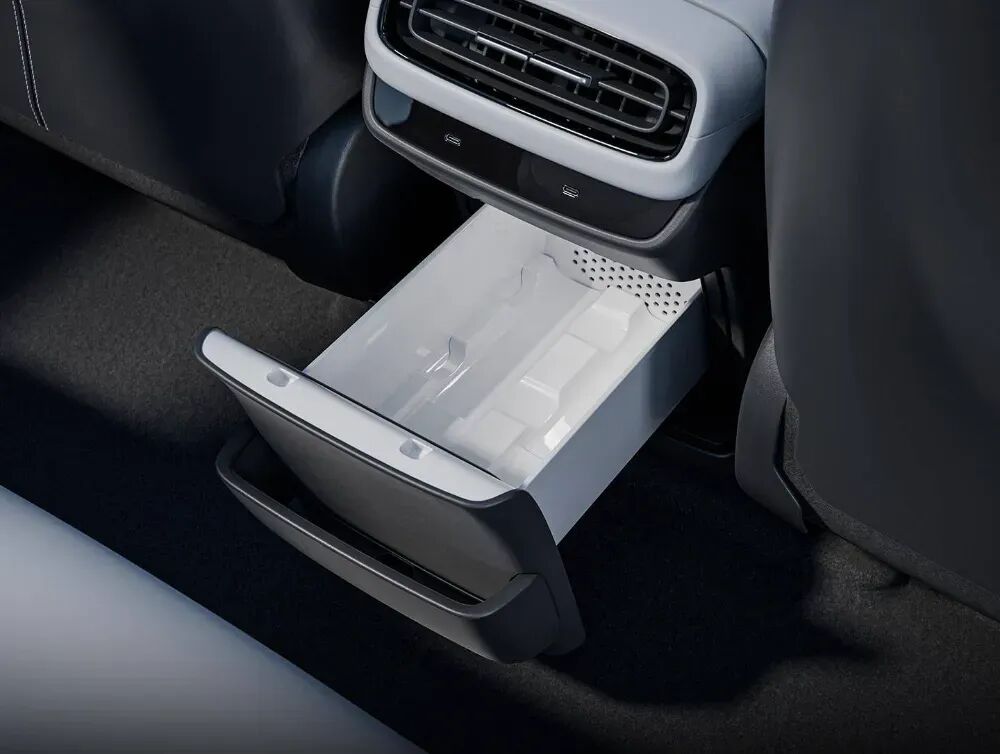
More and more new energy vehicles are equipped with in-vehicle refrigerators.
These configurations, which seemingly improve the driving and riding experience, are not "weight-free". The implementation of each function is accompanied by an increase in the weight of the hardware itself and the supporting systems.
Taking the in-vehicle refrigerator as an example, the weight of the refrigerator itself is about 20kg. Coupled with the supporting refrigeration pipelines, thermal insulation layer, independent power supply module, and in-vehicle fixing bracket, the overall weight can reach 50kg.
What's more noteworthy is that the weight increase of these configurations will also cause a chain reaction.
In order to accommodate more configurations and functions, automobile companies design larger vehicle body sizes, resulting in an increase in the basic weight.
The high power consumption requirements of a large number of electronic configurations also put forward higher requirements for the power battery, prompting automobile companies to increase the battery capacity.
With the superposition of various factors, new energy vehicles are ultimately becoming heavier and heavier.
02 National Forcing
The starting point for the obesity of new energy vehicles is to meet consumer demands such as range and intelligence.
However, the excessive weight also brings some negative consequences.
Firstly, it increases safety hazards.
Readers who have driven large trucks know that trucks cannot brake suddenly at will.
This is because the braking efficiency of a vehicle is inversely proportional to its own weight. The greater the self-weight, the greater the inertia during driving, and the braking system needs to output a greater braking force to slow down the vehicle.

A large truck may roll over during an emergency brake.
An overweight vehicle body will also accelerate the wear of brake pads, brake discs, and tires, and keep the vehicle's steering system, power supply system, and body connection parts in a high-load state for a long time, resulting in faster fatigue and aging of the parts.
A large and heavy vehicle body may seem safer, but in an actual collision, it may cause greater harm to the driver and passengers due to the greater collision kinetic energy generated.
In addition, the harm to the collided party will also increase significantly.
Secondly, it wastes a large amount of resources.
As analyzed above, one of the reasons for the heavier weight of new energy vehicles is to increase the driving range by adding more batteries.
However, adding more batteries increases the vehicle's weight, which in turn leads to a sharp increase in the power consumption per 100 kilometers.
That is to say, a large part of the newly added battery capacity is "consumed" by the vehicle's own weight, forming a vicious circle of "adding batteries - increasing weight - consuming more power - insignificant improvement in driving range".
The simple and extensive way of "adding batteries" is a relatively inefficient way of resource utilization.
Behind a power battery, a large amount of key mineral resources such as lithium, cobalt, and nickel are needed.
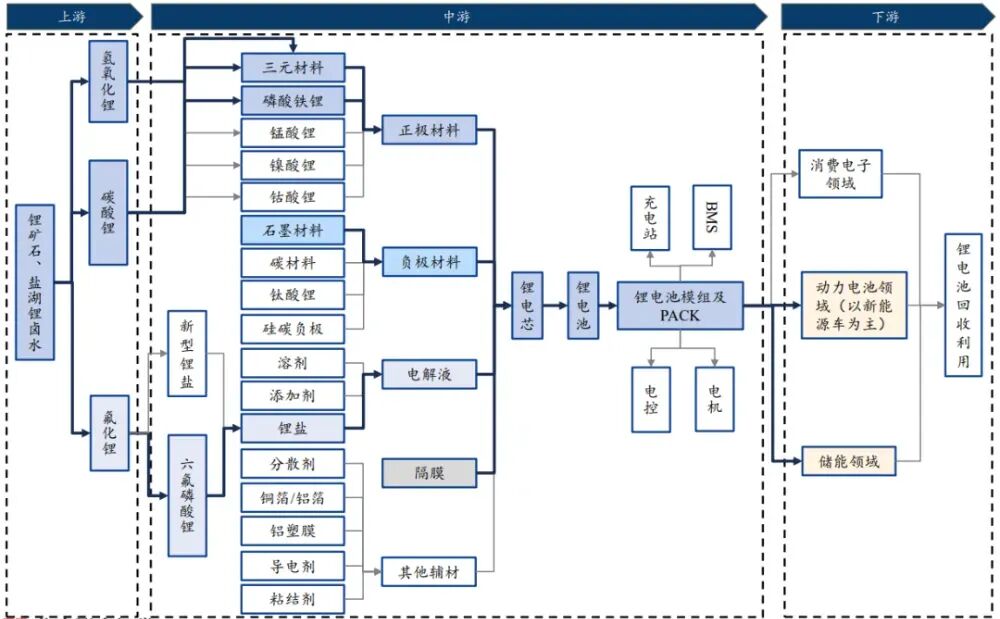
The power battery industry chain
Some of these resources are non-renewable, and their mining and processing are usually accompanied by high energy consumption and high pollution.
The inefficient capacity stacking of new energy vehicles amplifies the demand for the mining of these resources, causing resource waste and intensifying supply chain pressure and environmental disturbances.
This goes against the environmental protection concept advocated by new energy vehicles.
For this reason, the state has researched and formulated relevant standards and policies.
The national standard "Limits of Energy Consumption for Electric Vehicles - Part 1: Passenger Cars" (GB 36980.1 - 2025) has been implemented since January 1, 2026. This is the world's first mandatory standard for the power consumption limit of electric vehicles.
This standard comprehensively considers the current situation of power consumption of pure electric passenger cars, the potential of energy-saving technologies, cost control, and the power consumption performance of special models, providing a scientific guidance for weight reduction in the new energy vehicle industry.
Specifically, this standard deeply links the power consumption limit per 100 kilometers with the curb weight of the whole vehicle, sets limits in different weight ranges, and is about 11% stricter than the previous recommended standard as a whole.
This means that if automobile companies continue to increase the weight by adding more batteries, it will be difficult for them to meet the energy consumption limit requirements, and the cost of "increasing the driving range by adding batteries" will rise sharply.
It is worth noting that this standard fully considers the functional requirements of different models and does not require all models to achieve extreme weight reduction in a one - size - fits - all manner. It effectively takes into account the diversified development needs of models and provides guidance for the subsequent research and development and application of energy - saving technologies.
The introduction of the national standard has blocked the extensive path of "increasing weight by adding batteries", forcing new energy vehicles to "lose weight".
03 Industrial Upgrading
People lose weight through dieting and exercise. How can new energy vehicles "lose weight"?
Coincidentally, Zhengjieju has introduced these methods in previous articles.
Firstly, it is material upgrading.
Steel is undoubtedly the most widely used material in automobiles.
The article "The Fire at an American Aluminum Plant 'Exposes' a Fragile Link in the Supply Chain" introduced that the use of aluminum in automobiles is increasing.
The density of aluminum is only one - third of that of steel. On the premise of ensuring strength and stiffness, using aluminum alloy parts can reduce the weight by 30% - 50% compared with steel parts, significantly improving the driving range.
For example, the proportion of aluminum in the body - in - white of the Tesla Model 3 exceeds 90%. Through the integrated die - casting technology, the vehicle's weight is reduced by 200kg, and the driving range is directly increased by 50km.
The "Technology Roadmap for Energy - Saving and New Energy Vehicles" issued by the Ministry of Industry and Information Technology proposes that the targets for the aluminum usage per vehicle for vehicle lightweighting in China are 250kg/vehicle and 350kg/vehicle in 2025 and 2030 respectively.
The use of materials such as carbon fiber composites, engineering plastics, and lightweight foaming materials can also reduce the vehicle's weight.
Secondly, it is structural optimization.
In the article "China Has Become the World's Leader in Die - Casting Machines Sought by Tesla and Xiaomi", Zhengjieju introduced the application of die - casting machines in the automobile industry, especially in new energy vehicle companies.
Compared with traditional processes, large die - casting machines can manufacture more complex large - scale parts at one time, which can not only improve production efficiency and reduce costs but also reduce weight.
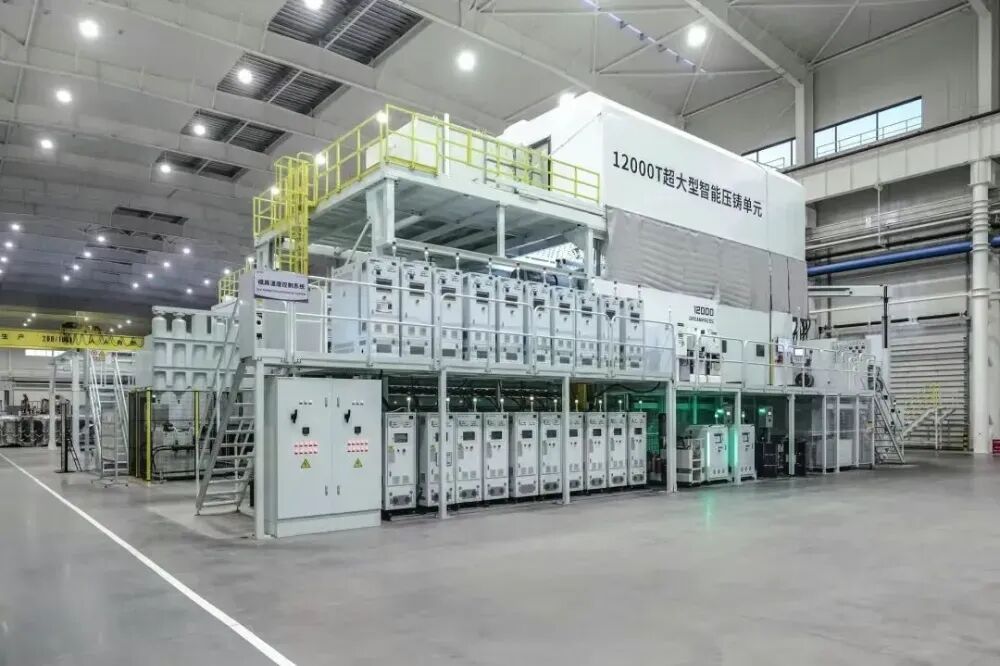
XPeng's 12,000 - ton integrated die - casting machine
For example, the Zeekr 009 uses an integrated die - casting process to produce the dragonfly - shaped middle section of the vehicle body. Compared with traditional welding, it can reduce the number of parts by 16 and the number of connection points by 66, achieving a 7% weight reduction of the whole vehicle.
Finally, it is system integration.
System integration means integrating multiple components to reduce "redundant weight".
The most typical example is the wiring harness introduced by Zhengjieju in the article "The Wiring Harness of a Car Can Be Up to 5 Kilometers Long, and the Industry Urgently Needs a Revolution".
As the nerves and blood vessels of a car, the wiring harness can be up to 5 kilometers long, accounting for 3% - 5% of the vehicle's total weight.
Automobile companies such as Tesla and Leapmotor have reduced the length of the wiring harness by more than 70% at most by building a central integrated electronic and electrical architecture and optimizing module design.
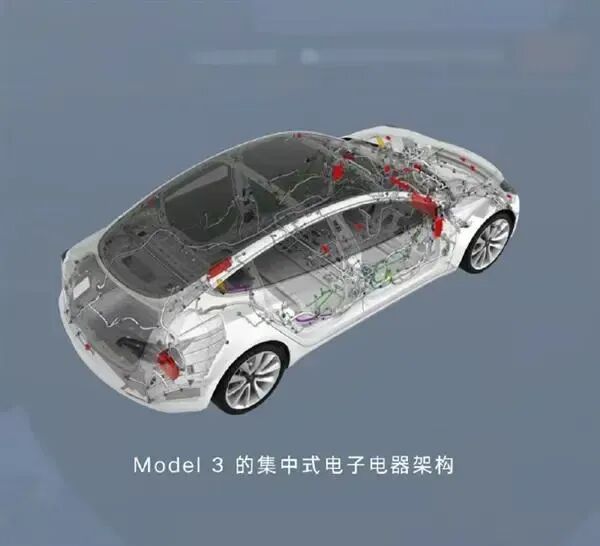
Tesla's centralized electronic and electrical architecture
Based on this idea, classifying and integrating components such as the motor, electronic control, reducer, chassis, and suspension will effectively reduce the weight.
It should be noted that the "weight loss" of new energy vehicles is by no means blind weight reduction but precise optimization without reducing performance or safety.
This is not only a technological challenge for automobile companies in terms of materials, structures, and system integration but also a deep - seated industrial upgrading of the entire new energy vehicle industry chain.
For example, the battery pack is the core of an electric vehicle's weight, and reducing the battery's own weight is the key to lightweighting.
This requires battery companies to research and develop high - energy - density battery cells and optimize the battery pack packaging process to truly achieve the breakthrough of "maintaining the driving range without increasing weight".
Under the rigid forcing and guidance of the national standard, the new energy vehicle industry is gradually moving out of the homogeneous involution of "competing for driving range by adding batteries and competing for configurations by adding hardware" and shifting to the high - quality track of "competing for technological strength and energy - efficiency levels", building a healthy industrial ecosystem of "safety, efficiency, and low - carbon".
Get rid of the redundant weight and develop core strength!
After "losing weight", Chinese new energy vehicles will become stronger.