Dingdong Maicai Expands to Yancheng: How Much Imagination Does "Small-City Consumption" Hold?
The future of instant retail may rely on young people in small towns.
The "Report on the Development of the Instant Retail Industry" by the Ministry of Commerce once pointed out that by 2026, the scale of China's instant retail will exceed 1 trillion yuan. With the regulation of macro - policies, the expansion of domestic demand, and the return of the population, the consumption potential in China's third - and fourth - tier cities, and even county - level cities, is constantly being magnified.
Previously, some industry insiders told 36Kr that the growth rates of users and transaction volumes in some low - tier cities have exceeded those in high - tier cities. It is foreseeable that for current competitors in the instant retail market, the sinking market has become an important engine for achieving performance growth.
On January 17th, Dingdong Maicai, a fresh food e - commerce enterprise mainly adopting the self - operated front - warehouse model, officially opened a warehouse in Yancheng City, Jiangsu Province. Through the mini - program or APP, whether it is fresh fruits and vegetables or live fish and shrimp, citizens can place orders online, and then Dingdong Maicai's riders will deliver the goods to their doorsteps immediately, which further enriches the shopping options for Yancheng citizens. According to insiders close to Dingdong Maicai, in the first four days after opening, the daily order volume of Dingdong Maicai in Yancheng exceeded 2,500 orders, which also reflects the strong consumption power of the sinking market.
"The opening of the Yancheng station is by no means a simple replication of the business, but a 'narrow and deep' supply - chain capability verified by the mature markets in the Yangtze River Delta region."
As introduced by Yan Xianfu, the vice - president of Dingdong Maicai, this station is a further strategic deepening of Dingdong Maicai in the Jiangsu market after it entered Taizhou on December 17th last year. Subsequently, the company also plans to explore other cities in northern Jiangsu. And Dingdong Maicai's continuous expansion in Jiangsu has actually kicked off the strategic layout for the accelerated sinking of fresh food retail in 2026.
01. The Advancing "Small - Town Consumption"
How much room for imagination does small - town consumption have?
Data from the National Bureau of Statistics shows that with the upgrading of commercial facilities in county areas and the continuous expansion of the channels for agricultural products to enter the market, the sales in rural markets have grown steadily. In the first 11 months of 2025, the retail sales of consumer goods in county and rural areas (including townships and rural regions) accounted for 38.7% of the total retail sales of social consumer goods. Well - known brands in industries such as hotels, catering, and retail are accelerating their entry into the county - level market.
It's not just the instant retail industry that hopes to seize this wave of dividends.
Not long ago, relevant officials of Huazhu Group said that county - level hotels are entering a period of rapid development, and the quantity, quality, and chain - operation rate will continue to increase. Currently, the group's business covers 96% of prefecture - level cities and 43% of counties across the country.
Zhou Zhaocheng, the vice - chairman of the board of directors of Haidilao International Holding Co., Ltd., also revealed that since the introduction of the franchise model in March 2024, more than half of the franchise applications have come from third - tier and lower - tier cities. It is reported that Haidilao has successively expanded into county - level cities such as Xiantao, Tianmen, Qianjiang, and Jianli in Hubei Province.
Looking deeper into the development of instant retail, 2014 was the first year of instant retail. In that year, platforms such as Meiri Youxian and Dingdong Maicai began to explore the front - warehouse model, hoping to solve the "last - mile" delivery problem in community retail through this model. This period is also regarded as representative of the 1.0 stage of instant retail.
In 2019, the categories of instant retail expanded from fresh fruits and vegetables to daily necessities. With the "black swan" event of the pandemic, online grocery shopping received the most extensive market education, and the industry thus entered the 2.0 era.
By 2025, instant retail has become a traffic entrance for Internet giants to compete for. With the increasing involution in first - tier cities and the "spill - over" of consumption trends, the consumption behavior and concepts in sinking markets represented by Yancheng have also been upgraded.
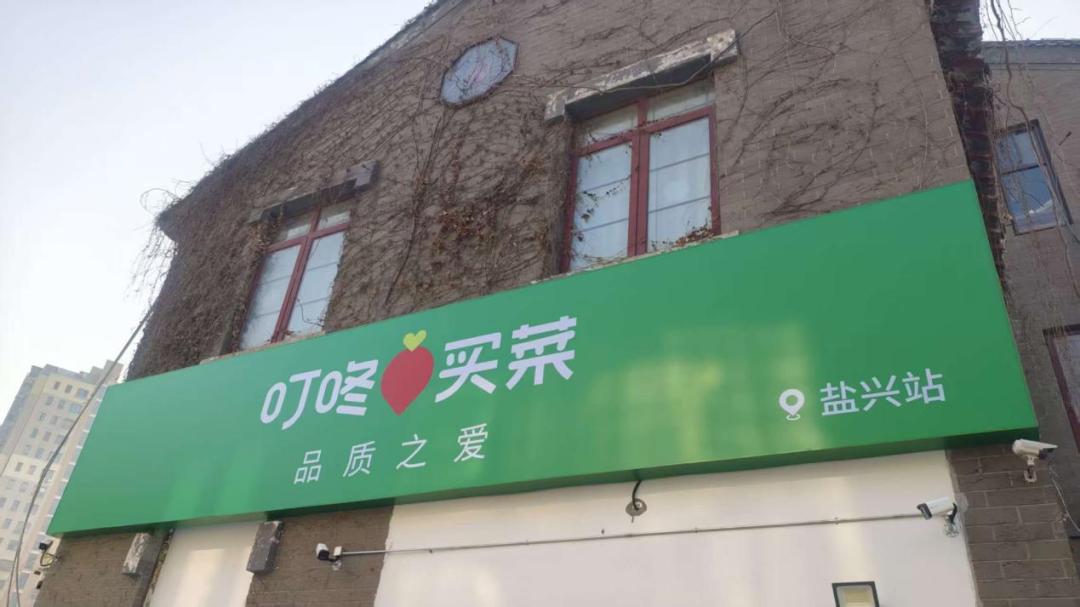
Dingdong Maicai Yancheng Yanxing Station
In fact, many low - tier cities in the Yangtze River Delta region have a large demand for "good products". When young people from big cities return to their hometowns, they also bring the demand for online shopping and home - delivered groceries to small cities. An interesting example is that in Yancheng and many other low - tier cities, there is also a large demand for "Sam's Club purchasing agents" or "Fat Donglai purchasing agents".
However, in reality, the vast majority of consumers in low - tier cities have not experienced convenient and high - quality service in the local market. During festivals, people still have to drive to provincial capitals or other big cities for shopping. Such a market gap provides opportunities for retail enterprises originally based in first - and second - tier cities and facing a slowdown in growth.
But with the popularity of instant retail in 2025, enterprises represented by JD.com, Taobao Flash Sale, and Meituan have brought the convenience of take - out services to low - tier cities. And instant retail players represented by Dingdong Maicai can make up for the consumption gap in the sinking market for "high - quality", "well - made products", and "good services" through Internet efficiency and product innovation.
02. Opened 130 New Warehouses in Small Towns in Two Years
Dingdong Maicai's layout in the sinking market has not been achieved overnight.
To open a warehouse, the supply - chain problem must be solved first. Over the years, Dingdong Maicai has accumulated a comprehensively covered supply - chain network in the Yangtze River Delta region, which can be reused when opening warehouses in Jiangsu Province. This is also the foundation for the company to expand into the sinking market.
On the other hand, Dingdong Maicai has been continuously deepening its involvement in the upstream of the industrial chain, achieving full - link quality control through "large - scale direct procurement" and "order - based farming".
In the first half of 2025, Dingdong Maicai jointly established a black - pig breeding base and a digital fish warehouse with upstream partners. These decisions to deeply participate in the upstream of the fresh - food industry not only improve product quality but also further explore differentiated products with regional characteristics and sales potential across China. These have become important means for Dingdong to expand in the small - town consumption market.

In terms of the most - concerned warehouse network layout, Dingdong Maicai has always adhered to the strategy of "efficiency first, while considering scale". Relying on the digital system for dynamic adjustment, especially based on the original advantages of the supply chain, it focuses on third - and fourth - tier cities in the Yangtze River Delta region, using a high - density warehouse network layout to meet the needs of high - consumption - power users.
A case that best reflects this encryption strategy is Dingdong Maicai's expansion into Chongming District, Shanghai.
In August last year, Dingdong Maicai opened two first - batch service points in Chongming, Shanghai: the "Beimen Road Station in Chengqiao Town" and the "Chenjia Town Station", and the sales volume increased significantly. According to insiders, taking the Beimen Road Station as an example, its daily order volume quickly climbed to more than 3,000 orders, indicating a very strong demand from consumers for instant fresh - food services.
To relieve the order pressure on the two stores, in November of the same year, Dingdong Maicai opened two more new stations in Chongming and further expanded the coverage of its delivery services. Meanwhile, in other areas of the Yangtze River Delta region outside Shanghai, Dingdong Maicai has successively entered "small towns" and even county - level markets such as Shaoxing, Shengzhou, Ninghai in Ningbo, Deqing in Huzhou, Cangnan in Wenzhou, Yongkang in Jinhua, Rugao in Nantong, Xuancheng, and Chuzhou.
Judging from the current results, in more than two years, Dingdong Maicai has entered more than 20 small towns and opened more than 200 new front - warehouses, of which more than 130 new warehouses are in the sinking market. The order volume of many new warehouses in small towns can exceed 2,000 orders in the initial stage of opening, higher than the historical data of new warehouses.
According to public information, there are more than 100 county - level administrative regions in the Jiangsu - Zhejiang area. This also means that Dingdong Maicai has more room for development.
03. Can the Experience in First - Tier Cities Work in the Sinking Market?
However, the fresh - food e - commerce industry has always been characterized by "high losses and strong seasonality". While retail enterprises such as Sam's Club, Hema, and Dingdong Maicai are expanding into the sinking market, the industry has also raised new concerns. These include "Can the supply - demand model in big cities be effectively replicated in the sinking market?" and "Can the thresholds such as the supply chain, logistics, and consumption habits be successfully crossed?"
Different from the price - war strategies of large enterprises, Dingdong Maicai's solution is: prudent expansion and differentiation in products. From the perspective of cost structure, in small cities in the Yangtze River Delta region like Yancheng, labor costs and rent costs are lower. When the efficiency of the supply chain is demonstrated, enterprises are more likely to achieve profitability in low - tier cities, thereby enhancing the overall development space.
In terms of product strength, in July 2025, at the Supply - Chain Ecosystem Summit, Dingdong Maicai officially proposed the "4G Strategy" of "good users, good products, good services, and good brand image", aiming to maintain the basic product portfolio and create unique competitiveness through product differentiation in the current price - war situation among giants.
Financial report data also shows that by September, the proportion of SKUs that meet the "good product" standard has increased to 37.2%, contributing 44.7% of the overall GMV. In that quarter, Dingdong Maicai's overall average monthly order frequency reached a record high of 4.6 times, and the average monthly order frequency of member users reached a record high of 7.7 times.
The data confirms the effectiveness of this strategy. Consumers have a deeper perception of buying "good products" at Dingdong Maicai. And these good products are exactly what the sinking market lacks the most. The consumption power of middle - class people in small towns who pay attention to the quality of life often explodes more astonishingly than that in first - tier cities.
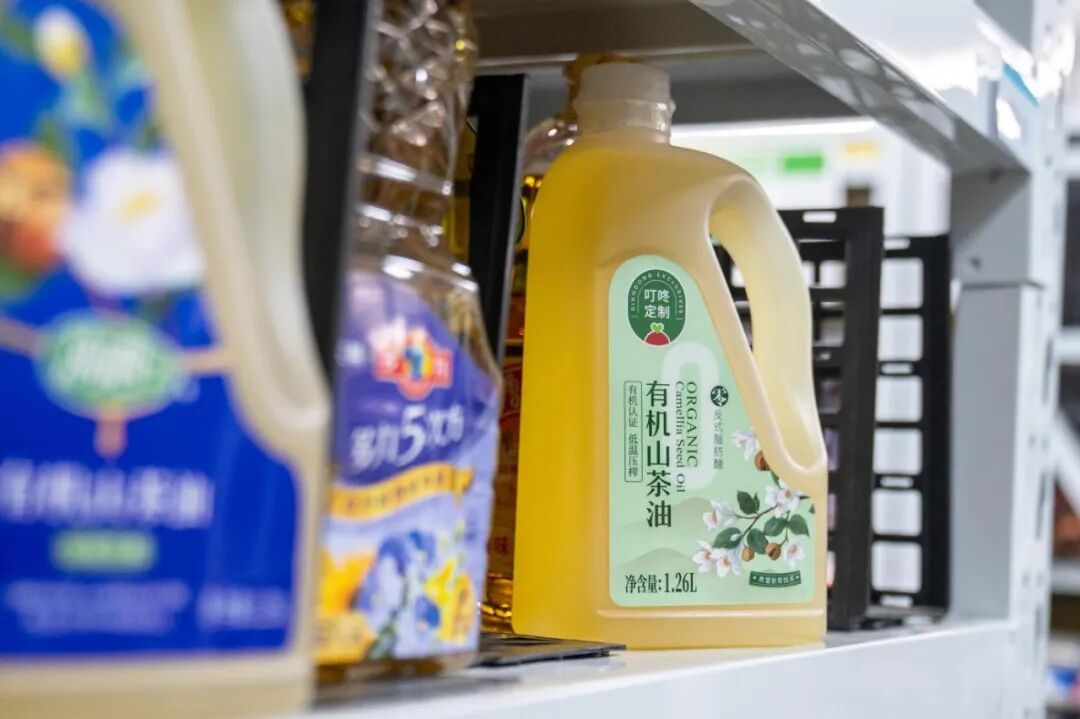
Taking the Yancheng station as an example, Dingdong Maicai has not only introduced cross - regional specialty products such as wild mushrooms from Yunnan and free - range cattle from Ningxia but also provides refined processing services such as slicing blackfish and perch. At the same time, it has introduced mature product categories such as "low - GI", "clean - ingredient", "organic products", "mom - recommended", and "medicinal - food homology", enabling local consumers to have a consumption experience and quality on par with that in big cities.
High - efficiency operation is also the key for Dingdong Maicai to expand in small and medium - sized cities. It is reported that currently, the inventory turnover days of Dingdong Maicai's fresh - food products have been shortened to 2.1 days, and the product loss rate is maintained at around 1.5%. Its operation efficiency far exceeds the industry average.
It is certain that the current instant retail industry has entered a new stage of development. Dingdong Maicai's initial success in the sinking market also proves to the market the endless feasibility of the self - operated front - warehouse model. Moreover, without the support of giants, Dingdong Maicai has long proven its sustainable self - financing development ability. As of the third quarter of 2025, Dingdong Maicai has achieved twelve consecutive quarters of profitability under the Non - GAAP standard and seven consecutive quarters of profitability under the GAAP standard.
It is believed that in the future, with the increasing maturity of consumers' consumption concepts, more small towns like Yancheng will become key battlefields for businesses to compete in.
*Disclaimer:
The content of this article only represents the author's views.
The market is risky, and investment should be made with caution. In any case, the information in this article or the opinions expressed do not constitute investment advice for anyone. Before making an investment decision, if necessary, investors must consult professionals and make decisions carefully. We have no intention of providing underwriting services or any services that require specific qualifications or licenses for the trading parties.