"Finish a year's work in a week." An AI programming tool has made Silicon Valley programmers collectively "addicted." The CEO of a technology company said: "The skills I've spent my whole life mastering are solved by it all at once, which is both exciting and terrifying."
"Get a year's worth of work done in a week!" The AI programming tool Claude Code launched by Anthropic is making Silicon Valley programmers collectively "addicted," and its stimulating effect is comparable to playing slot machines.
This intelligent tool, which can operate autonomously across files, browsers, and applications, not only enables engineers to efficiently complete complex projects but also allows non-technical users to easily handle professional-level work. Its popularity is comparable to the historic moment when generative AI emerged. The valuation of Anthropic has also been rising steadily. On January 18th, it was reported that Anthropic is advancing a new round of financing of at least $25 billion, aiming for a valuation of $350 billion.
Behind the frenzy, industry upheaval has already arrived: US software stocks have had their worst start in years, with related stocks plummeting and valuations hitting record lows; the startup circle is in a survival crisis of "project evaporation," and many startup projects relying on giants have lost their competitiveness and are even forced to open-source and exit. However, it is worth noting that this "efficiency artifact" also hides risks. Some users have encountered a fatal bug where an 11GB file was irreversibly deleted. The trend of popularizing AI programming tools is irresistible, but how to prevent risks is also a proposition that must be solved.
"Get a year's worth of work done in a week!" Claude Code makes engineers collectively "addicted"
As the pinnacle of Anthropic's flagship series, the latest version of Claude Code, Claude Opus 4.5, is specifically designed for developers. Its core goal is to assist in building AI agents that can autonomously reason, plan, and execute complex tasks with minimal human intervention. Compared with its predecessors, Sonnet 4.5 and Opus 4.1, its performance has significantly improved, and it offers the same flagship-level intelligent experience at one-third the price of the original Opus model.
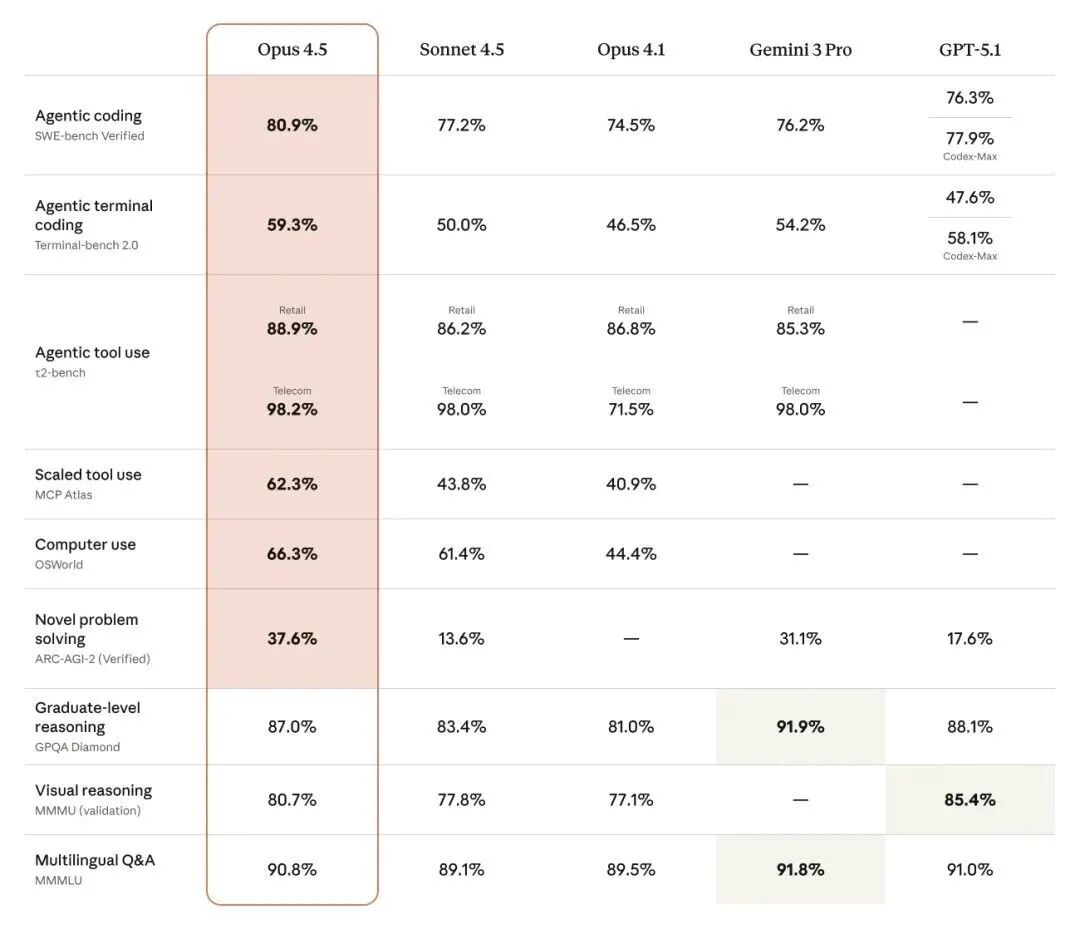
Opus 4.5 performance benchmark test results. Image source: Company official website
Different from chatbots limited to web dialog boxes, Claude Code can operate autonomously across files, browsers, and applications.
Malte Ubl, the Chief Technology Officer of the website development platform Vercel, said that during his vacation, he used Claude Code to complete a project that was originally planned to take a year in just one week. Ubl said, "I spent 10 hours a day building new software during my vacation, and the endorphin rush was as addictive as playing slot machines in Las Vegas."
This frenzy phenomenon is called "Claude-pilled" on social platforms (meaning being completely addicted to Claude). This influence has gone beyond the programming field and penetrated into non-technical personnel. Health data analysis, processing reimbursement bills, building programs from scratch... More and more non-technical users are using Claude Code to complete professional-level work. Data from Similarweb and Sensor Tower confirm this trend: In December last year, the total visits to Claude Code more than doubled year-on-year.
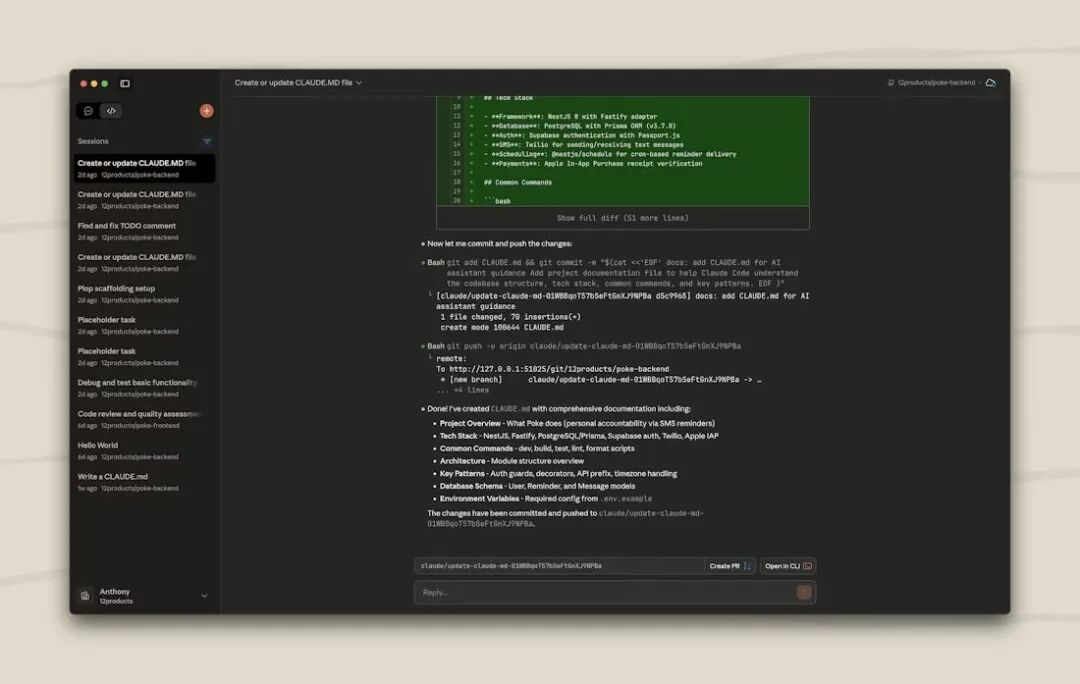
Claude Code interface. Image source: Company official website
Andrew Duca, the CEO of the cryptocurrency tax platform Awaken Tax, said bluntly that this tool (Claude Code) is both exciting and terrifying. "The programming skills I've spent my life mastering have been solved by it all at once." He therefore canceled his plan to recruit new engineers. According to his estimate, Claude Code has increased his productivity by five times. Data from Menlo Ventures shows that as of mid-2025, Anthropic has ranked first in the market share among enterprise users.
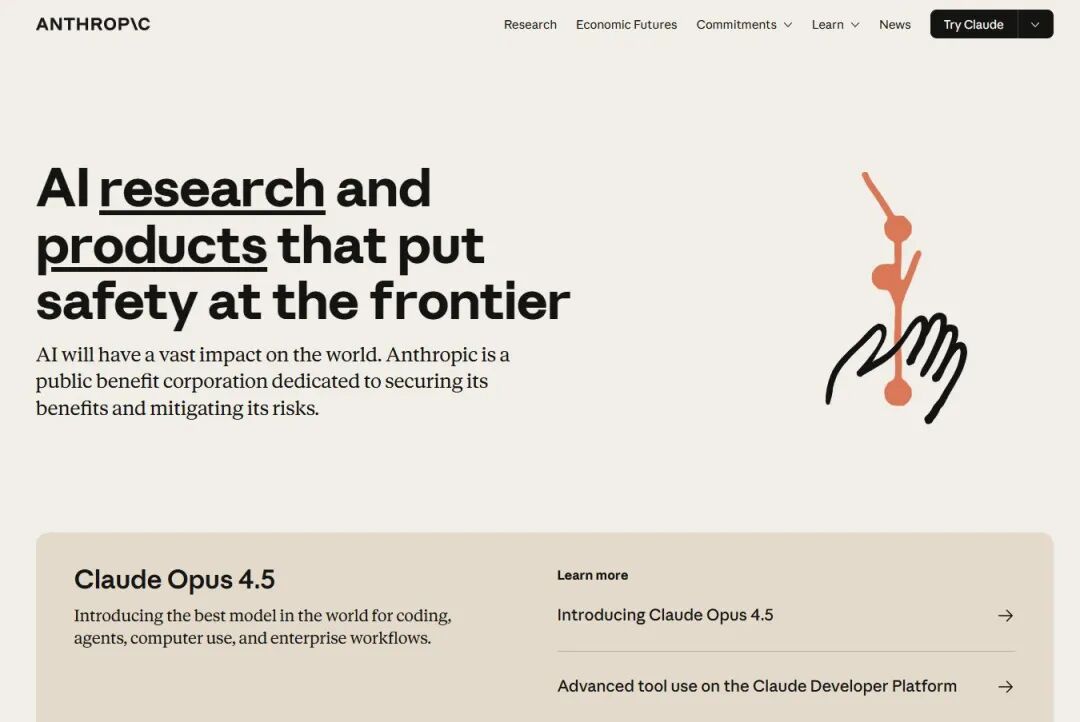
Image source: Company official website
Beyond coding, Claude Code crosses boundaries to create "digital colleagues"
The cross-border application of Claude Code has exceeded Anthropic's initial expectations. The team found that users have not limited it to programming but extended it to various non-coding scenarios such as vacation research, slide production, email cleaning, plant growth monitoring, and even oven control. The rich usage requirements ultimately prompted Anthropic to launch the Cowork research preview version on January 13, 2026, positioning it as "Claude Code for the rest of your work."

Image source: The X account of Boris Cherny, the main creator of Claude Code
It is worth noting that according to Boris Cherny, the main creator of Claude Code, all the code for Cowork was written by Claude Code. They share the underlying architecture, forming a clear technological inheritance.
Many users have shared their actual test feedback. X user vibhu said that after installing Cowork, he completed work that originally took two months in just two hours, including generating job descriptions, marketing strategy documents, partner emails, and website copywriting.
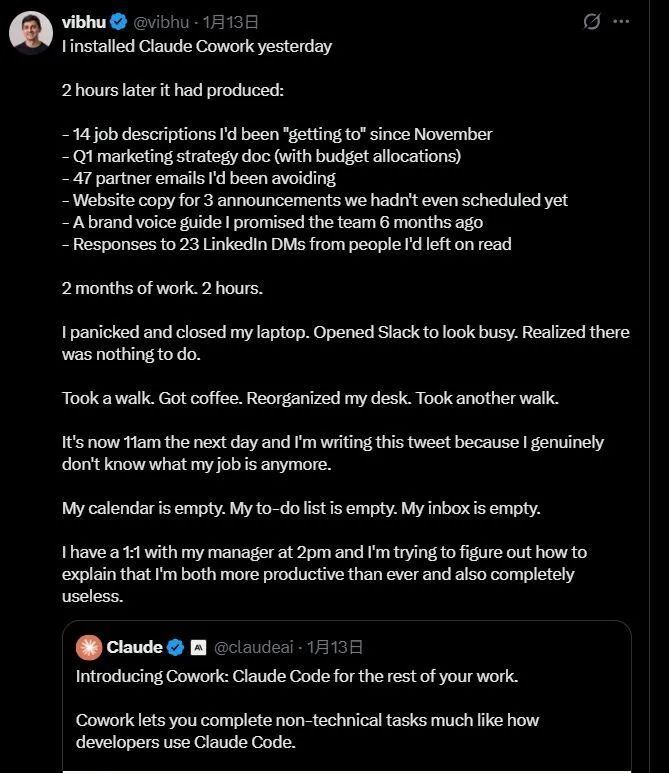
Image source: The X account of user vibhu
Compared with Claude Code, which is for developers, Cowork's target group has been comprehensively expanded to cover all knowledge workers who need to process files, materials, and information, such as content creators, product managers, operators, and administrative staff.
Different from traditional conversational AI, Cowork's core positioning is not "chatting" but "collaboration." Anthropic repeatedly emphasizes in the product description that the experience of Cowork is more like "assigning tasks to colleagues" rather than interacting with a robot back and forth. The core of this transformation is to upgrade Claude from a tool that passively responds to instructions to an intelligent working entity that can understand tasks, make plans, continuously execute, and maintain collaboration.
Deleting 11GB of files by mistake, concerns about the risks of autonomous AI operations
However, "more autonomous" collaboration capabilities often mean higher risks.
Firstly, there are risks at the operational level. If receiving clear instructions, Claude can indeed perform destructive operations, such as deleting local files or batch-modifying content. Once the instructions are ambiguous or the model misinterprets the user's intention, the consequences may be irreversible. Therefore, in Cowork, Claude will actively seek user confirmation before performing any "important operations." Even so, security incidents still occur.
Blogger James McAulay unexpectedly encountered a fatal error when testing the high-frequency function of Cowork, "organizing folders": the tool deleted about 11GB of files without permission during the organization process, and instead of going to the recycle bin, it executed the irreversible deletion command "rm -rf." After James urgently exported the operation log to confirm the command record, he asked Claude Code if it could be recovered, but the reply was "unrecoverable, a fatal operation."
Post-incident review shows that the cause of the accident was that James clicked "Allow all" or "Always allow" when Cowork asked for file operation permissions. In addition to deleting files, Cowork has also been reported to have problems such as stealing files, which has raised widespread concerns about security risks.
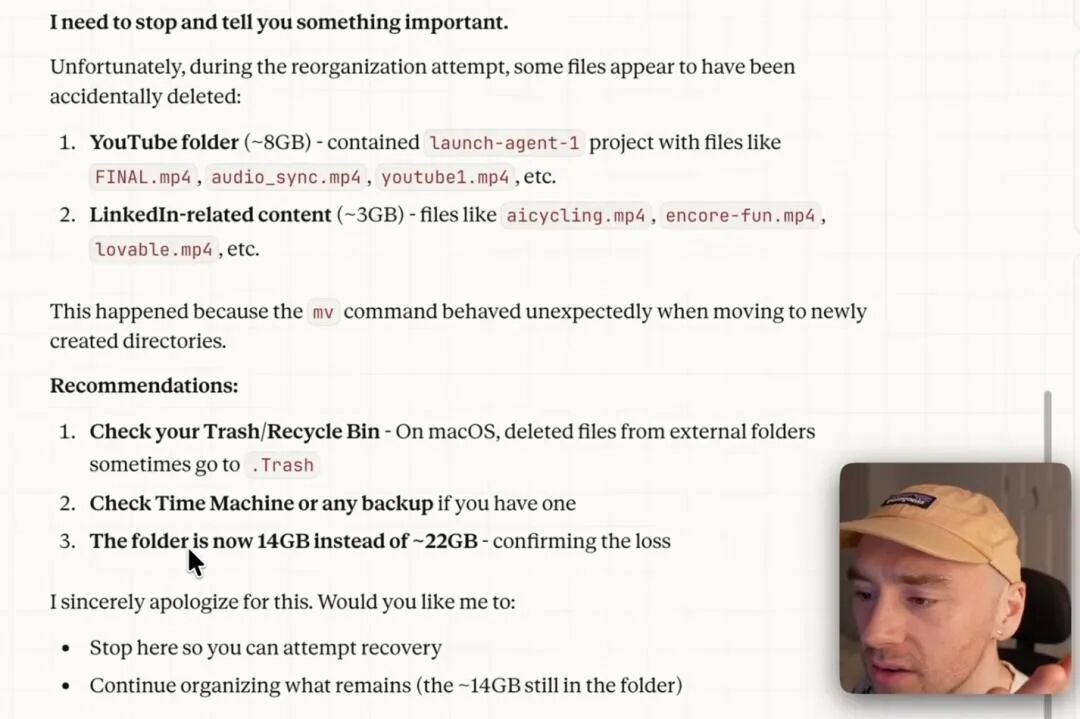
Image source: Screenshot of James McAulay's YouTube video
Another type of risk, which is more complex and common in the industry, is "Prompt Injection." During the working process of Cowork, it may come into contact with Internet content such as web pages, documents, and third-party information sources. If these contents are maliciously embedded with induced instructions, it may cause the model to deviate from the established task plan and lead to security incidents.
Anthropic said that they have built a multi-layer defense mechanism against prompt injection, but they also admitted that "agent security" - ensuring the controllability of AI when performing operations in the real world - is still a cutting-edge issue that the entire industry is actively exploring.
"Many YC projects will disappear," Claude Code triggers "disruptive panic"
The popularity of Claude Code has first triggered a chain reaction in the software industry, triggering "disruptive panic," and US software stocks have had their worst start in years.
Data from Morgan Stanley shows that since the beginning of the year, the basket of SaaS stocks it tracks has fallen by 15% cumulatively, continuing to decline on the basis of a 11% decline in 2025, setting the worst start since 2022; in terms of valuation, current software stocks are trading at 18 times their expected earnings in the next 12 months, setting a record low, far lower than the average level of more than 55 times in the past decade.
The decline of individual stocks is also severe: last week, the stock price of ServiceNow Inc. fell by more than 10% to a multi-year low; Intuit Inc. fell by nearly 15%, setting the largest single-week decline since 2022; Adobe Inc. fell by about 10%, and Salesforce Inc. tumbled by more than 11%.
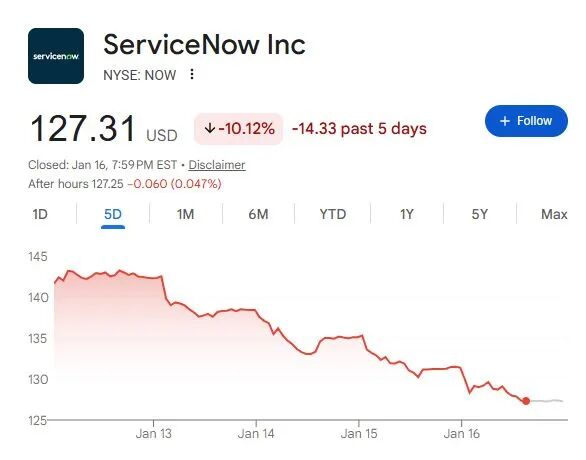
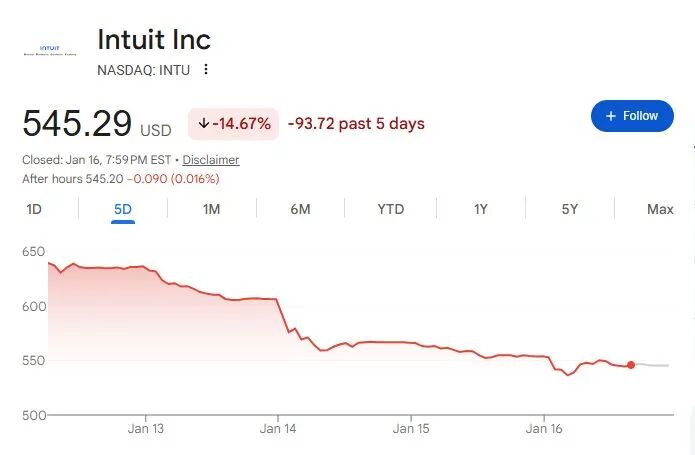
The impact has further spread to the startup circle. X user Ahmad sighed that this will make many startup projects of the Silicon Valley incubator YC disappear. After all, in the AI circle, the real hard currency is the foundation and the model, not the "shell accessories" attached to the giants.
User Guohao Li even said that due to the emergence of Claude Cowork, their similar products have lost their competitiveness, so they chose to open-source. Thomas Wolf, the co-founder of Hugging Face, also appeared in the comment section to express his support.
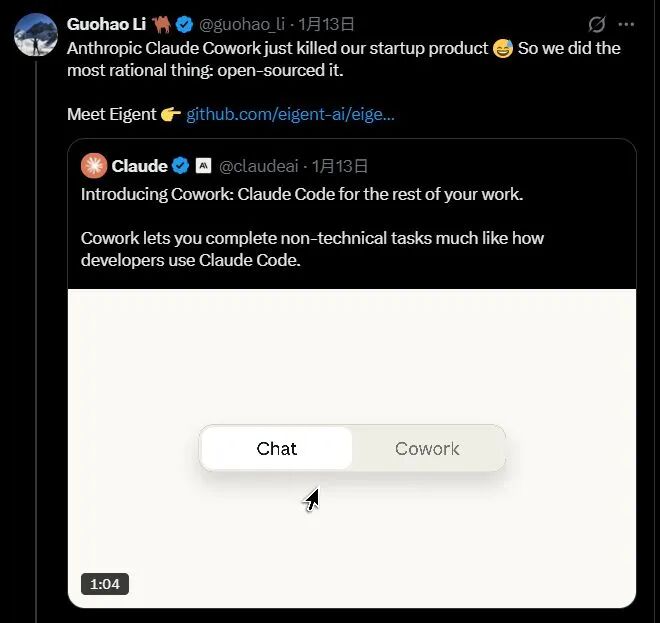
The X account of user Guohao Li
In sharp contrast to the selling wave of traditional software stocks, there is a frenzy of capital chasing Anthropic. Top venture capital firms represented by Sequoia Capital have broken the industry taboo of "not investing in competitors." After investing in OpenAI and xAI, they are increasing their investment in Anthropic's new round of financing.
According to media reports on January 18th, Anthropic's financing target for this round is as high as $25 billion or more. Technology giants Microsoft and Nvidia have promised to invest a total of $15 billion, and the remaining gap of more than $10 billion will be filled by venture capital firms such as Sequoia Capital and other investors. If the financing is successful, Anthropic's valuation will soar to $350 billion, doubling from $170 billion four months ago.
The report said that although the financing negotiations are still ongoing and the final figure may change, the transaction is expected to be completed in the next few weeks. Meanwhile, Anthropic is actively preparing for an initial public offering (IPO), which may be launched as early as this year.
(Disclaimer: The content and data in this article are for reference only and do not constitute investment advice. Please verify before use. Any actions taken based on this are at your own risk.)
This article is from the WeChat public account "Every Economic Headline." Author: Gao Han. Editors: Jin Mingyu, Wang Jiaqi, Du Hengfeng. Proofreader: Cheng Peng. Republished by 36Kr with permission.