In 2026, seven trends are booming.

Author | Wang Lu
Editor | Wei Jia
As 2026 dawned, the capital market continued to heat up. In the primary market, the pace of financing accelerated, and the financing amounts continuously broke records. In the secondary market, sentiment improved, and the number of companies going public through initial public offerings (IPOs) increased significantly. From the successive listings of large - model companies such as Zhipu and MiniMax to the sharp rise in the stock prices of many GPU companies like Moore Threads and Muxi Co., Ltd., the market is becoming increasingly active. More than one investor has expressed their general optimism about the market opportunities in 2026.
Different from the past, rather than betting on distant technological visions, investors are more concerned about one thing: which sectors can truly turn technology into profits, sell products, and make sustainable money.
Based on the views of multiple investors, the new trends in 2026 can be divided into three major parts:
Firstly, popular sectors represented by AI hardware, where competition centers around user attention and interaction entry points.
Secondly, ever - green sectors represented by consumer and cultural and entertainment industries, which are being re - activated with the support of technology.
Thirdly, long - term sectors represented by low - altitude economy and commercial spaceflight, which are starting to break through the limitations of technology and cost and move towards commercial implementation.
Despite the significant differences between sectors and different business cycles, they all point to the same trend: 2026 is no longer a year of "telling stories" but a year of "delivering results." The evaluation criteria for these results are very clear: AI technology must be converted into market share, consumer and cultural and entertainment products must have sustainable premium, and the vision of conquering the sky must ultimately show a feasible implementation path.
Investment is shifting from paying for distant dreams to voting for visible performance.

AI Hardware Enters the Arena:
Glasses, Robots, 3D Printers
Looking back at 2025, the hottest concept was undoubtedly AI. It has long moved from the laboratory to the daily lives of ordinary users, covering areas such as writing, search, translation, and image generation, with its functions being carried by specific products.
Therefore, when discussing the trends in 2026, it is impossible to bypass AI. However, rather than asking "whether there is AI," the market is more concerned about "whether it can make money." AI hardware is considered the direction that will lead the way.
Although both AI software and hardware are moving towards scale, most industry insiders believe that AI hardware relies on "new devices" and "new computing power." When chips are iterated and new devices are mass - produced, consumers can directly experience and purchase them. In contrast, AI software depends more on "new processes" and "new services," which require in - depth transformation of enterprise operation models and changes in user payment habits, with a longer cycle and a slower start.
In other words, AI hardware has started to sell products, while AI software is still in the process of educating the market. Entering 2026, AI hardware will be in full bloom. Forms such as mobile phones, glasses, PCs, humanoid robots, and cars are all accelerating the competition for user interaction entry points in the AI era.
Among them, mobile phones, with their large user base and high - frequency usage scenarios, are regarded as the most likely entry point for daily AI capabilities. However, multiple investors have also pointed out that the initiative in this sector is mainly in the hands of traditional mobile phone manufacturers, resulting in high uncertainty.
In contrast, they believe that greater opportunities are concentrated in AI glasses and humanoid robots. In 2026, these two sectors are expected to make breakthroughs in technological paths and commercial implementation. Among them, AI glasses, which experienced a year of explosive growth, will face the challenge of balancing functional diversity and device lightweighting; humanoid robots will officially enter the "year of mass production," moving from the laboratory to real industrial scenarios and starting to "work in factories."
Let's first look at AI glasses. Their exploration can be traced back to 2012 when Google released Google Glass. This product integrated a display, a camera, and voice interaction functions and was considered the prototype of smart glasses. However, it was not until the maturity of large - model capabilities that it was truly re - noticed by the market. When AI has real - time understanding, generation, and memory capabilities, the value of glasses as a device has been re - emphasized.
Currently, players in the AI glasses market have been divided into two camps. One camp consists of startups represented by Rokid, Thunderbird Innovation, and Halliday, which are iterating products around optical solutions, wearing experiences, and scenario - based applications; the other camp includes large companies such as Meta, Huawei, Xiaomi, and Alibaba, which are continuously exploring from the perspectives of ecological synergy and platform entry points.
The core logic for investors to be optimistic about AI glasses is similar to that of mobile phones: a large potential user base.
Comicc, an AI investor who has invested in several startups in the AI glasses industry chain, believes that there are over 700 million people in China who wear glasses daily. If only a few grams to a dozen grams are added to the weight of the original glasses, it will not significantly increase the additional wearing cost, but it will enable AI to be "attached" to people's first - person perspective for the first time, continuously capturing real - time data on scenarios and actions that mobile phones cannot obtain, and becoming a true user - specific memory storage device.
Although AI glasses are controversial due to their high return rate, according to statistics from vertical media, the average return rate of this category on mainstream e - commerce platforms is as high as 20% - 30%. However, Comicc believes that this is more like an inevitable stage for new consumer electronics products in the market introduction period. Especially since the online channels lack try - on experiences, while the return rate of offline channels is significantly lower.
Looking forward to 2026, Comicc predicts that the competition for AI glasses will focus on the two indicators of "weight" and "battery life." At present, the industry consensus is that AI glasses do not replace mobile phones but extend their capabilities. Therefore, some manufacturers will even actively reduce some non - core functions in pursuit of extreme lightweighting and long battery life.
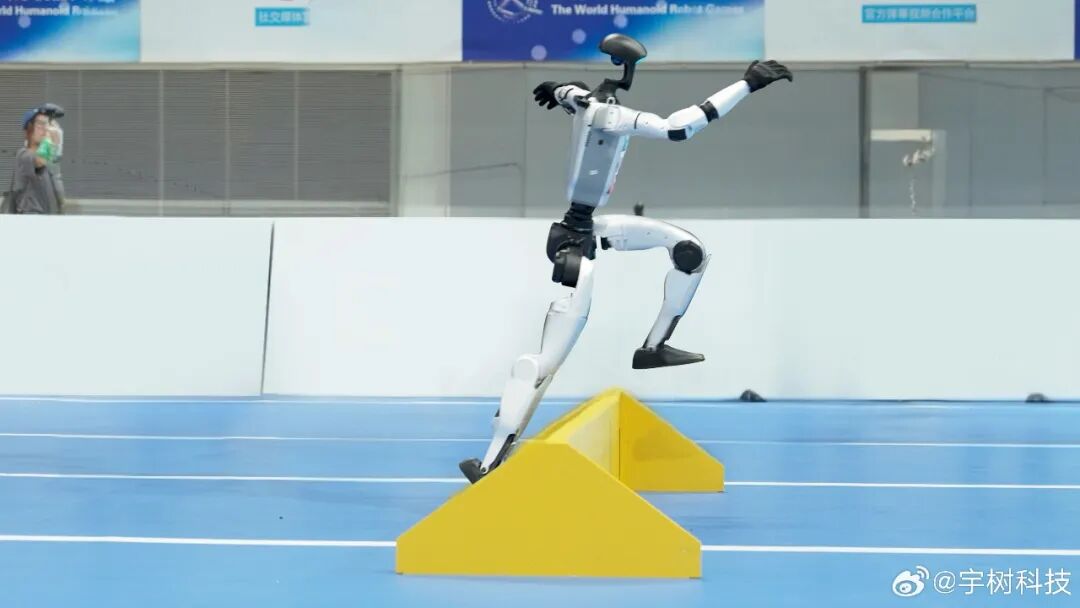
Image source / Weibo of Unitree Robotics
Compared with AI glasses, humanoid robots have a higher ceiling and greater potential for change. Many industry insiders called 2025 the "year of embodied intelligence." Many companies launched new products, proving that "building a movable body" is no longer difficult. Companies such as Unitree, Zhibot, and others have made breakthroughs in both hardware bodies and intelligent systems and have become representative enterprises in this stage. Entering 2026, industry insiders predict that the focus of competition will shift from "building bodies" to "cultivating brains."
Comicc has invested in multiple industrial segments of humanoid robots in the past two years. He found that compared with hardware, the most scarce resource in this industry is high - quality and scalable fine - operation data for robots. Currently, real - machine remote operation is relatively slow, and the data generated by simulation pipelines often has a certain "simulation - to - reality" migration error, making it difficult to be universally applied to all scenarios.
Therefore, he believes that the core of the competition in the next stage lies in who can build the prior physical intelligence of robots at the lowest cost (prior knowledge and intelligent decision - making ability of the physical world). Whether innovating in training data or model frameworks, and then putting robots into the real scenarios of customers to test their intelligence in real - world interactions. This is a matter that requires a balance between technological R & D, commercialization, and even the rhythm of financing.
In addition to entry - level hardware, a number of hardware products transformed by AI have also attracted the attention of the capital market. The most representative of them is 3D printing.
This sector, once regarded as a "niche geek toy," has become more popular as the birth of generative AI models (such as Meta SAM 3D and domestic 3D large models launched in 2025) has lowered the threshold for 3D modeling. According to the prediction of Huajing Industrial Research Institute, by 2030, the global 3D printing market scale is expected to reach $85.3 billion, with the proportion of the Chinese market increasing to 35%, indicating a large growth space. Tuozhu, Creality, Anycubic, and Intellifusion are known as the "Four Little Dragons of Consumer - Grade 3D Printing" and are all accelerating their expansion.
The observations of Xiao Li, an investor in the AI hardware field, are quite representative. He started paying attention to AI glasses at the beginning of 2025, shifted to AI toys in the middle of the year, and recently switched his target to 3D printing. He believes that the AI glasses sector is relatively mature. Although AI companion hardware meets the demand for "emotional value" and has a high gross profit margin, the user retention rate is highly uncertain.
In contrast, 3D printing has high technological barriers and a more stable growth path and is starting to generate real sales volume.
In short, in the AI hardware sector, although mobile phones are regarded as an important AI entry point, the evolution rhythm in 2026 is uncertain. Among other potential sectors, for glasses, it's about weight; for robots, it's about data; and for 3D printing, it's about sales volume.

Stable and Slow Growth:
Consumer and Cultural and Entertainment Industries, Re - Activated by Technology
Different from the high - speed iteration of the AI industry, the consumer industry is a typical ever - green sector. Entering 2026, most consumer sub - sectors are generally stable, and it is difficult to achieve explosive growth again. However, this does not mean that opportunities have disappeared. "IP +" consumption and the secondary - element peripheral consumption known as the "Guzi economy" still have potential.
According to the "2024 - 2025 China Guzi Economy Market Analysis Report" released by iiMedia Research, the market scale of the "Guzi economy" in China reached 168.9 billion yuan in 2024 and is expected to exceed 300 billion yuan by 2029.
An investor in the consumer field reviewed that in 2025, IP consumption completed the process from 0 to 1, breaking through from a niche hobby to mass consumption. In 2026, it will enter the stage of in - depth industrial development from 1 to N. This is mainly due to the progress in technology application, data - driven development, and globalization. It has upgraded this business centered on emotional connection and emotional value into a mature industrial system that is replicable, has industry barriers, and can participate in global competition.
For example, AI - generated content has lowered the threshold for IP creation. Combined with 3D printing technology, it can significantly shorten the proofing and production cycles of peripheral products such as badges and stands.

Image source / Screenshot of Weibo of POPMART
He is optimistic about two types of companies. One type is represented by POPMART, an original IP company that integrates design, production, channels, and brand operation, controls the pricing power of IP products, forms brand premium, and has run through the business model overseas; the other type is represented by Card Hobby, which relies on the advantages of scale and distribution network to occupy the card market.
In his opinion, in 2026, whoever can run through the three steps of "emotion + technology + going global" may replicate POPMART's market value of hundreds of billions.
The cultural and entertainment industry is similar to the consumer industry and is in a state of stable development. However, the technological changes brought about by AI are opening up new possibilities. AI - generated video tools and the new content forms they have spawned - comic dramas and AI live - action short dramas - are regarded as the explosive points in 2026.
Different from the traditional video production industry, which is resource - intensive, AI is bringing technological equality. The threshold for video production has been significantly lowered, and content competition has shifted from "competing for resources" to "competing for creativity." Many industry insiders predict that in 2026, AI will significantly reduce the cost of content creation and shorten the cycle from idea to finished product.
Bryan Liu, the investment director of Alumni Ventures, a venture capital firm focusing on early - stage technology investment, pointed out that for the capital market, the "efficiency revolution" that produces quick results is usually more impactful than the pursuit of the ultimate "art revolution." In his opinion, it will take time for an AI - made movie to win an Oscar, but in the fields of commercial short films, advertising and marketing, and social media content, the AI transformation will be realized more quickly.
At the same time, Bryan reminded that the "compliance" of generated content still faces severe challenges. Currently, the core bottleneck of AI - generated videos has shifted from image quality issues to copyright security and data traceability, which is an important reason why the capital is still waiting and watching.
"Only when technology can provide clear legal safety boundaries and solve the problem of content rights confirmation can it achieve a qualitative change from a creative toy to an industrial - grade tool," he said.
Comic dramas, with their relatively clear and controllable source of materials and highly standardized production process, are a typical example of AI - empowered content production. It combines the efficiency of AI and the plots of a large number of online novels, producing content in large quantities quickly, which naturally meets the platform's requirements for content quantity and update frequency.
Market data also confirms its potential. According to iiMedia Research, the market scale of Chinese animated micro - short dramas showed explosive growth in 2025 and is expected to exceed 85 billion yuan by 2030. However, the risk in this sector is that the product attribute is stronger than the work attribute, with a short life cycle and homogeneous content. It is still unclear how long it can remain popular.
Further segmented, many industry insiders pointed out that comic dramas will continue to develop in 2026, but their distinct secondary - element style objectively limits the audience. In contrast, AI - generated "live - action" short dramas, with their human - like images and realistic painting styles, are more likely to reach a general user group and achieve a real breakthrough.