The cutting-edge technology, retail strategy, and global ambitions of a Chinese KTV chain
In the just - past year 2025, there was an extreme contrast in China's business landscape.
On the one hand, the stock competition reached a white - hot stage: the catering industry was engaged in an intense battle for an ultra - efficient supply chain with a meager "one - cent profit", while the retail industry was struggling to improve the output efficiency per square meter. On the other hand, in the eyes of many, the KTV industry, which was labeled as "traditional" and "sunset", showed an abnormal figure - the second - store opening rate was as high as 83%.
This was the data released by Xingjuhui in July 2025. As a leading brand in China's social space industry, Xingjuhui has covered over 140 cities across the country, with the number of stores exceeding one thousand and the number of active members surpassing 30 million. An 83% second - store opening rate means that within Xingjuhui's franchise system, the vast majority of investors chose to reinvest after opening their first store.
On January 18th, Xingjuhui held the 2026 New Entertainment Ecosystem Press Conference in Shanghai, unveiling AI black technology, a sub - brand "Xingnengxiu", a new super - retail strategy, and a global layout plan. In the next three years, Xingjuhui aims to expand its domestic stores to 2,000 and open 300 stores overseas.

Weng Peimin, the founder of Xingjuhui, sharing at the press conference
In an era when the traditional KTV industry was on shaky ground, Xingjuhui once again accelerated its expansion.

Reshape the KTV Experience with AI
If your impression of KTVs still remains the fruit platters, the smell of cigarettes, and the old - fashioned MVs that never change, you may be greatly shocked when you enter a current Xingjuhui store. Whether it's the highly technological sound, light, and special effects, or the AI - driven creative gameplay, it means that the underlying logic of this business has changed.
Weng Peimin (Brother Xing), the founder of Xingjuhui, believes that gathering is the most core symbol of Xingjuhui. He gave an example: if Taobao is equivalent to "abundance", Pinduoduo to "savings", and JD.com to "speed", then the difference between Xingjuhui and traditional KTVs lies in maximizing the fundamental human need for gathering.
"The best business models always revolve around human nature." He mentioned a scene in an interview: in ancient times, successful hunting tribes would dance and sing around the bonfire to celebrate their survival victory. After millions of years, human beings' need for such singing, dancing, and social gathering has never changed.
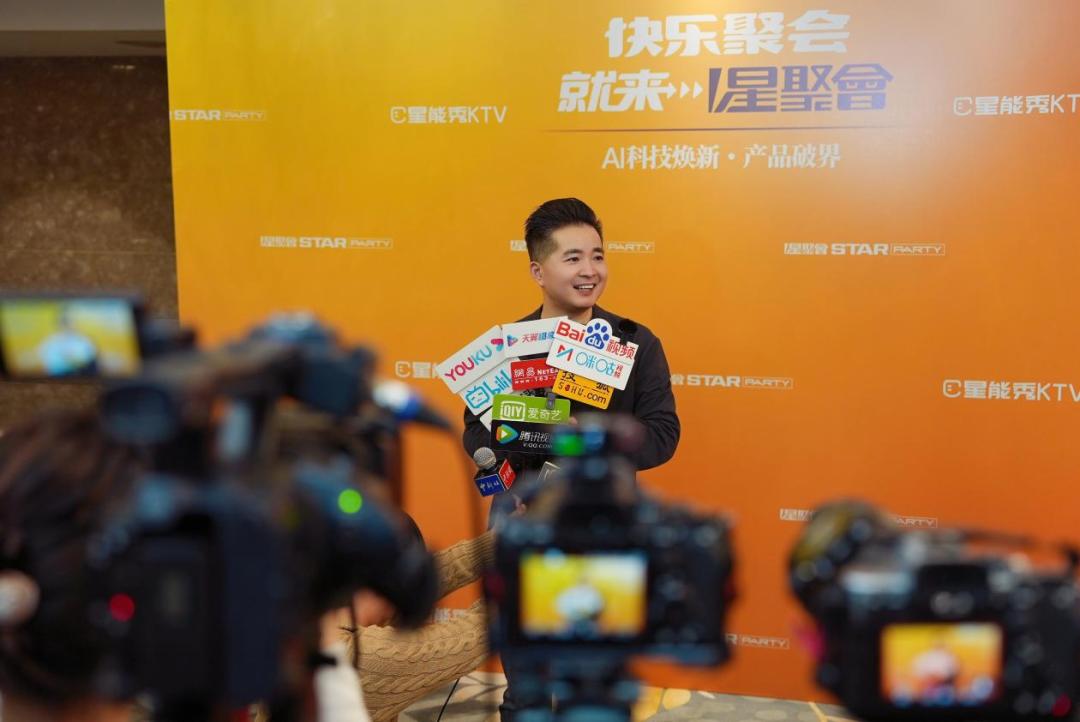
Weng Peimin, the founder of Xingjuhui, being interviewed at the press conference
The function of traditional KTVs focuses on singing. However, in Weng Peimin's view, one can sing anywhere, but gathering definitely requires a special occasion. The reason why the KTV industry was labeled as a "sunset" industry is essentially that the traditional gameplay has become increasingly boring. Xingjuhui's solution to break the deadlock is a set of AI - powered hardcore black technology, covering core functions such as AI intelligent scoring, AI song recommendation, AI pitch correction, and short - video production.
Many people have experienced such an awkward situation: they want to know their real singing level but are too shy to show it in public. Xingjuhui's AI real - time scoring system can score from five dimensions such as pitch accuracy, rhythm, and technique from the perspective of professional musicians. When people can't think of what song to order at a party, the AI song recommendation system can recommend matching songs according to the party occasion and personal preferences, boosting the atmosphere.
In traditional KTV boxes, the microphones are always in the hands of a few singing experts, while the vast majority of ordinary people become spectators during the song - changing intervals. For customers who don't sing very well or even sing out of tune, Xingjuhui's AI pitch - correction function can enable everyone to perform well. It can also automatically reduce noise and match exclusive reverb. After pitch correction, the AI automatic face - swapping function can generate exclusive MVs for customers, which can be uploaded to social networks at any time. While customers show themselves on their WeChat Moments, it is also a nearly cost - free promotion for Xingjuhui.
More interestingly, the three major black technologies have given rise to three innovative gameplay modes.
Firstly, there is the cross - box PK. Based on the AI scoring system, the system can accurately match like - minded singing friends across the country. From Beijing to Shanghai, countless singing friends are willing to have real - time PKs for beer or fruit platters. Driven by the desire to win, they will extend their stay. Besides the real - time PK, the second gameplay mode is the AI King of Singers Contest. Customers can participate in the contest at the store. The system sets up both strength scores and popularity scores, and the daily, weekly, monthly, and quarterly rankings are refreshed in real - time. Xingjuhui's official sets up a prize pool to encourage more people to participate. The last gameplay mode is to win red envelopes by singing together. The official selects several popular songs every day to launch a national co - singing activity. The higher the score, the more red envelopes one can share. The joy of having fun while getting benefits just fits human nature.
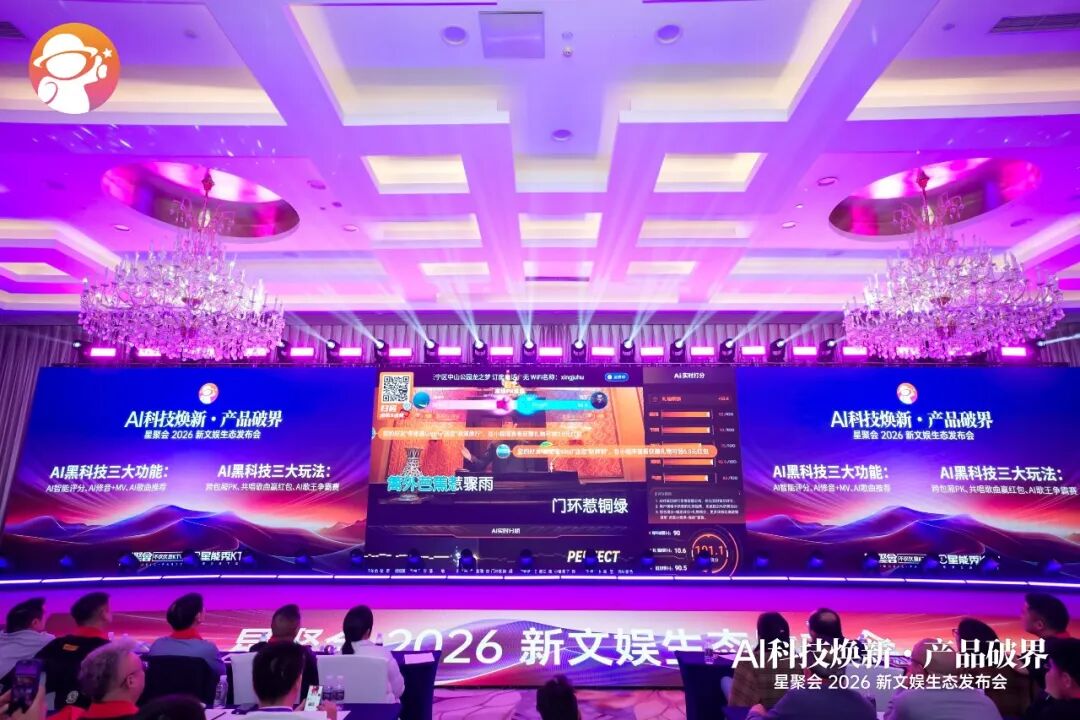
The cross - box PK contest displayed at the press conference
In the business concept of traditional KTVs, technology is not a frequently mentioned term. More people still care about the location and decoration. Of course, these two aspects are important, but Weng Peimin believes that decoration is easy to imitate, and only technology can form a real barrier. Xingjuhui spent three years and invested over 100 million yuan in research and development for this AI black - technology system.
"This is like digging a well. When you dig to 10,000 meters, your competitors may just reach 1,000 meters. If you stop, this lead will be instantly erased. So we must keep digging deeper, to 100,000 meters." Weng Peimin said.
Technology is also an important part of Xingjuhui's "One Body, Two Wings" strategy. In Weng Peimin's view, the "One Body" refers to a replicable talent - training system, which is the foundation for the enterprise's survival and expansion; the "Two Wings" are the enterprise's moats, namely technological strength and brand strength. It is this clear strategy that enables Xingjuhui to break away from the traditional box business with one screen and two microphones and transform the KTV boxes into highly sticky digital spaces.

Not Just Selling Drinks, but Also Engaging in Super - Retail
In addition to the AI black technology, an important plan for Xingjuhui this year is to transform and rebrand existing stores.
When many young people are reluctant to enter KTVs, they may be referring to such traditional stores: due to insufficient funds, the hardware equipment often remains at the level of a decade ago. The UI interface is simple, and the sound is harsh. These stores are completely unable to integrate with current technologies or social ecosystems and can only barely maintain their performance through box fees and drink commissions.
As of the end of 2024, industry research showed that the number of KTV stores in China was approximately between 40,000 and 50,000, and more than 60% of them were facing elimination or transformation. Although this number has been significantly reduced compared to the peak of 120,000 in 2015, the remaining market is still a huge stock market with an annual output value of over 100 billion yuan.
This is also the original intention for Xingjuhui to launch its sub - brand "Xingnengxiu": through systematic management output, it helps those stores that are difficult to renovate under cost pressure to transform quickly. From stronger bargaining power at the supply - chain end, more interesting gameplay and technology in the boxes, to the traffic pool of 30 million active members, and then to the digital operation system, it provides a replicable digital foundation for this highly fragmented and long - term innovation - lacking traditional industry, and also enables the industry to shift from inefficient and involuted stock competition to healthier growth.
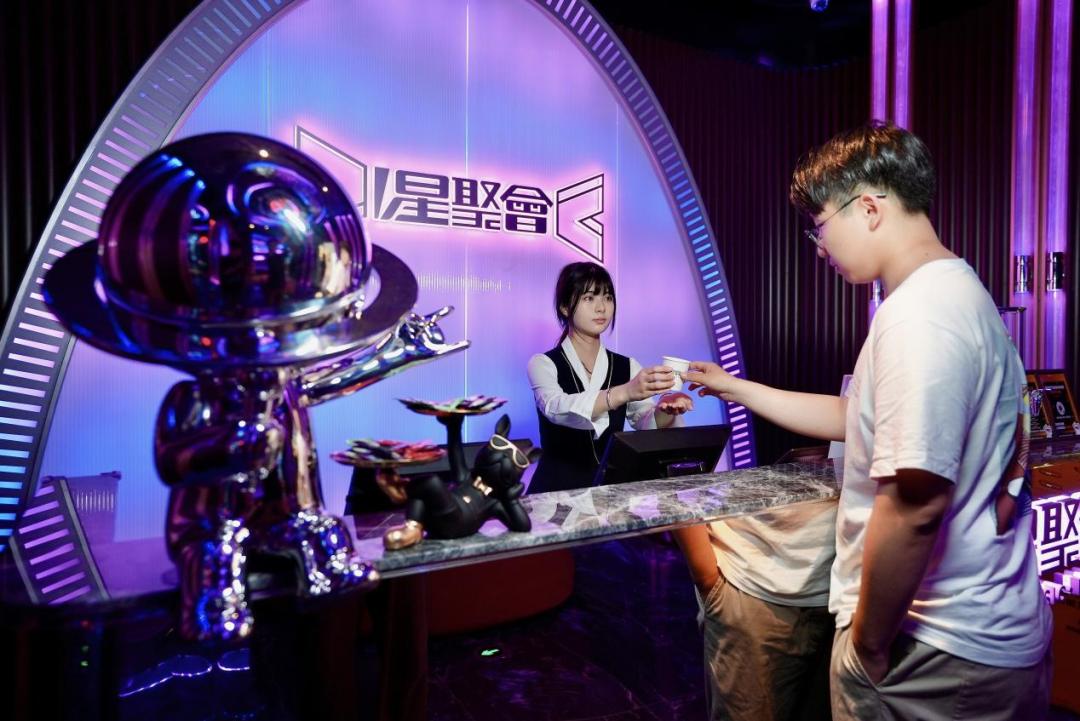
A Xingjuhui store
The biggest change may be in the organization. A thorny problem in traditional single - KTV stores is the employees' ceiling anxiety - in a closed small store, there seems to be no room for growth, which directly leads to the moral risks of employees slacking off, or even engaging in "flying orders" and "black orders". Xingjuhui incorporates these single stores into its large - scale organizational system with a multi - level incentive mechanism. Front - line employees now have the possibility of cross - store and cross - regional career transfers, and their enthusiasm will also increase significantly.
A similar example is Deyou of Beike. Beike used its standardized operation experience accumulated over the years in Lianjia to transform tens of thousands of small real - estate agency stores. Now, Deyou has refreshed the records of the growth rate and scale of domestic real - estate agency chain operations. It attracted 90,000 agents to open more than 10,000 stores within 15 months and has become Beike's most powerful tentacle to cover the offline market.
Revitalizing the rebranded stores depends not only on system empowerment but also on a new business model. This is also one of the reasons why Xingjuhui can attract franchisees: KTVs no longer take box fees and drinks as the core of profit, but super - retail.
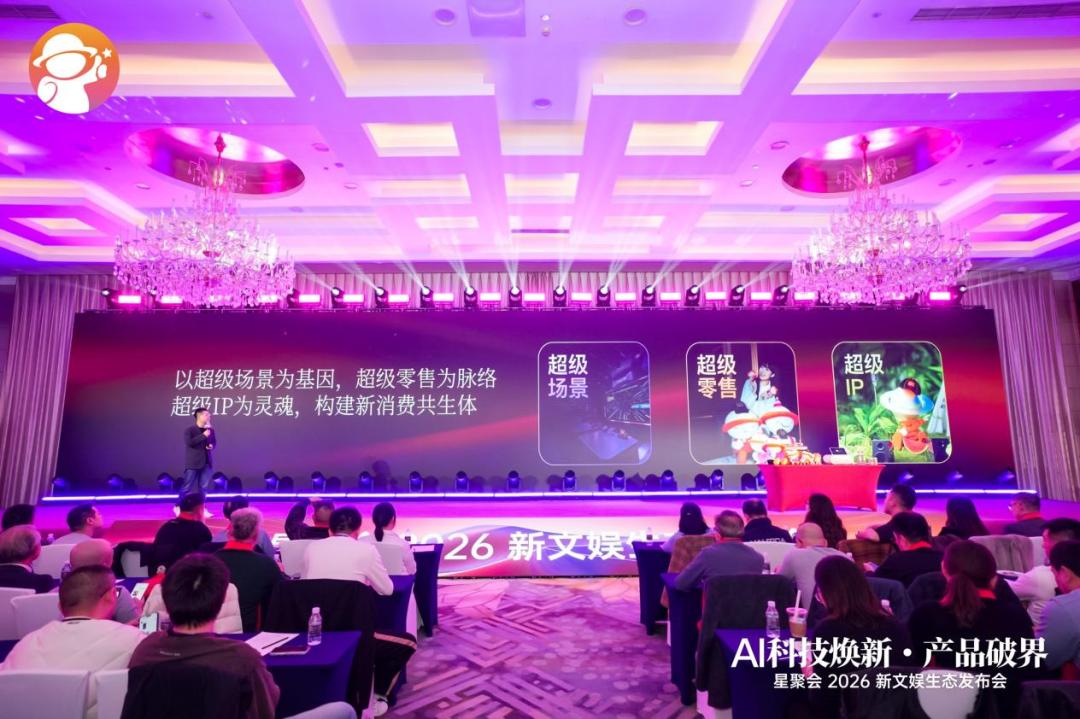
Weng Peimin, the founder of Xingjuhui, explaining super - retail at the press conference
Weng Peimin mentioned the example of ancient times again. After ancient humans returned from hunting, they not only danced and sang but also pulled out ivory and lion teeth and hung them around their necks as mascots. Modern people's love for IP trendy toys such as LABUBU is essentially an extension of the same logic. The "Xingzai" series of IP developed by Xingjuhui is also designed to increase the emotional richness of users in the gathering scenario, so that the happiness that bursts out in the boxes can be permanently preserved.
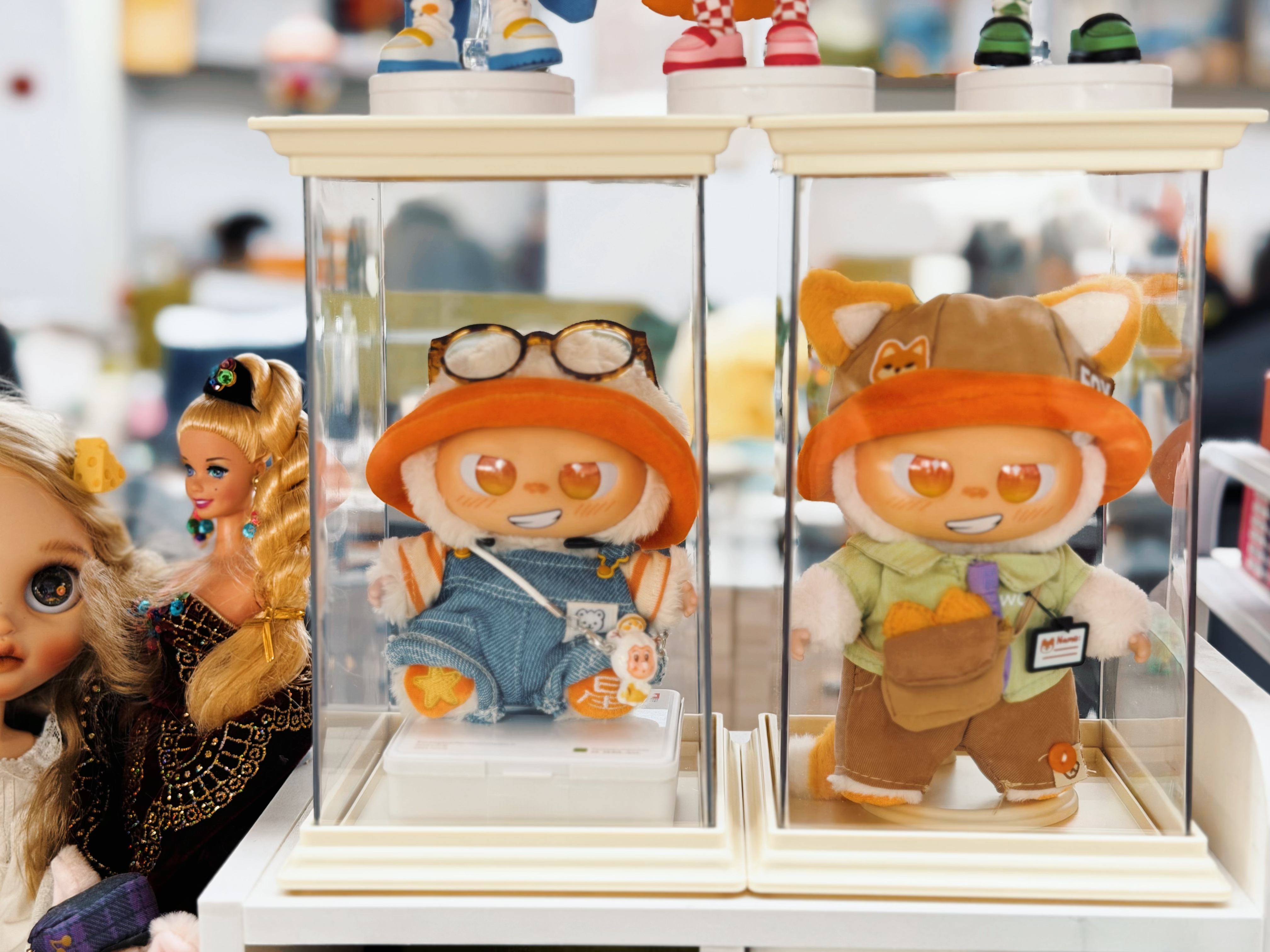
The "Xingzai" series of IP of Xingjuhui
"The premise of all our actions is to address the emotional value in the gathering scenario, and only then comes the revenue." Weng Peimin summarized. Another physical product launched by Xingjuhui is its self - developed intelligent karaoke terminal. This product does not enter the highly competitive consumer - electronics market but precisely targets the social gap of the elderly in terms of health and companionship. The terminal not only allows them to dance to square - dance music but also brings rich companionship value.
The innovation of the "entertainment + retail" model essentially uses the thinking of China's mature Internet industry to re - integrate the fragmented offline entertainment stock. As Weng Peimin said, the success of one enterprise is not enough. Only by revitalizing the entire industry and helping more enterprises achieve long - term success can the real value be realized.

Chinese KTVs Go Global
Xingjuhui's goal is not limited to the domestic market. At the press conference, Xingjuhui announced the first - batch overseas key - market plans and expansion rhythms for 2026, as well as overseas localization implementation plans for product adaptation, service systems, and supply - chain establishment. It is reported that Xingjuhui has steadily explored markets in multiple regions and countries, such as Hong Kong, China, Melbourne, Australia, and Southeast Asia. In the next three years, the brand will continue to strengthen its global layout, aiming for 300 overseas stores. The core is to promote the proven "AI + retail + entertainment" composite model in the domestic market to social enthusiasts around the world.
In terms of going global, Xingjuhui has accumulated a lot of experience. At the end of July 2025, Xingjuhui opened its first overseas store in Shibuya, Tokyo. So far, Weng Peimin's evaluation is that "this store has far exceeded our expectations."
