HORIEN's campus companionship experiment is rewriting the default answer for campus marketing.
At a time when young people's attention is highly fragmented, brands entering campuses is far from a new thing. Music festivals, roadshows, pop-up events, and sponsored performances have almost formed a mature and high-frequency "campus marketing template". However, the more mature the template is, the clearer the problems become: what exactly do brands leave behind after the event ends?
The four accompanying practice sessions of HORIEN sponsoring the Douyin Campus LIVE Program have chosen a slower, less quantifiable path: taking "cute-style companionship" as the entry point, integrating the brand into the real campus life of young people, and becoming a segment of youth stories that can be retold.
If we take these four campus accompanying practices as a whole, it is more like a reverse experiment: in the current era of prevailing traffic anxiety, can brands jump out of short-term stimulation and return to the very nature of "relationships" that require long-term cultivation?
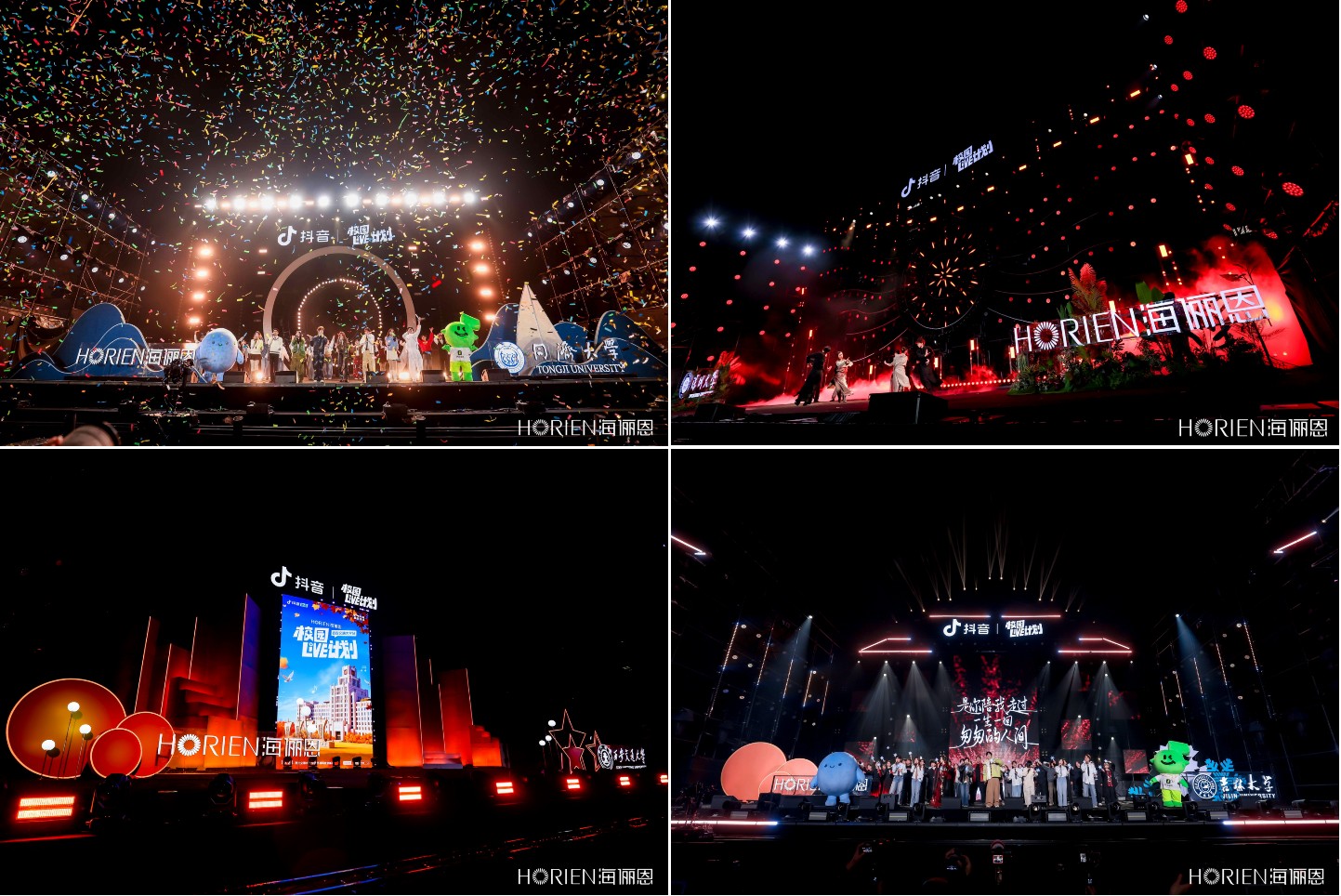
The Shift from "Entering Campuses" to "Integrating into Campuses"
For a long time, traditional campus marketing is essentially a form of "attention leasing".
Brands enter campuses during peak traffic periods such as the school opening season and graduation season, leveraging the scenario advantage of highly concentrated students to complete centralized exposure and topic creation, then leave the campus quickly. The core of this logic is not to build relationships, but to complete phased presence at the lowest possible cost.
The effect of this approach is obvious, but its influence cannot last long. After the event ends, the brand disappears from students' daily experience, leaving only a vague impression rather than a memory that can be retrieved repeatedly.
Surrounded by the flood of information, what young people really lack is an existence that can be deeply bound to their own lives and accompany them for a long time.
HORIEN's current campus accompanying practice is exactly a response to this problem. It does not regard the campus as a traffic field that can be quickly converted, but redefines it as a living field that continuously generates relationships, emotions and memories.
In such a field, only by putting down the dominant posture can brands more easily get the opportunity to be truly accepted. This requires brands to stop clinging to "being seen", and try to integrate into the daily paths of young people, so that the brand can gradually move from being accepted to being familiar and trusted.

From its own development path, this is not an isolated decision of the brand.
No matter the long-term exploration in cultural circles such as traditional Chinese style and ACG circles, or the emotional foundation built around cute IPs and public welfare actions, HORIEN has always been verifying the same question: how to become a "companion" in the growth process of young people, rather than a short-term intruder.
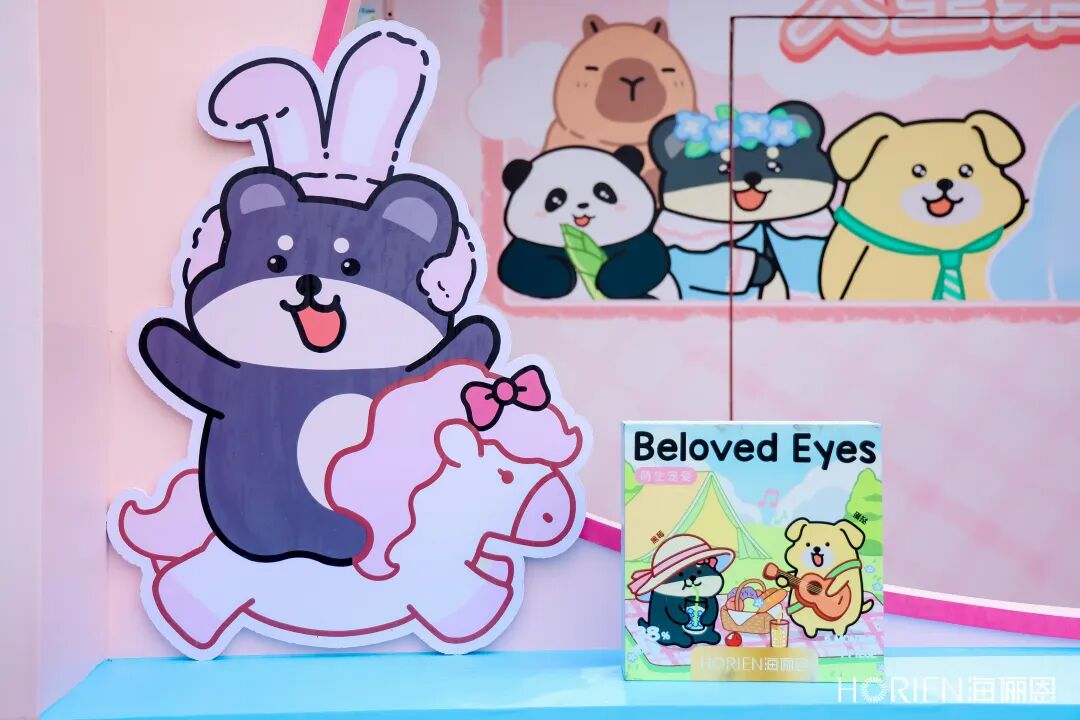
These explorations are scattered in different scenarios, and the campus has become a key node where they converge and are systematically verified, marking that the brand strategy has shifted from single-circle penetration to in-depth participation in the core life stage of young people. This is not only a strategic adjustment, but also a value preposition that wins emotional recognition before young people generate consumption demands.
The Methodology of Cute-style Companionship: Warm Core, Diverse Expressions
The difficulty of campus companionship is far more than "holding an event", but whether the brand can become a reasonable existence. Young people have long been immune to deliberate marketing. Only those natural and sustainable "presence" can cut through the noise and be truly accepted.
This is exactly the "warm core" that HORIEN has always adhered to in the four campus accompanying practices: with the most sincere companionship, to become the irreplaceable "youth partner" in the minds of young people. It does not over-intervene in students' rhythm, but deeply understands the unique culture of each young group, and becomes part of their youth stories in the most sincere way.
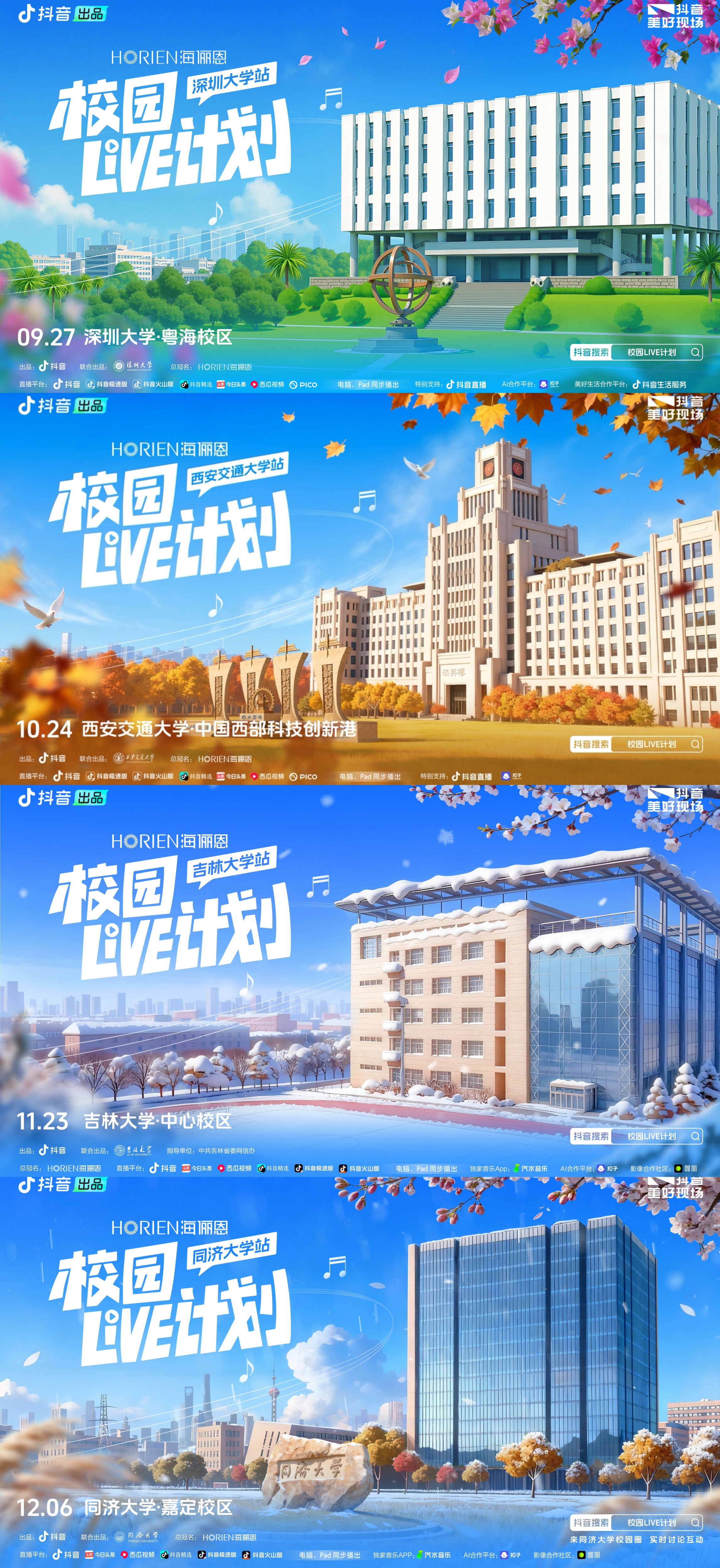
Under this premise, the four campus accompanying practices spanning different cities and universities with different characteristics are connected into a continuously unfolding path:
Starting from Shenzhen University, we first verified the feasibility of "cute-style companionship" in a high-density, fast-paced young field; then at Xi'an Jiaotong University, we completed local adaptation in a campus context with deeper cultural heritage; then at Jilin University, we transformed the companionship concept into practical care to cope with specific environmental challenges; finally, we settled at Tongji University, allowing the expectations accumulated in previous stops to converge naturally and turn into a more relaxed campus resonance.
The importance of this progressive process does not lie in "what was done" at each stop, but in that each stop calibrates the same temperature judgment with real feedback. Although the responses are different, they jointly verify one thing: natural companionship is easier to be accepted.
It is precisely in this way that the IP "Enen" has completed the identity transformation from a brand symbol to a cute campus friend. On the playground of Shenzhen University, under the sycamore trees of Xi'an Jiaotong University, in the snow of Jilin University, and under the ginkgo trees of Tongji University, it is pulled by students to take photos, hugged, and written into the copy of Moments — in these spontaneous interactions completed by students, "Enen" is no longer a brand symbol that needs to be memorized, but a natural, shareable warm segment in their campus life.
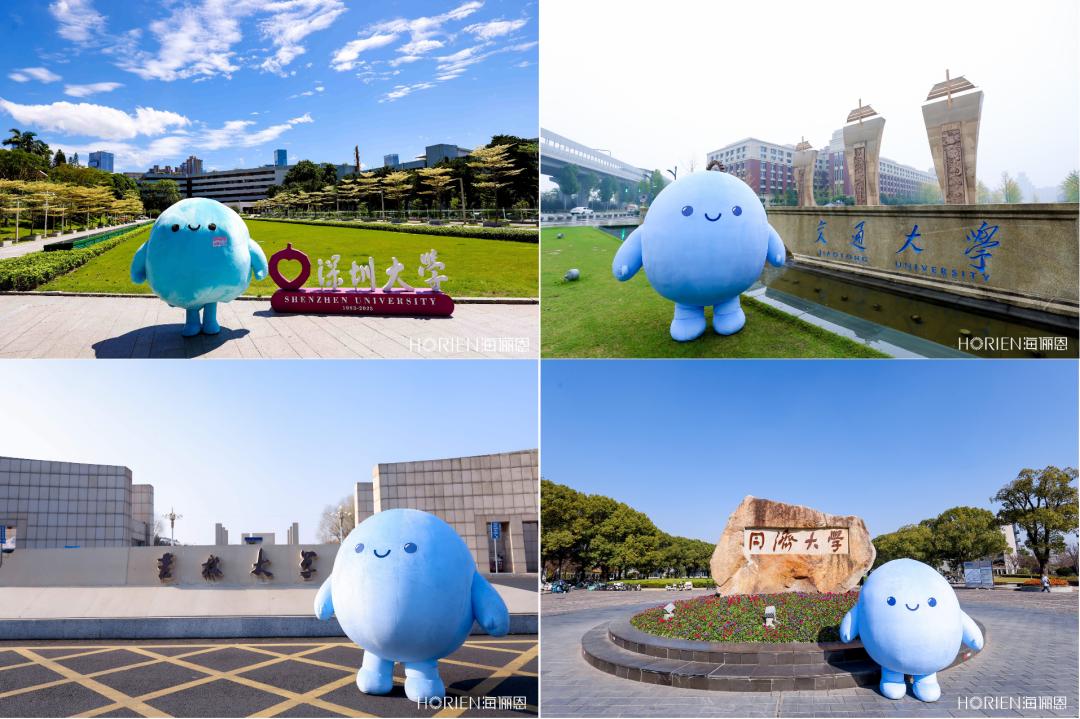
This is also the most realistic test of "cute-style companionship": whether young people are willing to bring you into their own narrative.
From the results, this set of methodology has been verified: the four events have cumulatively covered core groups of multiple universities, the total cross-platform exposure has reached the 10-billion level, the number of online and offline participants has continued to rise, there are hundreds of hot searches on Douyin, and the brand's 5A user asset has increased by more than 30 million cumulatively.
More importantly, Generation Z users have always been the main group of interaction and communication. Brand-related searches, discussions and spontaneous content have continued to ferment during the event cycle, quickly completing the consumer journey from reach, conversion to trust.
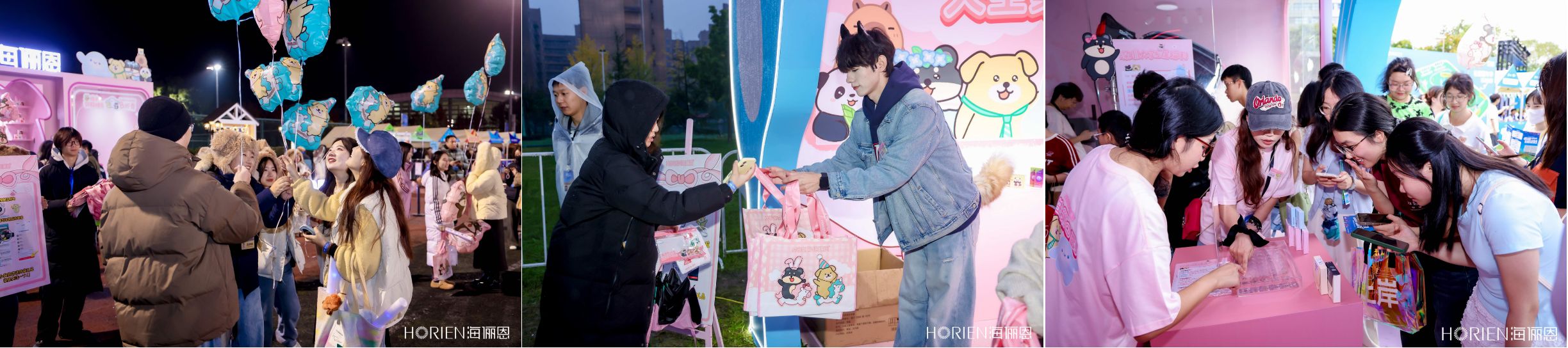
This is exactly the core of HORIEN's successful methodology: it transforms campus companionship from one-off performances at each stop into a rollable and accumulative relationship investment, making every appearance continuously add value to the existing sense of familiarity.
For brands, this is a practice that can stand the test of time better. It gives up short-term memory points, and instead operates a relationship structure that can be amplified by time. In an era when young people are increasingly immune to marketing, this kind of stability has become a scarce resource.
When Companionship is Remembered: The Leap from Short-term Publicity Volume to Long-term Emotional Assets
At present, most campus marketing activities often stop at data review, and narrowly define "value" only with data. Exposure, interaction and conversion are of course important, but when they are taken as the only criteria, brands will fall into a misunderstanding: only pursuing superficial hustle and bustle.
The result is that the publicity volume is getting larger, but the memory is getting thinner.
HORIEN's campus accompanying practice provides another path: taking publicity volume as the starting point to enter the life narrative. What is truly accumulated are three types of assets with long-term significance:
First, it precipitates into a repeatedly confirmable companionship relationship. The brand repeatedly appears in students' daily paths: being encountered by chance, being recorded, being shared, but never asking for response. It does not rely on one strong stimulation to grab attention, but relies on multiple appearances to build a sense of familiarity. As a result, companionship is no longer "one-time emotional reach", but a kind of existence that can be confirmed repeatedly.
Second, it is sublimated into a memory symbol co-created by users. When "Enen" is spontaneously written by students into Moments, short videos and daily narratives, it becomes an emotional anchor: cute, relaxed, warm, and shareable. The key to this transformation does not lie in how exquisite the IP is, but in whether it can enter real life. And "Enen" has realized the leap from "brand asset" to "campus public memory symbol", which makes it, as an IP, not only belong to the brand, but also belong to the common youth of all students.
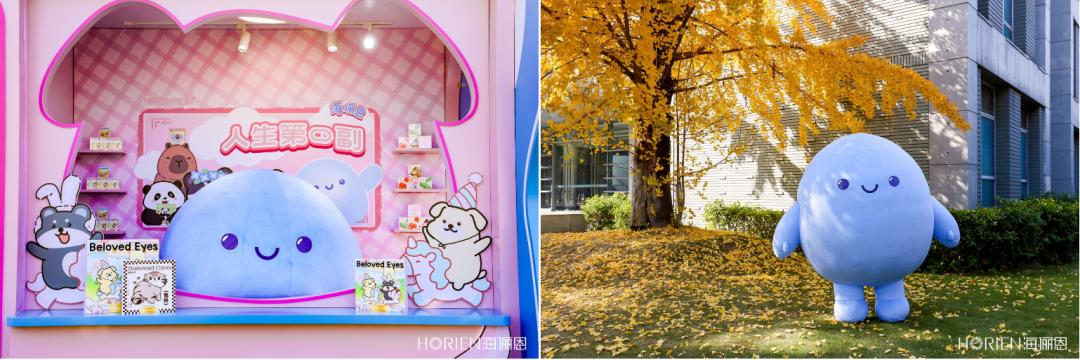
Finally, it is internalized into a mental presence with emotional preference attributes. It is not difficult to find that traditional marketing often stops at "being known and being chosen", but the ultimate goal of the companionship path is to anchor the brand from a consumption option to an emotional dependence in adolescence. This memory-based recognition has the strongest time compound interest, and also forms the real brand moat.
If we look at it from a higher perspective, the industry significance of this path is clearer: In the era of stock competition, what really counts is the ability to embed into the collective memory and cultural narrative of a generation. What young people retain for a long time is often not the loudest brand, but those existences that have truly appeared in their lives and are bound to a certain youth experience.
Therefore, the greater inspiration of this campus practice to the outside world is here: when everyone is chasing the outbreak and presentation of short-term benefits, another more difficult but more worthwhile path is to invest resources in long-term relationships. Become part of their stories, rather than a passerby at a marketing node.
When a brand is written into youth, it gains the power to traverse cycles.