Can you get the "League of Ancients" robot, which is more handsome than male idols, for just 20,000 yuan in the future? Female players are saving money to "marry" their digital boyfriends into their families.
As long as players can stay in the game long enough, it's not a dream for their virtual lovers to step into reality.
At the Hangzhou CP32 Pre Comic Con, Fang Chengyi, a character from the game "The Sleuth of the Ming Dynasty," walked vividly in front of the players.
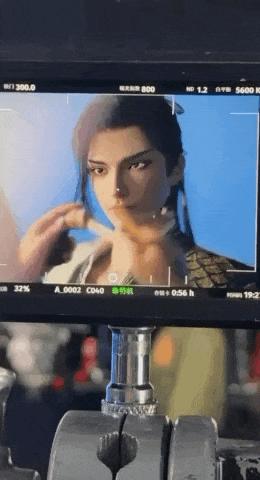
Image source: Xiaohongshu @U Hang
What's even more amazing is that his every move is so lifelike. For example, when the staff was applying makeup to him, he would blink more frequently as the makeup brush approached; when they were tidying his hair, he would slightly dodge as the hair touched his eyes.
The players' productivity and desire to keep playing were instantly boosted. "I'll strive to live until the day when bionic robots can be purchased," "I still haven't found any downsides to being rich," "Now I finally understand why Emperor Qin Shi Huang wanted to live forever."
So, how much money would it cost to bring your virtual lover home one day?
01 How did the first bionic robot of a game character make players want to live another 500 years?
"I'll definitely consider buying it. Even if I can't afford it, I'll definitely give it a try."
There's a lot of hype around robots, but few can really make ordinary people want to own one.
In December 2025, the mobile game "The Sleuth of the Ming Dynasty" and "AheadForm Technology" jointly launched the bionic robot of the game character Fang Chengyi at the Hangzhou CP32 Pre Comic Con. He has skin texture, touch, and even body temperature that are highly similar to those of humans. Thanks to the binocular vision system, he can have "eye contact" with the audience in front of him and make natural facial expressions and head movements through the AI bionic motion algorithm installed. The official of "The Sleuth of the Ming Dynasty" said that this move aims to let players have a "fateful encounter" with their cherished characters and break the barrier between the virtual and the real world.

Image source: The official WeChat account of "The Sleuth of the Ming Dynasty"
As early as September 2025, AheadForm Technology had cooperated with "The Sleuth of the Ming Dynasty" to launch the robot "Elf Xuan." Hu Yuhang (commonly known as "U Hang" on the Internet), the founder of AheadForm Technology, graduated from Xiamen University Tan Kah Kee College with a bachelor's degree and then went to Columbia University to pursue a master's degree and a doctorate. In 2024, Hu Yuhang's research results on face robots were published in "Science Robotics." The cover of the latest issue of "Science Robotics" in 2026 features a bionic robot face created by Hu Yuhang.
He believes that as AI makes breakthroughs in understanding language, videos, and even emotions, interactive robots centered around human faces will become excellent carriers of emotions. He defines it as the "emotion economy" and firmly believes that if robots can understand and convey emotions like humans, their value will far exceed their traditional tool attributes.
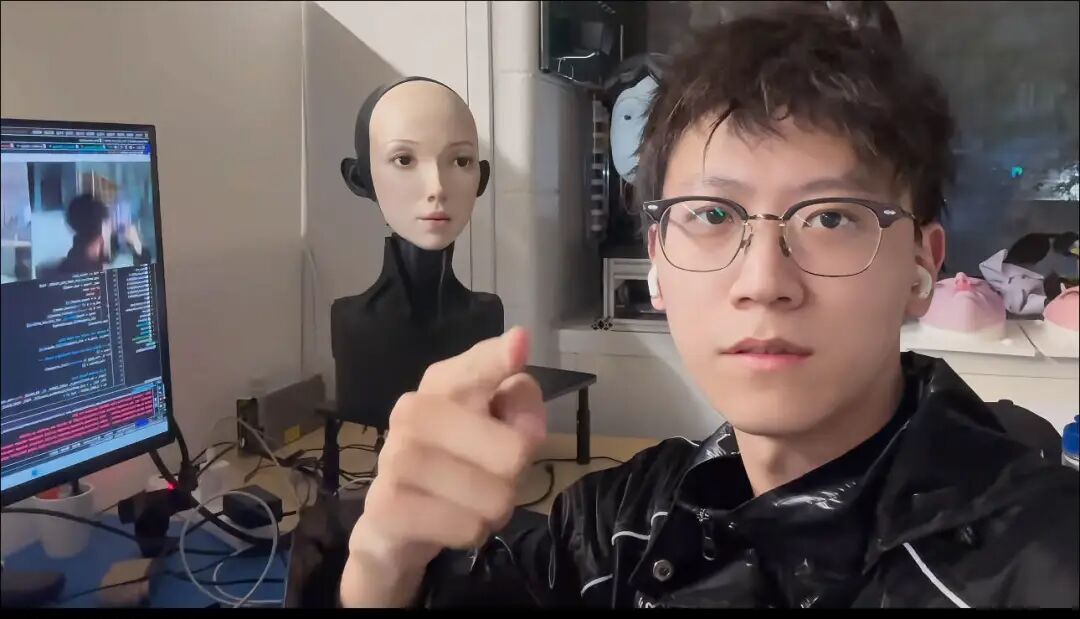
Image source: Xiaohongshu @U Hang
However, Hu Yuhang's face robots were not initially favored by capital. It wasn't until December 2025 that AheadForm Technology received joint investment from China Internet Investment Fund, Ant Group, and other groups. Before that, Hu Yuhang had been sharing his daily experiences of making robots on Xiaohongshu and had gained a large number of virtual shareholders. Collaborating with game IPs also seems to be one of the most popular directions in the comment section.
Fang Chengyi indeed achieved the effect the official wanted and became the most popular character at the CP32 Comic Con. Many players said they could fully accept it. The interviewee, Zuo Weimen, said, "I think it's like the development of game characters from 2D to 3D, and now to bionic robots. It's the continuous development of technology and games." "Now I really have to work hard to make money and live longer." Not only players of "The Sleuth of the Ming Dynasty" want to buy the robot, but players of otome games are also attracted. "I didn't expect it wasn't Diemoe that launched the robot first."
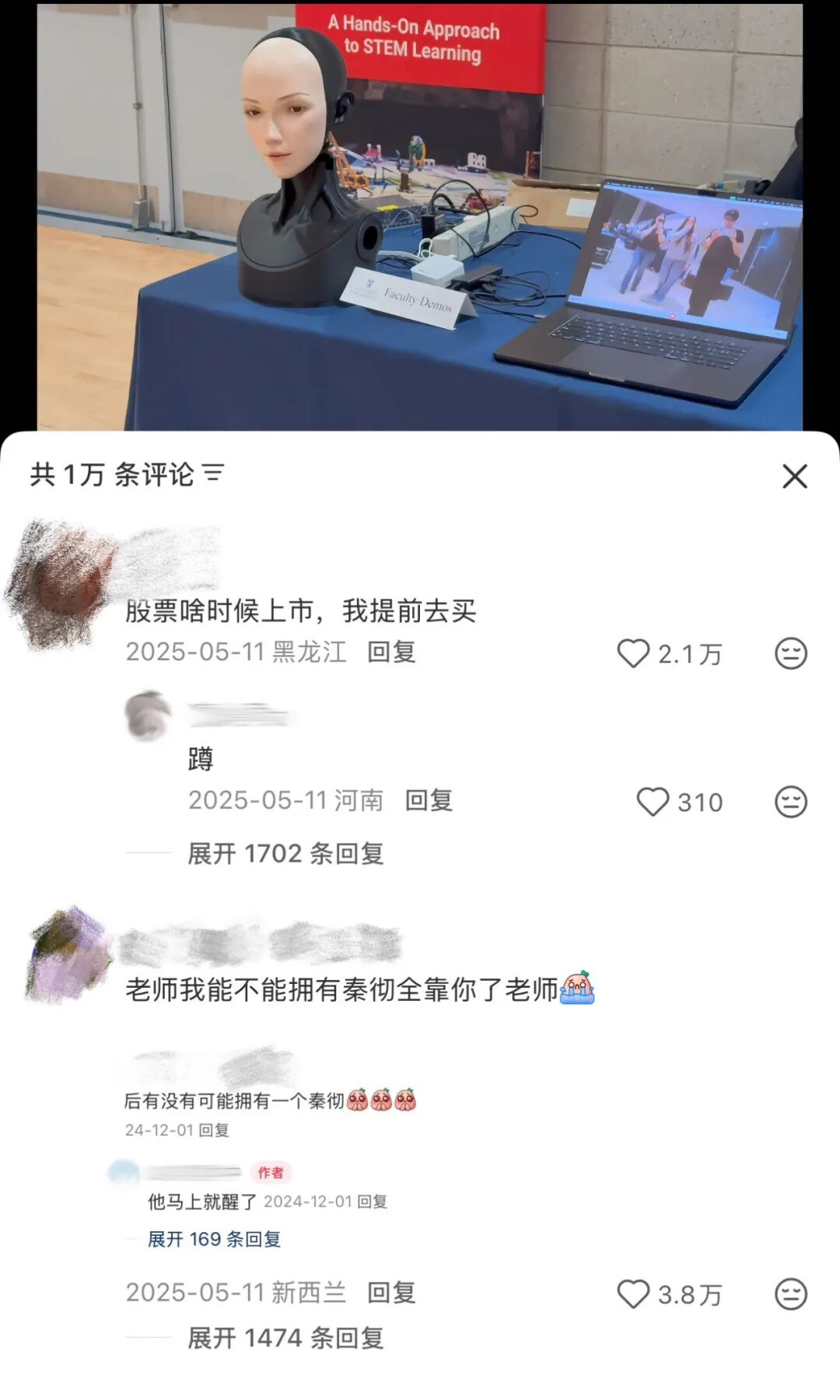
In the otome game player community, the discussion about the physical realization of game characters has always been hot. Most players are "the strictest mothers of bionic characters." Even a slight difference from the character model in the plot will lead to large - scale doubts. The fact that Fang Chengyi has been recognized by otome game players shows that AheadForm Technology's bionic robots are really attractive.
Whether in movies, TV shows, or real life, an unavoidable topic for bionic robots is the "uncanny valley effect." The more a robot looks and acts like a human, the more favorable our impression will be. However, once it approaches a certain critical point, our favorability will suddenly drop. Even the slightest imperfection - such as unfocused eyes, a half - beat delay in lip - syncing, or inconsistent facial expressions and body movements - will be magnified, giving people a sense of a zombie movie where the robot is "almost human but not quite."
So why can Fang Chengyi cross the "uncanny valley" and make people love him uncontrollably? The answer to this question can be compared to the human face.
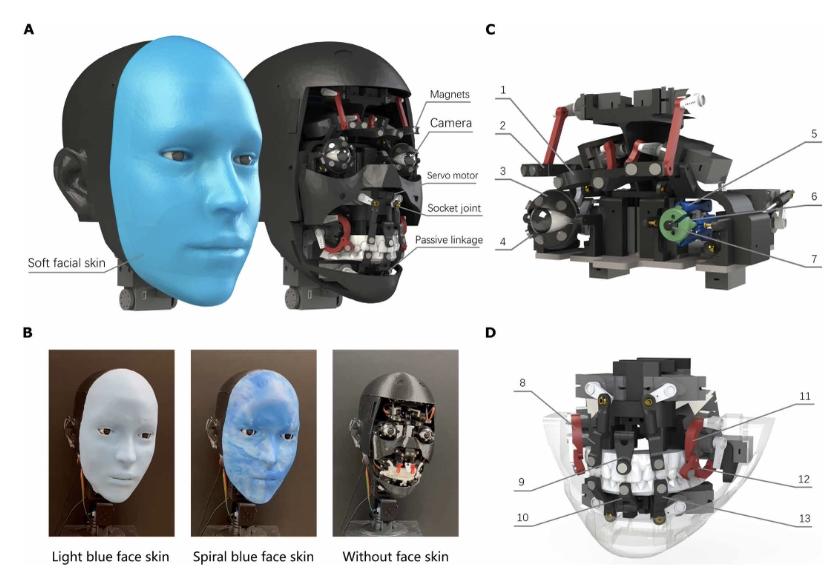
The structure of a face robot is similar to that of a human face, with an outer layer of skin - silicone human skin, a middle layer of bones, and a neural - central "brain" to control facial expressions. To make Fang Chengyi more human - like, AheadForm Technology has made innovations at different levels. In the mechanical face bones, AheadForm Technology has installed thirty movable muscle units in the robot's face, including the eyebrows, eyelids, eyeballs, mouth corners, and jaw. Each has independent control and can make asymmetrical small expressions to simulate the muscle units of a human face. The silicone skin used by AheadForm Technology can be thought of as a "magnetic phone case." You just press the buckle, and it will fit the hardware skeleton, which is convenient for replacement and maintenance and makes the skin's elasticity and details closer to those of a real person.
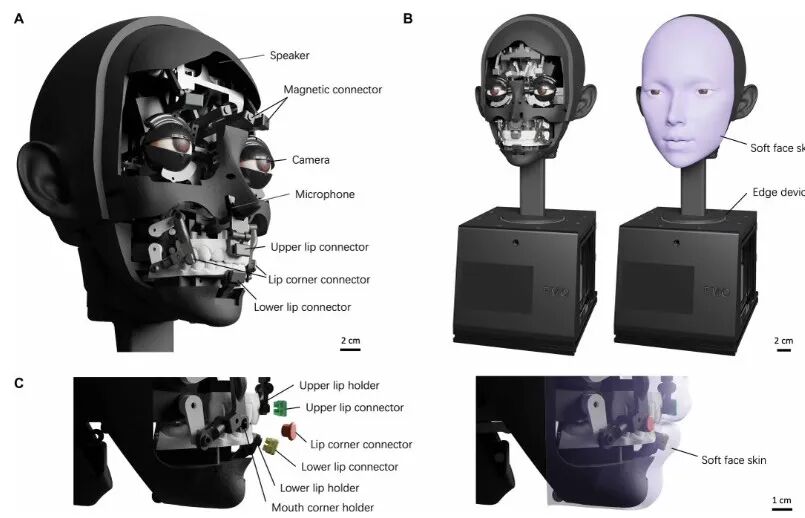
How to make the robot follow the audience's line of sight? AheadForm Technology chose to install a camera in the eyes, which is exactly at the position of the human "pupil," facilitating eye contact and observing the changes in human facial expressions. The robot's "brain" relies on the AI bionic motion algorithm independently developed by AheadForm Technology. Through self - learning of human facial expressions, blinking and smiling become more natural.
As for the price, Hu Yuhang said in a previous interview that the pricing would be calculated based on the production quantity. If mass production is achieved, the price of a single robot will decrease. "It may be more like Pop Mart - not a tool, but a provider of emotional value."

Professor Zhao Hao from the Institute for AI Industry Research at Tsinghua University gave an even more exciting estimated price. "In the next three years, you may only need 20,000 yuan to buy a robot with a 'dexterous face'." The 'dexterous face' robot launched by Zhao Hao's team is also a high - precision face robot that can simulate facial expressions and conduct conversations. The 'dexterous face' is based on digital humans, making the robot's "bones" both rigid and flexible - using 33 "rigid mechanisms + line - driven servos" and allowing the robot to make dexterous facial reactions through a hybrid - drive structure.
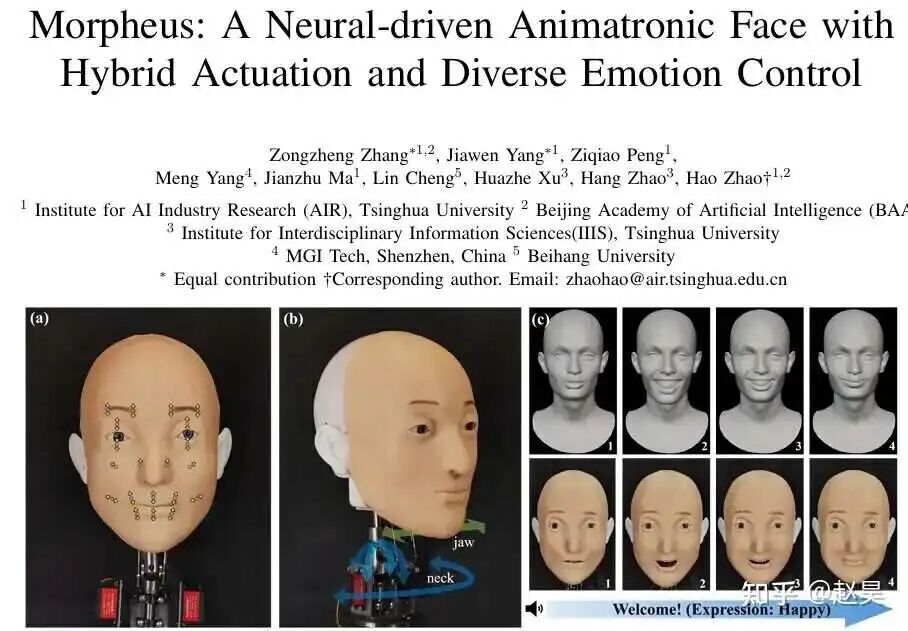
The cost of the current 'dexterous face' varies greatly due to factors such as materials, motors, and computing power. The cost may fluctuate between a few thousand and hundreds of thousands of yuan. However, in China, the so - called "industrial powerhouse," the future pricing of the 'dexterous face' robot may be similar to the cost of hiring human labor. "The current dexterous face robot is like Huawei's triple - fold phone a few years ago" - not everyone can afford it, but there's no worry about sales. Even Apple will launch a foldable screen phone in 2026.
"There are many jobs in the world that require a person to be present. So I always believe that 'having a person there' has great commercial value." In Zhao Hao's blueprint, the future pricing logic will be divided into three levels: the low - end and mid - end products will enter thousands of households as mass - produced consumer goods, while the high - end customized versions may involve the use of aerospace - grade materials and belong to the corporate or high - end customization category. More importantly, when the hardware becomes cheaper, the real value of the robot will depend on its "soul" - that is, the AI capabilities behind it, the degree of personalized customization, and the customized emotional experience it can provide.
Currently, face robots are not a popular research area in embodied intelligence. Compared with researching how to make a robot smile more like a human, enterprises at this stage are more willing to make robots "move" more like humans.
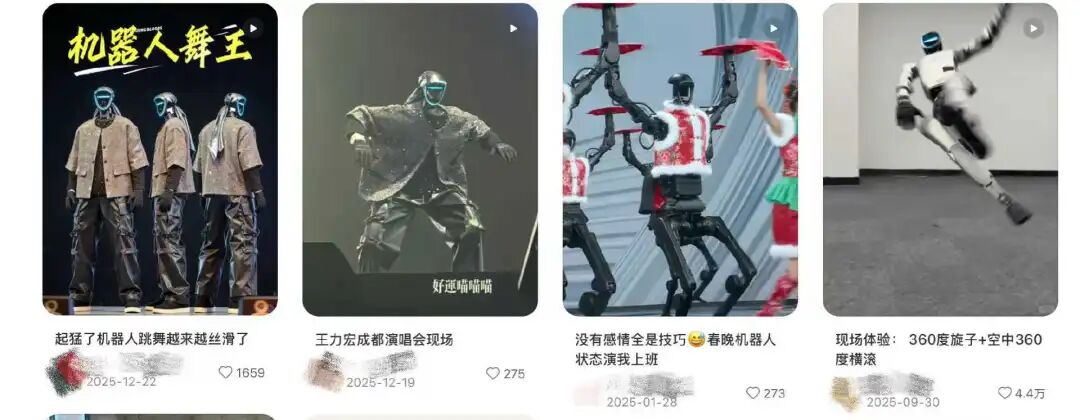
However, the evaluation of these productivity robots is "those whose elderly family members have nothing to do can buy one for them to take care of." Consumers have high hopes for these productivity robots, hoping that they can help us with housework and take care of the elderly. But the current situation is that the biggest use of robots bought by ordinary people is for entertainment. In the current embodied intelligence market, the value of face robots seems to be underestimated.
Why a human face? Robot dogs, AI intelligent toys, etc. all seem to be able to provide emotional value, but Hu Yuhang doesn't think so. "To truly establish an emotional connection like between humans, we must interact in a human way." The difference between face robots and other embodied intelligence is that people can have "empathy" with face robots.
02 "My intention to buy is extremely high. I can accept a price within 400,000 yuan."
There are many players who can empathize with Fang Chengyi.
Zuo Weimen (a pseudonym), a player who participated in the Hangzhou CP32 Pre Comic Con, told Qing Business that when Fang Chengyi turned his face towards her, "it was like fulfilling a dream. I was no longer separated from him by time and space, and we just looked at each other in reality." For her, the sense of companionship provided by the bionic robot is incomparable to that of traditional merchandise such as standees or badges. This form of presentation allows players and characters to make eye contact instead of being separated by a cold screen. "I always thought it was far away, but unexpectedly, I really saw him in reality."

Tiaoyao (a pseudonym), a player, has been accompanying Fang Chengyi since 2019. She has a "very high intention to buy" this bionic robot and "can accept a price within 400,000 yuan." For her, even if the face cannot be highly restored as in the game, the potential problems of the robot are much smaller than those of establishing an intimate relationship with others.
However, to bring the bionic robot into reality, we may also need to consider the subsequent maintenance costs. And this is very likely to follow the operation model of otome games. As players complain, "I have money to buy a villa, but I don't have money to pay the utility bills."
The bionic robot needs regular maintenance, such as cleaning and replacing the silicone skin, calibrating the drive structure, upgrading the software system, etc. It may even involve "beauty" services to keep it in the best condition. In addition to this continuous expense, the robot may also require continuous payment to unlock different storylines. "There are monthly passes, weekly passes, big gift packages, small gift packages, limited - edition gift packages, etc... If you don't pay, its functions are similar to those of a human - shaped Xiaoai Speaker."
