Chinese humanoid robots are triggering a global order boom.
From the technological carnival at the CES exhibition hall in Las Vegas to the implementation of scenarios in the hinterland of the Dubai Desert, from the independent breakthrough in core components to the global layout of complete machine products, the Chinese robotics industry, with humanoid robots at the forefront, is making a leap from 'following' to 'leading' on the new track of global technological competition.
At the 2026 Consumer Electronics Show (CES), Chinese companies achieved outstanding results with full bookings, which confirmed the global market's recognition of 'Made in China'; the 32% annual compound growth rate in the Middle East has become a 'golden testing ground' for Chinese robots to go global; and the in - depth technological exploration of Lingzu Era in the field of core components and the global network layout of Hikrobot have formed the two solid wheels for the Chinese robotics industry to go global across the entire industrial chain.
This wave of going global centered around humanoid robots is not only rewriting the global competition pattern of the robotics industry, but also marking a profound transformation of 'Made in China' from 'product export' to 'technology export','supply - chain export' and even'standard export'.
CES Exhibition: A Wind Vane for Chinese Humanoid Robots to Detonate Global Orders
As the 'technological barometer' in the global consumer electronics field, the 2026 Consumer Electronics Show (CES) in Las Vegas, USA, has become the core stage for Chinese robotics companies to showcase their hardcore strength. A large number of enterprises such as Xingdong Jiyuan, Beijing Humanoid Robot Innovation Center, Tongxin Zhiban, and Galaxy Universal participated in the exhibition collectively. The scale of participation, the iteration speed of exhibits, and the volume of signed orders all reached record highs. Among them, humanoid robots became the absolute focus, completely breaking the previous stereotype of Chinese robots as 'low - end OEMs' in the international market.
At this CES exhibition, Jiasu Jinhua had the largest scale of participation. As the key model presented at this exhibition, Booster K1 is an entry - level embodied development platform officially launched by Jiasu Jinhua in October last year. The person in charge of the company's participation in the exhibition told a reporter from Science and Technology Innovation Board Daily that dozens of Booster K1 robots on display had been fully booked and sold out before the end of the exhibition. This participation in the exhibition was a'stress test' of the product's marketability, and the market demand was very strong.
It is reported that the overseas market accounts for more than 40% of Jiasu Jinhua's business. So far, the cumulative global shipments of the company's products are nearly 1,000 units.
At this exhibition, Tongxin Zhiban Technology (LOVEAXI), an innovative enterprise from Zhongguancun Science City in Beijing, presented its first - created loviPeer emotional companion robot. Yan Jin, the CEO of Tongxin Zhiban Technology, told a reporter from Science and Technology Innovation Board Daily that during this CES trip, its AI companion robot 'lovi' received more market attention than expected and made substantial business progress, which confirmed the huge potential of emotional companion - type AI hardware in the global market.
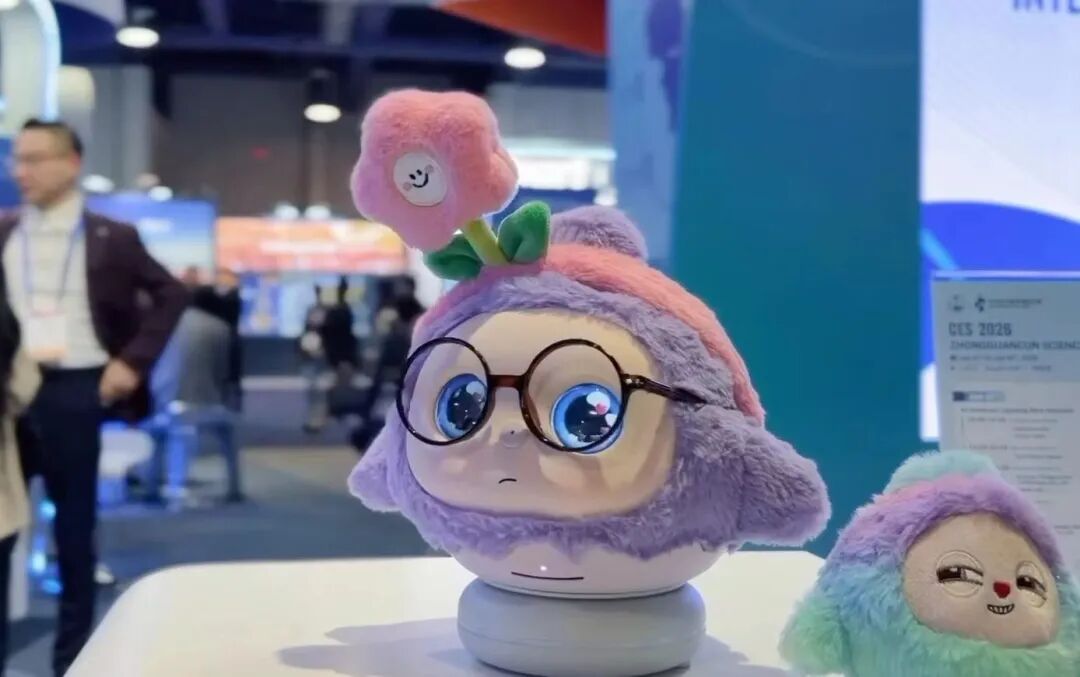
"We achieved immediate results in direct sales and channel expansion. During the exhibition, lovi was simultaneously launched on the Amazon North American platform. Many visitors who experienced the product on - site placed orders through the product link on the spot, expressing their enthusiasm to experience Chinese AI application technology as soon as possible. This has opened up an important online sales channel directly facing consumers for us."
Meanwhile, the exhibition attracted a large number of professional distributors and channel partners from the United States, Europe, Japan, South Korea and other places. They not only showed strong interest in acting as agents for the product, but also put forward many constructive suggestions on product positioning, marketing strategies, and local operations for the company based on the consumption habits of the local market, paving the way for lovi to quickly enter multiple mainstream global markets.
When talking about the core suggestions for AI companion robots to go global, Yan Jin said that based on lovi's practice of covering more than 20 global markets within half a year of its launch, going global for AI companion robots is by no means a simple product export, but a profound journey of 'cultural adaptation'.
There are systematic differences in the demand for companionship between Asian and European - American families. In the Asian market, the product is more inclined to 'growing - type companionship' and is endowed with the tool attributes of an 'educational assistant' or a 'family care bond'. "For example, we observed that many Asian families use lovi as a partner for their children's English learning. In the European and American markets, the demand focuses more on 'existence - type companionship', and the product serves as a 'life partner' or a'mental health partner'. Users value its value in providing emotional support, inspiring inspiration, or combating loneliness. Therefore, when going global, it is necessary to understand the differences in user needs in terms of product positioning, content ecosystem, and communication language, and achieve a local reconstruction from 'function' to 'role'." Yan Jin said.
In addition, several robotics companies participating in the CES also told a reporter from Science and Technology Innovation Board Daily that all the robots displayed on - site were sold out and were very popular.
Behind the hot sales at the exhibition is the strong rise of the Chinese humanoid robot industry in the global market. A recent report released by market research institution Omdia shows that the total global shipments of humanoid robots are expected to reach 13,000 units in 2025. Chinese manufacturers stand out in large - scale mass production and shipments. Among them, Zhiyuan accounts for 39% of the global market share, followed closely by Unitree.
The New Blue Ocean in the Middle East: A Typical Sample of High - end, Scenario - based, and Ecosystem - integrated Development
If the CES is a 'grand parade' for Chinese robots on the global stage, then the Middle East market is a 'typical battlefield' for them to successfully expand overseas. With its unique economic structure, population characteristics, and strategic needs, this region provides an excellent testing ground for Chinese robotics companies to verify products, build brands, and integrate into high - end ecosystems.
The boom in the Middle East market is not accidental, but a precise match between demand and supply. When talking about the characteristics of Middle Eastern customers in product selection and procurement decisions, the person in charge of a robotics distribution platform in Abu Dhabi told a reporter from Science and Technology Innovation Board Daily that the Middle East is a very unique market. In the preliminary research, it was found that the young population in the Middle East accounts for a large proportion. They have a strong preference for technological, scientific, and intelligent products, and are greatly influenced by the Internet. Products shared by online influencers are more likely to be favored. At the same time, because Middle Eastern countries are relatively wealthy, residents have strong purchasing power and prefer products with high unit prices but comprehensive functions.
"So, although we usually only promote one product in the Middle East, which is the latest and most high - end one, because low - end products cannot meet the needs of Middle Eastern consumers and may even damage the brand image."
Then, what are the development prospects and sales trends of robotics companies in the Middle East?
The above - mentioned person in charge introduced that as an emerging market, the Middle East has an annual compound growth rate of up to 32%, with huge consumption potential and high unit prices, providing broad blue - ocean growth space for Chinese sellers. Moreover, there is a general shortage of industry and manufacturing in the Middle East, and most commodities (such as household items, consumer electronics, clothing, etc.) rely on imports. Currently, the sales of robotic dogs in the Middle East are quite good.
In the UAE, Chinese robots have achieved large - scale implementation and become an important force in the local intelligent transformation. According to Ednex Automation, a local distributor in the UAE, through cooperation with Unitree, they are redefining the future mode of human - robot collaboration. "Through our cognitive physical interaction system, which can make intelligent decisions through physical actions, we will demonstrate how these robots can achieve adaptive bionics, enhance human capabilities, and promote the development of social intelligent robots - thus transforming various industries from healthcare to warehousing."
Robots can be applied in various scenarios. "It can replace the work of supermarket cashiers," he explained. "For fruits or vegetables, these robots are equipped with feedback sensors. They can pick up bags, check the goods, immediately label them, and add them to your checkout bill."
Shao Yuanxin, co - founder and COO of Lingzu Era, a supplier of robot joint modules, told a reporter from Science and Technology Innovation Board Daily that countries with strong economic strength such as the UAE and Saudi Arabia attach more importance to the performance attributes of robots and mainly purchase complete machine products from brands such as Unitree, Zhiyuan, and Zhongqin. Currently, the demand for joint modules is relatively low, "because their R & D capabilities in the field of robotics are relatively weak. In unstable regions of the Middle East, more complete machines are needed to perform dangerous tasks."
Behind the interest in Chinese robots, Middle Eastern countries represented by the UAE and Saudi Arabia are accelerating the process of industrial transformation. The UAE has launched the Artificial Intelligence Strategy 2031, clearly setting the core goal of making the country a global leader in the field of artificial intelligence by 2031.
On November 12, during the first Abu Dhabi Smart and Autonomous Technology Week, the 2025 Asia - Pacific Robot World Cup was opened in Abu Dhabi, which is the largest - scale robot competition in the Gulf region to date. In this Robot World Cup, many Chinese companies provided technical support. The boxing competition robots were provided by Unitree, and the motion - capture technology hardware for the 5V5 football match was provided by Jiasu Jinhua.
When talking about why they chose Chinese robots as technical providers, Hamad Obeid, the chairman of the 2025 Asia - Pacific Robot World Cup and an associate professor in the Department of Mechanical and Nuclear Engineering at Khalifa University, told a reporter from Science and Technology Innovation Board Daily: "When I visited China in 2025, I was deeply impressed by China's achievements in artificial intelligence technology, especially in the field of robotics. China's embedded artificial intelligence has developed well. Technology plays an important role in the preparation of the Robot World Cup. We need robots with strong performance, fast response, easy programming, and the ability to get up by themselves after falling. Currently, only Chinese robots can meet our requirements."
Regarding the attention to Chinese robots and other fields, Stefan Kracksnar, a competitiveness development consultant at the Abu Dhabi Department of Economic Development, once told a reporter from Science and Technology Innovation Board Daily: "We foresee a huge market in the field of artificial intelligence in the future. Therefore, we have established the Abu Dhabi Smart and Autonomous Vehicle Industry Cluster (SAVI) to attract technology providers and leading companies in the fields of aerial autonomous driving, land driverless taxis, and even maritime water taxis. In addition, robotics and embodied intelligence technology are the key areas of focus for SAVI, and Chinese companies play a very important role in these fields. We hope that these technologies can be commercially deployed and applied in daily life."
In addition, the UAE has also established the UAE Robotics and Automation Association (RAX) and plans to deploy more than 200,000 robots, with the goal of making the robotics industry contribute 9% to the GDP by 2030.
Core Components as the Underlying Support
The rapid rise of Chinese robot complete machines in the global market is underpinned by the strong competitiveness that China has established in core components and the supply chain.
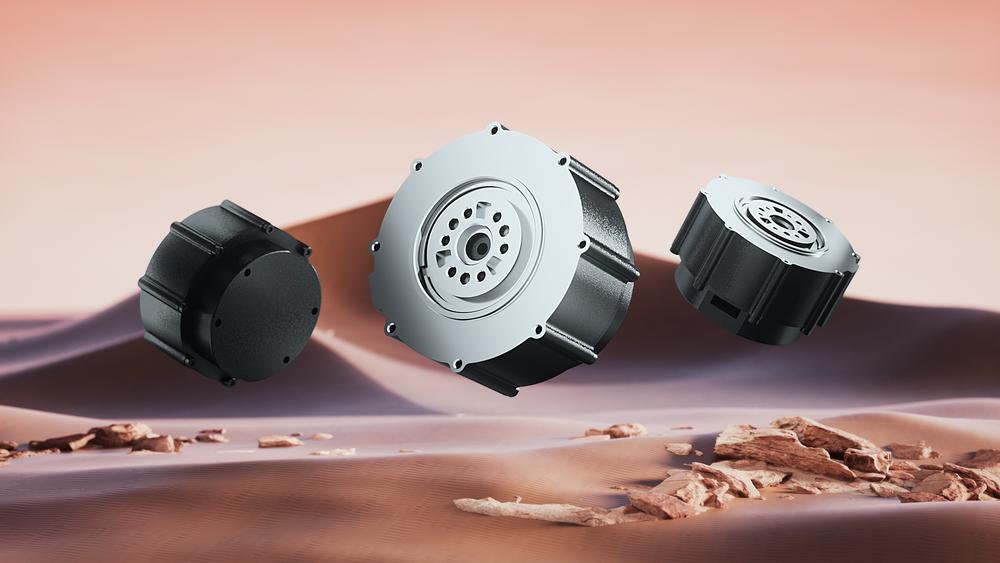
This is vividly reflected in the story of Lingzu Era going global. As a supplier focusing on the "motion heart" of robots - joint modules, Lingzu Era achieved the goal of shipping more than 100,000 units throughout 2025, and its customers cover almost all mainstream Chinese robot complete - machine enterprises. Its overseas shipments of about 26,000 units with high gross profit further demonstrate that Chinese core components have been recognized for their value in the global high - end market.
The global customer list of Lingzu Era is very convincing. According to Shao Yuanxin's introduction to a reporter from Science and Technology Innovation Board Daily, it not only includes institutions and companies in the United States representing the world's top R & D strength, such as PI (Physical Intelligence), Stanford University, and Hugging Face, but also covers robotics companies in countries such as France, the UK, Japan, and South Korea, as well as regional technology giants like VinMotion under the Vietnamese VinGroup. This clearly shows that in the global robotics innovation network, high - performance Chinese core hardware has become one of the basic and default choices.
Shao Yuanxin's thinking on overseas market layout is very representative: focus on developing countries with good economic conditions and a willingness to build an image of cutting - edge technology, such as Vietnam, Singapore, Japan, South Korea, and Australia. The industrial support logic in these regions is similar to that in China, and the market potential is huge. In terms of customer types, overseas demand is mainly divided into three categories: first, robot body manufacturers, which are the core customer group; second, scientific research institutions, which use the products for laboratory R & D, agricultural machinery automation, and other projects; third, DIY individual players, who are the main audience for overseas retail business. They will use joint modules to make self - made simulators, automatic bicycles, and other equipment. However, in mature automation industries such as the automotive, agricultural machinery, and sweeping - machine industries overseas, most use complete "Made in China" equipment and rarely purchase joint modules separately. The proportion of this part of the business is very low.
Lingzu Era practices the "technology - driven" and "in - depth service" models during the process of going global. The company does not have a large full - time sales team, but relies on technical engineers to directly connect with customers. The co - founder personally led the technical team to visit Vietnam, the United States, Europe and other places to deeply understand the local culture and work habits to ensure smooth communication. In terms of local adaptation, they not only ensure that the product manuals and debugging tools support professional bilingual (at least English) versions, but also emphasize integrating into international practices in terms of working language and communication methods.
Hikrobot focuses on machine vision, mobile robots, and articulated robot products and solutions. Feng Libo, the overseas head of the company, told a reporter from Science and Technology Innovation Board Daily that the company's overseas layout attaches importance to the sustainability of local automation and intelligent needs. It hopes that its product solutions can serve local factories/warehouses in the long term, helping them achieve long - term business success and sustainable social value. It deploys the overseas market more with the thinking of doing real - world business.
According to Feng Libo, the company started its overseas business in 2017 and pays attention to local operations. In terms of localization, it has established branches in the Netherlands, France, Germany, Hungary, South Korea, Japan, Singapore, Malaysia and other places (as of July 2025). Its business network has covered more than 50 countries and regions around the world, and it is actively exploring the market and building an ecosystem.
The products are applied in the global factories of international enterprises. The customers are mainly enterprises, and the industries cover automotive, lithium - battery, retail, e - commerce, pharmaceutical distribution, semiconductor, consumer electronics, etc. The countries where large - customer projects are located include South Korea, Japan, Germany, France, Spain and other places.
Facing Challenges: A Long March of Certification, Ecosystem Building, and In - depth Localization
Despite the strong momentum, it is by no means a smooth journey for Chinese robots to go global. Both complete - machine manufacturers and component suppliers are facing a series of challenges from market access to cultural integration. The sharing of Feng Libo, the overseas head of Hikrobot, deeply reveals the complexity of implementation in mature markets (especially in Europe and the United States).
Feng Libo admitted that there are many practical problems in the project implementation process. For example, large overseas enterprises have requirements for enterprise employment, sustainable development, product certification, and safety. In addition, in the European and American markets, the automation level is high, and there is a complete manufacturing ecosystem. Products also need to conform to the local ecosystem and automation market (such as the ecosystems of Siemens and Rockwell).
"