Chinesische Humanoidroboter entfachen weltweite Bestellungen
From the technological orgies at the CES in Las Vegas to the practical implementation of scenarios in the desert of Dubai, from independent relief in the core components to the global expansion of complete machine products - the Chinese robotics industry is at the forefront with humanoid robots and manages to make the leap from the role of follower to the leading position on the new track of global technological competition.
At the International Consumer Electronics Show (CES) 2026, the Chinese contingent achieved impressive results with full bookings, which confirms the global market's recognition of Chinese intelligent manufacturing. The annual growth rate of 32% in the Middle East makes this region the "golden test site" for Chinese robotics companies. The technological expertise of Lingzu Times in the field of core components and the global network expansion of Hikrobot form the two solid pillars for the Chinese robotics industry's entry into the world markets.
This wave of expansion based on humanoid robots not only changes the competitive situation in the global robotics industry, but also marks the profound transformation of Chinese intelligent manufacturing from "product export" to "technology export", "supply chain export" and even "standard export".
The CES as a Guide: Chinese Humanoid Robots Ignite Global Orders
As the "technological barometer" in the global consumer electronics field, the International Consumer Electronics Show (CES) 2026 in Las Vegas, USA, was the central stage for Chinese robotics companies to demonstrate their hard core competencies. A series of companies such as Xingdong Jiyuan, Beijing Humanoid Robot Innovation Center, Tongxin Zhiban and Yinhe Tongyong participated in the fair together. The scale of participation, the iteration speed of the exhibits and the number of contracts concluded all reached record levels. The humanoid robots were the absolute focus and completely broke the previous rigid perception of the international market of Chinese robots as "low - value contract manufacturers".
At this CES, the exhibition group of Acceleration Evolution was the largest. As the key model of the fair, the Booster K1 is an entry - level Embodied Development Platform, which was officially presented by Acceleration Evolution in October last year. The fair representative of the company told a reporter from the "Science and Technology Innovation Board Daily" that all about ten or so Booster K1 robots shown at the fair were already sold and reserved before the end of the fair time. This fair participation was a "stress test" for the marketability of the product, and the market demand was very strong.
It is known that the share of the foreign market of Acceleration Evolution is over 40%. So far, the company has delivered nearly 1,000 devices worldwide.
At this fair, the innovative company Tongxin Zhiban Technology (LOVEAXI) from Beijing Zhongguancun Science City presented its newly developed loviPeer Emotional Companion Robot. The CEO of Tongxin Zhiban Technology, Yan Jin, told a reporter from the "Science and Technology Innovation Board Daily" that the AI - Companion Robot "lovi" achieved above - average market attention and concrete business progress during this CES trip, which confirmed the enormous potential of emotional companion AI hardware in the global market.
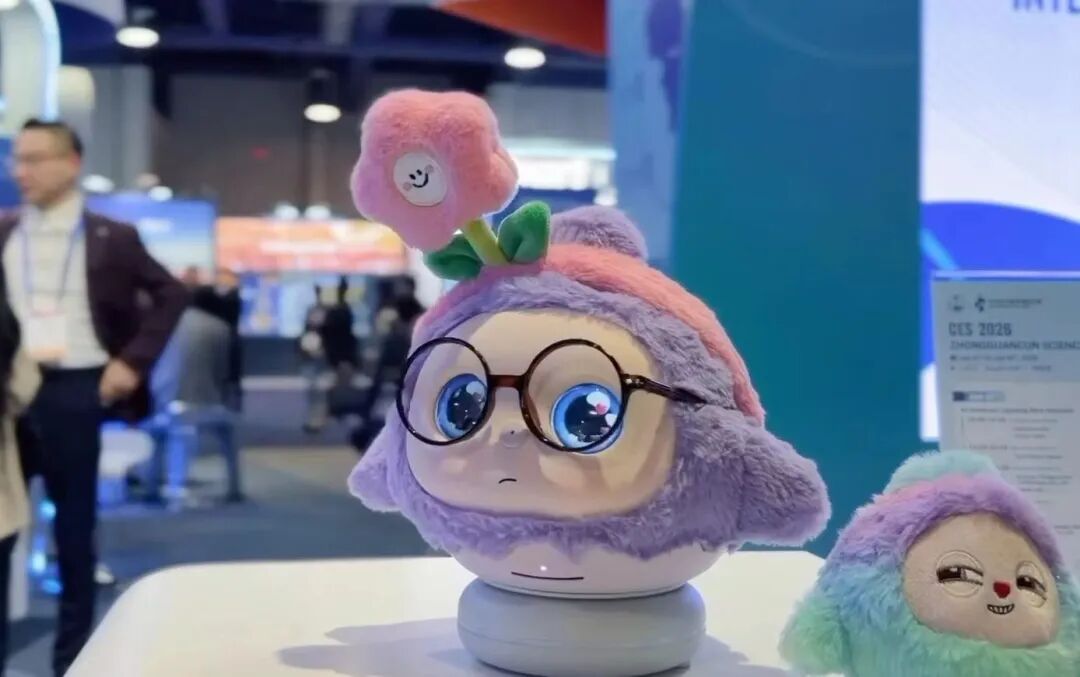
"We have achieved immediate results in terms of direct sales and channel expansion. During the fair, lovi was simultaneously launched on the Amazon North America platform. Many visitors who had tested the product on - site immediately placed orders via the product link and showed their enthusiasm to experience Chinese AI application technology as soon as possible. This has opened an important online sales channel directly to consumers for us."
At the same time, the fair attracted a large number of professional dealers and sales channels from the United States, Europe, Japan, South Korea and other regions. They not only showed great interest in representing the product, but also gave many constructive suggestions regarding the local market consumption habits for the company's product positioning, marketing strategy and local operation mode, which paved the way for lovi to quickly penetrate into several major global markets.
When asked about the key suggestions for the expansion of AI - Companion Robots abroad, Yan Jin said, based on the practice of lovi, which expanded into more than twenty markets worldwide within six months after market launch, that the expansion of AI - Companion Robots was not simply product export, but a profound journey of "cultural adaptation".
There are systematic differences between the companionship needs in Asian and Western families. In Asian markets, the product tends to be more of a "growth - oriented companion" and is provided with the tool function of an "educational helper" or a "bond for family care". "For example, we have observed that many Asian families use lovi as an English learning partner for their children. In Western markets, the focus is more on 'existential companionship', and the role of the product is more of a 'life companion' or a 'partner for mental health'. Users attach more importance to the emotional support, inspiration or prevention of loneliness that the product offers. Therefore, when expanding into the world markets, the different needs of users must be recognized in product positioning, content ecosystem and communication, and a local transformation from 'function' to 'role' must be carried out." said Yan Jin.
In addition, several robotics companies participating in the CES told a reporter from the "Science and Technology Innovation Board Daily" that all the robots shown at the fair were sold out like hotcakes and were very popular.
Behind the strong sales at the fair lies the strong rise of the Chinese humanoid robotics industry in the global market. A recently published study by the market analysis service Omdia shows that the total delivery volume of humanoid robots worldwide is estimated to reach 13,000 units in 2025. Chinese manufacturers stand out in mass production and delivery volume, with Zhiyuan accounting for 39% of the global market share and Unitree closely following.
The Middle East as a New Growth Field: A Typical Example of High - Quality, Scenario Adaptation and Ecosystem Integration
If the CES is regarded as a kind of "military parade" of the Chinese robotics industry on the world stage, then the Middle East is the "typical battlefield" for a successful entry into foreign markets. Due to its unique economic structure, population characteristics and strategic needs, this region offers Chinese robotics companies the perfect test environment to validate their products, strengthen their brands and integrate into high - quality ecosystems.
The rise of the Middle East is not a coincidence, but the precise match between supply and demand. When asked about the characteristics of Middle Eastern customers in product selection and purchase decision - making, the head of a robot distribution platform in Abu Dhabi told a reporter from the "Science and Technology Innovation Board Daily" that the Middle East was a very special market. In the preliminary investigation, it was found that the proportion of young people in the Middle East was very high. They were very interested in technological, scientific and intelligent products. Since young people were strongly influenced by the Internet, products shared by online influencers would be more preferred. At the same time, the countries in the Middle East were relatively rich, the population had high purchasing power and preferred products with high cost - performance and a variety of functions.
"Therefore, we usually only recommend one product in the Middle East, namely the latest and highest - quality one. Low - price products cannot meet the requirements of consumers in the Middle East and would rather damage the brand image."
So, what are the development prospects and sales trends of robotics companies in the Middle East?
The above - mentioned head explained that as an emerging market with an annual growth rate of 32%, the Middle East had huge consumption potential and high average sales prices, which opened up a broad growth field for Chinese sellers in an as - yet untapped market. Since there was generally a lack of industry and manufacturing capacity in the Middle East, most goods (such as household goods, consumer electronics, clothing, etc.) were dependent on imports. Currently, robot dogs are achieving good sales results in the Middle East.
In the United Arab Emirates, Chinese robots have already achieved large - scale implementation and are an important force in the local digital transformation. According to the local Emirati distributor Ednex Automation, the cooperation with Unitree will re - define the future form of human - robot cooperation. "Through our cognitive physical interaction system, which is able to make intelligent decisions based on physical actions, we will show how these robots realize adaptive bionics, improve human abilities and drive the development of social intelligent robots - and thus revolutionize industries from healthcare to warehousing."
Robots can be used in different scenarios. "They can take over the work of supermarket cashiers," he explained. "For fruits or vegetables, these robots are equipped with feedback sensors. They can pick up bags, check the goods, immediately attach a label and then add them to the cash register."
Shao Yuanxin, co - founder and COO of Lingzu Times, a provider of robot joint modules, told a reporter from the "Science and Technology Innovation Board Daily" that economically strong countries such as the United Arab Emirates and Saudi Arabia were more interested in the show function of robots and mainly purchased complete machine products of the brands Unitree, Zhiyuan and Zhongqin. The demand for joint modules was currently still low, "because their capabilities in the field of robot development were relatively weak. In unstable regions in the Middle East, complete machines are more needed to perform dangerous tasks."
Behind the interest in Chinese robots is the fact that countries in the Middle East such as the United Arab Emirates and Saudi Arabia are accelerating their industrial transformation. The United Arab Emirates has already presented the AI Strategy 2031 and set the goal of becoming a world - leading country in the field of artificial intelligence by 2031.
On November 12, during the first Abu Dhabi Smart and Autonomous Systems Week 2025, the Asia - Pacific Robot World Cup in Abu Dhabi, the largest robotics tournament in the Gulf region so far, opened. At this robotics tournament, many Chinese companies provided technical support. The box robots were supplied by Unitree, and the hardware for the motion recording technology in the 5V5 football game was provided by Acceleration Evolution.
When asked why they had chosen Chinese robots as technology providers, Hamad Obeid, chairman of the Asia - Pacific Robot World Cup 2025 and professor at the Department of Mechanical and Nuclear Engineering of Khalifa University, told a reporter from the "Science and Technology Innovation Board Daily", "When I was in China in 2025, I was impressed by China's achievements in the field of artificial intelligence, especially in the field of robotics. The development of embedded artificial intelligence in China is very good." Technology plays an important role in the preparation of the robotics tournament. One needs robots with high performance, fast reaction, easy programmability and the ability to get up by themselves when they fall. So far, only Chinese robots are able to meet these requirements.
Stefan Kracksnar, advisor for the competitiveness of economic promotion in Abu Dhabi, told a reporter from the "Science and Technology Innovation Board Daily" regarding the attention to Chinese robotics and other fields, "We see huge market potential in the future of the field of artificial intelligence. Therefore, we have founded the Abu Dhabi Smart and Autonomous Vehicle Industry Cluster (SAVI) to attract technology providers and leading companies in the fields of autonomous aviation, autonomous land vehicles and even watercraft. In addition, robotics and embodied intelligence technologies are key areas of SAVI, and Chinese companies play a very important role in these areas. We hope that these technologies can be commercially used and integrated into daily life."
In addition, the United Arab Emirates has founded the Emirates Robotics and Automation Association (RAX) and plans to deploy over 200,000 robots. The goal is that the contribution of the robotics industry to the GDP should reach 9% by 2030.
The Core Components as the Basic Support
The rapid expansion of Chinese complete robot machines in the global market is based on China's strong competitiveness in terms of core components and supply chains.
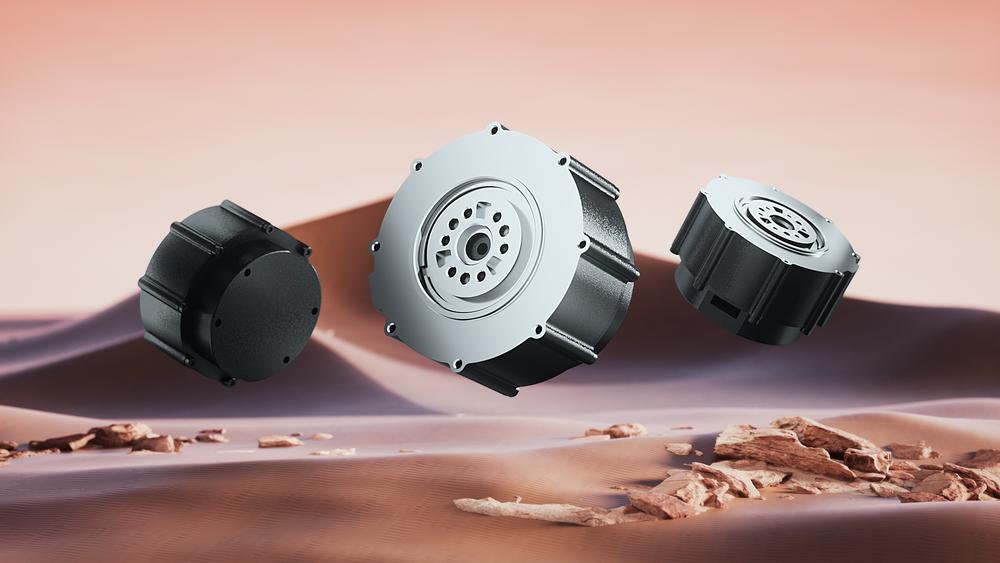
This is impressively shown in the history of Lingzu Times' expansion into the world markets. As a provider of robot joint modules, which are regarded as the "movement hertz" of robots, Lingzu Times reached the goal of delivering over 100,000 modules in 2025. The customers cover almost all important Chinese manufacturers of complete robot machines. The result of about 26,000 exported modules and a high profit margin shows that Chinese core components have value. (The original text seems incomplete here)