Apple users had to exchange their devices ten or more times before getting a Samsung screen, which domestic manufacturers use in low-end phones.
It has been more than four months since the release of the iPhone 17 series, yet many users are still “suffering.”
Last October, we reported that a group of Apple users, in order to get an iPhone with a “Samsung screen,” used magnifying glasses to check the display quality of the phone screens. Some even went through multiple rounds of returns and exchanges. Now, in January 2026, this trend is still prevalent on Xiaohongshu. (You can click here.)
The main reason they want a “Samsung screen” is that the display panels provided by Samsung have vivid colors, no color deviation, and no “smudgy” effect. Among them, the Samsung panels starting with the model number “G9N” have the best display quality.
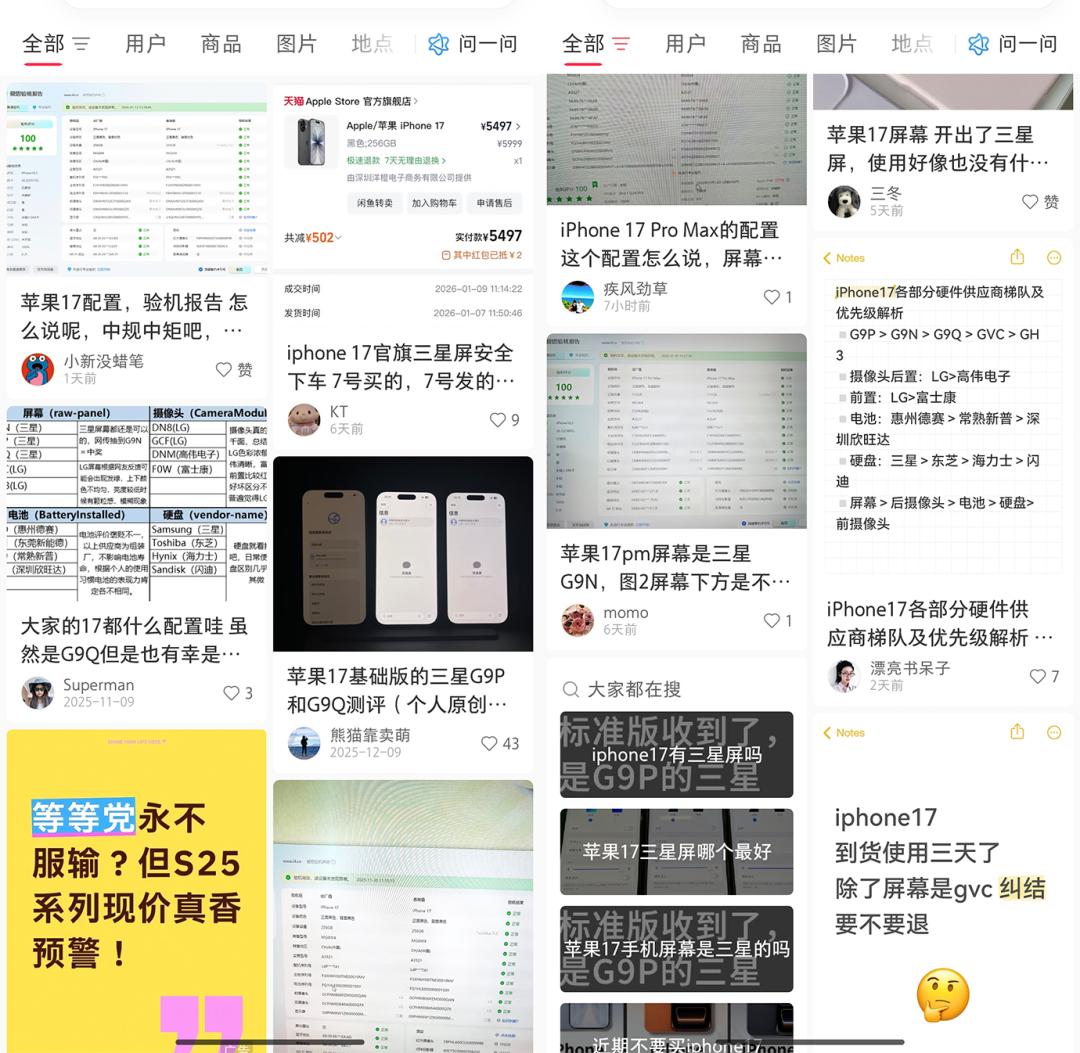
To be honest, I can totally understand why Apple users are so picky. After all, they spent nearly ten thousand yuan on a phone, so it's reasonable for them to have high expectations.
However, a recent piece of news in the mobile phone industry might really hurt the feelings of those Apple users who are keen on “lottery-style” screen selection:
Realme, a sub - brand of OPPO, officially announced that the Realme Neo8 will use Samsung's “latest flagship” M14 light - emitting material.
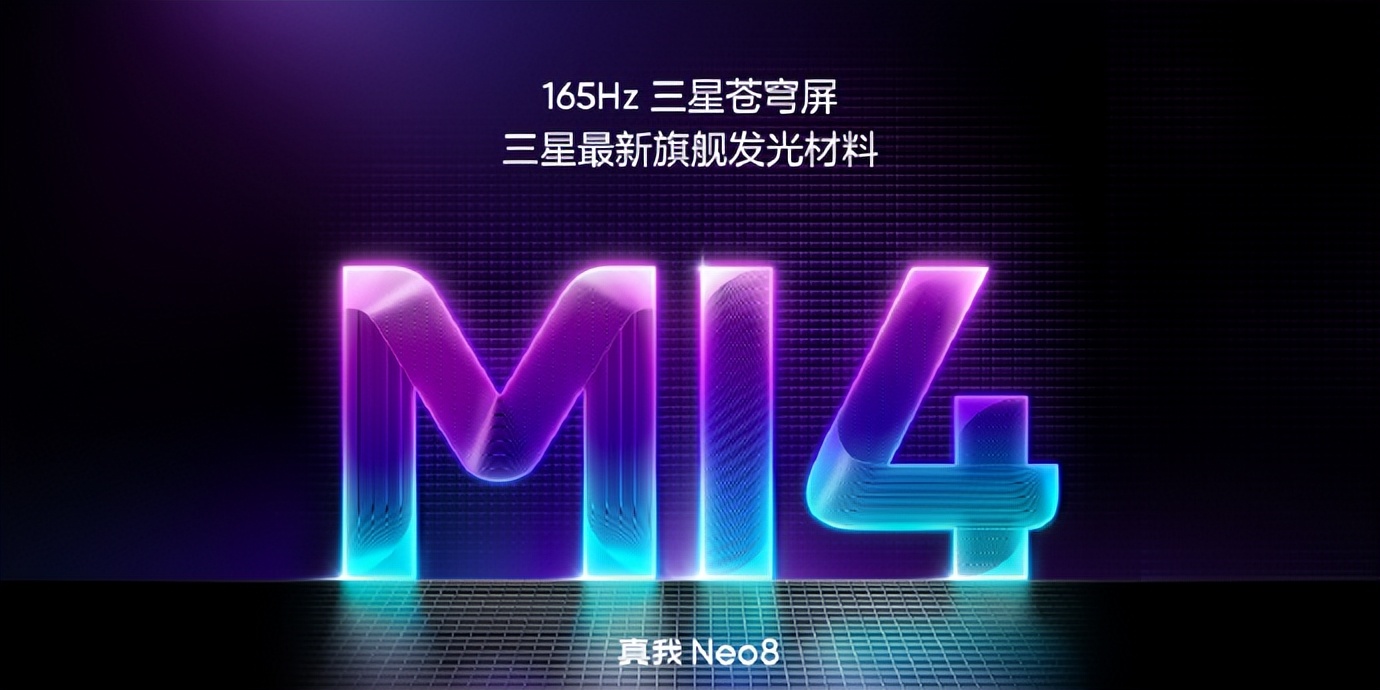
You know, the starting price of the previous - generation Neo7 was only 2099 yuan. Even considering the “inflation” of mobile phone prices, it can only be regarded as an entry - level model.
The Samsung M14 light - emitting material is the same as that used in the iPhone 17 Pro with a Samsung screen. That is to say, the top - tier Samsung screen that Apple users have been searching for can be bought in the Android camp for just over 2000 yuan.
Is it that Samsung has suddenly become “kind - hearted” and is promoting “inclusive technology”?
Needless to say, the answer is definitely “No.”
However, compared with the idea of “Samsung being kind - hearted,” the truth behind this might be even more painful for Apple users.
Is a Good Screen “Only from Samsung?”
Whether it's the iPhone users who keep going through the hassle or Realme using Samsung screens for promotion, the underlying message is: Samsung screens are the best.
Is that really the case?
The development history of mobile phone screens can be roughly divided into two eras: the LCD era and the OLED era. In the current OLED era, Samsung screens have indeed been “far ahead” for a long time.
The reason is that Samsung has almost monopolized the core technologies of OLED display panels.
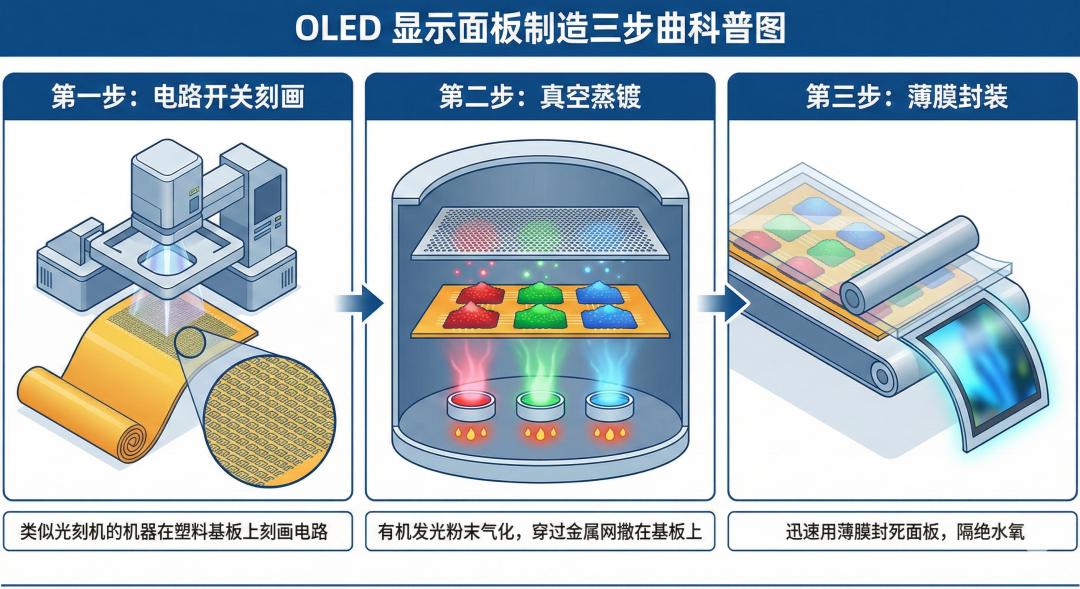
Here, we need to briefly introduce that manufacturing an OLED screen mainly consists of three steps:
First, a machine similar to a lithography machine is used to etch millions of circuit switches on a plastic substrate, just like manufacturing a chip.
Then, through a process called “vacuum evaporation,” a “vapor deposition machine” is used to heat the red, green, and blue organic light - emitting powders to a gaseous state at high temperatures. Then, these gaseous substances pass through a metal mesh (shadow mask) full of small holes and are spread on the substrate like salt.
Finally, the panel is quickly sealed with a thin film, and this becomes the core of the screen: the display panel.
Actually, what makes Samsung truly remarkable is not so much its advanced technology as its far - sightedness.
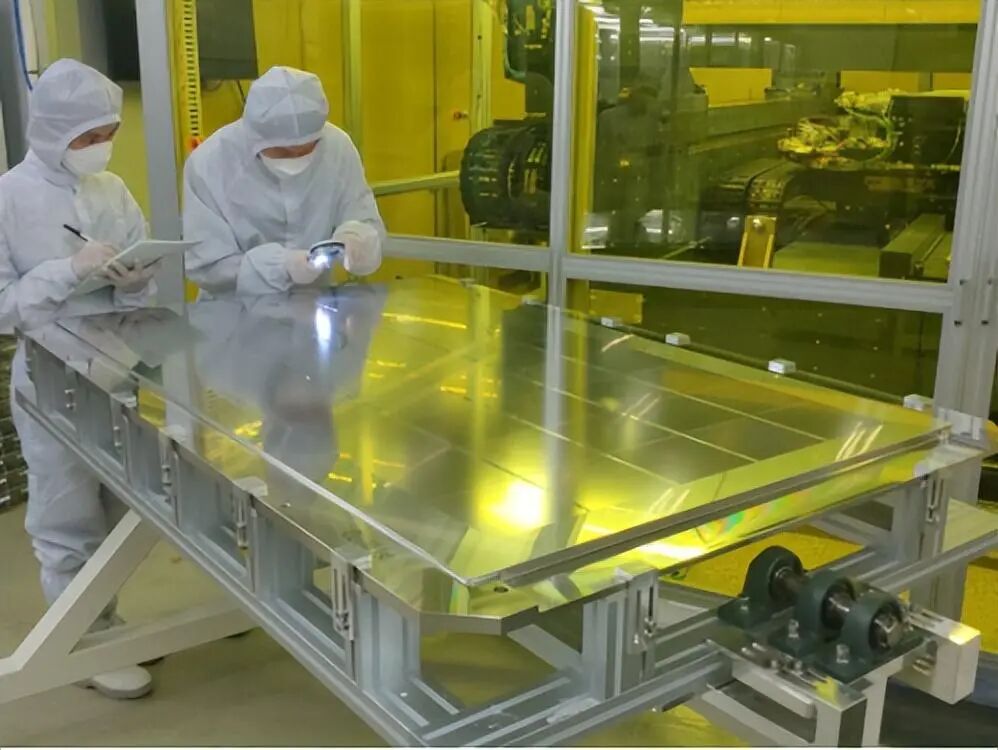
The vapor deposition machine used in the “vacuum evaporation” process. The vapor deposition machines produced by Canon Tokki in Japan are recognized as the best in the industry, capable of controlling the evaporation error to the micron level.
Early on, Samsung secured the entire annual production capacity of Canon Tokki, monopolizing the top - tier machines for itself. This forced its competitors to use inferior products, thus taking an early lead in terms of the yield rate and display quality of OLED screens.
In addition, Samsung has a unique skill: the OLED “diamond pixel arrangement” (diamond pattern).
The OLED screen emits light by applying an electric current to the red, green, and blue organic light - emitting powders attached to the substrate. However, among these three materials, the blue material has low luminous efficiency. If a larger current is used to make it brighter, its lifespan will be shortened, and eventually, the screen may have color deviation or even “burn - in.”
So, Samsung came up with the “diamond pattern” and quickly applied for a patent.
Samsung's idea was to increase the size of the blue material so that it could emit light without a large current. Then, both the red and blue pixels are made into diamonds, and the green pixels are made into long, grain - shaped ones. Under an electron microscope, the pixels are similar to the 45 - degree oblique texture of a diamond cut surface.
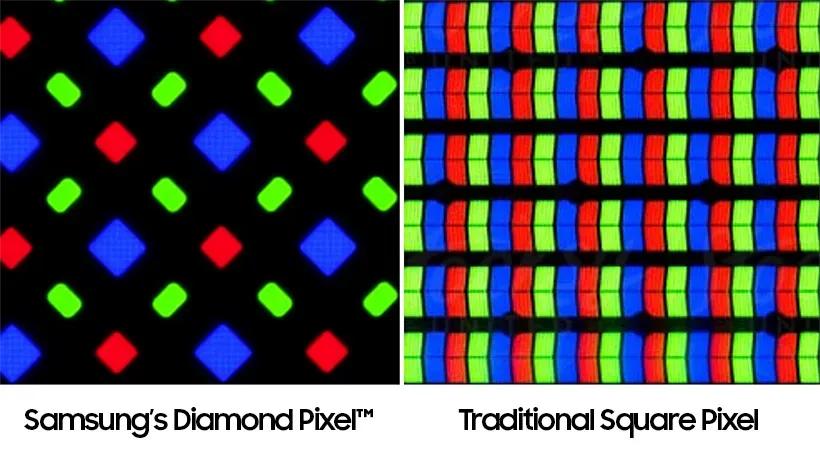
Samsung's “diamond pattern” not only ensures vivid color display but also avoids the problems of short - lived blue pixels and blurred font edges on OLED screens. It was once the optimal solution to the OLED pixel arrangement problem.
Although manufacturers like LG and domestic ones have been trying to develop “diamond - like patterns” to bypass the patent, most of them do not have as good display effects as Samsung's.
Finally, Samsung's trump card is its light - emitting materials.
Light - emitting materials are the key to determining the luminous efficiency and color purity of the screen, and Samsung has a unique formula. The M14 mentioned earlier has extremely high purity of organic materials, vivid colors, high luminous efficiency, and low power consumption, placing it in the top tier of the industry.
Therefore, with the best machines, the top - tier pixel arrangement, and the best light - emitting materials, Samsung naturally occupies the leading position. Before 2022, for any flagship mobile phone, regardless of whether it was domestic or foreign, using a Samsung screen was a symbol of high - end quality.
At the height of Samsung's dominance, there was even an incident where it “easily outmaneuvered Xiaomi.”
In 2016, Lei Jun flew to Samsung's headquarters in South Korea in person just to “apologize” to a Samsung executive.
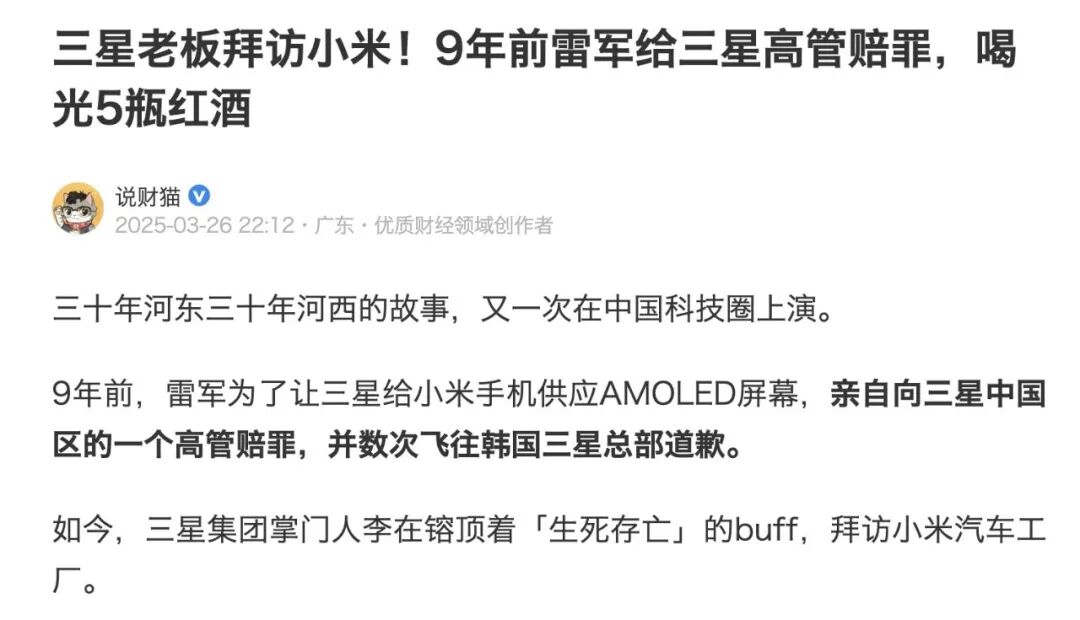
At that time, Xiaomi was on the rise. It was valued at $45 billion before going public and was the sales champion in the Chinese mobile phone market from 2014 to 2015. Their next goal was to enter the high - end market with the Xiaomi Note2.
However, something went wrong with the Xiaomi Note2. At that time, Zhou Guangping, a co - founder of Xiaomi, was in charge of mobile phone R & D and the supply chain. It is rumored that he was very aggressive during the negotiation with Samsung Display and even “slammed the table” in front of the Samsung representatives. (Again, this is just a rumor!)
Anyway, he ultimately offended Samsung. Samsung Display decided to cut off the supply to Xiaomi. Without Samsung's top - tier AMOLED screens, Xiaomi had to turn to LG. As a result, after changing the supplier, everything went wrong: smudgy screens, uneven color distribution, color deviation, and insufficient production capacity...
This directly led to one of the biggest setbacks in Xiaomi's mobile phone business.
So, in the end, it was the high - quality of the screens, the endorsement of flagship products, and Lei Jun's “apology” that elevated the once - popular Samsung screens to a god - like status.
However, please note that this was “once.”
The Defection of Domestic Brands
Maybe Samsung itself didn't expect that Xiaomi, which used to be so compliant with Samsung screens, has now become one of the companies that have most thoroughly “moved away” from Samsung screens.
Most people remember the Xiaomi 17 series because of the name - changing incident, but they overlooked one of its major breakthroughs: it is the first to use an OLED screen with a “full RGB arrangement.”
It uses a completely different “problem - solving approach” from Samsung's, completely subverting Samsung's “diamond pattern.” In the evaluations of digital technology bloggers, it is comparable to top - tier Samsung - screened phones in many aspects such as sharpness, color uniformity, and color accuracy. The only drawback is a slight color deviation when viewed from the side.
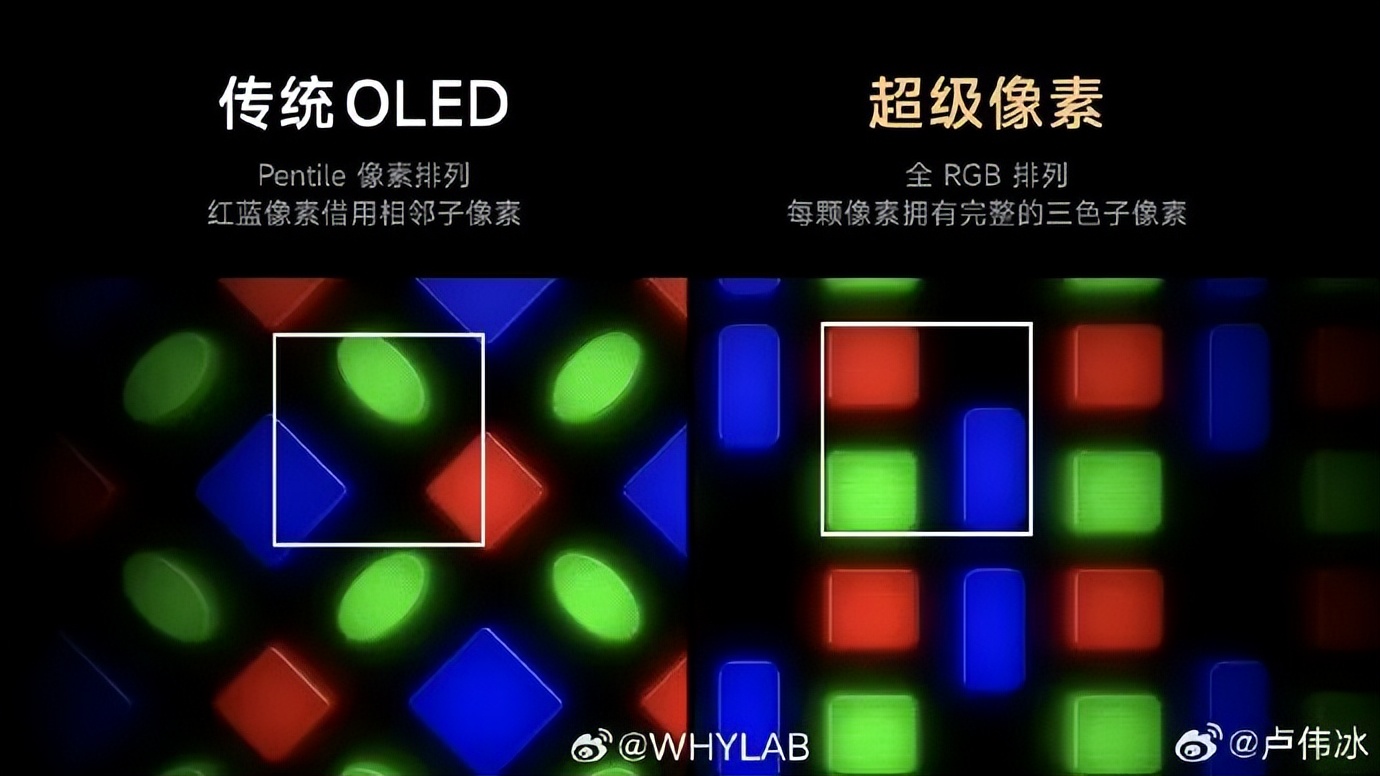
The company that provided Xiaomi with this “amazing screen” is a Chinese screen panel manufacturer: TCL CSOT.
Actually, by now, it has become quite common for Chinese domestic flagship mobile phones not to use Samsung screens:
Vivo has been using domestic screens since the X200 Ultra. The BOE Q10+ screen it currently uses has a much better reputation than Samsung's. The OPPO Find X9 Pro also chose the Tian Gong screen from Tianma, making it one of the domestic phones with the best display effects.
The reason why these domestic brands no longer use Samsung screens is simple: they can still achieve excellent display effects without Samsung screens.
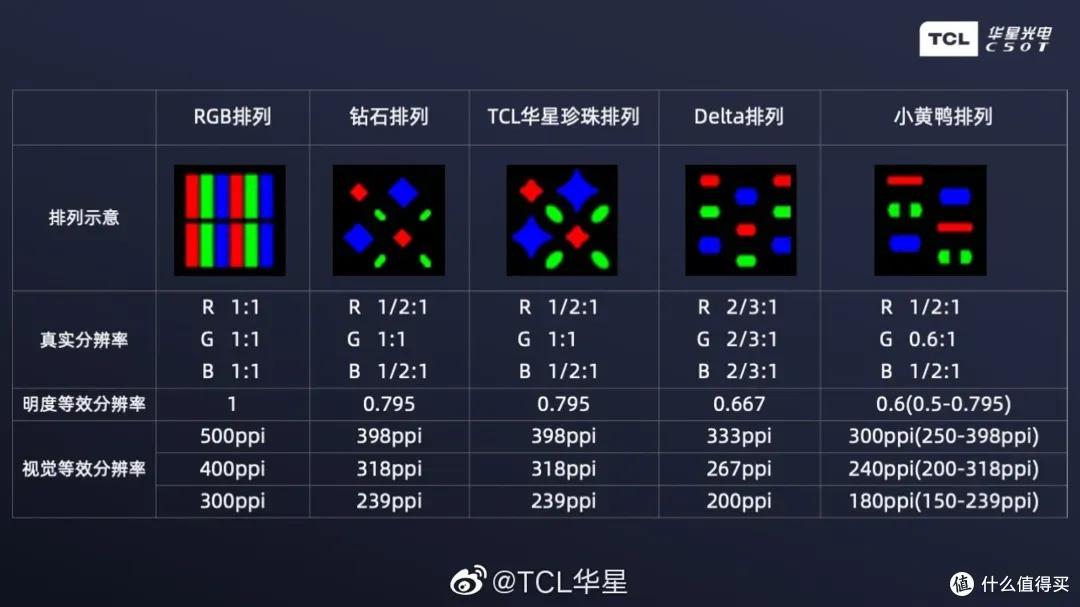
Heard that Samsung's “diamond pattern” has a patent barrier?
Then domestic manufacturers found alternative ways. For example, BOE has developed a new “blue diamond arrangement.” The fineness of the text edges is almost the same as Samsung's diamond pattern. On the CSOT side, in addition to the full RGB arrangement mentioned above, there is also a “pearl arrangement,” etc., which makes domestic screens no longer “fear” Samsung in terms of clarity.
Heard that Samsung's M - series light - emitting materials are very good?
BOE has the Q - series, and CSOT has the C - series light - emitting materials. They not only match the lifespan of Samsung's E - series and even M - series but also surpass them in terms of luminous efficiency. The local peak brightness of these domestic screens often exceeds 4000 or even 5000 nits, leaving Samsung far behind in terms of visibility under strong outdoor light.
Moreover, domestic screens have an advantage in eye - protection, allowing them to overtake Samsung.
Domestic screen manufacturers have already popularized ultra - high - frequency PWM dimming at 3840Hz or even 4320Hz, while Samsung screens have long adhered to low - frequency dimming at 480Hz or 240Hz, which can easily cause dry eyes and tearing for sensitive users.
There is also a very important point: Domestic manufacturers are not as domineering as Samsung. They can meet the needs of mobile phone manufacturers and develop products with customized parameters, such as various unusual screen ratios, 165Hz ultra - high refresh rates, and even double - layer OLEDs...
So, the disappearance of Samsung screens in domestic flagship mobile phones today is not because a certain brand has offended Samsung and “Samsung refuses to supply,” but because there are better, cheaper, and even more “obedient” domestic screens, so they actively choose not to use Samsung screens.
Even if Samsung screens are used, they will only appear in mid - to low - end Android phones, such as the iQOO 15 and this Realme Neo8.
According to data from CINNO Research, as early as the first half of 2024, the global market share of Chinese domestic OLED panels had historically exceeded 50%, officially ending the dominance of South Korea (mainly Samsung). In domestic mobile phones, the proportion of domestic screens has reached as high as 76%, while Samsung only accounts for 15%.
The era of Samsung's dominance is gone forever.
Seemingly Praising Samsung, Actually Praising Apple
At this point, a contradiction arises: Although in terms of absolute quality, Samsung screens may not necessarily be better than domestic screens, when it comes to iPhones, the display effect of an Apple phone with a Samsung screen still outshines domestic Android phones.
Isn't this a self - contradiction?
However, some users firmly believe that the screen display effect of Apple phones is far better than that of Android phones, with vivid colors, accurate color reproduction, and smooth automatic brightness adjustment. This is because of Apple's excellent technology, not because of how amazing Samsung's panels are.
Apple, with its deep pockets, conducts extremely strict color calibration on every screen before it leaves the factory. It also fine - tunes the gamma curve and white balance of the screen point - by - point through algorithms at the iOS system level.
This systematic optimization that combines software and hardware can even turn an 80 - point screen into a 95 - point one.
Not to mention Samsung screens, even the LG screens that Apple users dislike