Chinese AI application entrepreneurs are leading the way on a new track | AI Spark Open Mic
On January 8th, in Shenzhen. "AI Sparks·Open Mic", jointly hosted by Alibaba Cloud and 36Kr, gathered five AI startup veterans: Jeff, the founder of Juvilux; Yuan Lin, the founder of Tinylion; Wang Jianjun, the founder of Tongxing Technology; Zhou Qi, a partner at GSR Ventures; and Ren Penghao, the general manager of the KA Business Department of the Small and Medium-sized Enterprise Division at Alibaba Cloud. In an honest conversation without preset questions or rehearsed answers, they all pointed to one answer: the rules of the game for AI startups in China are being rewritten - shifting from "computing power anxiety" to "scenario dividends" and from "following Silicon Valley" to "leading on a new track". Through this conversation, we captured three key changes taking place in the industries where AI-native entrepreneurs operate.
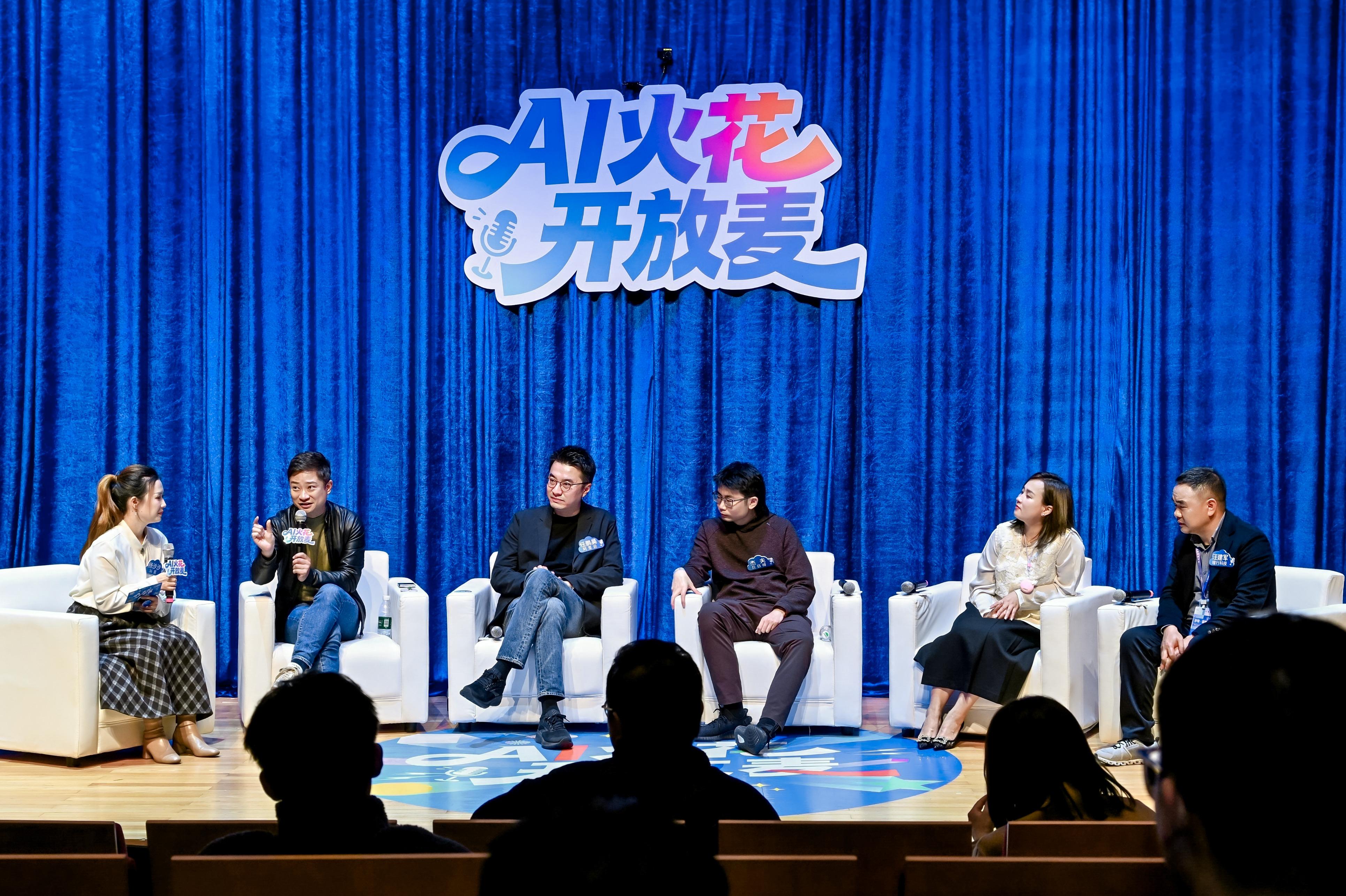
From left to right: Yang Shasha of 36Kr (host), Zhou Qi, a partner at GSR Ventures, Ren Penghao, the general manager of the KA Business Department of the Small and Medium-sized Enterprise Division at Alibaba Cloud, Jeff, the founder of Juvilux, Yuan Lin, the founder of Tinylion, and Wang Jianjun, the founder of Tongxing Technology
First, computing power is no longer the sole decisive factor, and the "physical body" is becoming the new battlefield.
When Zhang Liang, the vice president of Alibaba Cloud Intelligence Group, described the all-pervasive AI and the talking hardware at the event as "stumbling into the set of Toy Story", this joking remark actually signaled an industry trend: AI is making a crucial leap from "showcasing skills in the cloud" to "physical penetration". The "AI Brain + Made in China + Global Vision" model proposed by Zhou Qi, a partner at GSR Ventures, reveals the new advantage of Chinese entrepreneurs: using AI as the brain, Chinese manufacturing as the body, and globalization as the vision. Whether it's Wang Jianjun of Tongxing Technology, who designs AI glasses for the visually impaired, Yuan Lin of Tinylion, who uses AI as an entry point for children's companionship, or Wu Ming of Watch Interactive Entertainment, who integrates AI functions into headphones and sells them globally, they have proven that with world-class supply chain and engineering capabilities, Chinese AI can bypass the computing power barrier and establish a differentiated competitive advantage at the application level.
Second, "AI-native" is not just a technological label; it is shifting from "cost reduction and efficiency improvement" to "creating supply".
For a long time, people thought that the role of AI was to replace human work. However, Jeff, the founder of Juvilux, demonstrated a new understanding through the practice of an AI short drama creation tool: AI is not just an add-on; it changes the supply relationship. AI enables the existence of things that didn't exist before and satisfies everyone's personalized tastes. Wang Jianjun of Tongxing Technology put it more directly: For the past 100 years, the best tool for the blind has been a white cane. Previously, assistive products could only "describe pictures", but now they can "prescribe solutions". This means that the real value of AI-native lies not in the percentage of efficiency improvement but in opening a window for those "previously impossible" needs.
Third, the window of opportunism is closing, and "continuous evolution" is becoming the new core competitiveness.
In the past two years, countless entrepreneurs flocked to the AI track, expecting to replicate the script of "seizing the first-mover advantage and winning" from the mobile Internet era. However, this script is no longer working. Ren Penghao of Alibaba Cloud observed that the cycle from the birth of an AI startup to achieving large-scale profitability has been extremely compressed. It's so fast that investors may miss the best opportunity even if they review numerous business plans in a year. The common feature of the AI companies that will truly succeed in 2025 is that they are always preparing for the next change. Zhou Qi of GSR Ventures, from an investor's perspective, expressed another concern: The biggest worry is not investing in the wrong company but having a promising product suddenly disrupted by a cross - border player with a completely different mindset. This reflects a fundamental change in the startup logic in the AI era: the core competitiveness of small and medium-sized enterprise entrepreneurs is no longer a static moat but the ability to continuously evolve.
In this open mic, there was no success - story cliche, only entrepreneurs' honest embrace of uncertainty and their return to the essence of business. Perhaps the next chapter of AI will be written by these Chinese entrepreneurs who understand manufacturing, human nature, and business. The following are the highlights of the round - table discussion, with some content edited by 36Kr:
Round - table guests:
• Zhou Qi, a partner at GSR Ventures
• Ren Penghao, the general manager of the KA Business Department of the Small and Medium-sized Enterprise Division at Alibaba Cloud
• Jeff, the founder of Juvilux
• Yuan Lin, the founder of Tinylion
• Wang Jianjun, the founder of Tongxing Technology
36Kr: What exactly is "AI-native", and what does it mean for your products?
Jeff: In our short comic drama track, AI has disrupted efficiency to the extent of changing the supply relationship. It has broken the limitations of many traditional film and television methods. Whether it's animation or live - action shooting, these presentation methods have their own limitations. Many good stories couldn't find the most suitable way to be presented in the past, but now AI can quickly, efficiently, and cost - effectively showcase these stories. For example, in the traditional film and television field, you can see animations like "Captain Tsubasa" and "Slam Dunk", but there is no relevant film and television content for more niche sports. Because the fan base of these niche sports is not large enough to support specialized commercial content creation. However, with the empowerment of AI, I believe there will be works like "Archery Kid" in the future. Everyone's personalized tastes and needs can be satisfied through AI - produced content.
Wang Jianjun: I conducted research on the blind market. The data I obtained this time was told to me by a friend from the National Braille Library. He kindly reminded me at that time that there were still risks in this industry. But now I think the times have changed. Because without the current computing power, large models, and other AI capabilities, those products simply couldn't have been made. I can make an analogy for the industry of the visually impaired: Just like the hearing aid industry. Ten or twenty years ago, there were foreign brands like Siemens and Resound. Now, some domestic hearing aid companies are also starting to gain momentum. For the blind, AI technology can really "open a new window" for them.
Yuan Lin: The current post - 2010 generation is very representative. They are AI natives. For them, AI is not a profound technology but as natural as air. When we define scenarios and products, we start more from the children's own life, learning, and entertainment scenarios to construct the entire intelligent agent. The arrival of the AI large model this time can be called AI 2.0. After the emergence of the AI 2.0 large model, children have a better chance to discover their unique natural talents. I've been an entrepreneur for 11 years and am now in middle age. I think people ultimately deal with their relationship with themselves. Through using AI, children can understand their relationship with the world, nature, and others earlier. In my opinion, the impact of AI on the post - 2010 generation is revolutionary, enabling them to change from "passive input" to "active exploration". However, they also face great pressure. They will demystify many occupations, causing many children to lose their original motivation. But society has high expectations for them, hoping they become generalists rather than specialists. So, AI is really a timely help for them.
Ren Penghao: Since the wave of AI traffic hit at the beginning of the year, I don't think there is any industry that seems to have no opportunity. I often tell people this logic: In the past in the IT world, we were mainly dividing an existing "cake" of basic resources. But now with AI, this "cake" may have turned into a new form of food, and everyone is dividing it anew.
I met about a hundred entrepreneurs last year. My impression is that each entrepreneur is doing something different, and almost everyone can make money in the early stage of their business. This is something I've never encountered in the past twenty years of observing the To B track. In the past, many companies had a startup phase, such as raising funds from investors, presenting a flashy business plan, and telling a story about making profits in three to five years. But today, I see many companies that, even when they are still "small and beautiful", have already started to thrive. Not necessarily making huge fortunes, but at least having positive cash flow or becoming self - sustaining.
Today, there are no unpopular tracks; there are only a variety of thriving tracks. Alibaba Cloud aims to "empower all industries". In theory, any scenario in any industry can be re - created with AI. As long as we "re - create", we have a chance.
36Kr: In 2025, who or what "educated" you?
Zhou Qi: Jensen Huang introduced a product called Rubin this time, which completely disrupted the previous Blackwell. One chip replaced six chips. Ten years ago, we also invested in an NLP company. But in today's Transformer architecture, all the models you trained and the data you accumulated before no longer matter. So my biggest concern now is that a product that seems promising to us at present may suddenly be completely disrupted by a cross - border product with a completely different mindset.
But I also want to tell everyone that there are also many positive signals in 2025. From a funding perspective, there are three 50 - billion - yuan national innovation guidance mother funds in Beijing, Shanghai, and Shenzhen respectively. There is also a 50 - billion - yuan fund in Hangzhou from the national social security and AIC. Suzhou and Wuhan also have 50 - billion - yuan funds. These funds will be allocated to us, and we need to make configurations and amplifications, perhaps multiplying by three times. So there may be a large amount of funds in the future. This is very good news for startups.
Where are the future opportunities for AI startups? I think they may be at two extremes: One is the concentration at the top. There is no chance for new startups to enter the basic large - model field now. So what about the other extreme? It may be companies with one person, two people, or five people. From our perspective as investors, we invest in so many companies in a year. It's impossible for all of them to grow into large enterprises, nor can they all be small companies. This poses a huge challenge to us investors.
Ren Penghao: The investment trend has changed. Many investors who used to focus on later - stage investments are now restless and want to invest in startups at a very early stage. The deep - seated reason behind this is that the cycle from the emergence of an AI company to its establishment, development, and finally making money and rapid expansion is too short. It's so short that investors may miss the good timing even if they review numerous business plans in a year.
For all our customers, it also means a direction adjustment. In the process of transformation in some traditional industries, there are usually two voices: One is to be very determined and think they must invest fully; the other is to take a wait - and - see approach and not be so decisive. Generally, those who are determined have seized the opportunity and often developed smoothly. Those who are hesitant usually encounter some difficulties.
I watched a long video by a technology blogger a few days ago. He used to make long - form dramas. He found that dramas that used to take two or three years and a large amount of capital and resources to produce can now be made by AI in a short time, and the effect is no worse than that of large - scale CG teams. So he is also thinking about how to lead his company to the next opportunity. This is a question in every entrepreneur's mind: Should they invest fully or first safeguard their existing business and move forward step by step?
In the past two years, there has been a concept called "AI - native enterprises". These enterprises have less historical baggage. They are very pure from the day they are born, focus on what they do, and don't use the old - fashioned thinking to build their companies and organizations. Their success rate is much higher.
Jeff: During the startup process, I had a deep realization: The traditional startup concept believes that you need to continuously win through one or two core advantages. But now I feel that in the AI era, this may no longer be the case. What is your core competitiveness? Is it possible that your core competitiveness changes every three months? I just told a joke. From the beginning when we manually drew cards to the Agent stage, many people left, and only one person remained. Maybe this is exactly the fastest way for us to change: If they hadn't left, we might not have won the battle of Agent.
So now I tell my team that we may need to be mentally prepared. We may need to win continuously from 0 to 1 ten times to become a stable company. Before Juvilux started working on Agent, our market share was already 50%. But at that time, I felt that Agent was a completely new battle: You've achieved some results, but sorry, you have to start from 0 to 1 again. My attitude is: Bring it on! Anyway, I'm just like this by nature. Being changeable and flexible may be an advantage.
36Kr: Regarding commercialization, the most practical and concerning topic: How can you make money?
Jeff: AI comic dramas have become the "pigs flying in the wind", but why should customers choose you? There is an interesting assumption behind this: It seems that we want to do something speculative. What if we fail? I think there is a strong sense of opportunism behind this. But I believe that although the speed of opportunity iteration is very fast, this actually leads to fewer successful opportunistic cases. I came in with the determination for a "close - combat battle" from the beginning. When I started, I didn't assume that this track would be easy. I even imagined extremely powerful competitors, and they are arriving on the battlefield as I expected. That's why I'm here.
Returning to the essence of business: In real life, there are also very competitive industries, such as the catering industry. Does it mean that no one will do it? Are there no winners? There are. At any time, to run a successful company and make money, it depends on your organizational ability and efficiency. We are doing an AI tool. I don't think it's anything new. At worst, we can treat it like the catering industry and strive to be like Haidilao. Our main revenue model now is that customers recharge with us and then consume the usage. We need to do a good job in sales, product development, and customer service, and make all these aspects efficient.
Yuan Lin: I've been in the hardware business for 11 years. If the business model is well - calculated, hardware itself can be profitable. Hardware competition is about scale. As long as there is scale, it can make money. But from the very beginning, the more important value of hardware is as an entry point. For products targeting children, the real way to make money is from the content. Because as the intelligent agent becomes smarter and more understands the children, the content provided to them will be very customized, and it is naturally reasonable to charge for customized content. So I'm not worried at all about making money in the children's AI hardware track. I think the opportunities in this track are even greater than in the adult market.
Ren Penghao: I think truly profitable companies have several common characteristics:
First, they are very determined in attitude.
Second, they need to find a good balance between market capacity and verticality in the track they choose: It can't be too large or too small. For example, the consumer electronics market is too large, so it needs to be more vertical. But it can't be too vertical either. They need to balance these two aspects. For example, Jeff is in the tool - making track, Mr. Yuan is in the children's companionship track, and Mr. Wang is in the AI glasses track. They are all in vertical tracks. Regardless of the market capacity or the current significance, they have found a track with fewer variables and are very focused.
Third, they prepare for the next change. I've seen many AI - native companies. They may be doing something very solid in the past six months, but they are already planning what to do in the next six months. In today's AI era, the "stubborn" model no longer exists. AI - native enterprises need to be very agile. When they succeed in doing A, they need to think about where the next goal is.
Many of our customers are crossing industries. With our facilitation, customers may even establish joint -