Gemini has revitalized Google's suite of apps, "natively" bringing with it your memories of the past decade.
Google is turning the ever - ready and all - knowing butler "Jarvis" from science fiction movies into a real product.
Google has officially launched the "Personal Intelligence" feature powered by the latest Gemini 3 model.
It has connected the data pools of Google's four major applications at the underlying level, giving AI cross - application permissions.
From now on, Google AI can independently cross application boundaries, connecting your scattered itineraries in emails, fragments of memories in albums, and video - watching habits in real - time into a complete personal life map.
Gemini Connects Google's Suite of Apps
Personal Intelligence is powered by the Gemini 3 model and directly connects the four core applications: Gmail, Photos, YouTube, and Search.
This feature enables AI to retrieve data across applications in the background. This means that your email exchanges, life moments in the photo album, and YouTube viewing records are interconnected and associated under a unified intelligent hub.
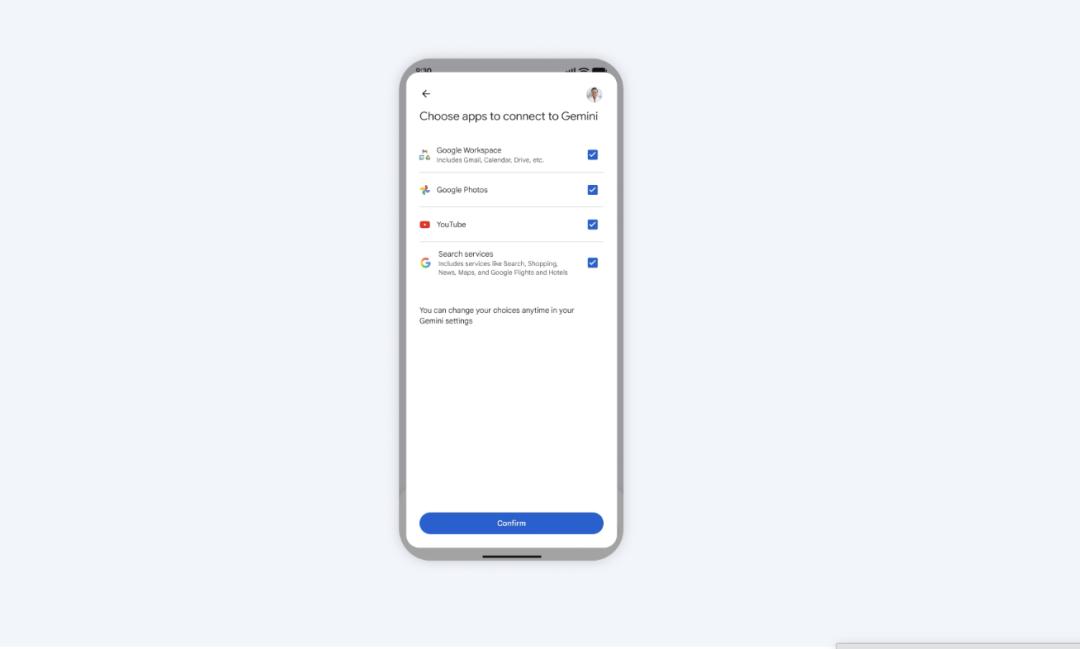
This interconnection directly endows AI with the ability to process "private context". Gemini can delve into a vast amount of historical data to extract details to assist in current responses.
This mechanism solves the practical pain point of general large models "not understanding users", allowing AI - given suggestions to directly reference your real - life trajectories and provide highly personalized feedback.
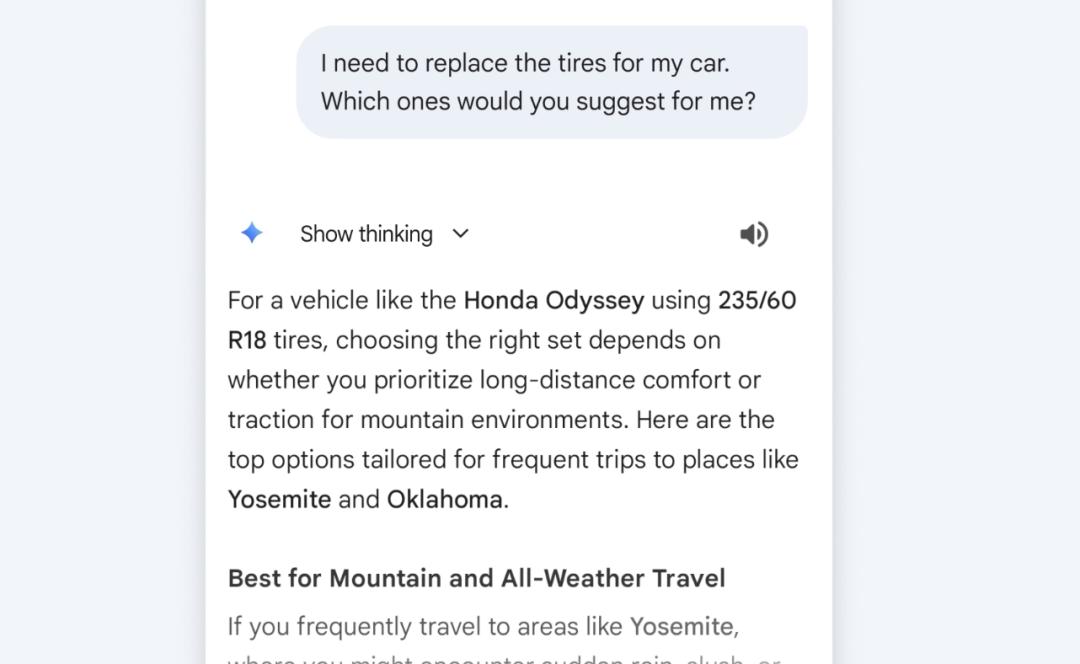
To address possible misjudgments when AI processes private data, the system also has a built - in intuitive natural - language error - correction mechanism.
For example, if Gemini incorrectly infers your interpersonal relationships or interests based on a candid photo or an email, you just need to directly point out the error in the dialog box, and the system can instantly correct its cognitive record of you.
This design not only ensures intelligence but also greatly lowers the threshold for users to manage their personal data models.
This feature is currently in the Beta testing phase and is prioritized for paid - subscription users such as Google AI Pro and AI Ultra. After the feature is enabled, it supports cross - device use across Web, Android, and iOS platforms.
In the future, this core ability will be gradually extended to cover free - version users.
Both Use Gemini, but How Is It Different from Apple's Intelligence?
A few days ago, Apple and Google officially announced a cooperation agreement, confirming that the Gemini model will be introduced into the Apple Intelligence system. The two giants of mobile operating systems will achieve a rare confluence at the model base level.
Although they have chosen the same "brain", they have taken completely different paths in technology implementation.
Google's Personal Intelligence belongs to a purely "cloud - native" architecture, growing directly in a large data center and relying on cloud computing power to process a vast amount of data. Apple, on the other hand, adopts a hybrid edge - cloud strategy, using Gemini as an external cloud - based ability for iOS and only invoking it when local computing power cannot meet the requirements.
This architectural difference determines the essential difference between their capabilities. Google builds its moat through "depth of memory". It can dig into users' Gmail archives and Google Photos from the past decade to grasp the complete digital history.
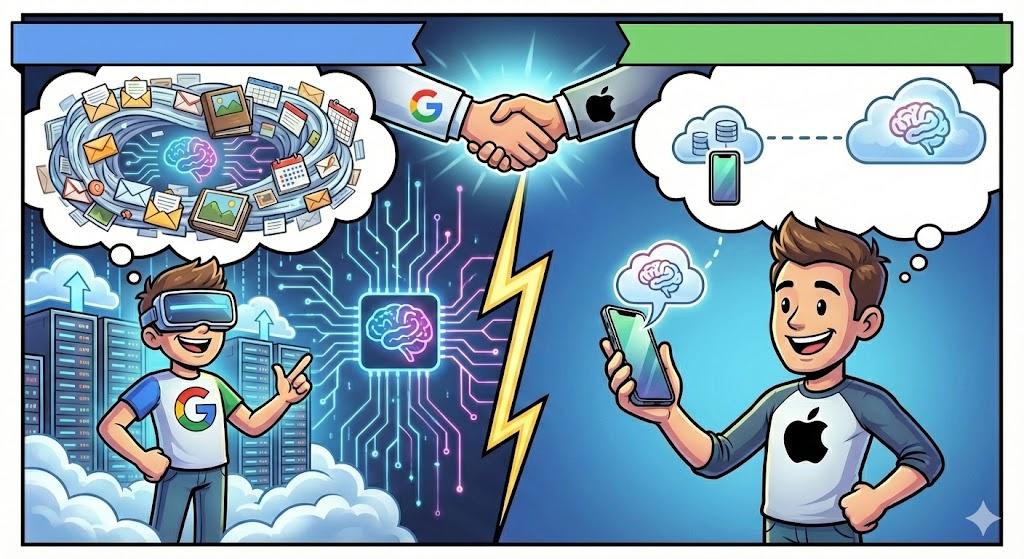
Apple focuses more on "breadth of perception", relying on On - screen Awareness technology to instantly understand users' current operation intentions. Google's AI is like a librarian who has read your diary thoroughly, while Apple's AI is like an operator who is always watching your screen.
The two sides have also chosen different solutions for privacy architecture. Google adopts a "native integrated" model, where data flows efficiently within its closed - loop ecosystem, which requires users to have a high degree of trust in Google's privacy policy.
Although Apple has integrated the Gemini model, it has built a strict isolation layer through private cloud computing. Essentially, it rents Google's intelligence while cutting off the AI's direct access to the original data, thus maintaining its consistent privacy - protection stance.
This situation of "same core, different paths" reveals the completely different ultimate ambitions of the two giants. Google is betting on the stickiness of the software ecosystem, trying to make AI a digital butler you can't do without. Apple is betting on the barrier of hardware experience, aiming to make AI the decisive reason for you to buy the next iPhone.
From the Battle of Hundreds of Models to Ecosystem Competition
Google's move sends a very clear signal - the focus of AI competition has quickly shifted from simple model comparison to the construction of ecosystem barriers.
In addition to Google, domestic technology giants are no longer satisfied with releasing a new chatbot. They are more eager to activate their huge stock of applications through AI.
The core of this battle lies in who can be the first to connect individual independent App islands into an indivisible intelligent continent.
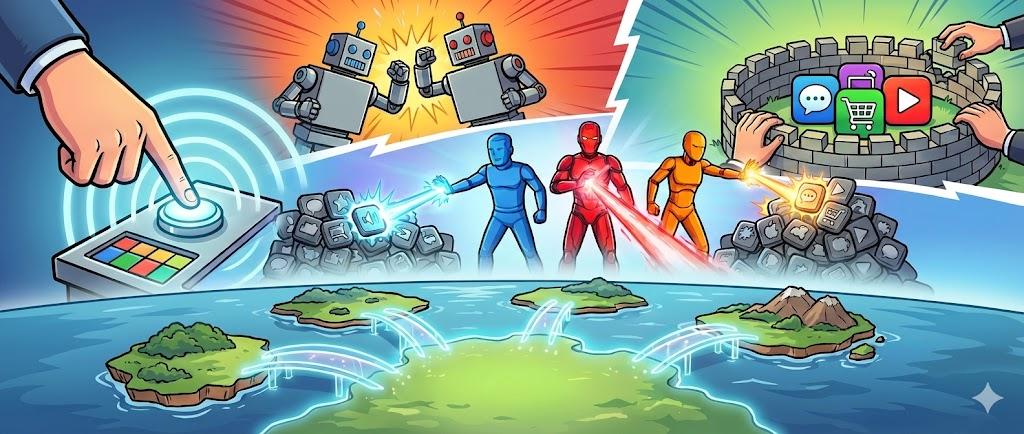
For example, Alibaba is trying a path to connect the "workflow and lifestyle flow". Through the Qwen large model, DingTalk's office decision - making and Taobao's consumer services are seeking an underlying connection, trying to build a super - hub covering both the B - end and C - end.
ByteDance uses its huge traffic pool to seamlessly integrate the Doubao large model into Douyin's content consumption and Feishu's information production, using the continuous content ecosystem to feed the evolution of AI.
Tencent holds WeChat, the most promising social base. The market generally expects the Hunyuan large model to be fully integrated with the WeChat ecosystem. Once AI is deeply integrated into the social relationship chain and service mini - programs, WeChat will have the opportunity to evolve from a super App into a real "personal digital operating system".
The final logic of the industry in the future is already clear. The gap in technical indicators among large models will eventually be smoothed out over time. The real moat will return to the competition for private - scenario data.
Users may easily replace an AI assistant, but it is difficult to migrate an entire social circle, workflow, or long - term digital assets. In this new land - grabbing movement, the model is just an admission ticket, and the ecosystem is the real moat.
Reference Links:
[1]https://blog.google/innovation-and-ai/products/gemini-app/personal-intelligence/
[2]https://www.zdnet.com/article/google-gemini-personal-intelligence/
This article is from the WeChat official account "QbitAI", author: Keleixi. Republished by 36Kr with permission.