Waymo's vehicle stopped on the train tracks, and passengers fled in a panic... Elon Musk must be laughing in his sleep.
Waymo has caused trouble again!!
This self-driving company under Google, after driving into a police-criminal standoff scene and causing chaos in Silicon Valley during a power outage... this time it almost cost a passenger's life:
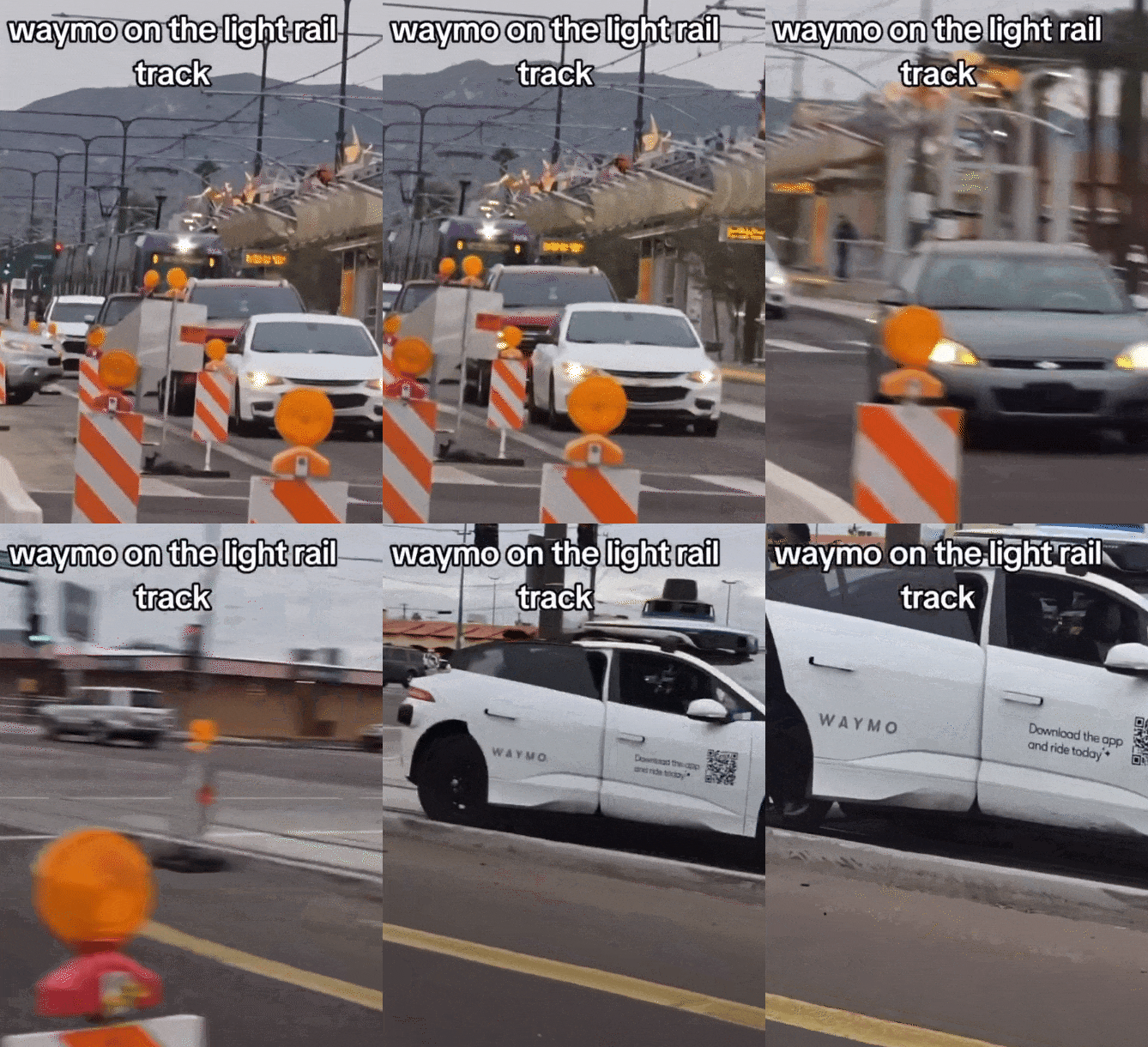
Yes, you read that right.
This time, it directly drove a passenger onto the railroad tracks in the middle of the city road, and there was a small train following behind.
This really scared the passenger. So, the passenger quickly got out of the car and ran away.
Once the incident came out, Waymo, which has a long list of "previous offenses", once again triggered an outcry from netizens, and the "L4 direct access faction" it represents was also questioned again.
However, at this moment, on the side of Tesla, the representative of the "L2 upgrading faction", there is new progress in FSD -
Elon Musk recently announced that the one-time purchase of FSD will be stopped, and from now on, it will only be available for subscription.
The confrontation between the two major factions represented by Waymo and Tesla has escalated. It seems that this year's self-driving battle will be even more exciting.
Waymo stopped on the tracks, and the passenger escaped from the car
Waymo let us down again... and it was at the moment when it was in a fierce race with Tesla, and the two major routes were at their peak confrontation.
The location of its "mishap" this time is in Phoenix, Arizona. From the video provided by onlookers, we can see:
Although there was a very wide road beside it, it still drove onto a railroad track on its own and moved forward along the track.
Seeing this, the guy driving by was shocked and quickly stepped on the brake to stop and watch.

You should know that there was a passenger sitting in the car at this time, and the situation was getting critical.
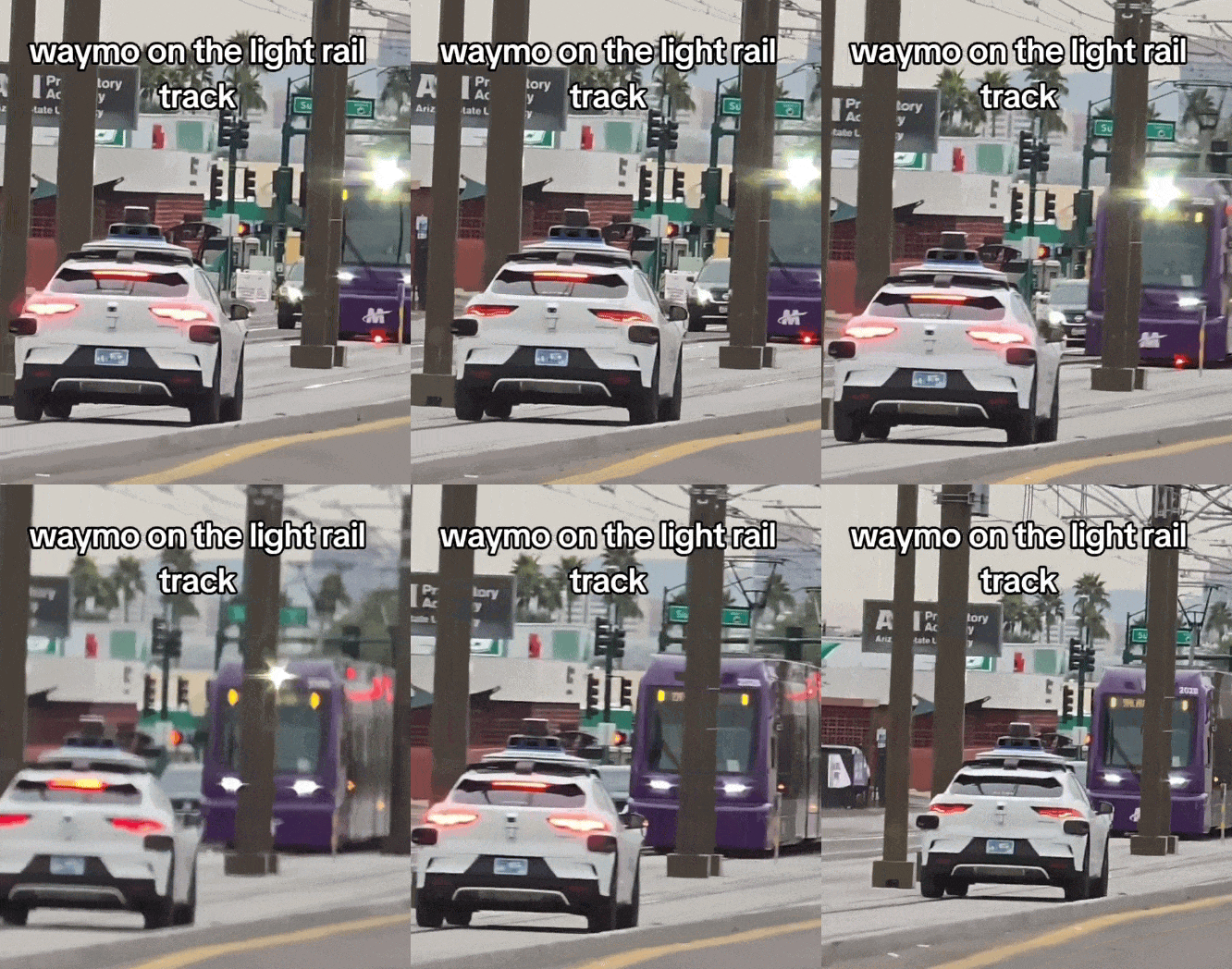
When the camera zoomed out, everyone was even more worried about the passenger - there were small trains slowly approaching both in front of and behind Waymo. If not careful, an accident might happen.
Behind Waymo, there was a small train moving forward on the same track:
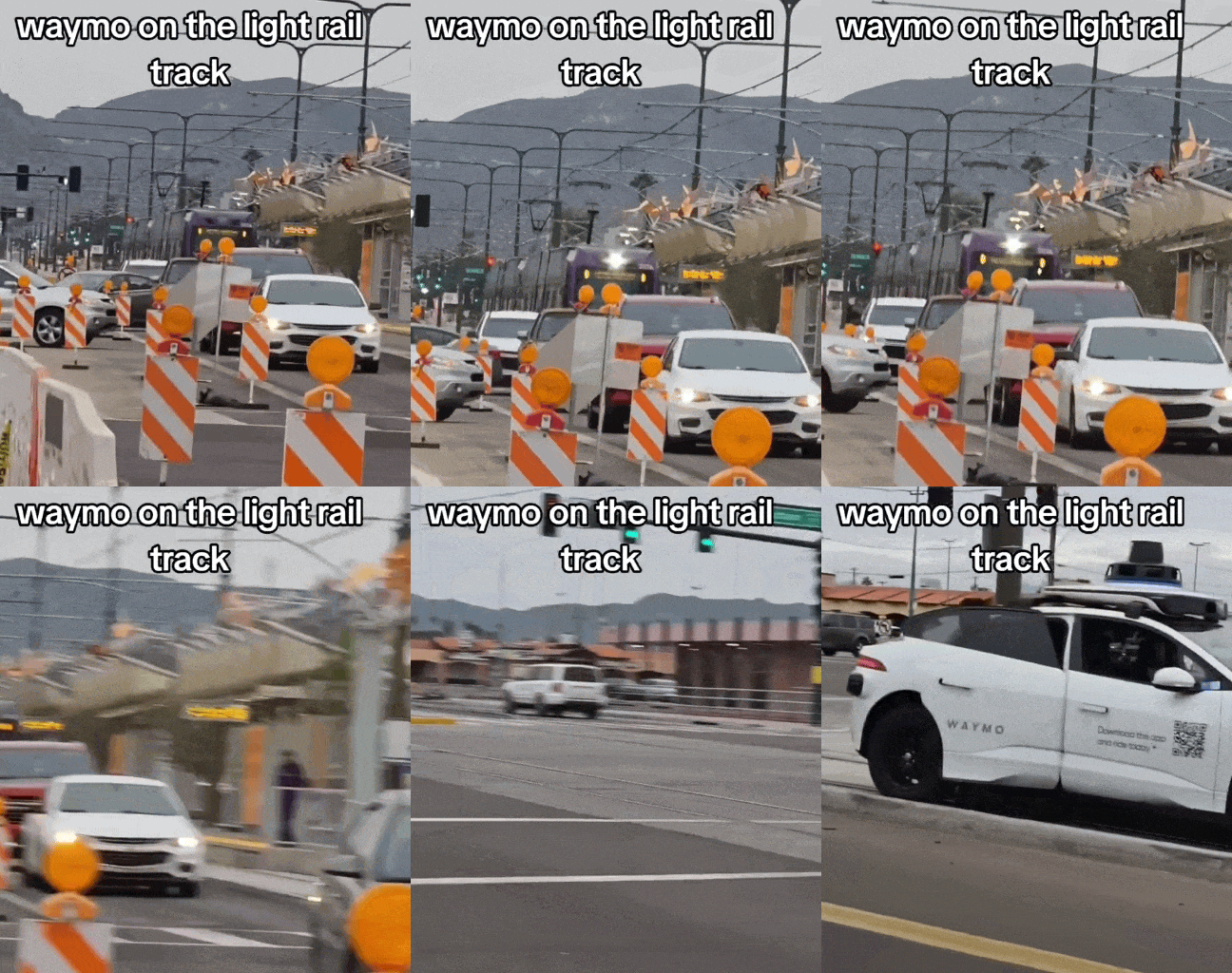
If you say go forward, there was also a train coming on the adjacent track in front:
Goodness, the passenger had to run away quickly. So, the passenger took advantage of the gap when Waymo stopped on the track and quickly "abandoned the car to save the most important thing".
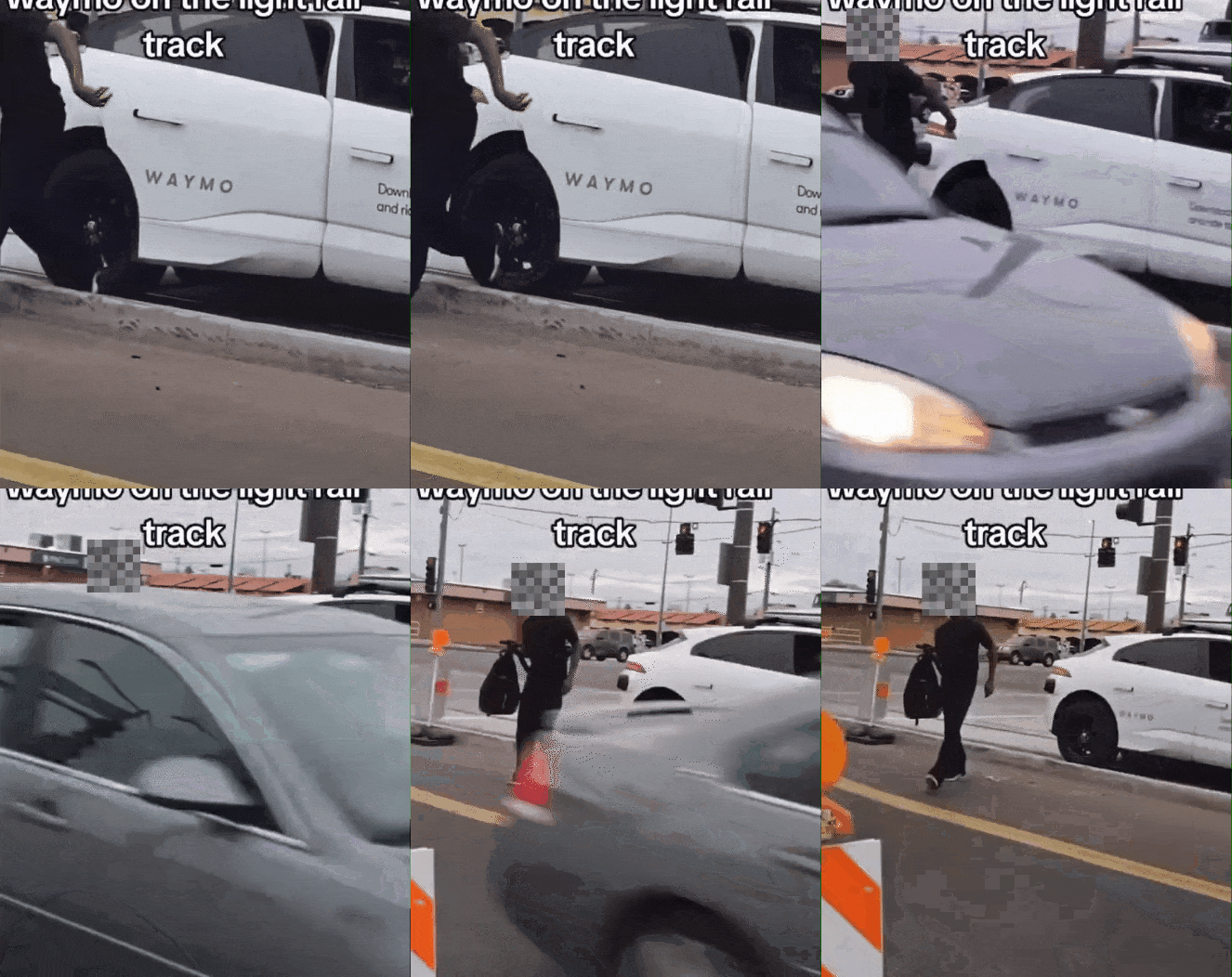
According to the supplement from netizens who have been continuously following this matter, later, the car was driven off the track under the handling of the staff, and no collision accident or casualties occurred.
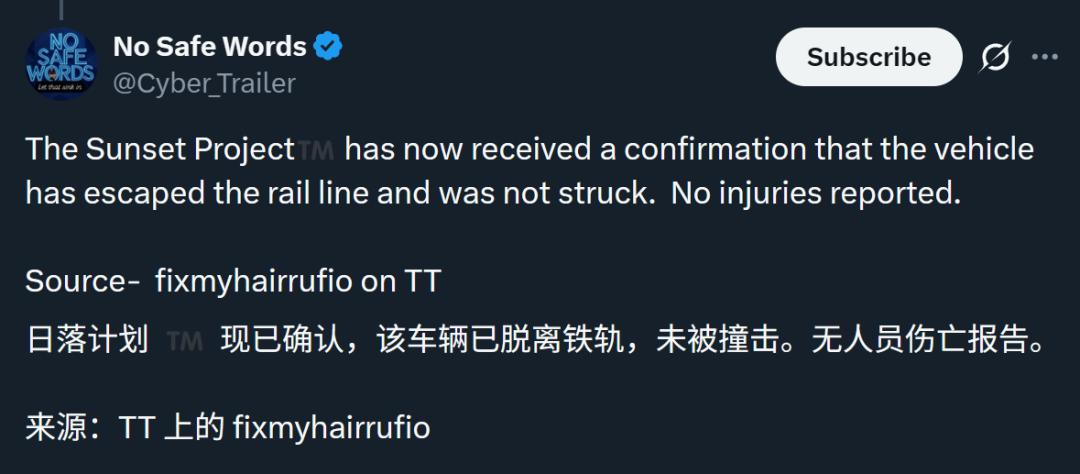
A spokesman for the Phoenix public transportation agency also said in a statement that they contacted Waymo immediately after the accident and cleared the scene within 15 minutes.
The incident did not cause major delays, and the scene was cleared within 15 minutes.
As for the cause of the accident, although the official has not given a clear statement yet, a professor from Arizona State University believes that this is one of the extreme situations.
This is an unexpected situation. The driving mode of the machine is not like that of a human but like that of a machine.
Waymo is equipped with 29 cameras, and its driving route and system are updated every week. However, construction was going on in the area where the incident happened. The light rail line at this location was newly added within the past year, which may be the reason why the vehicle deviated to the rail transit line.
But anyway, once imagining being the passenger sitting in the car, netizens couldn't help but complain and condemn Waymo.
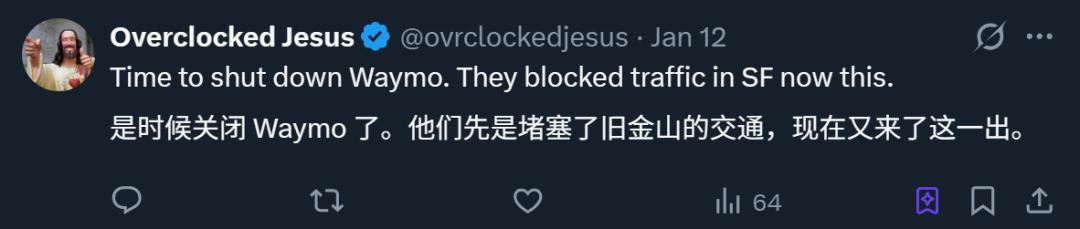
After all, this is not the first time that Waymo has let us down... From the end of last year to now, the corner cases that Waymo has been caught in can even make a collection: driving directly into a police-criminal standoff scene, violating traffic rules by overtaking a school bus, causing chaos in Silicon Valley during a power outage, etc. These incidents have triggered public outcry again and again.
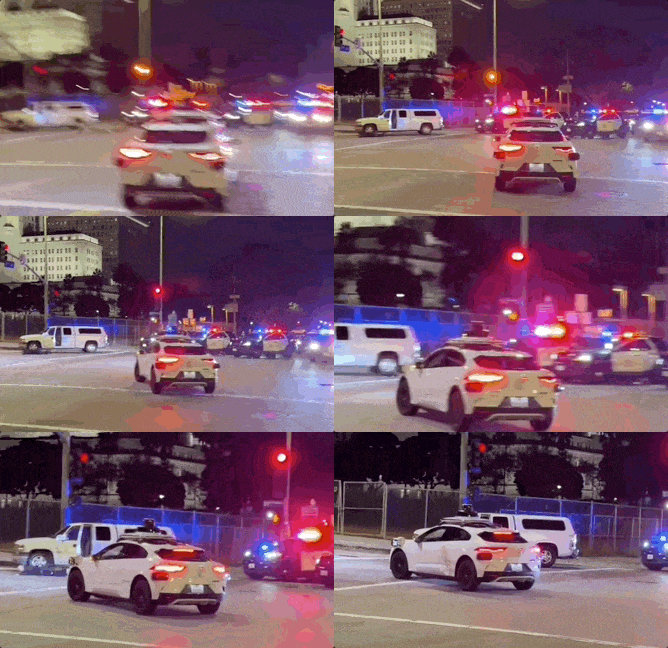
At the beginning of December last year, a passenger of Waymo may have experienced the most thrilling moment in life.
The reason is simple. When Waymo saw the police lights flashing ahead, it still drove through the red light with the passenger and directly drove into a real-life police-criminal chase scene.
On one side of Waymo was the police on high alert, and on the other side was the suspect.
The passenger was like: Who am I? Where am I?
What's even more terrible is that it slowly slid past both sides (OS: Why not drive faster). It really made the passenger break out in a cold sweat.
After this scene was filmed by a passerby and posted on social platforms, the incident quickly became popular.
Do you think it would stop there? NONONO~ Soon after this incident, Waymo made it onto the top hot search lists because of a large-scale power outage.
It wasn't long after Waymo's valuation of hundreds of billions of dollars was reported. As a result, it came to a complete standstill due to a local power outage and blocked the road, causing urban congestion.
After all these things, the outside world has also begun to question Waymo's technical route. Is it reliable enough to directly aim for the L4 camp through a powerful model?
The sensor solution and the model may be powerful enough, but the scale and number of the vehicle fleet are still limited, which puts it at a disadvantage when encountering long-tail scenarios.
This scale and number of the vehicle fleet are directly in contrast to Tesla - the mass-produced vehicle route accumulated through millions of mass-produced vehicles and hundreds of millions of miles.
Is it easier to achieve the Scaling Law?
In fact, Elon Musk, who comes from the L2 upgrading route, is really making rapid progress at this time - FSD is advancing at a high speed. The unsupervised version of FSD can basically handle daily situations. Some car owners have even achieved the goal of crossing the United States without any takeover - a goal set by Elon Musk.
Interestingly, after FSD entered a new era, Elon Musk also did another high-profile thing -
The one-time purchase system of FSD was cancelled. Previously, if you wanted to experience FSD, you had to buy it in one go and pay $64,000, even though it was just a "futures product" before.
But now, the latest version of FSD has given Elon Musk great confidence: No more one-time purchase. After February 14th, it can only be subscribed monthly.
If you like it, buy it. If you love using it, pay for it.
Even earlier, the monthly active users of FSD were also set as a key goal in Elon Musk's OKR.
The qualitative change moment of Tesla's FSD: Changing from one-time purchase to monthly subscription
Elon Musk announced on social platforms one month in advance:
Tesla will stop selling FSD from February 14th, and only monthly subscription services will be provided thereafter.
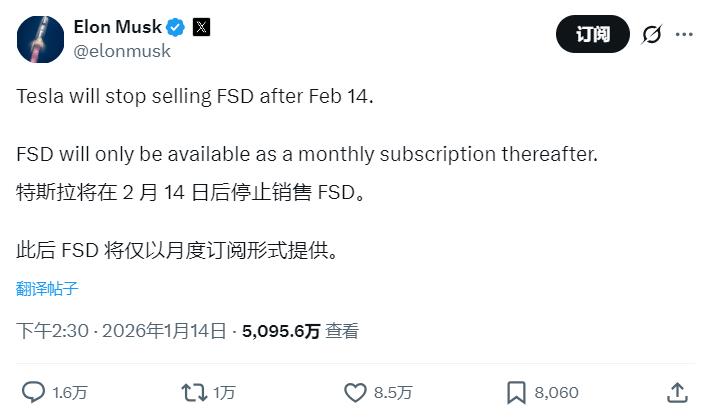
This is a very special signal.
Before this, FSD offered two parallel business models in the United States:
One is one-time purchase, and the price in the United States is $8,000 (equivalent to about 56,000 RMB).
The other is monthly subscription, and the monthly fee is $99 - $199 (equivalent to about 690 - 1,387 RMB).
Currently, FSD in China is only available for one-time purchase, and the price is 64,000 RMB.
Netizens have different opinions on Elon Musk's decision. After all, not everyone likes the subscription-based service. But most people think that monthly subscription has obvious benefits for both Tesla and car owners.
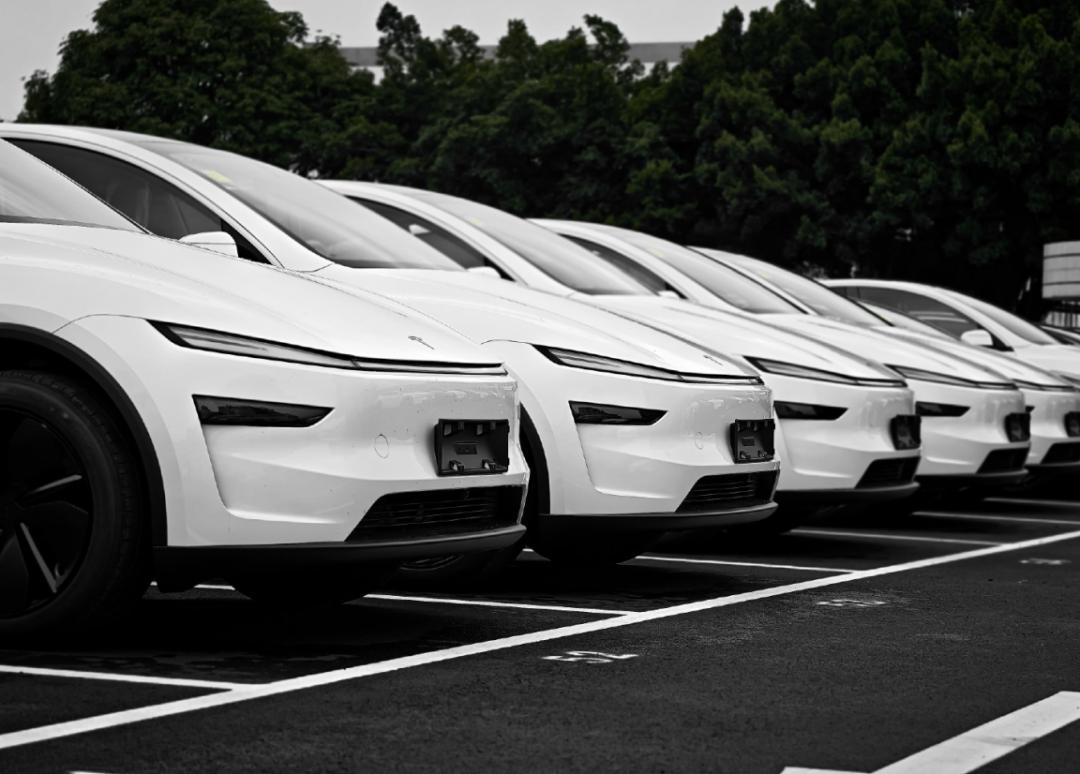
First of all, for car owners, they can buy FSD according to their needs. For example, they can buy it temporarily during a vacation. The cost is relatively lower, and there is more room for trial and adjustment.
Moreover, when an old car owner buys a new Tesla, the FSD subscription of the old car can still be used on the new car.
Secondly, for Tesla, the subscription system can bring continuous income to the company, which is similar to Apple's profit model.
More users will be willing to try it, which is exactly what Elon Musk wants -
After all, in the huge compensation incentive plan that Elon Musk just got, one of the requirements is to obtain 10 million FSD subscriptions to unlock it.

Looking deeper, this may imply that there is a qualitative change in Tesla's FSD. It is more confident in its own system. Because only providing subscriptions means opening up more room for trial and error, which means that Tesla is confident to attract more car owners to use it.
So, where has Tesla's FSD reached now?
According to the latest progress announced, the currently pushed version is FSD V14.2. The smoothness, perception ability, parking ability, etc. have all been significantly optimized, and it can handle complex scenarios such as rainy nights and dead ends with ease.
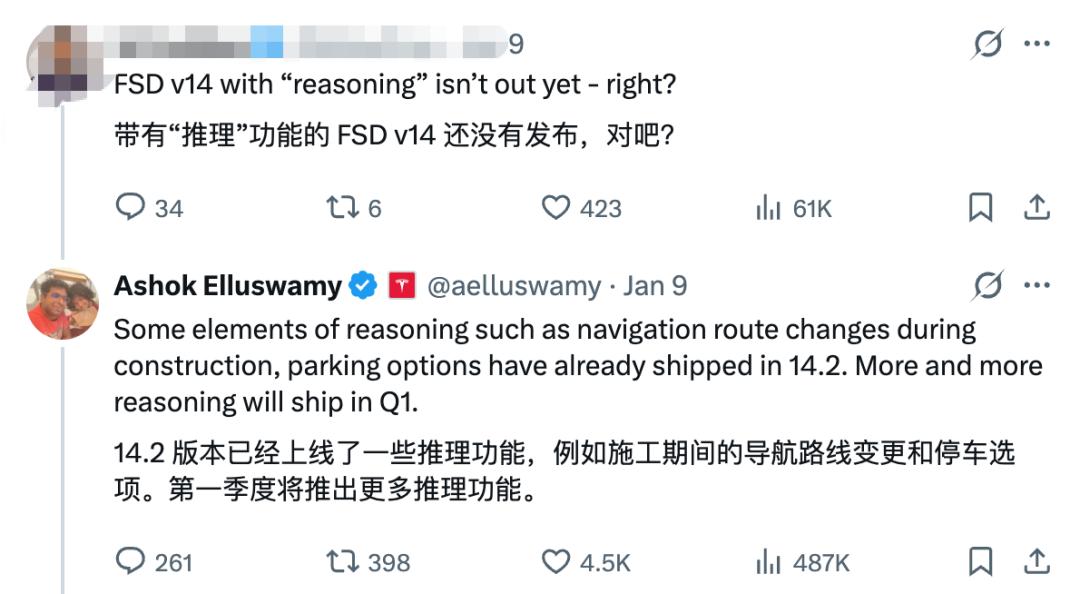
Tesla's vice president of autopilot, Ashok Elluswamy, recently confirmed that the current FSD V14.2 already has reasoning ability. It can change the route in construction scenarios and provide more parking space options. He also said that the reasoning ability will continue to be strengthened in the future.
Many car owners took their cars for a test drive on the road as soon as they received the update and said that the experience had been significantly improved.
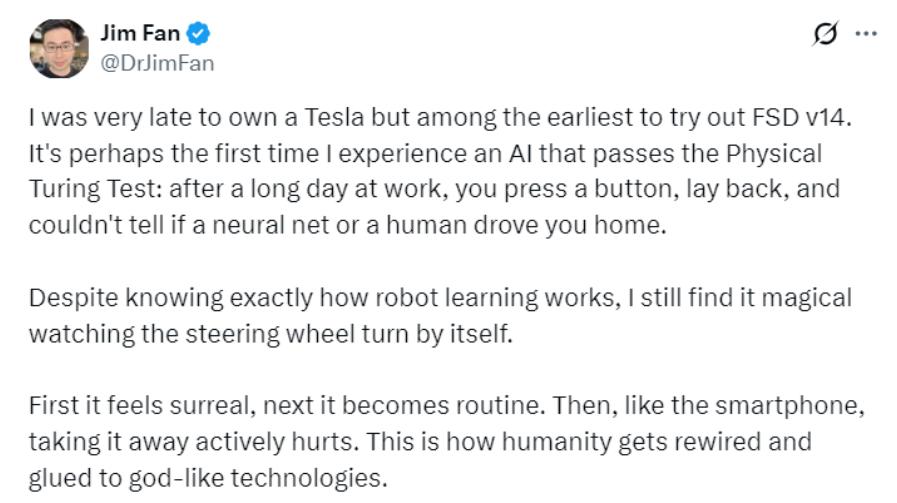
Jim Fan, a former student of Fei-Fei Li, a doctor from Stanford University, the head of the robotics department at NVIDIA, and an outstanding scientist, also gave high praise after experiencing FSD V14:
This may be the first time I've experienced an AI that passes the physical Turing test: After a long day at work, you press a button, lie back, and can't tell if it's a neural network or a human driving you home. Even though I fully understand how robotic learning works, it still feels amazing to watch the steering wheel turn on its own.
Not long ago, a car owner spent 2 days and 20 hours on a self-driving tour across the east and west coasts of the United States, a total of 2,732.4 miles (about 4,397.4 kilometers).