The truth after the shipment volume reached the top: humanoid robots are still in the transition period.
When Zhipu Robotics achieved a shipment volume of over 5,100 units, accounting for nearly 40% of the global market share, the humanoid robot industry, which had long been confined to laboratories, exhibitions, and videos, finally had a reliable real - world indicator for the first time.
According to the latest "General Embodied Robot Market Radar" released by Omdia, the global shipment volume of humanoid robots in 2025 is approximately 13,000 units. Zhipu Robotics, Unitree Robotics, Ubtech Robotics, and Tesla are listed in the first echelon. However, in this early - stage volume expansion, the one that truly stood out is Zhipu Robotics - its single - manufacturer shipment volume has exceeded 5,100 units, almost accounting for nearly 39% of the global market share.
The significance of this figure does not lie in being "number one on the list" itself. Instead, it marks that humanoid robots have stepped out of the technology verification stage for the first time and reached the starting line of industrialization oriented towards real - world delivery.
This is not a victory in a parameter competition or a result of the spread of a "technology - show - off video." It is a breakthrough closer to the industrial sense: humanoid robots are starting to be continuously produced, delivered, deployed, and enter real - world application environments.
In an industry where the global exploration generally remains at the level of hundreds of units or prototypes, Zhipu Robotics has taken the lead in running through the minimum closed - loop of "scale - delivery - feedback." This indicates that the focus of the industry's attention is shifting from "whether it can be made" to "who can enter the mass - production rhythm first."
In other words, the real dividing line in this round of shipment rankings is not the overall superiority of Chinese manufacturers, but that Zhipu Robotics has pushed the humanoid robot industry one step forward on the industrial timeline.
Saying Goodbye to the "PPT Stage", Shipment Volume Becomes the New Consensus Indicator
Over the past few years, humanoid robots have always been questioned for remaining in the "PPT stage." Although the technology demonstrations have been continuously breaking new records, they have always been unable to bypass three of the most realistic and cruel problems: whether they can be mass - produced stably, whether they can be reused across scenarios, and whether a truly closed - loop business model can be formed.
Although Zhipu Robotics' top - ranking in shipments does not mean that it overwhelms all its competitors in technology, it provides the industry with a new evaluation criterion: Humanoid robots are starting to be regarded as an industrial product that can be delivered, rather than a laboratory prototype.
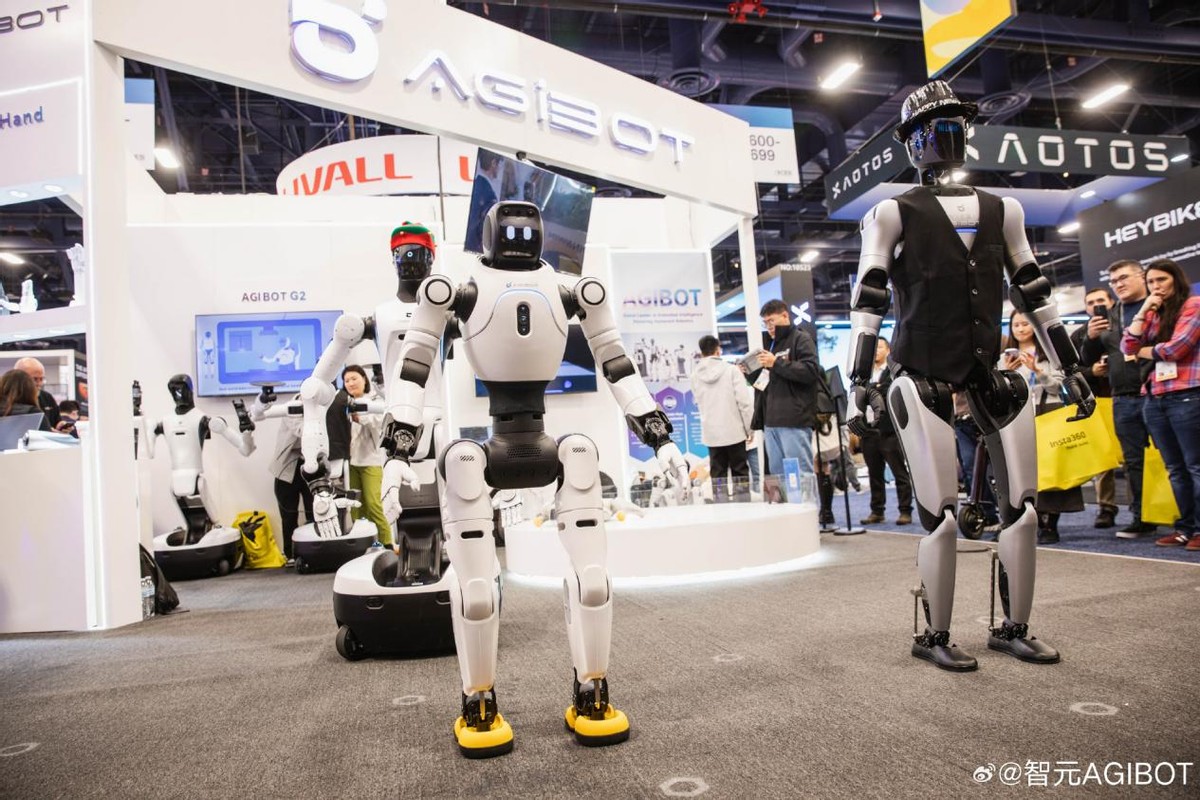
Image source: Zhipu Robotics' official Weibo
In this round of competition, what determines the outcome is no longer just single - point technical indicators, but a comprehensive reflection of product maturity, manufacturing capabilities, and business structure. Zhipu Robotics' differentiated approach is not to pursue the limit of performance, but to prioritize "deliverability."
At a stage when the technology has not fully converged, Zhipu Robotics has not bet on a single technical route. Instead, it is simultaneously promoting full - size, half - size, and wheeled multi - form products, actively dispersing the engineering risks brought about by the incomplete convergence of the humanoid structure.
In terms of business strategy, Zhipu Robotics has adopted an obvious "commercial use first" strategy. That is, the ability to be mass - produced, maintained, and repurchased is more important than "running faster" or "jumping higher."
Behind this is actually a shift in the industrial logic of humanoid robots. The industry's focus is shifting from "whether the technology is feasible" to "whether the system is stable," "whether the supply chain is controllable," and "whether customers are willing to keep paying."
This approach reduces the systematic risks brought about by a single technical route and enables the company to be more quickly integrated into real - world demands, rather than waiting for the arrival of the "perfect general form."
In 2025, Zhipu Robotics achieved shipments of over 5,000 units and revenues of 1 billion yuan, and expects to maintain several - fold growth in the next few years. The significance of these figures is not only that it has crossed the important critical point of mass - production in the humanoid robot industry and formed a reusable industrial closed - loop in terms of the supply chain, manufacturing system, algorithm stack, overall machine tuning, and cost model, but also a clear confirmation of early - stage business demands.
This is why shipment volume is replacing "technology demonstrations" as the new consensus indicator in the industry. It measures not imagination, but the ability to deliver on promises.
Although humanoid robots have finally left the laboratory, it does not mean that the final outcome of the technology competition has been decided. The real change is that the industry is starting to shift from "making it" to "who can continuously deliver."
Behind the 5,100 Units, It's a Realistic Transitional Business
A continuously increasing shipment volume does not equal the real popularization of humanoid robots.
If we break down the real destinations of these 5,100 units, we will find that what current humanoid robots undertake is not the "general labor force" that can replace humans as the public imagines, but a series of highly structured application scenarios with low tolerance for errors.
In the fields of cultural and entertainment commercial performances, exhibition guidance, and brand interaction, the value of the "humanoid" lies first in its display ability. In the scenarios of scientific research and education, industrial manufacturing assistance, data collection, and training, humanoid robots mainly serve as system training terminals and carriers for capacity iteration, rather than mature production tools.
Although these scenarios seem scattered, they have a common characteristic. They have a high tolerance for errors, are not sensitive to single - time efficiency, but can continuously generate data, feedback, and room for improvement.
For this reason, current humanoid robots are more like terminals for data collection and system training with commercial attributes, rather than mature "machine labor forces." At the same time, this is also the most "economical" living environment for current humanoid robots.
Under this logic, the path differences among different manufacturers are starting to become clear.
Unitree Robotics has chosen a route closer to the consumer end and focused on demonstrating sports capabilities. By lowering the price of the Unitree R1 to 29,900 yuan, Unitree Robotics has successfully lowered the psychological threshold of the market and established stronger recognition in terms of engineering capabilities.

Image source: Unitree Robotics' official Weibo
Ubtech Robotics has more firmly plunged into the industrial and government - enterprise systems. The delivery rhythm of the Walker S series in industrial scenarios is stable, and the order amount is highly certain. The cumulative orders in 2025 reached as high as 1.3 billion yuan.
Zhipu Robotics is located right between the two. It has neither fully bet on the explosion of the consumer market nor locked itself into the logic of large - scale projects. Instead, it is continuously expanding the "scenarios that can be delivered on a large scale" through parallel verification of multiple scenarios, thereby continuously expanding the boundaries of deliverability.
The relationship among the three is not simply about superiority or inferiority, but different judgments on "who to sell humanoid robots to at this stage."
In other words, the commercialization of humanoid robots today is essentially a "transitional business." What really determines the pattern of the next stage is not who can tell the general narrative earliest, but who can accumulate the most real - world data, engineering experience, and customer feedback at this stage.
Because only after completing this round of accumulation is one qualified to enter the next - stage competition for generalization.
2.6 Million Units Is Not the Finish Line, but the Starting Point of an Elimination Tournament
If we stretch the timeline, the imagination space for humanoid robots is sufficiently vast.
According to Omdia's prediction, the annual global shipment volume of humanoid robots is expected to reach 2.6 million units in 2035. Citigroup has even extended the timeline to 2050, presenting a long - term imagination space of 648 million units.
However, the transition from 13,000 units to 2.6 million units is not a simple expansion, but a comprehensive test of an enterprise's organizational capabilities, ecological construction capabilities, and the endurance of its business model.
For Zhipu Robotics, its current lead is only a phased achievement. It has crossed the threshold of "being unable to sell" and proved that humanoid robots can be delivered on a large scale.
However, as the shipment scale continues to expand, the ability to stably adapt to complex scenarios, the intelligent migration ability across industries, and the potential to build a platform and an open ecosystem will become the key variables determining the growth slope. Once the system complexity cannot keep up with the scale expansion, the leading advantage may be quickly diluted.
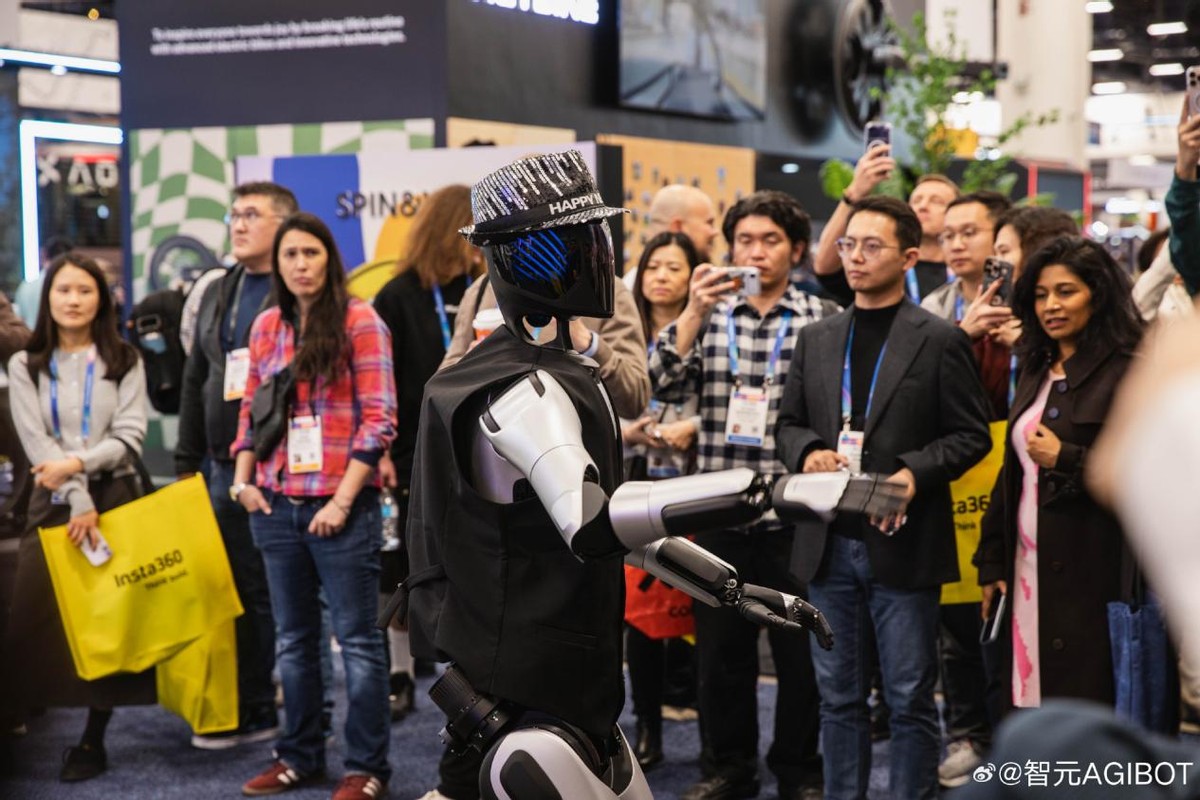
Image source: Zhipu Robotics' official Weibo
Ubtech Robotics' advantage lies in the certainty of orders and the real - world value in industrial scenarios. However, this model is still essentially project - based. Before the global application has fully unfolded, the project - based model naturally limits the expansion speed.
If it cannot open up new growth in general capabilities and the international market, Ubtech Robotics' growth may remain in a "steady but limited" range for a long time.
Unitree Robotics' low - price advantage and strong engineering capabilities have won it an entry - point advantage, but they have also planted hidden worries about the long - term profit model. Although the low price can open up the market, it is difficult to support high - complexity applications in the long run, and it will be inevitable to make up for the deficiencies in software, services, and the ecosystem.
From Zhipu Robotics' phased lead, to Ubtech Robotics' in - depth industrial development, to Unitree Robotics' leveraging of price to open up the entry - point and imagination space, today's differentiation is more like a screening for the next - stage long - distance race.
The 2.6 million units will not be the end of the industry, but the starting point of a new round of cruel competition. What it really screens is not "who has the highest shipment volume," but who can build a continuous revenue model, cross - scenario intelligent capabilities, and an open ecosystem. What it competes for is no longer speed, but who can survive the high - intensity consumption and continue to evolve.
Conclusion
Looking back at today's humanoid robot industry, it is easy to be led astray by shipment numbers, action videos, and grand predictions. However, what is truly worth remembering is not how many units a company sold in a certain year, but that this industry has finally completed a crucial identity transformation - from technology demonstrations to deliverable industrial products.
Zhipu Robotics' phased lead, Unitree Robotics' leveraging of price to open up the entry - point, and Ubtech Robotics' in - depth exploration in industrial scenarios do not point to a pre - determined end. Instead, they are jointly outlining a clear industrial path: Before humanoid robots are fully generalized, commercialization is not the end, but a necessary transition.
The curve from 13,000 units to 2.6 million units, and then to the more distant long - term assumption, will not grow naturally.
Humanoid robots have not suddenly "matured." They have just finally left the laboratory and entered a stage where they must be tested by reality. And it is precisely at this stage that the real competition begins to become cruel and clear.
This article is from "Songguo Finance," author: When the Piano Sounds, published by 36Kr with authorization.