Goodbye, programmers. Everyone in Silicon Valley is doing AI coding. Andrej Karpathy declared that a magnitude 9 earthquake is coming.
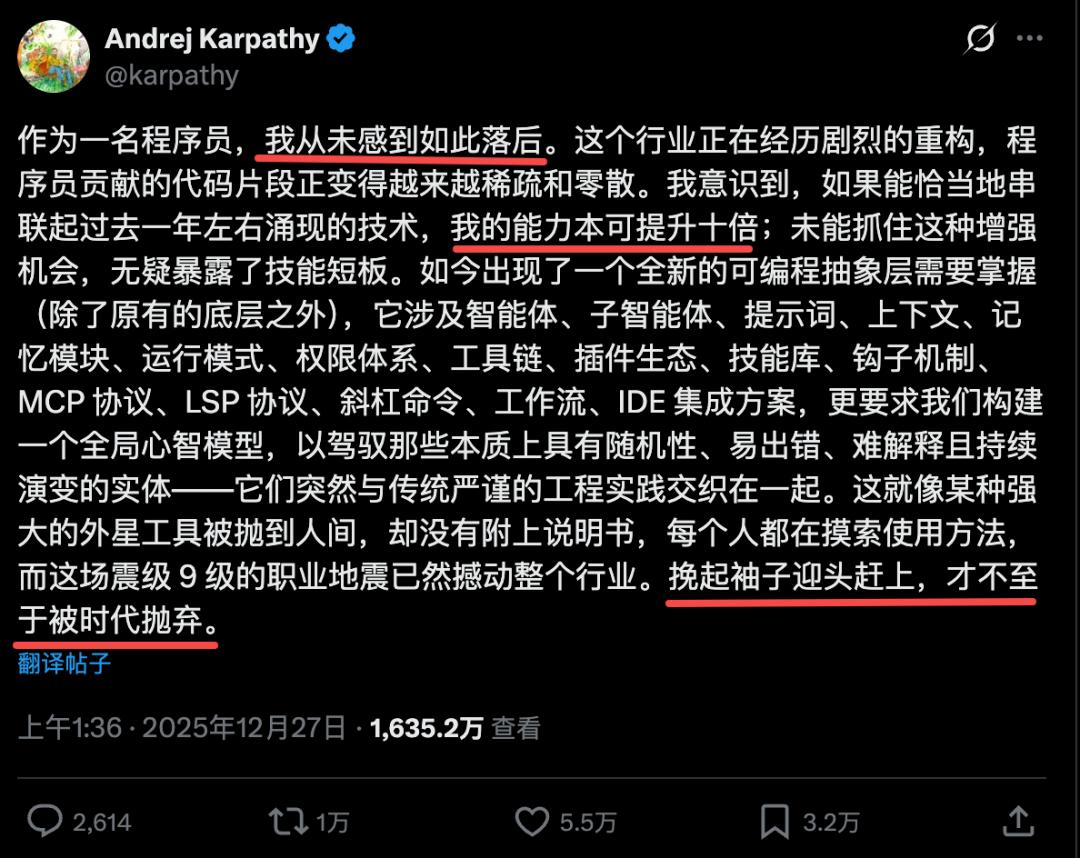
On December 27, 2025, Andrej Karpathy posted a tweet.
This tweet was quickly retweeted over ten thousand times and received tens of thousands of likes.
Because it hit on a reality that all developers can feel but few can clearly articulate:
The profession of software engineering is being completely reshaped. And most people are being left behind by the times.
This tweet triggered a "collective panic," and the aftershocks of this wave have continued to this day.
In the tech circle, there's no need to elaborate on Karpathy's influence. He is a technical idol in the hearts of countless programmers and a pioneer at the forefront of the AI wave.
But the content of this tweet broke the defenses of the entire developer community:
"As a programmer, I've never felt so far behind."
He admitted that if he could correctly use the AI tools that emerged in the past year, his capabilities could have been ten times greater - but he hasn't achieved that yet. And this sense of powerlessness made him call it a skill gap.
What's even more suffocating is his description of the current situation:
"It's like some powerful alien tool has been thrown into the world without an instruction manual. Everyone is groping for how to use it, and this magnitude 9 career earthquake has already shaken the entire industry."
Alien tool. No instruction manual. Magnitude 9 earthquake.
If even Karpathy is panicked, what should ordinary programmers do?
The Programming Singularity: The Rules of the Game Have Been Rewritten
Two weeks later, well - known tech blogger Theo (founder of t3.gg and CEO of Ping Labs) made a video in response to Karpathy.

The title of the video is straightforward to the point of being cruel:
You're falling behind. It's time to catch up.
(You are falling behind. It's time to catch up.)
Theo's core assertion is concise and powerful: The field of software engineering has reached a permanent turning point.
Pay attention to this word, permanent.
This is not just another technological iteration, not a change of the level from jQuery to React, but something more fundamental.
The profession of software developer itself is being redefined.
He used an accurate metaphor: This is a magnitude 9 earthquake. Not an aftershock, not a minor disturbance, but a major quake that can change the landscape.
What exactly happened in the past year?
Theo revealed a data that shocked many people: In his own work and in several teams he operates and consults for, now 70% to 90% of the code is generated by AI.
Not auxiliary generation, not reference generation, but direct generation.
Let's review the timeline:
- 2023: AI can help you write functions, and you need to check and modify them.
- 2024: AI can help you write modules, and you need to integrate and debug them.
- 2025: AI can help you write entire functions, and you need to review and optimize them.
Where is the end of this trend? Theo believes that there may be no end at all, only continuous acceleration.
The window for waiting and seeing has closed!
From 2023 to 2024, it was reasonable to take a wait - and - see attitude.
At that time, the tools were immature, the cost was high, and the reliability was questionable. Many developers would say: Let the bullet fly for a while and see if this thing really works.
But by the end of 2025, this attitude has become a burden.
The capabilities of the basic models have reached the production level, the inference cost is halved every 8 weeks, and the tool ecosystem is mature enough to be used directly.
Tools like Cursor, Claude Code, and Windsurf are no longer experimental products but standard productivity tools.
Theo's judgment is straightforward: Those who start to adapt to AI now are officially late.
If you wait any longer, it's not just about being late, but you'll miss the whole game.
For example, Linus, the father of Linux, who was the most outspoken opponent of AI programming, has also joined in.
New Concepts: The Future Programming Paradigm Has Emerged
Karpathy listed a long list of new concepts in his tweet:
Agents, Sub - agents, Prompts, Contexts, Memory, Modes, Permissions, Tools, Plugins, Skills, Hooks, MCP, LSP, Slash Commands, Workflows, IDE Integrations...
This is not being deliberately obscure.
This is a brand - new programmable abstraction layer.
Looking back at the history of computer development, every major leap has been accompanied by an upgrade of the abstraction layer:
- From machine code to assembly
- From assembly to high - level languages
- From high - level languages to object - oriented programming
- From object - oriented programming to cloud - native
Now, we are experiencing another leap from hand - written code to orchestrating AI.
The traditional development process is linear: Requirement → Design → Coding → Testing → Deployment.
The core value of developers lies in the coding part: How quickly and accurately you can convert logic into code.
But now, this process is being deconstructed and reorganized.
The role of programmers is being restructured; they are no longer artisans writing code by hand but conductors orchestrating AI Agents.
What you need to master is no longer grammar details, algorithm implementation, or framework features, but:
- How to design and use AI agents (Agents)
- How to break down tasks for different sub - agents (Sub - agents)
- How to provide appropriate context (Context) for AI
- How to make AI remember the project's history and decisions (Memory)
- How to orchestrate AI's collaboration processes (Workflows)
- How to deal with new protocols such as MCP and LSP
Karpathy's exact words hit the nail on the head:
We need to build a global mental model to control entities that are inherently random, error - prone, difficult to explain, and constantly evolving - entities that have suddenly intertwined with traditional rigorous engineering practices.
This is a brand - new ability model.
If you're still using an "old map to navigate," you'll find that the road no longer exists.
The Bigwigs Are All In: Attention! This Is Not a Drill
If Karpathy's tweet was a wake - up call, then what happened next blew up the entire tech circle.
Linus Torvalds has joined in.
Yes, the legendary programmer who created Linux and Git, the old - school hacker known for his disdain for AI programming, has started using Google's AI tools to write code.
He said in an interview:
I'm surprised that the code written by AI is better than what I write by hand.
When the father of Linux starts using AI, when the person who once publicly mocked AI - generated code as garbage starts to change his tune, what reason do you have to keep waiting and seeing?
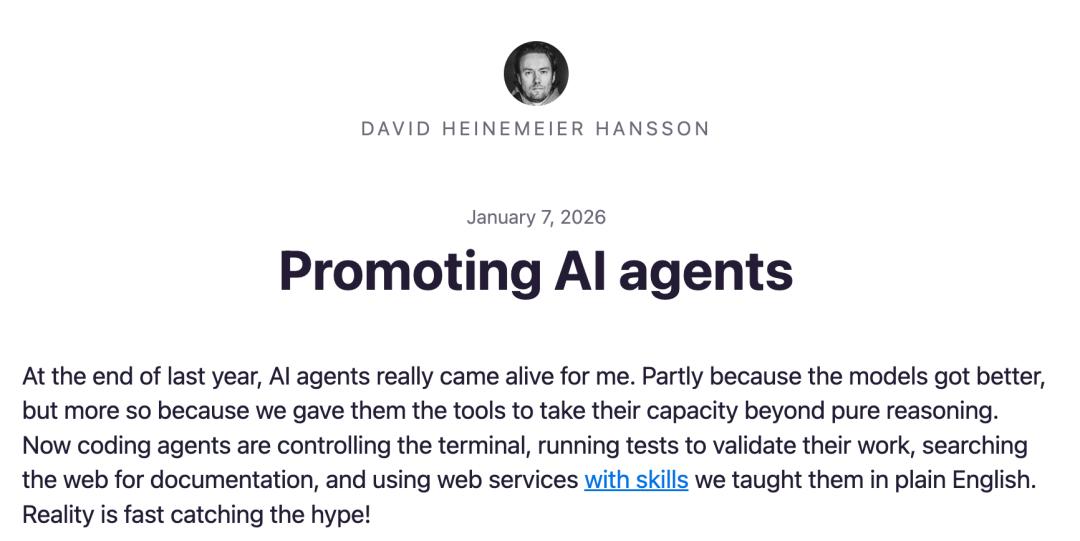
DHH has also joined in.
DHH, the founder of Ruby on Rails and a staunch supporter of the Rust language, has been enthusiastically promoting AI programming tools on social media. He even said:
Programmers who don't use AI to write code are like typists who refuse to use a computer.
What do these names represent? They are living fossils in the programming world, spokespersons for the craftsmanship spirit, and the group least likely to compromise with automation.
But they've all surrendered.
Because they've witnessed a fact with their own eyes: AI is not here to replace programmers; AI is here to replace programmers who can't use AI.
Silicon Is 60,000 Times Faster Than Carbon: The Verdict of Physical Laws
Why has the explosion of AI programming been so rapid?
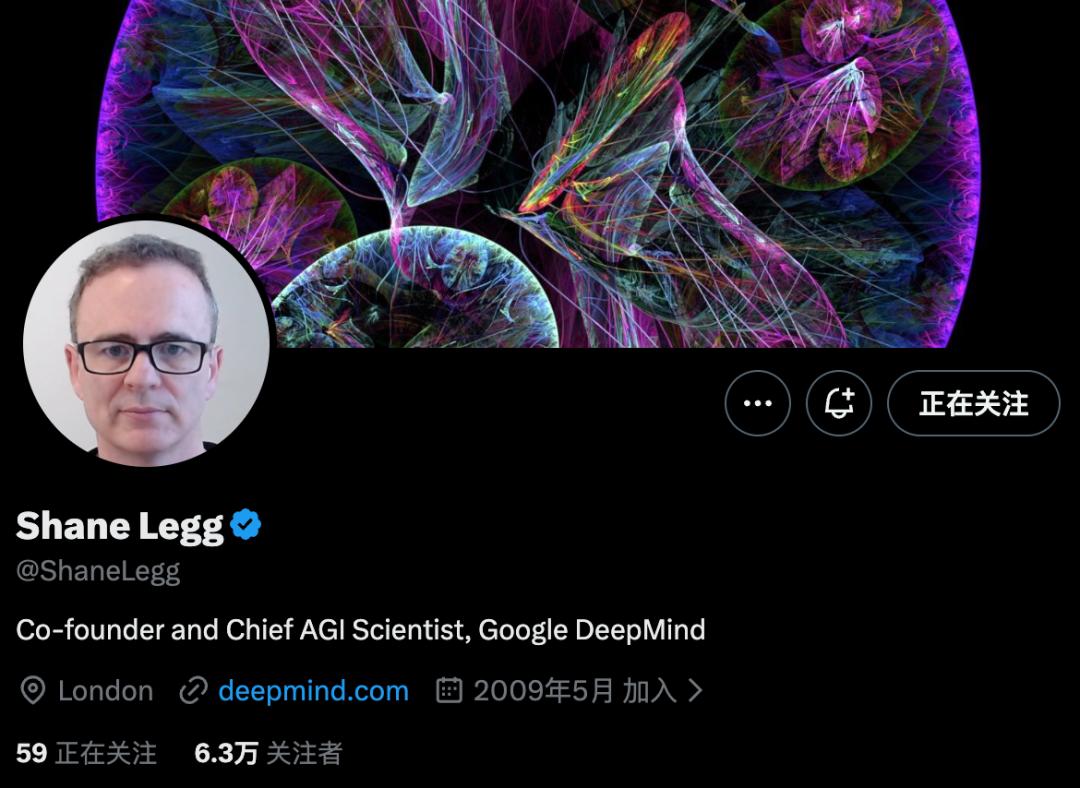
Shane Legg, the co - founder of Google DeepMind, gave a chilling explanation in an interview:
The human brain is essentially a low - power 20 - watt mobile processor, limited by biology.
While our internal neural signals move slowly at a speed of 30 meters per second, AI data travels at the speed of light.
The firing frequency of biological neurons is usually as high as 100 - 200 Hz (the average frequency is much lower, about 0.1 - 2 Hz, and some peaks can reach ~ 450 Hz), while the clock speed of modern silicon chips is usually as high as 6 billion Hz.
That is to say, silicon is about 60,000 times faster than carbon.
60,000 times.
This is not a gradual improvement; this is a crushing at the level of physical laws.
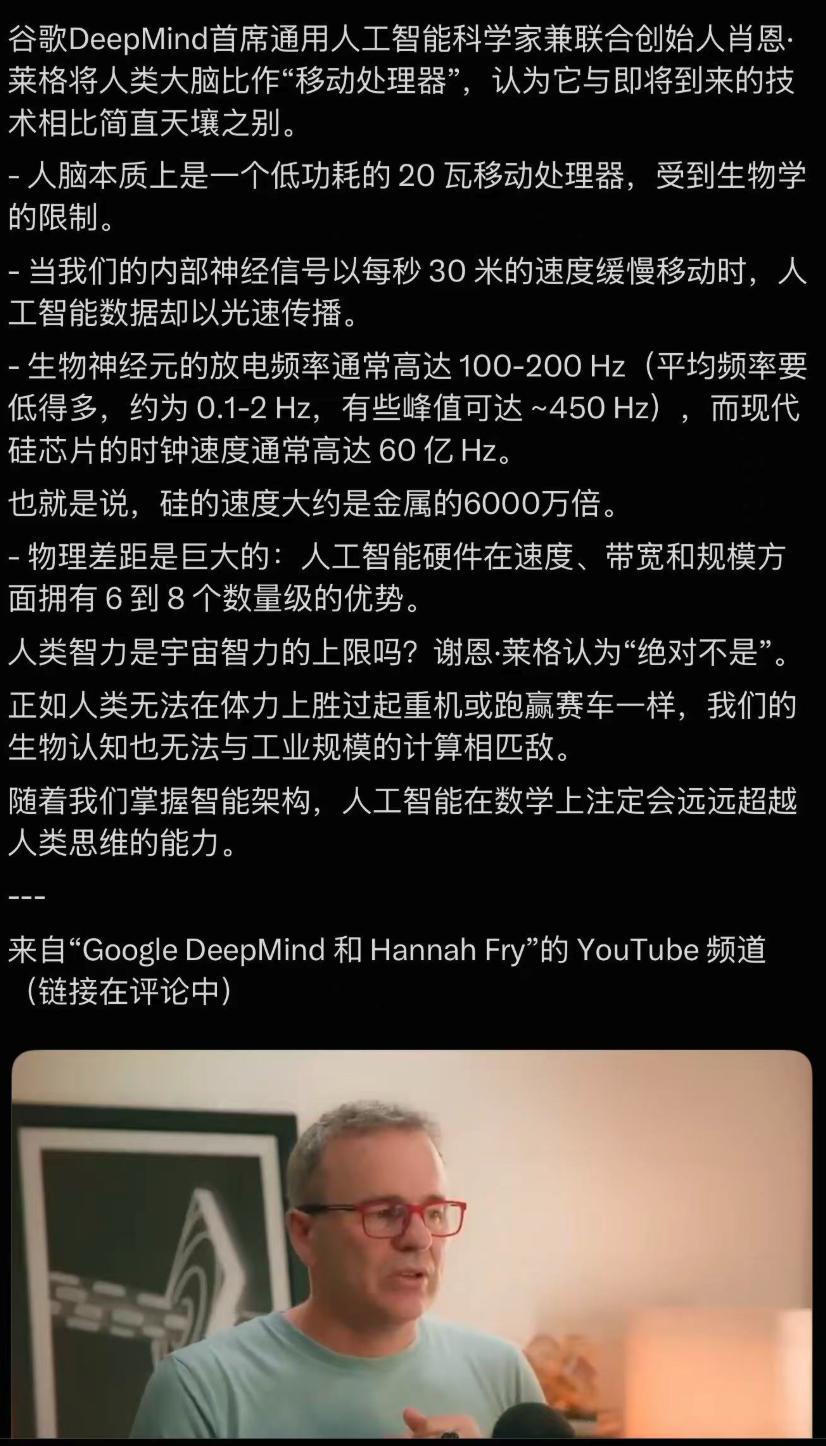
Legg further pointed out:
Just as humans can't outperform a crane in physical strength or outrun a racing car, our biological cognition can't compete with industrial - scale computing.
As we master intelligent architectures, AI is mathematically destined to far exceed the capabilities of human thinking.
This is why the programming field is the first to reach the singularity: Code is pure logic, and the compiler is a perfect judge.
In this field, there is no gray area, no subjective judgment, only code that can run and code that can't. This is the battlefield where AI excels.
And the human carbon - based brain is being crushed by silicon - based intelligence at a speed 60,000 times faster.
A Survival Guide for Programmers
Facing this magnitude 9 earthquake, what should ordinary programmers do?
Theo gave a very specific five - step action guide:
Step 0: Immediately Connect to AI Code Review
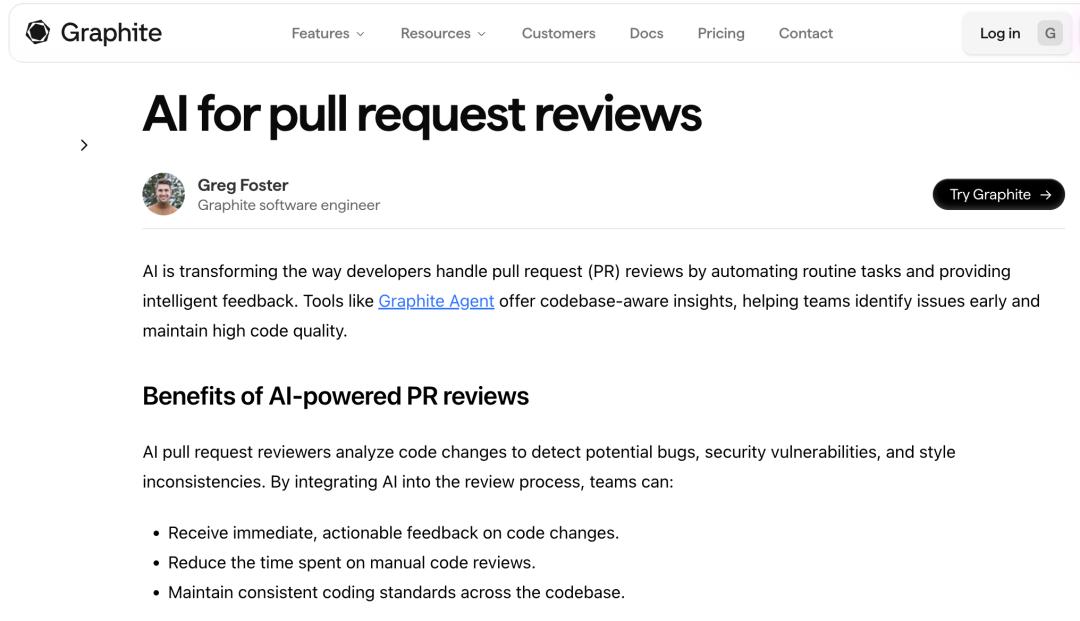
The first step is the simplest and lowest - risk: Connect an AI - driven code review tool to your code repository. Tools like Graptile and CodeRabbit will automatically check code quality and find potential bugs during the PR stage.
Zero cost, zero risk, and immediate results.
Step 1: Test the Limits of AI
Find a task that you spent a week on in the past and try to complete it with AI in a few minutes. Don't expect perfection; the key is to build an intuition about the boundaries of AI's capabilities.
Theo's advice is straightforward: If you don't feel even a little uncomfortable, it means you're not trying hard enough.
Step 2: Learn to Read AI's Thinking Process
Use Plan Mode to observe how AI analyzes the code repository, formulates plans, and breaks down tasks. It's like watching a chess player review a game; you need to understand not only the result but also the considerations behind each step.
Step 3: Establish an agent.md System
This is the most crucial step. Create and maintain an agent.md file in your code repository. Whenever you manually modify AI - generated code, add a rule to this file.
The effect is exponential:
First week: The accuracy of AI increases from 60% to 75%
First month: The accuracy of AI increases to 85%
After three months: The accuracy of AI approaches 95%
Your work gradually changes from writing code to raising requirements.
Step 4: Learn to Orchestrate Multiple Agents
The last step is the ultimate goal: Make multiple AI Agents work together, like a symphony orchestra.
This is a brand - new skill tree, and this skill tree is still growing rapidly.
A Warning for Managers
Theo specifically addressed technical managers and CTOs in the video. His tone was unusually serious:
Don't force employees to use outdated models.
Many companies, for cost - control or data - security reasons, require engineers to use old, in - house fine - tuned models or restrict the use of the latest models such as Claude and GPT - 4o.
Theo's warning is straightforward:
Forcing them to use old or inferior in - house models will cause top - tier talent to leave.
Excellent engineers will realize that in this company, their productivity is artificially restricted, their skills are growing more slowly than the market, and they are doing backward things with backward tools.
The result is a brain drain, a decline in competitiveness, and a negative cycle.
Many managers will say: Claude costs $15 per million tokens, while our own model only costs $0.5. We must save money.
But the real calculation is: The hourly wage of a