The belated Pocket craze and DJI's ambition
The tech industry in 2026 is witnessing a long-overdue boom.
Against the backdrop of fast iteration in consumer electronics where products are updated every six months and become outdated within a year, DJI Osmo Pocket 3 has followed a highly unusual lifecycle curve. More than two years after its launch, this product still maintains a remarkably high presence rate in popular scenic spots, concert venues and even on the streets. Instead of fading over time, it has increasingly become a classic symbol that transcends cycles.
The product, playfully nicknamed "electronic Moutai" by netizens, owes its evergreen vitality to breaking the dimensional barrier between "professional equipment" and "mass life". Looking back at the past two years, DJI Pocket 3 has completed a textbook-level product perception leap: in 2023, it was known as the "Vlog magic tool" in the mouths of digital content creators; soon after, it quickly penetrated the mass market and became the "travel shooting buddy" for ordinary families and young people; and recently, with the shift of social media trends, it has become the viral "Live Photo magic tool" and "cinematic atmosphere magic tool" across the whole internet thanks to its unique imaging quality.
When a hardcore tech product starts to be discussed for its "photo output quality" on Xiaohongshu and used to record "lifetime photos" on WeChat Moments, it is no longer limited to the vertical creator economy, but has entered the broader mass imaging market.
Having spotted the huge cake of this market that is expanding from niche to mass, mobile giants and traditional imaging manufacturers can no longer hold back. Supply chain sources confirm that multiple leading manufacturers' "Pocket-like form" products have entered the countdown to mass production. This marks that Pocket-form products are no longer DJI's solo show, and are evolving into the next-generation "new infrastructure" of the imaging industry following smartphones.
However, on the eve of the coming industry war, Pocket 3 is still the benchmark being imitated. A figure that has caught the industry's attention shows that among Pocket 3's user profiles, the proportion of female users has exceeded 50%. This is unprecedented in DJI's brand history, which is full of carbon fiber, motors and hardcore parameters. It proves that Pocket 3 has successfully broken the traditional logic of tech products that "prioritize parameters over experience", realized the value leap from a professional tool to a lifestyle symbol, and also means DJI has completed a textbook-level brand breakout.
The success of Pocket 3 proves the high premium capability of independent imaging devices — it is not an accessory to smartphones, but a hard currency. However, latecomers have to face a cruel reality: the first-mover barrier built by DJI over seven years is far more than just hardware stacking, but a long game involving physical limits, supply chain integration and user psychology.

The Lone Pioneer
To understand Pocket 3's current dominance, we have to turn the clock back ten years, to the uncharted "no man's land" that no one had stepped into.
The story started in 2014. Back then, DJI dominated the sky with its Phantom series drones, but the company had no clear concept for ground shooting. It was not until the product team found a strange phenomenon on overseas geek forums: some hardcore users used 3D-printed handheld brackets to remove the expensive Zenmuse gimbal from the Inspire series drones, and forcibly tied it to a selfie stick to shoot ground videos. This "violent mod" from users shocked the engineers at DJI's Shenzhen headquarters.
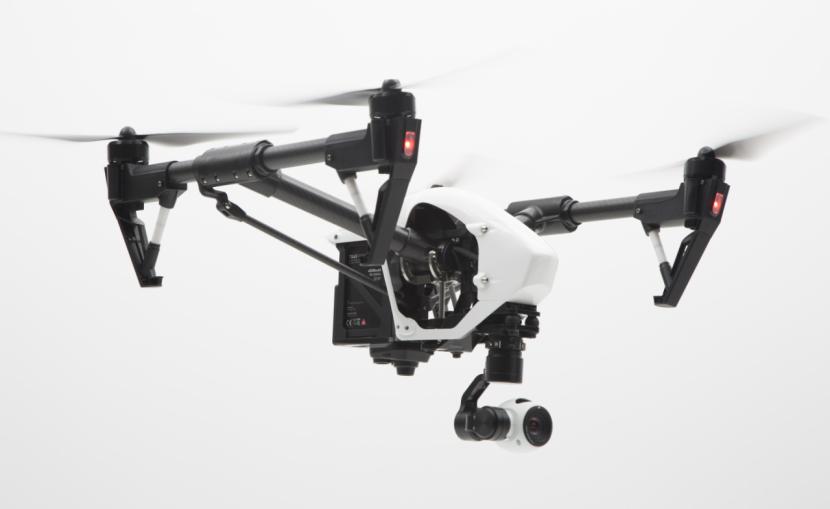
This is not just a form of tribute, but a strong signal of market demand, which inspired DJI's engineers: bringing the extremely mature drone gimbal technology originally used in the sky back to the ground would be a dimensionality reduction strike to the image stabilization market at that time.
On October 8, 2015, Osmo, the first-generation integrated handheld gimbal camera product, was born. Although its footage was extremely stable, its form looked rather strange. It was essentially a physical combination of a drone camera head, a handle and a mobile phone monitor. Users had to hold the torch-like device in one hand, and worry about the mobile phone connection disconnecting with the other. It met professional requirements but completely sacrificed portability. Engineers also admitted that Osmo was too big and too heavy. At that time, the product was still far from the concept of "Pocket".

The real turning point came in 2016, when engineers decided to create a smaller Osmo that can work independently.
On the initial sketch of the first-generation Pocket, the shape of the fuselage was like a lipstick. At an early project initiation meeting, the product manager took out a common Wrigley's Spearmint metal candy box that can be found in any supermarket, slapped it on the table and said: "The main body of our new product cannot be larger than this box."
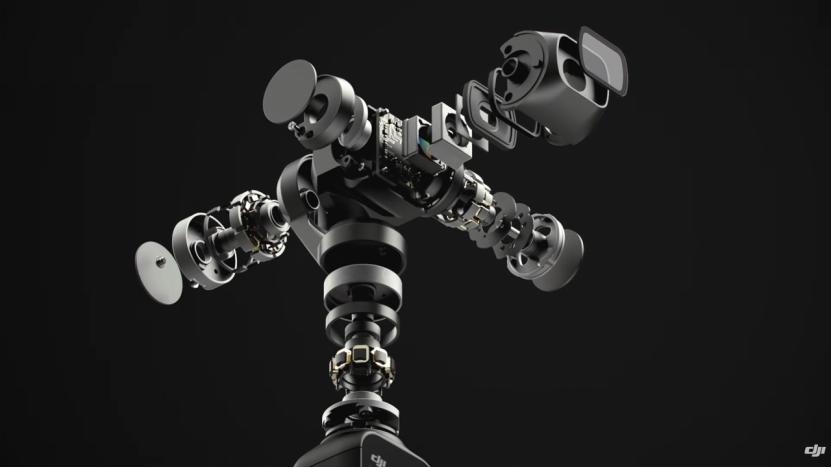
The logic behind this strict requirement is exciting: only by making it that small can it not take up the space in users' pockets that is reserved for AirPods, car keys or lipsticks. But for engineering implementation, it was a nightmare. That meant the 3-axis gimbal, which was originally the size of a fist, had to be compressed to the size of a ping pong ball.
What's even more crazy is the internal structure. To achieve unlimited 3-axis rotation, the diameter of the gimbal's shaft hole was compressed to less than 2mm, which is only as thick as a matchstick. In this extremely tiny space, engineers needed to fit more than 50 coaxial cables. That was not all: to ensure signal transmission, each cable contained 6 internal strands, plus the shielding layer, totaling more than 300 strands of wires thinner than a human hair. To miniaturize the gimbal, all these wires had to be hidden inside the structure.
In the most difficult stage of R&D, the biggest challenge engineers faced was "fatigue fracture". If any single wire broke after millions of rotations, the product would be scrapped. The R&D team spent a whole year polishing only to solve the balance between physical wiring and service life. This is why latecomers find it hard to replicate Pocket. Most consumer electronics manufacturers are used to avoiding mechanical moving parts because they are so easy to break, but DJI does not mind challenging this "precision watch-level" complexity.
However, the loneliest moment did not occur during the technical tackling process, but when there was no market consensus.
During the R&D period from 2016 to 2017, the term "Vlog" barely existed on the Chinese internet, and there were hardly any related videos to be found on Bilibili. Inside DJI, doubts once emerged: in an era when almost no one shot videos, was building a dedicated video-shooting device a pseudo-demand? But DJI's senior management foresaw the possibility of the explosion of video social interaction in advance, and approved the support for the Pocket project.
In 2018, the first-generation Pocket was launched as scheduled. It verified the feasibility of the product category, but also exposed the immaturity of the initial product — limited focusing distance, high noise during audio recording, and not wide enough field of view. If this was only a tentative move by DJI, the story might have ended there.
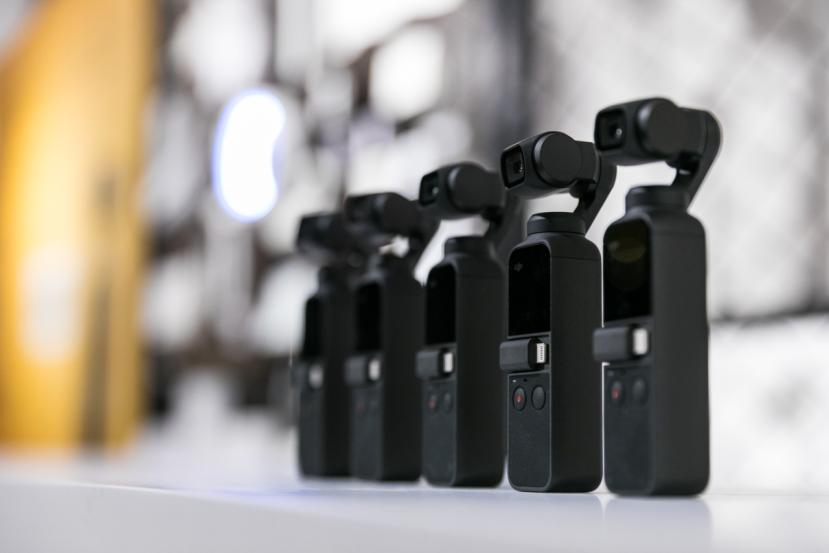
But DJI chose to "stick to it relentlessly". In 2020, Pocket 2 was launched under pressure. With almost no change in the fuselage volume, the R&D team fitted a wider 20mm lens to meet the demand for selfie shots with background, implanted a 4-array microphone to reconstruct the audio system, and even designed an all-in-one handle to expand the ecosystem.
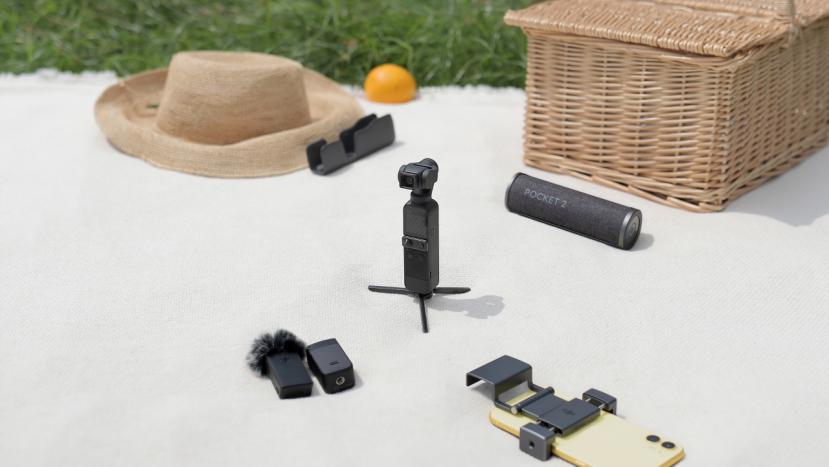
Pocket 1 represented the vision of "from 0 to 1", while Pocket 2 represented the persistence of "from 1 to 1.5". In the years when the mass market had not fully exploded and Vlog was still in its infancy, DJI endured the loneliness, and evolved the product from "usable" to "user-friendly" through polishing two generations of products. It is precisely this years-long deep technical cultivation and trial and error that laid a key foundation for the subsequent "accumulation of strength for a big leap" of Pocket 3 — when the market trend really arrives, only those who are fully prepared can take off.

The Solid Moat
To this day, the reason why Pocket 3 can become "electronic Moutai" is not luck, but the result of DJI's relentless technical polishing and overcoming three major difficulties in the three-year "quiet period" after the release of Pocket 2.
The first difficulty is image quality, which is a victory of physical optics.
Mobile phone manufacturers have been competing in imaging for ten years, but they have never been able to break through the limit of physical thickness. To maintain a slim body within 13mm, smartphones cannot perfectly accommodate a 1-inch sensor without sacrificing edge image quality. The launch of Pocket 3 is a "physical impact" on mobile imaging. Leveraging the advantage of its fuselage length, it achieves a complete flange distance on the lens module, and fully takes all the benefits of the 1-inch large sensor. This means that in night scenes and low-light environments, the purity and dynamic range provided by Pocket 3 is "optical reality" that cannot be easily simulated by mobile phone algorithms.
The second difficulty is ease of use, turning the operation of the device into a stress-relieving activity.
How to make users willing to take out the camera? DJI's answer is to make a 2-inch rotating screen. This is not just a screen, but a switch. To adjust the hand feel when rotating this screen, the structural team tested hundreds of spring solutions, and finally tuned out the crisp mechanical damping feel similar to opening a Zippo lighter. This brilliant design makes the boot action itself a stress-relieving ritual. Many users report that they even take it out to rotate it a few times when they have nothing to do. This psychological "addictive design" greatly lowers the psychological threshold for shooting.
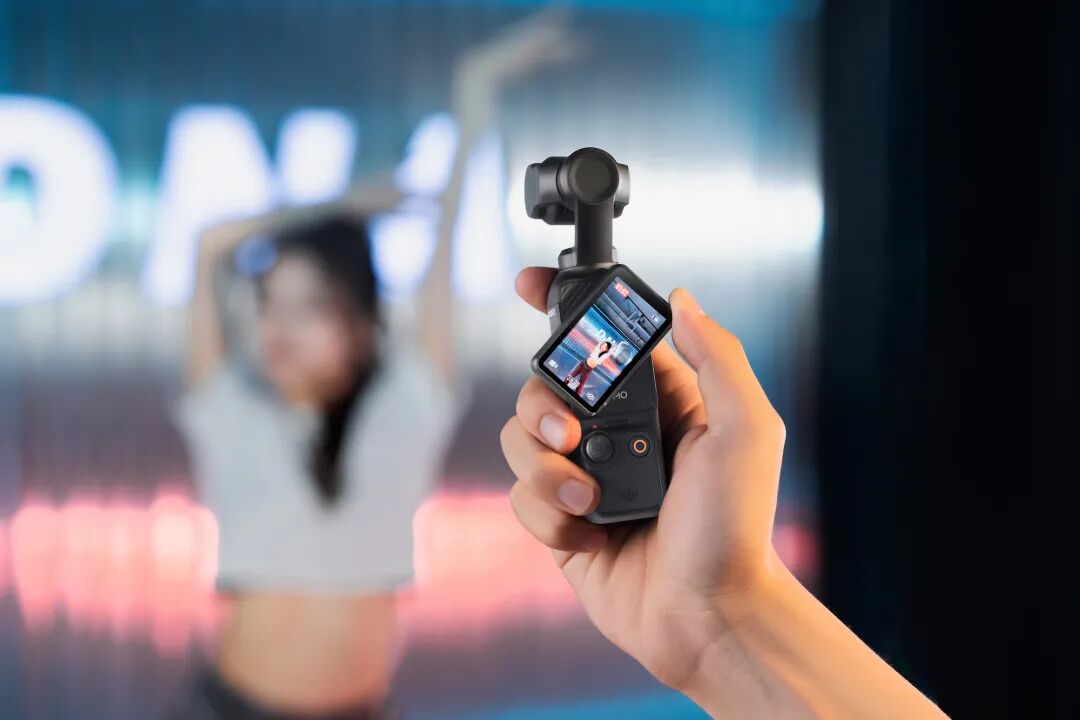
The third difficulty is aesthetics, achieving a level that even female users are fully convinced by.
Before Pocket 3, DJI was once regarded as a typical example of "engineering-focused products". But on this generation of products, DJI got one thing right: redefining "beauty retouching and skin tone". Even in the red ocean market where domestic mobile phones have pushed "portrait beauty retouching" to the extreme, Pocket 3 still stands out and becomes the essential "1+1 travel shooting buddy" that users carry with them in addition to their mobile phones, which fully proves that its image quality is recognized and welcomed by the mass public.
Different from the "violent skin smoothing" algorithm still used by some mobile phones, Pocket 3 introduces a skin tone science that is more in line with professional imaging aesthetics. The texture it presents is "natural beauty enhancement": it retains the real texture of the skin while removing blemishes, as if restoring the user's original appearance. This advanced aesthetic orientation has spawned a trend of exclusive filters for "DJI original camera" on platforms with a large number of female users such as Xiaohongshu, completely reversing the gender ratio of the brand's users.
Admittedly, the moat in the business world ultimately comes down to cost competition. The challenge of building products like Pocket is that manufacturers can hardly make real profits.
Once a manufacturer carefully disassembled Pocket 3, and then sighed that if they purchased motors, gimbals and sensors of the same level on their own, the BOM cost would even be higher than the retail price of Pocket 3.
In fact, the secret for DJI to reduce costs lies in extreme vertical integration. It is not just an assembly plant, but also a parts manufacturer. From micro brushless motors to high-precision lenses, even the core ISP (Image Signal Processor) chip, DJI has achieved independent R&D or in-depth customization. The cost of self-developed chips alone is more than 30% lower than that of general-purpose solutions. Some manufacturers have calculated that DJI has already pushed the price below the industry's cost line. This is the fundamental reason why Pocket 3 can drop from 3499 yuan to a more competitive price point while maintaining a high profit margin.

Diversified Positioning Under a Thriving Ecosystem
As 2026 arrives, it is a certainty that multiple manufacturers will enter this market. After computational photography has dominated the imaging industry for a decade, we are experiencing a return to the physical world.
Even with a 1-inch large sensor and computational photography support, mobile phones cannot defy the laws of physics: full-body vibration