Level 3 autonomous driving is here: Don't tell me about those parameters. I only need a "scapegoat."
Autonomous driving is getting closer and closer to us.
Not only in cities like Beijing, Chongqing, Shenzhen, Guangzhou, Shanghai, and Hangzhou, where vehicles that have batch - obtained L3 - level autonomous driving road test licenses are conducting tests, but even Mengcheng in Anhui has issued county - level intelligent connected vehicle test licenses, accelerating the leap of intelligent driving technology to the "countryside".
Obviously, this wave of autonomous driving testing started on December 15, 2025. An official announcement from the Ministry of Industry and Information Technology pressed the key fast - forward button for this transformation. The Changan Deepal SL03 and BAIC ARCFOX Alpha S series became the first models in China to obtain the access permit for L3 - level conditional autonomous driving products, and are allowed to conduct on - road pilot operations on some designated roads in Beijing and Chongqing.
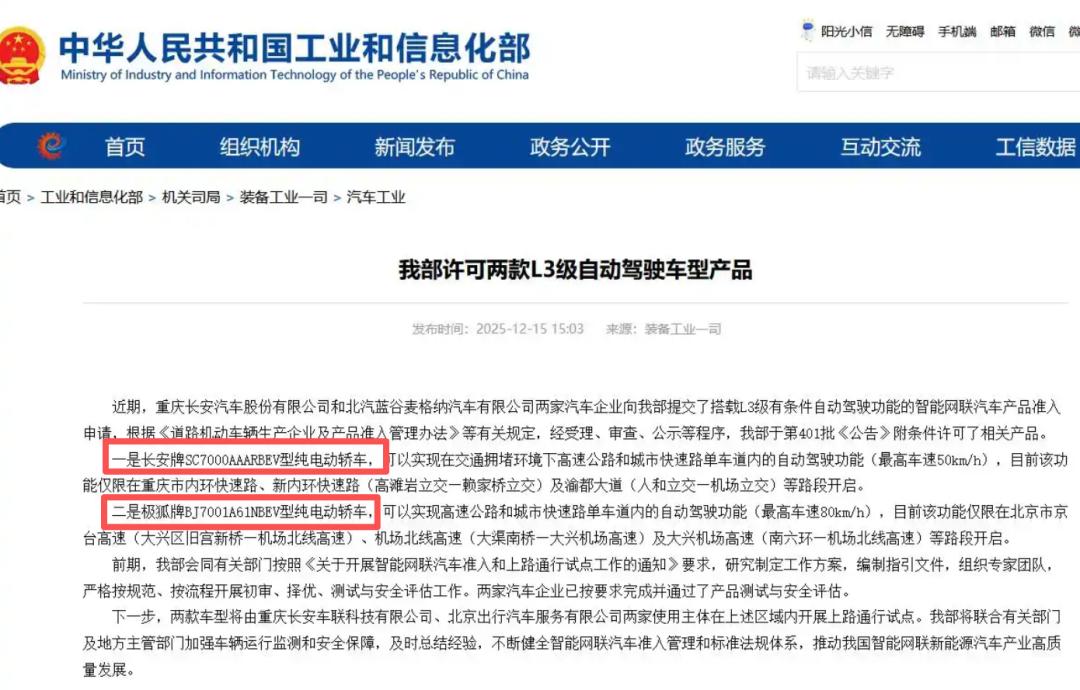
Photo/Deepal SL03 and ARCFOX Alpha S series obtain L3 access permit. Source/Screenshot from the Internet, New Energy Outlook
This marks that China's autonomous driving has officially entered the "eve" of commercial exploration in real - world scenarios from closed - loop testing and road demonstrations. Subsequently, car companies such as XPeng, Xiaomi, Seres, Voyah, and Geely announced that they had obtained L3 - level autonomous driving test licenses issued by local governments and started testing.
However, when the spotlight is on the technical symbol "L3", what may be churning in the minds of ordinary car buyers is not the yearning for the number of lidar lines or computing power chips, but a simpler and more fundamental question: When the car is driving itself and an accident occurs, who is ultimately responsible?
Car companies are keen to promote that their intelligent driving systems have safely traveled tens of millions or even hundreds of millions of kilometers. However, for you and me holding the steering wheel, the cold mileage numbers are far less real than a clear commitment.
The dawn of technology has broken, but the "sun" that illuminates the way forward must be "responsibility". The real arrival of L3 does not lie in the stacking of functional parameters, but in whether there is someone brave enough to take the blame.
1. In the era of autonomous driving, what users want is not just a "runnable" car, but a car they can trust to sleep with
In the era of L2 - level assisted driving, the balance of responsibility clearly tilted towards the driver.
The system is the "assistant", and the person is the "main body". No matter how dazzling the car companies' advertising slogans are, the ultimate responsible person in laws and user agreements is always the driver in the driver's seat who must always stay focused. This bundling of rights and responsibilities naturally sets up a psychological barrier for the popularization of high - level intelligent driving: Why should I entrust my safety to a "co - pilot" that doesn't need to be responsible for the consequences?
The fundamental leap of L3 is precisely to pry the cornerstone named "responsibility".
By definition, within the system's designed operating conditions (ODD), the vehicle can complete all dynamic driving tasks. This means that on congested highways, drivers are allowed to take their eyes off the road ahead, check their phones, or even take a short nap, but they cannot completely disengage from driving, such as leaving the driver's seat or falling asleep. Zhu Xichan, a professor at the School of Automotive Engineering of Tongji University, has clearly pointed out that once a traffic accident occurs, the main responsible party will fundamentally shift from the driver to the car company between L2 and L3.
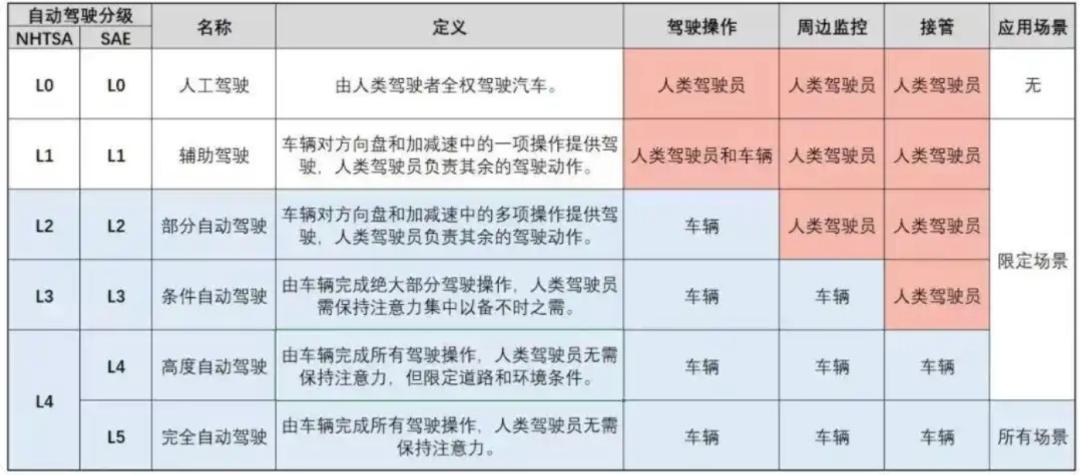
Photo/Differences among different levels of autonomous driving. Source/Screenshot from the Internet, New Energy Outlook
Therefore, the core demand of users has undergone a decisive change: They no longer just pursue the system's ability to complete lane - changing and parking. Instead, they urgently need a reason to dare to "take hands and eyes off" the wheel for a certain period. This reason is a legally binding safety guarantee commitment provided by the car company.
Different technological paths are essentially different answers from car companies when exploring the boundaries of responsibility.
The two approved models provide an interesting comparison: The BAIC ARCFOX Alpha S (L3 version) is equipped with 34 high - performance sensors, including 3 lidars, to build full - link safety redundancy in perception, decision - making, braking, power supply, etc.; while the Changan Deepal SL03 adopts a vision - based solution.
Both have passed strict tests within the limited ODD (for ARCFOX, it's highways with a speed limit below 80 km/h; for Deepal, it's congested expressways with a speed limit below 50 km/h). This reveals a deeper logic: Regardless of the choice of technological route, the prerequisite for obtaining access permission is that car companies must prove their ability to assume corresponding responsibilities in "limited scenarios".
BAIC revealed that its test vehicles have completed more than 800,000 kilometers of equivalent mileage tests, covering sufficient scenarios within the designed operating range; Changan Automobile claims that its L3 system has undergone more than 5 million kilometers of road verification. These astronomical test figures are ultimately to prove to regulatory authorities and potential users one thing: Inside this "box", I can take responsibility.
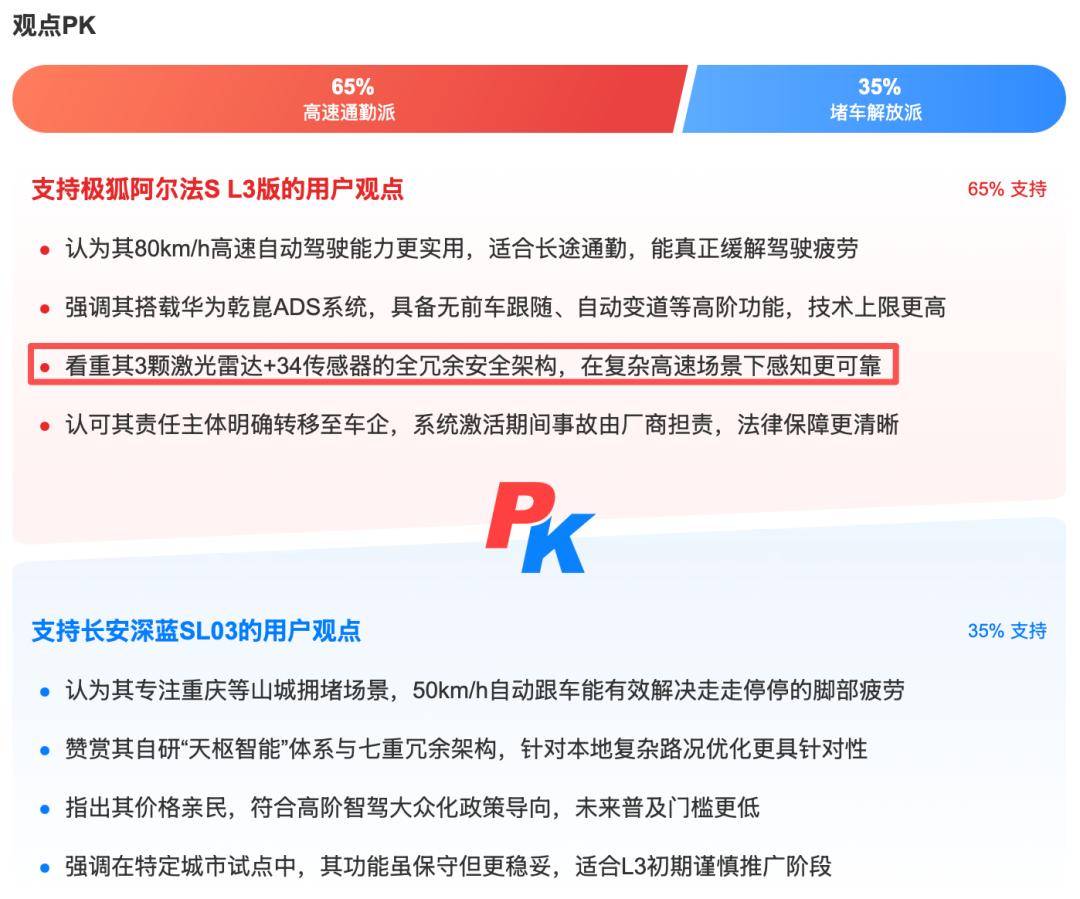
Photo/Real opinions of 127 users participating in the test. Source/Screenshot from the Internet, New Energy Outlook
However, there is still a trust gap between "being responsible in the laboratory" and "making users willing to use".
Some car companies often claim to be "experienced drivers" when promoting their L2 + - level intelligent parking functions. However, when users actually encounter scratched paint or damaged wheels, the claim process may be evaded with reasons such as "the system is only for assistance" or "the usage conditions are not met", resulting in an unpleasant experience.
Therefore, any clear responsibility - guaranteeing measures are extremely precious. For example, GAC Aion's intelligent driving worry - free guarantee policy, which includes accidental damage in scenarios such as automatic parking, is a positive step forward. This directly addresses users' anxieties more directly than any parameter comparison: Don't tell me how smart you are. First, tell me, if you cause trouble, will you compensate?
2. In the era of autonomous driving, car companies should put responsibility first
When the pointer of responsibility starts to turn, the unprecedented transformation of the production relations and business models in the automotive industry also kicks off. This requires car companies to complete not only technological upgrades but also a comprehensive reshaping from value definition to business logic.
First and foremost, car companies must place "responsibility" at the top of their strategies and conduct a subversive value reconstruction for it. Traditional car sales involve a one - time transfer of property rights, while the price of cars with L3 capabilities now includes a long - term "responsibility option". Car companies are not only selling a means of transportation but also a "safety service contract" within a specific period and in specific scenarios.
Fu Bingfeng, the executive vice - president of the China Association of Automobile Manufacturers, wrote in an article that the implementation of L3 is a systematic project that involves multiple parties such as the whole vehicle, components, software algorithms, and data services working together. This means that car companies must transform from "manufacturing integrators" to "safety operation service providers", and their core competitiveness should expand from cost and quality control to managing the comprehensive risks of complex systems.
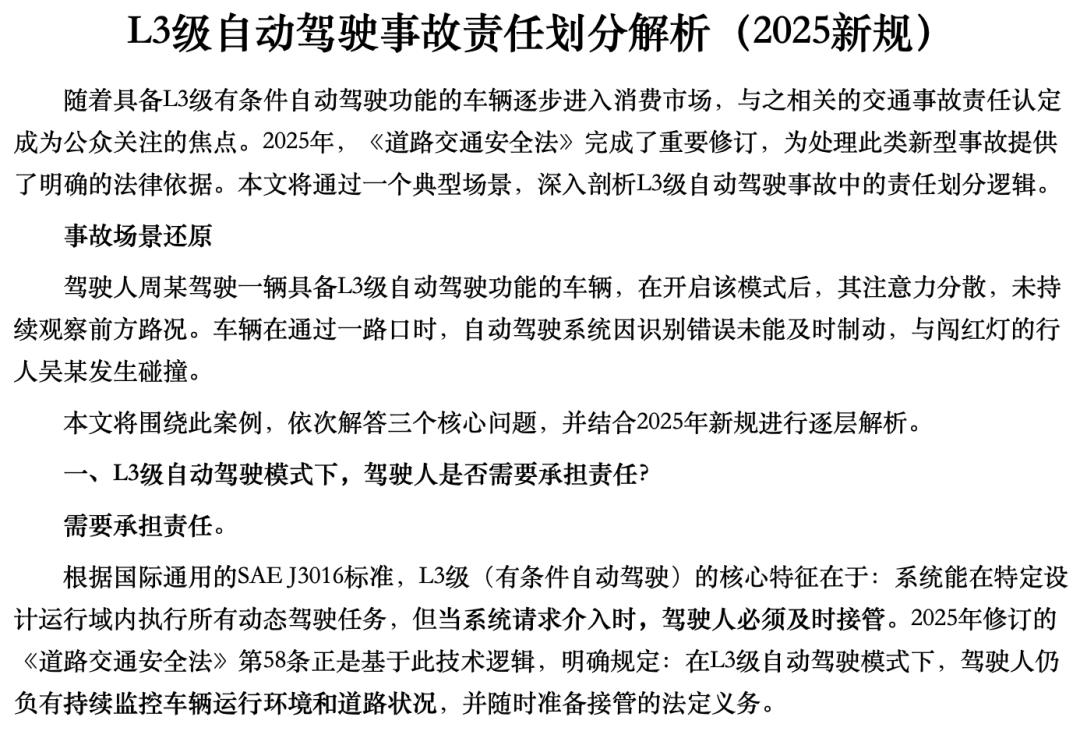
Photo/Partial content of liability division for L3 - level autonomous driving accidents. Source/Screenshot from the Internet, New Energy Outlook
This transformation is reflected in the technical aspect as the cost - regardless investment in "safety redundancy".
To achieve the L3 safety goal, BAIC ARCFOX not only stacks sensors but also backs up the steering, braking, communication, power supply, and even the positioning systems to ensure that the vehicle can still safely stop even if a single system fails. Behind this is a huge R & D and manufacturing cost.
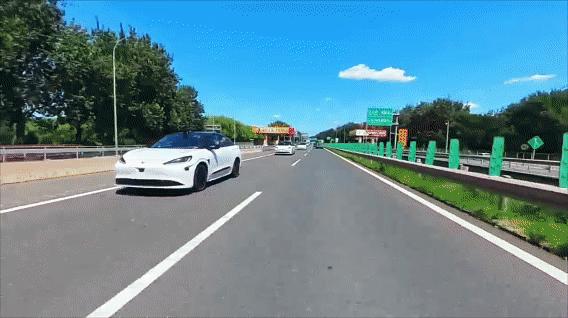
Photo/Test footage of the ARCFOX Alpha S L3 version. Source/Screenshot from the Internet, New Energy Outlook
Changan Automobile builds its safety moat through more than 400,000 simulation test scenarios and more than 5 million kilometers of road verification (36% of which are extreme scenarios). These investments are casting the technical foundation for the commitment of "being brave to take responsibility".
A deeper - level change lies in the deconstruction and reconstruction of the business model. The value of the vehicle is being disassembled into two parts: the "hardware carrier" and the "software service (including responsibility guarantee)".
A forward - looking model, the "intelligent driving insurance", has quietly emerged. Huawei's Hongmeng Intelligent Driving's "Intelligent Driving Worry - Free Service Rights" for AITO models, and the industry's first intelligent driving guarantee service plan jointly launched by Ping An Property Insurance and Seres, all attempt to provide targeted protection for liability risks in scenarios such as intelligent parking and cruise assistance, with the maximum protection amount reaching millions of yuan.

Photo/Assisted driving worry - free service. Source/Screenshot from the Internet, New Energy Outlook
Although these services are currently mostly defined as "rights" rather than standard insurance products and have pre - conditions such as "the intelligent driving function is enabled at the time of the accident and the vehicle is at fault", their direction is extremely clear: Future automobile consumption is likely to evolve into a subscription - based combination of "hardware + insurance (service)".
Qu Yu, the CFO of NIO, said bluntly at the 2024 Automobile Finance Industry Summit that the essence of the future commercialization of autonomous driving is "insurance", and the value it creates will be reflected in lower insurance premiums and the liberation of users' energy, and may be presented in the form of subscription fees.
All of this ultimately points to a fundamental innovation in the relationship between car companies and users. The relationship between buyers and sellers will change from a one - time game to a symbiotic entity based on long - term trust and data iteration.
Only when car companies dare to take responsibility will users dare to use the products with confidence; users' feedback on usage data can help car companies optimize the system and reduce risks. A positive "trust - data - safety" flywheel starts to turn.
Sun Hang, the chief engineer of the China Automotive Technology and Research Center, said in an interview with the media that this L3 access permit is a "small - scale start" under the premise of "safety first", aiming to accumulate experience, promote technological iteration, and improve the system. This implies that the ability to take responsibility will become the core criterion for the stratification of car companies in the next stage.
3. In the era of autonomous driving, the definition of a successful brand is being rewritten
Interestingly, the market's reaction was quick and direct. After the ARCFOX Alpha S (L3 version) under BAIC BluePark obtained the access permit, its stock price hit the daily limit at the opening. The capital market voted with real money, showing trust in "responsibility".
BAIC immediately announced that it plans to start the L3 operation in specific scenarios in the first quarter of 2026. This clearly indicates the future competition logic: Those who have the ability and courage to fulfill their responsibility commitments will gain a market premium.
In the context where safety and responsibility have become the bottom line, "safety redundancy" has become a hard threshold. The models that have obtained L3 access this time generally adopt a solution that integrates lidar, millimeter - wave radar, and cameras to ensure the system can still operate safely when partially failing.
Driven by the wave of autonomous driving, as of the third quarter of 2025, RoboSense, a leading domestic lidar company, has received 144 vehicle model appointments from 32 car companies and Tier 1 suppliers. Its recent product revenue has increased significantly. Based on the current order trends and product volume, the company expects to achieve profitability in the fourth quarter of 2025.
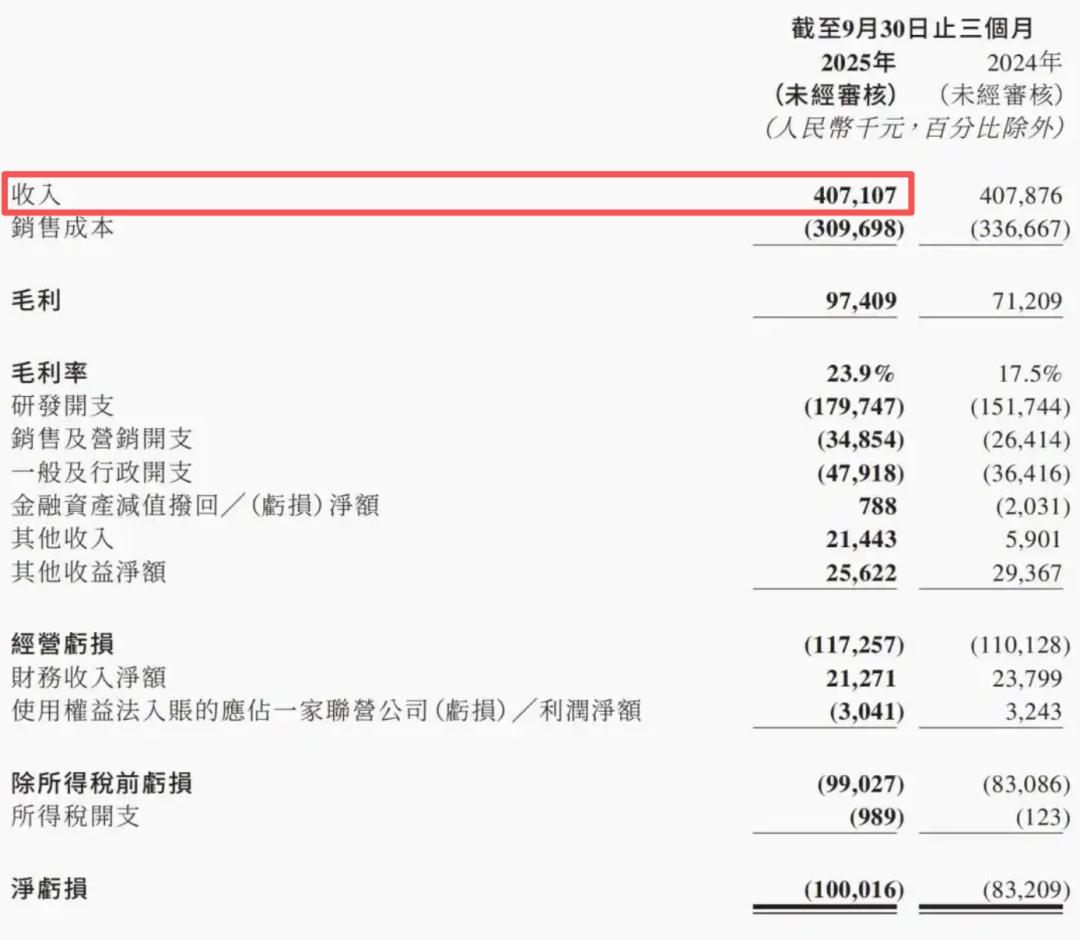
Photo/Partial data from RoboSense's financial report in Q3 2025. Source/Screenshot from the Internet, New Energy Outlook
Meanwhile, the value evaluation criteria for suppliers in fields such as chips, high - precision maps, and simulation test software have shifted from simple performance indicators to whether they can help OEMs meet the strict standards of functional safety (Safety) and safety of the intended function (SOTIF). The synergy in the industrial chain is accelerating the transformation from the traditional "supply - procurement" relationship to a "responsibility - sharing alliance" to jointly tackle the "long - tail safety problems".
The so - called long - tail problems in autonomous driving refer to the low - probability, diverse, and hard - to - predict special scenarios in autonomous vehicles, such as pedestrians suddenly crossing the road or sensor failures in extreme weather.
Even though the cumulative test mileage of Tesla's FSD system has approached 7 billion miles, with more than 2.5 billion miles on urban roads, Musk recently said that achieving the 99% technical goal is easy, but it's extremely difficult to tackle the remaining long - tail problems.
