Robotic colleagues are on the job. Should human workers step aside?
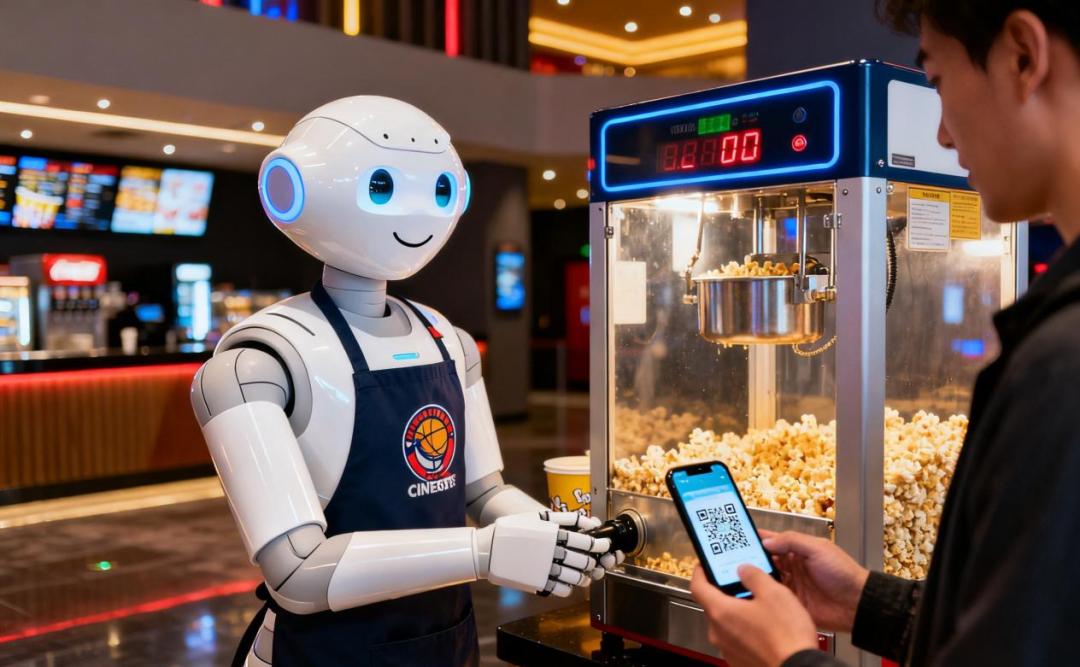
At the beginning of 2026, workers received a bombshell news that could shatter their psychological defenses: "The world's first fully autonomous humanoid robot, Atom, has taken up a job at a cinema in Shenzhen. It can independently complete the entire service chain of popcorn orders without human assistance, work continuously for 14 hours a day without a single error, produce and sell over 1,000 cups of popcorn, and has the ability to handle emergencies independently."
This is a technological application breakthrough for robots to operate completely autonomously in complex commercial scenarios for the first time. It is even hailed by the media as "a new model that is expected to gradually replace repetitive labor and upgrade the labor force in the service industry."
However, for workers who are "at risk of being replaced," when tireless and error - free robots truly enter the workplace, the nightmares they had on the day these intelligent devices emerged have finally become a reality.
Previously, humanoid robots mostly stayed at the performance level of "walking" and "jumping." Now, humanoid robots have completed the closed - loop from "understanding" to "doing correctly." This leap undoubtedly brings unprecedented impact to the traditional service industry.
From waiters in restaurants to cashiers in supermarkets, from assembly - line workers in factories to porters in logistics, if humanoid robots start to penetrate various industries on a large scale, the entire labor market landscape will undergo a profound transformation.
Humans Are Losing Their Jobs to Digital Employees
The robot Atom that has officially started work this time is from Dobot. Relevant information shows that it is a self - developed fully autonomous humanoid robot by Dobot, claiming to be the world's first embodied intelligent humanoid robot with "dexterous operation + straight - knee walking." It is equipped with a neurally - driven dexterous operating system. Inspired by the co - evolutionary mechanism of the human brain and hand, this system uses a Transformer - based model architecture and human - like binocular RGB visual drive to achieve end - to - end autonomous reasoning and operation with up to 28 degrees of freedom in the upper limbs.
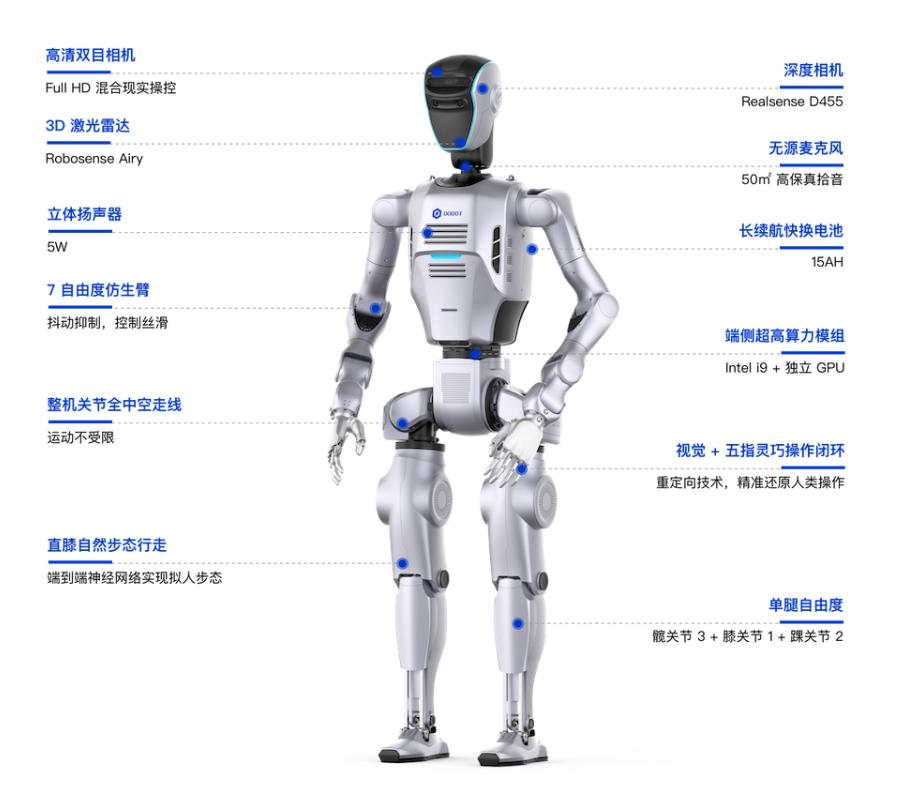
Image source: Dobot official website
Its actual performance on the ground is remarkable. According to relevant media reports, during the 14 - hour working period, Dobot's humanoid robot can operate stably with "zero errors" and independently complete the entire process of operations such as recognizing instructions, grabbing cups, accurately filling, and delivering products. Even when encountering emergencies such as spilled popcorn, displaced containers, or human interference, the system can quickly identify task deviations, independently diagnose problems, and trigger dynamic re - planning. It can correct errors and continue tasks without external instructions.
In addition, this robot can also independently complete tasks such as making breakfast, pouring milk, arranging fruits on a plate, toasting bread, frying bacon, receiving corporate clients, pouring coffee, delivering documents, and picking up express deliveries... And its price starts at only 199,000 yuan.
Compared with human employees, this "one - time purchase price" is very competitive. Especially when considering that robots do not need to rest, do not require salary and benefits, and can maintain a highly efficient and stable working state continuously, their cost - effectiveness is even more obvious.
For employers, introducing such digital employees not only means a significant reduction in labor costs but also an effective improvement in work efficiency and service quality - In a busy work environment, robots can tirelessly perform various tasks and always maintain a friendly and patient attitude. Moreover, due to the high programmability and flexibility of robots, enterprises can easily adjust their work processes and task allocations according to actual needs, thereby further optimizing resource allocation.
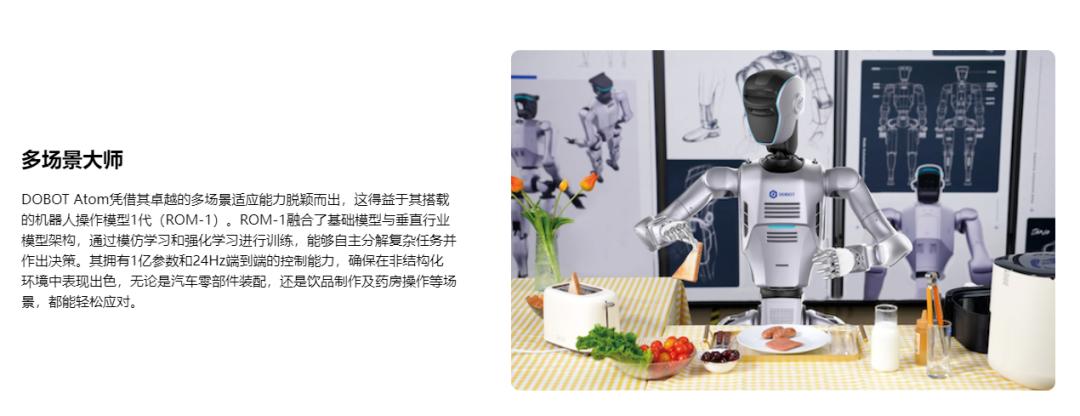
Image source: Dobot official website
The key is that Dobot set a strategic plan in 2025 to "expand to 10 core cities after the cinema verification." Later, in the actual implementation process, due to scenario adaptation, supply chain, and cooperation implementation rhythm, the goal was adjusted to "complete pilot projects in 3 - 5 core cities in 2025 and fully expand to 10 cities in 2026."
That means in jobs with high repetition and high labor intensity, robots are gradually becoming strong competitors to humans with their tireless, precise, and efficient characteristics. The wave of lay - offs that workers deeply fear, where they are replaced by digital employees, may be just around the corner.
After all, there are many robot brands currently making efforts in the daily business environment:
On the "unmanned production line" of Beijing Foton Cummins Engine Factory, robots such as "Embodied Tian Gong 2.0" and "Tian Yi 2.0" can independently pick up and place material boxes, handle transportation, and adapt to different cargo location heights and various types of material boxes. They have completed the "last - mile" verification from the laboratory to real - world production.
Zhipingfang, a unicorn in embodied intelligence, has opened a robot - operated coffee shop in Chaoyang Park, Beijing. It is another startup company that has brought robots to business districts and scenic spots for "business operations" after Galaxy Universal and Stardust Intelligence.
Unitree Technology has launched the world's first offline store, which has started a trial operation at the Beijing Shuangjing Store of JD MALL. Users can intuitively experience the practical applications of robots in scenarios such as family, education, entertainment, and elderly care. Through real - time interaction and feedback, the products can be iterated and optimized, accelerating robots to enter thousands of households...
We have to admit that the above - mentioned robot brands are changing the current work mode and workplace ecosystem at an unprecedented speed. From precision robotic arms on production lines, to intelligent voice assistants in customer service centers, to tireless automatic sorting systems in logistics warehouses, these digital employees are gradually penetrating into various industries and taking over tasks originally done by humans.
Is Human - Robot Collaboration the Biggest Way Out in the Future?
After the news that robots have officially entered the workplace spread, there were many panicked voices on the Internet: "Well, what's the use of humans? We can't even sell things as well as robots." "Technological progress is supposed to replace humans in dirty and high - risk jobs, not for driverless taxis or selling popcorn and taking people's jobs." "If machines can replace humans, many bosses would rather buy robots than hire people."... These remarks spread rapidly on social media like ripples, triggering extensive discussions.

Image source: Xiaohongshu
Some people said that with the continuous progress of robot technology, they will gradually penetrate into various industries, from manufacturing to services, from simple repetitive jobs to positions that require certain skills, and no one can be spared. If this trend continues, humans will face unprecedented employment challenges, and a large number of jobs will be replaced by robots, leading to a soaring unemployment rate.
However, another group of people hold an optimistic attitude. They believe that the emergence of robots is not entirely a bad thing but an inevitable result of technological progress. Robots can take on heavy, dangerous, or boring work, thereby freeing up human time and energy to focus on more creative and valuable work. In addition, the widespread application of robots will also give rise to new industries and employment opportunities, such as robot R & D, maintenance, and programming, providing new career development directions for humans.
From the above views, it is not difficult to see that robots may have a certain impact on the employment market, but the key for humans to deal with this panic lies in how they adapt to technological changes and improve their skills to find a new foothold in the robot era.
Actually, earlier, when autonomous driving technology first emerged, people also had similar concerns about this disruptive innovation.
At that time, taxi drivers found that driverless taxis could provide services at a lower price by eliminating labor costs (for example, the short - distance fare might be less than half of that of traditional taxis) and could operate 24 hours a day, directly impacting traditional drivers. In Wuhan, some drivers' daily income was only 200 - 300 yuan. The significantly lower operating cost of driverless vehicles led to a loss of orders through traditional channels and a sharp decline in income. There were even appeals on the "brink of death"... They kept voicing their fears of unemployment, worried that driverless vehicles would completely replace their jobs, and a "human - robot war" broke out because of this.
After the turmoil caused by driverless taxis gradually subsided, people gradually calmed down from their initial panic and resistance and began to rationally examine the phenomenon of robots entering the workplace.
Some people found that by learning new skills such as vehicle maintenance and intelligent dispatching system operation, they could transform into maintenance personnel or dispatchers for driverless vehicles. Although they no longer directly drive vehicles to carry passengers, the new positions not only offer stable income but also a safer and more comfortable working environment. Moreover, with the popularization of autonomous driving technology, the demand for such positions is constantly increasing.
To put it more bluntly, in the situation where the large - scale employment of robots is a foregone conclusion, learning and adapting to the new model of human - robot collaboration may be the wisest choice for workers in the face of employment competition in the new era.
It is foreseeable that with the rapid development of AI technology, robots and artificial intelligence will gradually penetrate into all industries, from manufacturing to services, from simple repetitive jobs to complex and delicate tasks. The presence of robots will be everywhere.
By closely collaborating with robots, workers can fully leverage their creativity, judgment, and interpersonal skills, which are advantages that robots are difficult to completely replace. At the same time, with the high - efficiency execution and precision of robots, workers can significantly improve their work efficiency and stand out in the fierce market competition.
Throughout human history, every technological revolution has been accompanied by challenges and opportunities. Those who dare to innovate and forge ahead are always the ones who can have the last laugh. Instead of constantly worrying about the threat of robots, it is better to actively embrace technological changes and strive to improve one's competitiveness. In this way, not only can one cope with current challenges but also gain an advantageous position in the future workplace and maximize personal value.
This article is from the WeChat public account “Zinc Scale” (ID: znkedu), author: Meng Huiyuan. It is published by 36Kr with authorization.