In the era of AI, on the global creation and consumption platform, there has emerged an "invisible champion" from China.
In the third year of the rapid development of AIGC, there is a collective anxiety of "separating the true from the false" permeating the industry.
On one hand, the once - bustling landscape of the "battle of a thousand models" at the underlying level has basically solidified, and the marginal effect of parameters is diminishing. On the other hand, there is confusion at the application level. After a brief explosion of traffic, a large number of efficiency tools that call the base models have quickly fallen into silence.
Investors have seen too many products that are as brilliant as fireworks, and they have begun to return to the essence of business. Everyone is looking for the same answer: Apart from selling computing power and efficiency, is there really a third commercialization path for AI in 2026?
Amid the uncertainty of the "super - app" form, a Chinese team called SeaArt has emerged.
This company, which was founded just two and a half years ago, has quietly climbed to become the "rising star" in the global AI creation community field without a self - developed underlying large model. A recent set of data intuitively shows the magnitude of its business ecological niche: the Annual Recurring Revenue (ARR) exceeds $50 million, the Monthly Active Users (MAU) have exceeded 25 million, and users generate over 20 million images and more than 500,000 videos per day.
This set of data breaks the myth of the "technology - only theory" in the industry. While most teams are still testing the ceiling of AI in office applications, SeaArt has chosen a completely different path: using AI to meet human "emotional value" and "desire for expression".
From the growth story of this company, we will find that the competition logic in the second half of the AI era is undergoing a qualitative change: from a single "computing power arms race" to the "competition for ecological niches" with self - hematopoietic ability.
I. The Growth Miracle under the PUGC Ecosystem
To understand SeaArt's breakthrough point, we must first understand the "efficiency trap" that commonly exists in the AI application layer.
The business logic of most AI applications is as tools. Even in the AIGC creation field, their selling points lie in more accurate copywriting generation and lower - threshold image and video generation. The essence of such products is to "save learning costs and time" for users' imagination.
However, the fate of efficiency - tool products is often to be "used and discarded", and their moats are very shallow. Once the upstream models cover stronger capabilities, the value of the intermediate - layer tools will instantly become zero.
SeaArt also started its business in the highly competitive "intermediate layer" of AIGC: acting as a super - scheduler to be compatible with models at the lower level and providing a minimalist creation experience at the upper level. But after optimizing the product experience on the generation side, they firmly chose a different path: seizing the satisfaction of human emotions by AI content and changing from "saving time" to "killing time".
Based on this, in addition to technology, SeaArt has placed another emphasis on building a decentralized PUGC (Professional User Generated Content) ecosystem.
In the SeaArt community, the complex underlying model parameters, technical details such as LoRA and ControlNet are encapsulated into reusable workflows and templates, encouraging creators to sell their personal aesthetics, styles, and worldviews. This model solves a "chronic problem" in the AIGC field, that is, the uncertainty of "random draws". For ordinary users, Prompt is a mystery, while "good - looking, fun, and appealing styles" are intuitive consumer products.
SeaArt's thinking actually represents the "micro - reconstruction" of the content production relationship in the AIGC industry in the past year. In the traditional logic of creative tools, each generation is an independent consumption of computing power and brainpower, and users need to repeatedly debug to approach the ideal effect. In SeaArt's ecosystem, what is emphasized is not Prompt and debugging, but the experience and wisdom solidified into "digital assets" that can be instantly called.
When an ordinary user calls a mature "cyber - punk lighting" workflow in the community, they are consuming and reusing the debugging experience of a senior creator over hundreds of hours. The assetization of experience greatly reduces the marginal cost of high - quality content production and enables AI creation to transition from the "hand - crafted workshop" era to "industrial standardization".
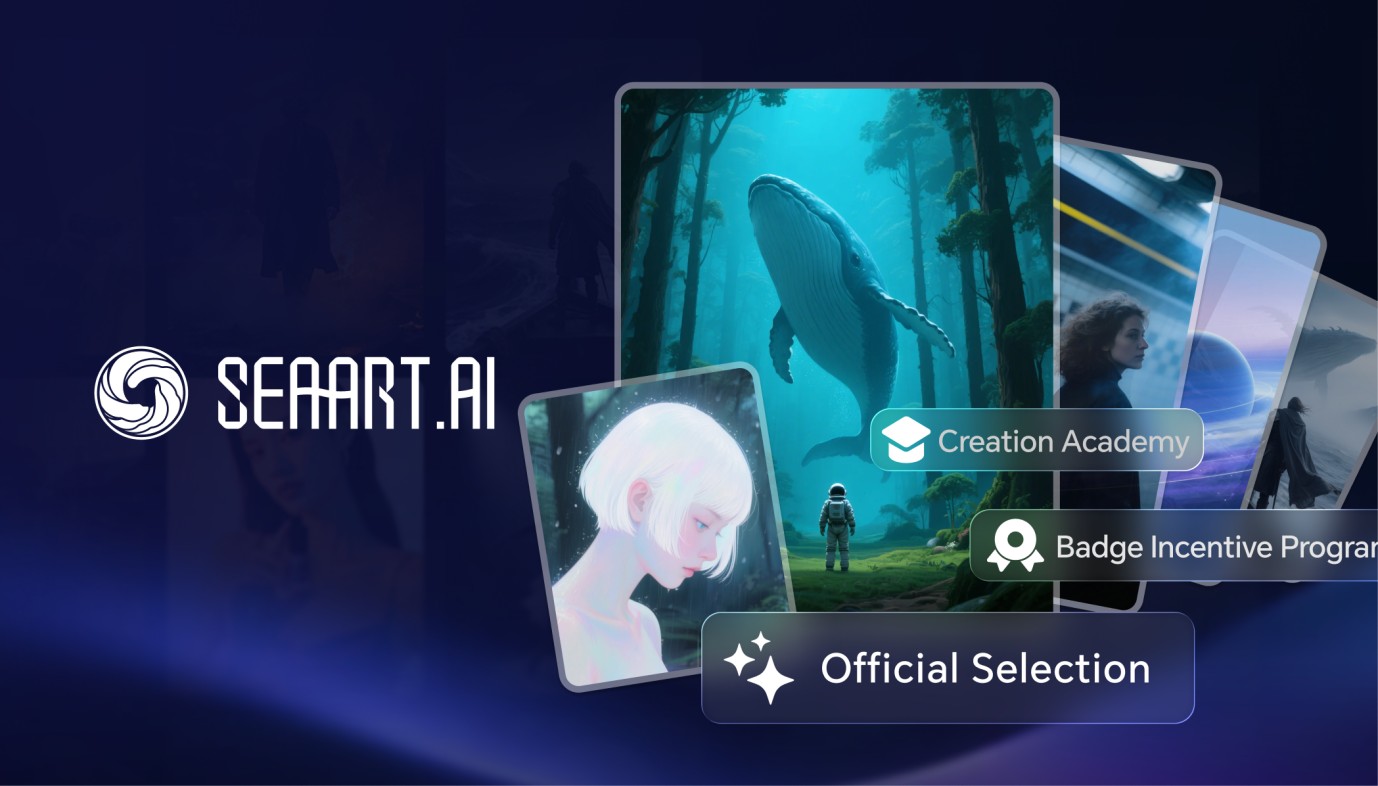
Currently, SeaArt already has more than 2 million primary AI creation SKUs, and is gradually establishing a firm position on the path of transforming non - standardized creativity into standardized "digital commodities".
It is not difficult to see that SeaArt's commercialization idea is to open a "Create - to - Earn" business model like Roblox, making users and creators loyal to a specific "painting style" and community atmosphere rather than the model capabilities themselves.
Through a systematic incentive and sharing mechanism, top creators on the SeaArt platform can already earn thousands of dollars in monthly income. Economic incentives can stimulate the activity and self - driven innovation on the supply side. The iterative speed of this "bottom - up" ecosystem can often "defeat" the iteration of cutting - edge models in terms of generation effects and user needs.
An interesting phenomenon is that even at the beginning of 2026, there are still a large number of users on the platform using "outdated" models such as SD 1.5 for content creation. They don't care whether the model version is cutting - edge. Instead, they are more willing to consume the styles and emotions carefully selected in a "taste market" directly connected with creators.
This has enabled SeaArt to successfully build the first moat at the application level. Through high - viscosity generated by circle screening and operation, it can resist the rapid iteration of underlying models. And the deeper moat lies in the "cultural aesthetic barrier" that is difficult to be quantified by technical parameters. The "aesthetic consensus" grown out of high - frequency interactions between users and creators cannot be easily replicated.
Its unique ecological positioning has helped SeaArt double its user scale and revenue in the past two years and magnified the value of "connection and scheduling" in the AI industrial chain. However, there are many AI communities with connection value. Why can SeaArt break through? What exactly do users and the market need?
II. Operating the AI Community with "Game Logic"
The PUGC ecosystem has enabled SeaArt to have a "content supply chain" with both industrial standardization capabilities and community warmth, but having a supply chain is only the first step.
Although the technical moat as an "intermediate layer" is relatively shallow, this company attaches great importance to speed and cost structure. Through flexible scheduling of global computing power and in - depth local operation, SeaArt has a high - cost - performance and fast cold - start and early - stage rapid expansion. The current user scale and daily token call volume have formed a scale effect on computing power costs, laying a healthy cost foundation for commercialization.
In terms of the commercialization moat, an AI content community tests not only the know - how in the AIGC field but also a systematic project of computing power scheduling, global operation strategy, and user psychology.
In the era of "flooded" AIGC content, the marginal cost of AI generation is almost zero. Mediocre content in the community will quickly drown a small amount of high - quality content, which is also one of the fundamental reasons why most AI communities fall into "silence". It is not that simple to make high - quality community content flow globally as SKUs. In addition, compared with other vertical communities, an AI community itself is a closed - loop track with "production, distribution, and consumption - socialization". Every technical logic and operational detail determines success or failure. As long as the experience of one link is not good, a large number of core creators and users may be lost.
So, why can a Chinese team win this global "traffic war"?
After delving into SeaArt's team background, we found a counter - intuitive logic: This is not a traditional AI R & D, social product, or SaaS team, but a group of "veterans" with more than 20 years of experience in the overseas game and content industries.
This "atypical" gene determines that SeaArt has the confidence to conduct a "dimensionality - reduction strike" in its operation logic.
Similar to the AIGC community, the game is also a track where the technical logic determines the lower limit and the understanding of human nature determines the upper limit. This company has transplanted the experience of operating high - complexity games such as SLG (Strategy Games) to the AI community, which is reflected in a profound analysis of users' addiction curves and feedback mechanisms, thereby stimulating users to complete personalized expressions and simultaneously mastering R & D, long - term operation, and creator ecosystem management in a highly competitive environment.
This is why, between the "time - saving" tools and "time - killing" entertainment consumption, SeaArt has clearly chosen the latter. Data shows that the average online time of users on this platform is more than three times that of similar competitors. This data also makes SeaArt more like a high - viscosity online game rather than a creative tool.
In terms of the global strategy, SeaArt has also demonstrated the delicate tactics that "overseas games" are best at.
Using the theory of "global low - lying areas", the team first entered non - English markets such as Brazil with high demand and low competition, and detonated word - of - mouth with the core selling point of "easy to use". After establishing a scale effect and a data flywheel, it then counter - attacked high - value markets such as Europe and the United States.
The approach of "gamified operation + global computing power arbitrage" has given birth to a highly viable native AI culture during the global exploration period of consumer - level AI applications. Although the improvement of computing power and the experience of full - modality generation are important, they are more like "parameter involution" during the overseas expansion process. On this basis, the ability to transform technology into "playability" and "immersion" is a rarer internal ability of the team.
III. In the Future, from a "Gallery" to a "Full - Modality Playground"
If SeaArt's 1.0 stage is an AI gallery based on creation and consumption, then its 2.0 stage and the upcoming SeaVerse are ambitiously building a digital playground in the AIGC era.
In the short - video era, multi - modality AI generation has always been a track where user demand far outpaces technological maturity. In 2025, AI video generation has reached the level of "usable, adjustable, and affordable". The ever - expanding imagination and desire for expression of users have reached the critical point for turning the next "flywheel". In 2026, the multi - modality field will usher in new maturity and explosion, completing the transformation of traditional AIGC from a single - point tool to full - modality generation output, and at the same time making the generated content transmissible and consumable.
In the 2.0 era, SeaArt, which has now fully "commercialized" categories such as AI Art, AI audio, AI video, and AI Agent, will strive to become a consumer content platform for full - modality "finished - product" creation. The complete closed - loop from creation, consumption to monetization will also give every ordinary person the opportunity to become an independent content distributor.
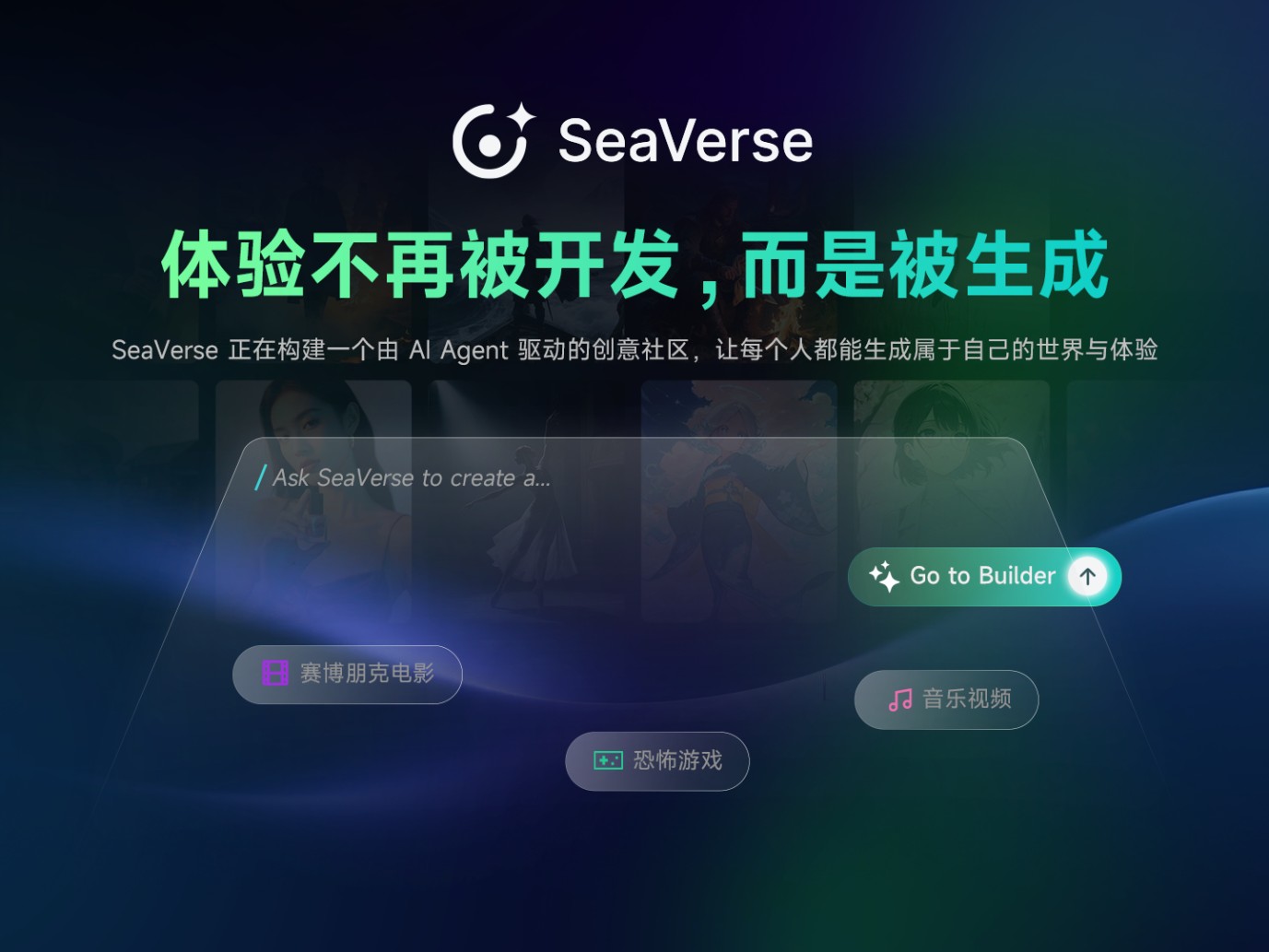
In the concept of SeaVerse, the boundaries of creation will be completely broken: by introducing multi - Agent collaborative delivery, SeaVerse will disassemble the content know - how of Agencies in fields such as film and television, and game production into reusable AI workflows. Users do not need to operate multi - modality AI like operating professional software. Instead, they can directly schedule roles such as AI screenwriters, AI storyboard artists, AI editors, and AI music composers in natural language interactions to create full - modality editable content with consumption power and product dissemination power.
This means that the dreams of "personal directors", "zero - cost movies", and "AI - native IPs" are not far away.