360, a company fighting against fraud, was "defrauded" in India.
Author | Wang Hanbo
Editor | Zhang Fan
By the end of 2025, Qifu Technology had won so many awards that its hands were full.
In December, Qifu Technology was commended by the Ministry of Industry and Information Technology for its anti - fraud technology, and its self - developed AI compliance intelligent agent was selected as a typical case of "Jin Xintong". In January, it jointly released the first multi - modal evaluation benchmark for credit with a university. The AI compliance intelligent agent won three consecutive awards in a competition hosted by the Internet Society of China. Meanwhile, the company's team won the "Gold Award for the Team" in a category at the 2025 Black - Grey Industry Detection Skills Competition.
This fintech company, initially incubated within the 360 Group and formerly known as 360 Digital Group, also bears a distinct "anti - fraud" label in terms of technology R & D and strong capabilities.
Meanwhile, since the second half of 2025, Qifu Technology's stock on the Hong Kong stock market has shown a steep downward curve - the stock price has been sliding from the mid - year high, with a cumulative decline of over 57%.
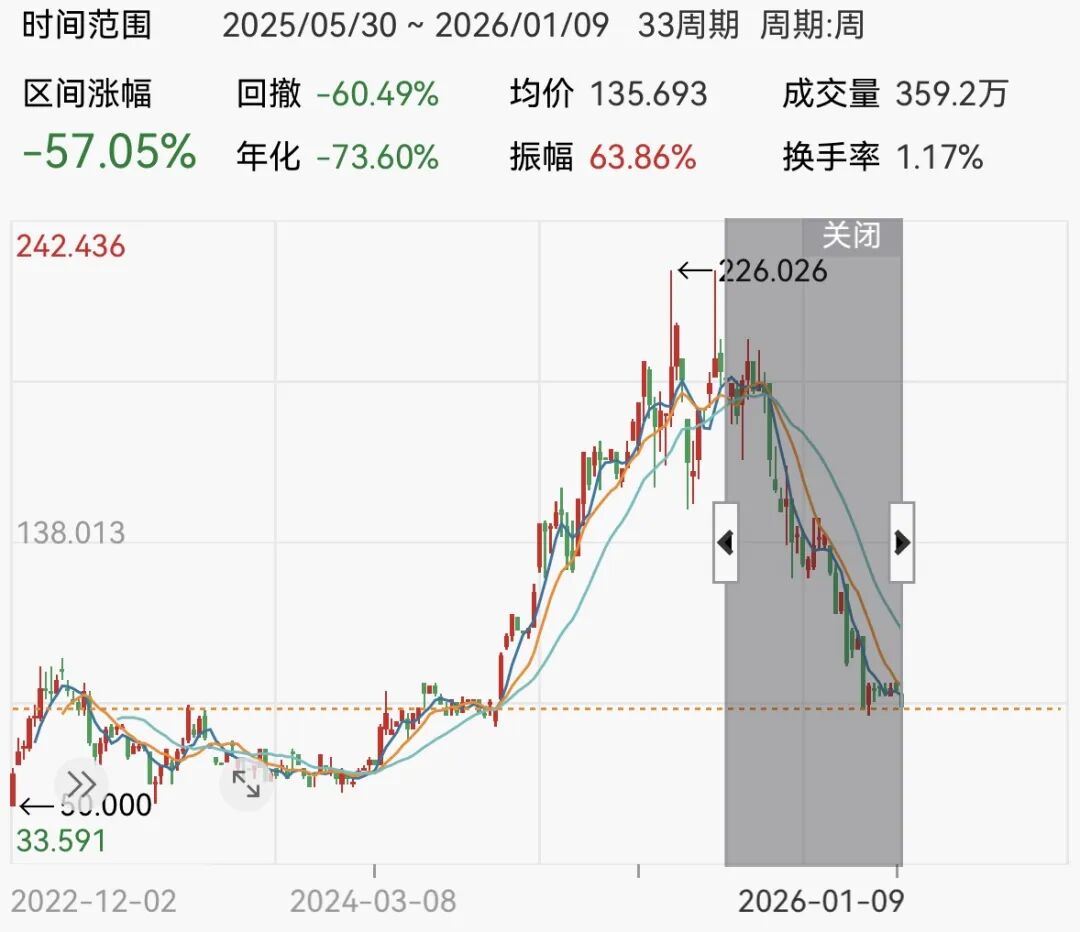
The trend of Qifu Technology's Hong Kong stock price. Source: Wind
The divergence between the stock price and the recognition of technology reflects the deep - seated doubts in the capital market.
When the news that Ant Group cleared its equity in Indian credit and Xiaomi's "Mi Credit" stopped lending came out one after another, the market finally clearly realized that the gold rush of Chinese - funded online lending in India, which started in 2019, seems to be ending with the defeat of the entire industry.
As one of the pioneers going global back then, Qifu Technology may also be doomed to be "cheated" in the Indian market. And the possible bad debt risk arising from this is becoming a key variable in determining its valuation logic.
The Gold Rush of Online Lending in India: From the Allure of the Blue Ocean to the Quagmire of Bad Debts
Around 2019, the tightening of domestic online lending supervision and the "perfect data" of the Indian market formed a strong gravitational field.
At that time, among India's 1.4 billion population, the bank financial coverage rate was less than 50%, and the credit card penetration rate was only 4%. There was a huge credit gap behind the 600 million smartphone users.
More importantly, for non - bank institutions and digital online lending platforms, there was no clear upper limit on the loan interest rate locally, which enabled online lending platforms to replicate the model of "high - interest lending + efficient collection". According to the report of Guancha.cn, the annualized interest rate of some Chinese - funded platforms in the early stage could reach 200% - 300% after conversion.
For Chinese - funded platforms like Qifu Technology, India can be regarded as a "low - end version of China". The risk control algorithms verified in the domestic market and the mature online lending process seem to be able to easily achieve a dimensionality - reduction strike.
At its peak, one out of every three online lending platforms in India had a Chinese - funded background: Qifu Technology deployed the loan supermarket business through its subsidiary; Xiaomi pre - installed the credit product "Mi Credit" directly on mobile phones in the Indian market; and 360 Group's "Mobishenqi", which was controlled by Qihoo Technology, could, according to an insider who revealed to the media in 2019, issue 60,000 loan orders per day in the Indian market.
However, at present, this carnival is turning into a disaster. Industry data shows that the bad debt rate of Chinese - funded online lending platforms in India generally exceeds 50%, and that of small and medium - sized platforms is as high as 80%. According to the report of Guancha.cn, the industry estimates that the loss scale of Chinese capital in the Indian digital lending market reaches billions of dollars.
The core crux of this problem lies in the mismatch between the online lending model and the local environment in India.
First of all, the vacuum in the credit reporting system is the first dead end. Data from Indian credit reporting agencies show that as of March 2024, only 9% of Indians had inquired about their credit scores, and it was almost zero in rural areas - the "big data risk control" relied on by Chinese - funded platforms lost its foundation. Moreover, the local Adhaar ID card system was full of loopholes, and the fake ID card industry chain gave rise to 12 fraud cases per minute, making risk control useless.
Secondly, the local cultural background in India also made the "social death" triggered by the collection logic basically ineffective locally, which exacerbated the problem of loan recovery. The 22 official languages in India made the collection scripts useless. Instead of putting pressure on the borrowers, their relatives and friends even asked about the borrowing channels. The legal process was slow, and debt dispute cases took an average of 3 - 5 years. Chinese lawyer letters basically lost their legal binding force.
Meanwhile, the formation of the reverse harvesting industry chain was even more devastating. There were once Chinese users familiar with the rules acting as "loan - fraud mentors", training Indians to forge identities for loans on social platforms, and sharing the profits after the loans according to a certain proportion. They even reported unlicensed platforms voluntarily to get out of trouble. Chinese - funded online lending platforms changed from "harvesters" to "cash machines".
In addition, the change in supervision dealt the final blow to the journey of Chinese online lending going global to India. In 2022, India's "Digital Lending Guidelines" were implemented, mandating that all lending - related data must be stored on local servers. In 2024, the draft of the "Prohibition of Unregulated Lending Activities Act" was introduced, clarifying the upper limit of interest rates and banning violent collection. The model of "covering high bad debts with high interest" relied on by online lending platforms collapsed.
Qifu Technology Can't Escape the "Indian Curse"
Qifu Technology also seems to be doomed to the industry fate of "making money in India and spending it in India".
In 2019, it entered the loan supermarket track through its subsidiary, relying on its traffic advantage to match lending needs. Although it has not publicly disclosed the specific lending scale and bad debt data, the trajectory of Qifu Technology's business in India basically coincides with the curve of the industry's defeat.
From the perspective of industry commonalities, Chinese capital has accumulated losses of over $1 billion in India. As one of the pioneers, Qifu Technology is likely to be trapped in the dilemma of capital precipitation.
Financial data indirectly reflects that its overseas business may have become a drag. The third - quarter report of 2025 shows that the net cash flow from investing activities of Qifu Technology was - 12.077 billion yuan, a significant increase from - 3.240 billion yuan in the same period of the previous year.
Meanwhile, Qifu Technology's provision for loans receivable was 838 million yuan, a year - on - year increase of 75%. The provision for contingent liabilities was 773 million yuan, a significant increase of more than 11 times compared with 64 million yuan in the same period of the previous year. This shows that its credit default risk is also expanding, and asset impairment losses will further affect the profitability level.
Although Qifu Technology has not disclosed the amount of asset impairment in India, combined with the clearance actions of Ant Group and Xiaomi, some market views believe that it has hidden losses.
It is worth noting that Qifu Technology's domestic business performed strongly before, which offset its overseas setbacks to a certain extent. In 2024, the company's revenue was 17.166 billion yuan, and the net profit was 6.264 billion yuan, with a year - on - year increase of 46.18% in net profit. However, its revenue in the third quarter of 2025 was 5.206 billion yuan, and the adjusted net profit dropped to 1.508 billion yuan, indicating that after the setback in India, it still faces great challenges in maintaining subsequent growth.
Qifu Technology's Valuation Dilemma
Combined with the financial performance, the 57% decline in the Hong Kong stock price may reflect the reconstruction of the valuation logic of Qifu Technology by the capital market. If it further declines, the deep - seated reason may lie in the gaps in three expectations.
On the one hand, the collapse of trust in its overseas expansion ability may be the direct cause. Previously, Qifu Technology and even 360 Group were once among the "pioneers" in the Indian market, but their passive withdrawal later exposed their lack of localization ability - they neither established local credit reporting cooperation nor had channels for regulatory communication, which was in contrast to the mature strategies in the domestic market. The market is worried that its future overseas layout will repeat the same mistakes, and the risk premium has increased.
On the other hand, the disadvantage of the industry cost - performance ratio of the valuation level has become more prominent. As of now (January 12, 2026), the price - to - earnings ratio of Qifu Technology on the Hong Kong stock market is only 2.7 times, which is not only lower than the 41 times of Lingzai Technology Finance and the 16 times of Yixin Group in the same industry, but also lower than its own historical average of about 5.1 times.
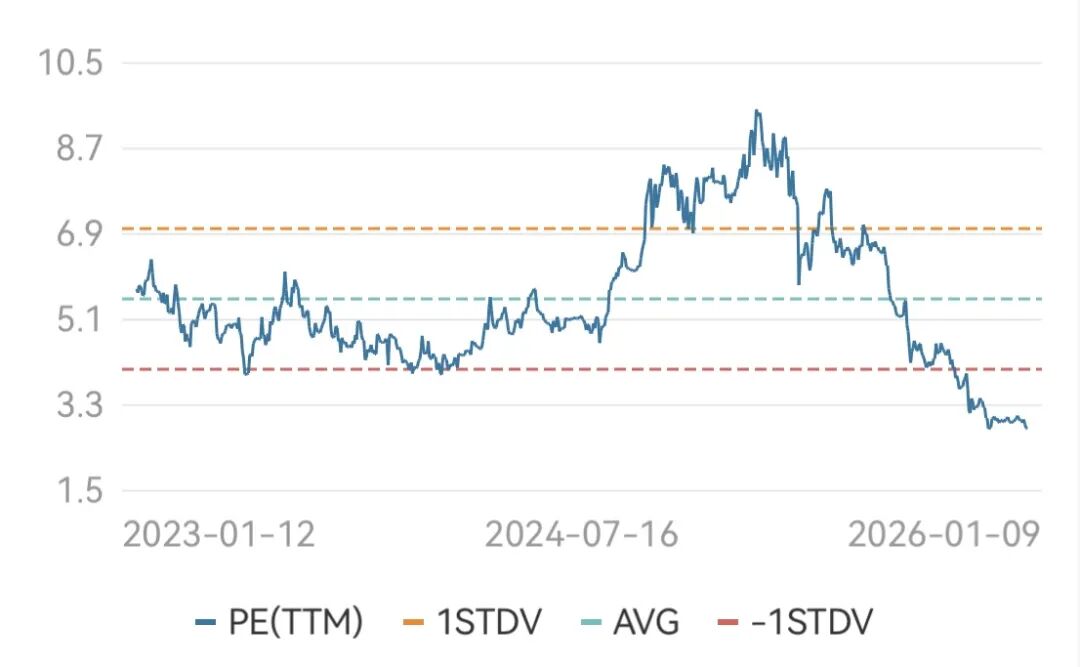
The PE level of Qifu Technology in recent years. Source: Wind
Meanwhile, the expansion of the credit risk exposure is also attracting market attention. The financial report shows that in recent years, the 30 - day overdue rate and 180 - day overdue rate of Qifu Technology have generally shown an upward trend. The first - day overdue rate of the credit business in the third quarter was about 5.5%, compared with 4.6% in the same period of the previous year. The 30 - day recovery rate was 85.7%, also showing a year - on - year decline, indicating an increase in the default risk.
Looking forward, Qifu Technology said in its third - quarter report last year that due to the continuous uncertainty in the macro - environment, the company plans to make risk control its top priority at present and adopt a cautious attitude in the business planning for the next few quarters. Therefore, in the fourth quarter of 2025, the company expects to generate a net profit of 920 million - 1.12 billion yuan and a non - GAAP net profit of 1 - 1.2 billion yuan, a year - on - year decline of 39% - 49%.
Therefore, although the research report of CICC believes that Qifu Technology has a "solid foundation for long - term growth", the current valuation dilemma shows that investors are still playing a game between short - term risks and long - term values.
To achieve valuation repair, Qifu Technology may need to answer three major questions: first, whether the real impairment scale of its Indian assets can be made transparent; second, whether the business structure can be continuously optimized to improve the dependence on the heavy - asset model and resist the pressure of credit default risk; third, whether the overseas strategy will be adjusted to avoid repeating the mistakes of "blind replication and neglect of localization".
From an industry perspective, Qifu Technology's setback in India is not an isolated case, but the collective cost of Chinese fintech going global. As the lesson of Ford's withdrawal from India shows, this market is never the "next China", and any adventure that ignores localization is difficult to sustain. For Qifu Technology, only by clarifying its overseas burdens and focusing on its core advantages can its valuation return to the fundamentals of performance.
*Disclaimer:
The content of this article only represents the author's views.
The market is risky, and investment should be cautious. In any case, the information in this article or the opinions expressed do not constitute investment advice to anyone. Before making an investment decision, if necessary, investors must consult professionals and make decisions carefully. We have no intention to provide underwriting services or any services that require specific qualifications or licenses for the trading parties.
Follow to get more information