Will car prices rise or fall this year?
The opening of the Chinese automotive market in 2026 kicked off amidst complex games, presenting a high degree of uncertainty and complexity. At the beginning of the new year, the terminal market encountered a "bad start." During the New Year's Day holiday, the overall passenger flow and order volume in the passenger car market declined significantly compared with the same period last year.
For example, the order volume of many leading self - owned brands and new - energy vehicle startups' stores was halved compared with the previous period. This widespread sluggishness occurred against the backdrop of car companies offering various subsidies, but the results were meager, leading to an inauspicious start.
Behind the market downturn is actually a complex dilemma intertwined with multiple factors. The most direct reason is the decline of policy dividends and the poor connection between policies. At the same time, although the new national subsidy policy for the new year has been announced, the implementation details in some key cities are not yet clear, causing consumers to choose to wait and see due to concerns about missing out on overlapping discounts.
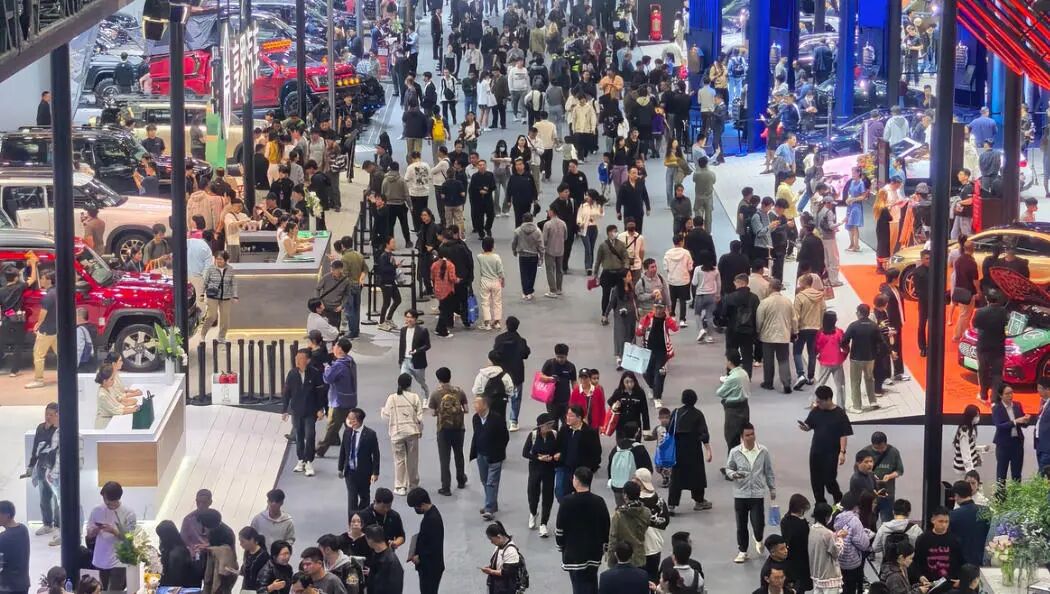
A deeper reason may be the over - drafting of demand. In the past two years, stimulated by strong subsidies, more than 18.6 million vehicles were traded in for new ones. In essence, this advanced the car - buying demand for the future, especially in the first half of 2026, resulting in the current market vacuum. In addition, the lack of consumer confidence also makes consumers more cautious when making decisions on big - ticket items like cars.
This situation has greatly increased future uncertainty. On the one hand, there is a survival crisis. On the other hand, a large number of blockbuster new cars are lined up in the MIIT catalog, ready to start a new round of product competition. For all participants, 2026 will be a major survival test of strategic determination and operational efficiency, and the industry pattern may be reshaped in this complex adjustment.
01
Price Increase of Upstream Raw Materials
Recently, one of the most prominent views is that while the new - energy vehicle market is continuing its high - speed growth, it is facing price pressure driven by the combined effects of cost transmission from upstream raw materials and adjustments in industry regulatory policies.
The price increase of core battery materials such as lithium iron phosphate, coupled with a series of symposiums held by the MIIT and other competent departments to curb "involution - style" competition, indicates that battery costs may enter an upward channel and ultimately be passed on to the final retail price of vehicles.
As the absolute dominant material for power batteries, lithium iron phosphate is experiencing an obvious price increase wave. Since the fourth quarter of 2025, many leading enterprises including Hunan Yuneng, Wanrun New Energy, and Defang Nano have successively announced production cuts for maintenance and simultaneously raised processing fees. Among them, Hunan Yuneng has clearly raised the processing fee for its entire series of lithium iron phosphate products by 3,000 yuan per ton.
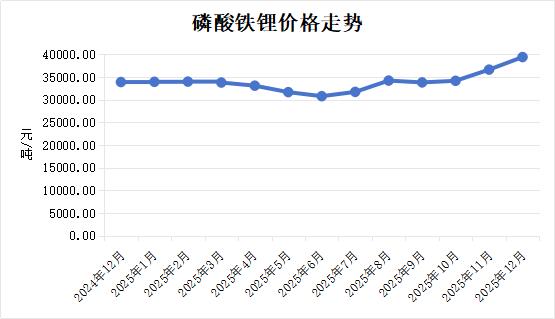
The direct driving force behind this round of price increases is the all - round rise in the cost of upstream raw materials. Lithium carbonate, the most core raw material for lithium iron phosphate, accounts for more than 40% of the cost, and its price trend directly determines the basic cost of the industry.
Data from Zhuochuang Information shows that on December 17, 2025, the market price of Fubao's battery - grade lithium carbonate had risen to 97,200 - 100,000 yuan per ton, more than a 50% increase compared with the low point in the middle of the year. In addition, various chemical raw materials (such as phosphoric acid, 98% mono - ammonium phosphate, and ferrous sulfate) that make up the precursor of lithium iron phosphate, lithium iron phosphate, have also shown a general upward trend since the fourth quarter of 2025.
A deeper reason lies in that the long - term involution and losses in the industry have forced enterprises to seek price recovery. In the past three years, the price of lithium iron phosphate has dropped by more than 80%, and the entire industry has been in continuous losses. After the China Chemical and Physical Power Supply Industry Association organized a meeting of leading enterprises in November 2025 and issued an initiative for coordinated action, there have been signs of a turnaround in this vicious competition situation.
Li Bin, the founder of NIO, recently also called on consumers to "buy a car earlier" because the biggest cost pressure in the automotive industry in 2026 comes from the price increase of memory. However, the current cost pressure has not been fully passed on to the final retail price. Once the profit margin of car companies is compressed, they may pass on the cost through price increases in the future.
It is reported that the core reason for the memory price increase is the explosive growth of the AI industry, which has led to a sharp increase in the demand for memory in servers. The memory usage of a server is more than ten or even a hundred times that of an ordinary household computer. Currently, more than 70% of the global memory chip production capacity is occupied by AI companies, directly pushing up the price.

This price increase has directly affected the cost of automobile manufacturing. The memory cost required for a car's intelligent cockpit and intelligent driving system has increased by about 5,000 - 10,000 yuan. For example, L2 - level assisted driving requires 8 - 12GB of memory, while L3 - level may require 32 - 128GB of memory.
While the cost of raw materials is rising, the policy level is also actively guiding the industry to bid farewell to the disorderly price war. At the end of November 2025, the Ministry of Industry and Information Technology organized a symposium for manufacturing enterprises in the power and energy - storage battery industries, clearly requiring the governance of irrational competition in the industry in accordance with laws and regulations and firmly resisting relevant behaviors.
In January 2026, the regulatory intensity was further upgraded. Four departments, including the MIIT, the National Development and Reform Commission, the State Administration for Market Regulation, and the National Energy Administration, jointly held a symposium, targeting irrational behaviors such as blind expansion of production capacity and low - price competition. They also clearly stated that they would take measures in multiple aspects, such as strengthening price law enforcement, product quality supervision, and cracking down on intellectual property rights violations, aiming to build a fair competition environment with high - quality products at reasonable prices.
The combined effects of raw material price increases and policy regulations constitute the factors that may lead to price increases for new - energy vehicles. After all, battery costs account for a very high proportion, and material price increases directly affect battery prices. Lithium iron phosphate cathode materials account for more than 40% of the cost of lithium iron phosphate batteries, and a large - scale price increase will inevitably directly drive up the cost of cell manufacturing.
However, if the cost pressure persists and is huge while the market demand remains strong, adjusting the final retail price of models to share part of the pressure will become an inevitable choice for most enterprises. If new - energy vehicles generally experience price adjustments due to the above - mentioned dual pressures, it will have a profound impact on the market.
02
Joint - Ventures Initiated the Price War First
In fact, while people were speculating whether new - energy vehicles would increase in price, the Chinese automotive market in 2026 was filled with a strong sense of gunpowder in the first week of the new year. The traditional luxury giant BMW took the lead in announcing official price cuts for 31 of its main models, with a maximum reduction of more than 300,000 yuan.

Following closely behind, Yueda Kia launched a national unified fixed - price sales model for its K3 and Sportage models, aiming to completely eliminate price fluctuations. Subsequently, Beijing Hyundai also followed suit with the fixed - price model, and Changan Mazda launched the CX - 50 Xingye with more features at the same price.
Meanwhile, BYD, the market leader, did not directly cut prices but played a more powerful card: it comprehensively replaced the large - capacity batteries for its plug - in hybrid models such as the Qin and Seal series, increasing the pure - electric range to 210 kilometers while keeping the starting price at 89,800 yuan.
If BMW's official price cut this time has more symbolic meaning than the actual amount of the price reduction, then Kia and Hyundai's adoption of SAIC - GM's fixed - price model represents a more sophisticated pricing war. In the case of not having an absolute advantage in brand power, joint - venture brands are trying to stabilize their market share through extreme cost - effectiveness.
However, compared with BYD's value - reconstruction war, the price cuts of both BMW and Kia - Hyundai are under greater pressure. Instead of simply adjusting the price figures, BYD chose to improve the core technical parameters, increasing the pure - electric range of plug - in hybrid vehicles from the general level of about 100 kilometers to 210 kilometers at the same price.
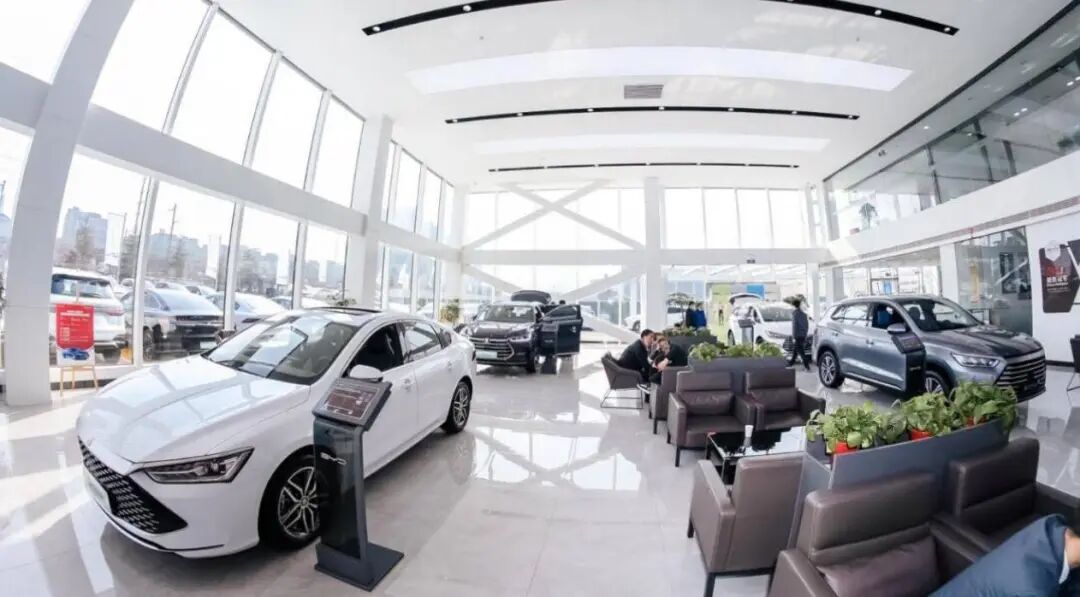
This means that for most users, plug - in hybrid vehicles can truly be used as pure - electric vehicles for daily commuting, significantly reducing the cost of using the vehicle, and there is no need to worry about long - distance travel at all. This is not only a leap in product strength but also a redefinition of the market value of plug - in hybrid models.
This forces all competitors to face a dilemma: whether to follow BYD's example and carry out the same technological upgrade, thus getting involved in the arms race dominated by BYD; or to stick to the original technical specifications but make greater price concessions to make up for the product gap. In fact, BYD's move has raised the dimension of market competition from price to technological value, setting a higher threshold for entry.
Of course, this series of collective actions, which seemingly have different strategies but actually have the same goal, reflects the complex game in the deep - water area of the electrification and intelligent transformation of the Chinese automotive market. They jointly indicate a cruel reality: the market competition in 2026 will not ease but will continue in a more diverse and profound form. A comprehensive war around price, value, and the right to survive has already begun.
In fact, the root cause lies in the profound changes in the deep - level structure of the Chinese automotive market. The market has shifted from incremental competition to stock competition. Consumers are becoming more rational and practical, making comprehensive trade - offs among price, technology, and brand. Moreover, the penetration rate of new - energy vehicles continues to rise, and self - owned brands have established a significant leading advantage in the fields of electrification and intelligence, exerting a downgrading impact on traditional fuel vehicles and even joint - venture brands.
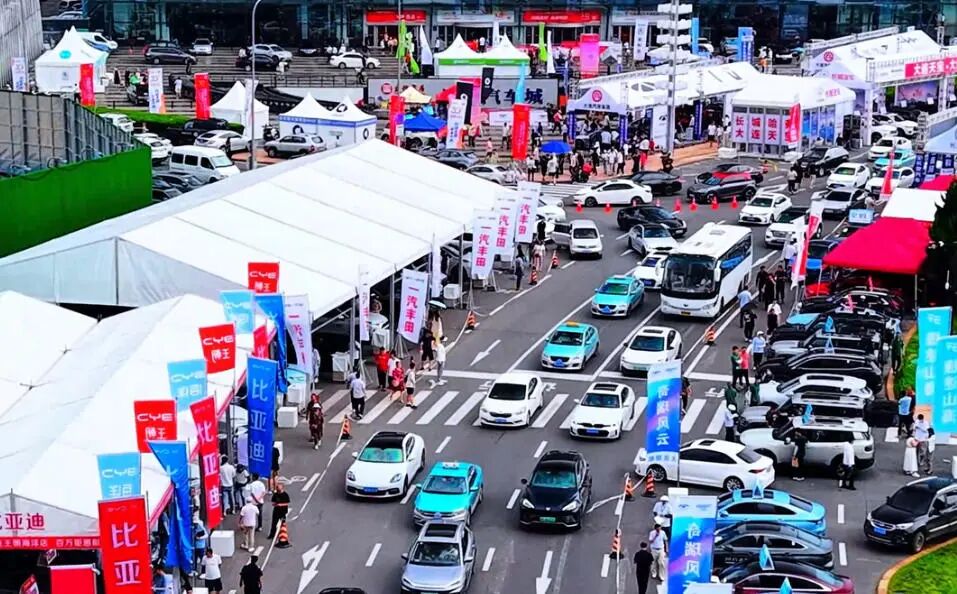
Therefore, the price war is no longer a short - term promotional tool but has evolved into a normalized market cleansing mechanism. BMW's price cut is for survival space, Kia and Hyundai's pricing innovation is to attract customers who value price transparency, and BYD's value upgrade is to consolidate and expand its dominant position.
It can be said that for the entire industry, continuous white - hot competition will undoubtedly accelerate the reshuffle. Enterprises lacking core technologies, with unclear brand positioning, and weak cost - control capabilities will be eliminated. For consumers, this is undoubtedly a blessing, as they will be able to obtain more valuable products and services at lower prices.
Undoubtedly, a more extensive and in - depth comprehensive competition is inevitable. This competition will ultimately prompt the automotive industry to abandon inflated premiums and flashy gimmicks and return to the track driven by technological innovation. For both car companies and consumers, a more transparent, efficient, and cruel new era of the automotive industry has arrived.
This article is from the WeChat official account "Automobile Commune", author: Yang Jing. Republished by 36Kr with permission.