It sold 100 million yuan in a single day. A dark horse emerged in the tool market.
Recently, xTool, a brand of laser creative tools, submitted a listing application to the Hong Kong Stock Exchange. If the listing is successful, xTool will become the "first stock of consumer-grade laser engravers".
Founded in 2021 by Wang Jianjun, a member of the post-85s generation, xTool is a typical e-commerce-driven brand. More than 80% of its revenue comes from channels such as Amazon, independent websites (both domestic and overseas), and Walmart.
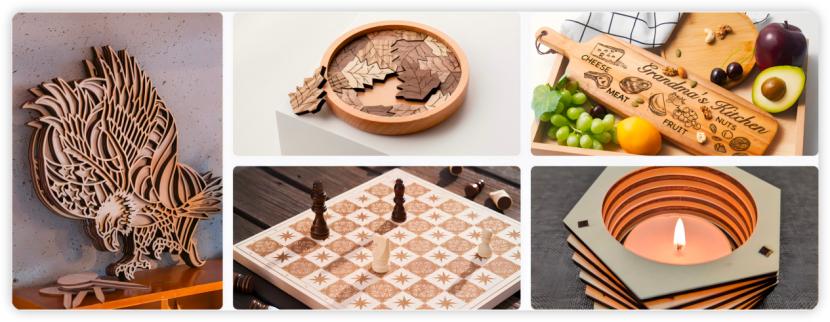
xTool's main products are "laser engravers" and "laser cutters". Users can use its machines to draw or engrave on the surface of various materials. For example, they can engrave a Go pattern on a wooden board, customize text or names on a glass, and cut customized shapes on leather.
xTool's business model is somewhat unique. It can not only attract ordinary consumers to spend money but also provide equipment, consumables, and services to a large number of e-commerce sellers or enterprises.
For instance, xTool launched a new product, a clothing printer, this year. With this printer, users can print personalized patterns on clothing. This product has achieved nearly 100 million yuan in sales just three months after its launch.
This clothing printer is not only popular among ordinary consumers but also seizes the market trend of "Print-on-Demand (POD)" in the e-commerce industry. Under the "Print-on-Demand" model, consumers customize clothing patterns online, and then the sellers print and ship the products.
In recent years, the Print-on-Demand market has been growing rapidly, and its scale is expected to reach hundreds of billions of dollars in ten years.
Driven by this trend, the demand for xTool's laser printers and engravers has exploded. During the "Black Friday and Cyber Monday" period in 2025, xTool's sales increased by 50% year-on-year, achieving a record of over 100 million yuan in single-day sales for the first time.
Currently, xTool's product line has gradually extended to laser welding machines, CNC cutters, and material printers, covering educational, studio, and small industrial-grade scenarios. It is in fierce competition with brands such as Creality, Ortur, and Laserpecker.
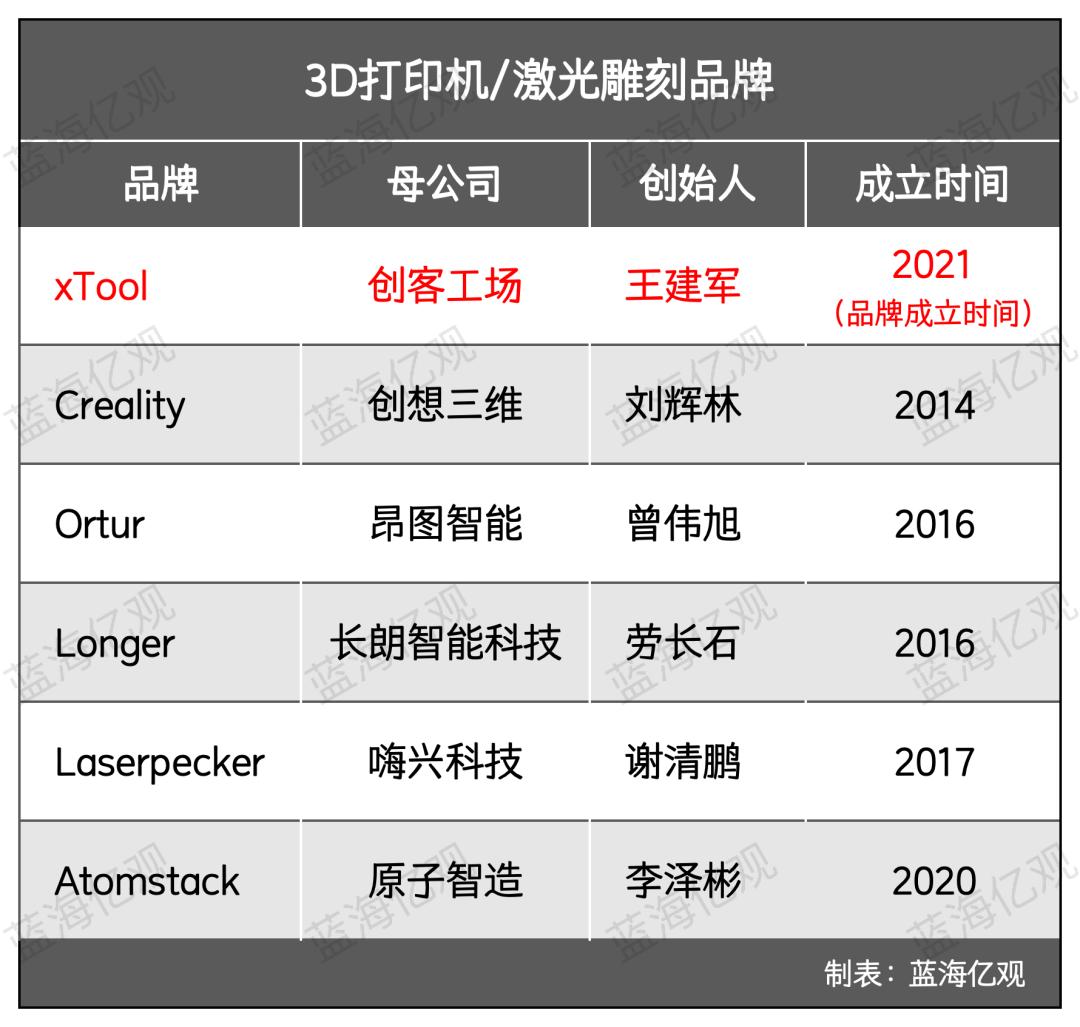
However, xTool's business has the dual characteristics of high growth and pressure on profitability.
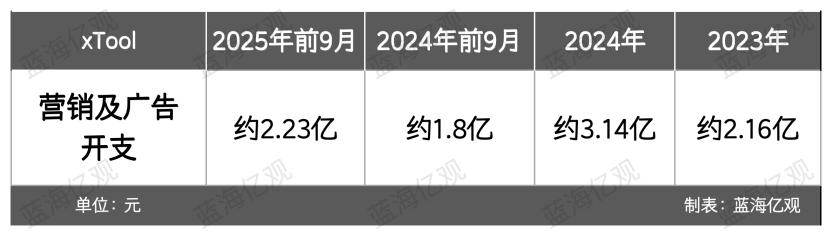
In 2024, xTool's net profit was less than 2%, and its spending on marketing and advertising has been increasing in the past two years, rising from 216 million yuan to 314 million yuan.

01. "Hardware + Software", a Promising Business
Before founding xTool, Wang Jianjun took some wrong turns.
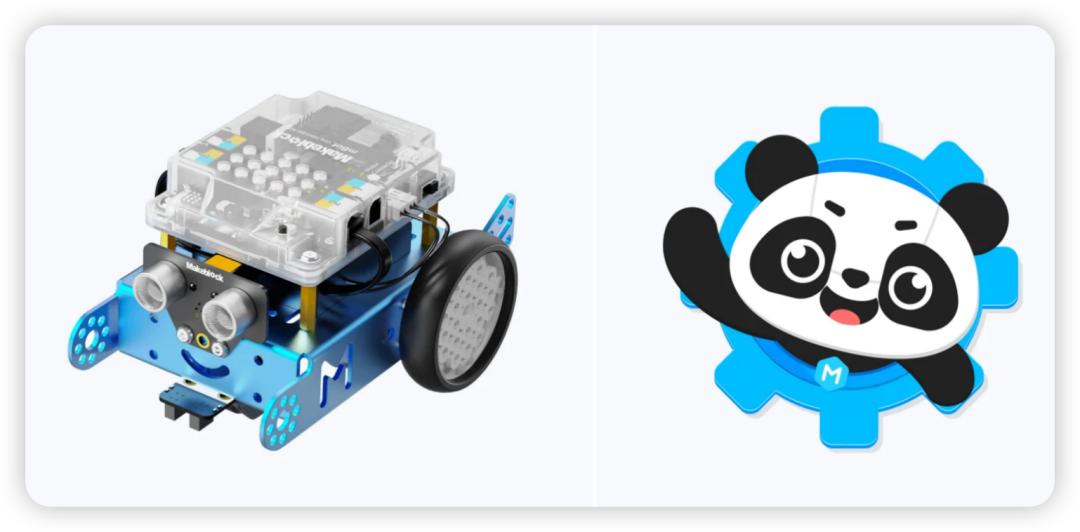
After graduating from Northwestern Polytechnical University in 2013, Wang Jianjun founded Makeblock, focusing on STEAM solutions and providing robot kits and programming platforms. Its business once covered more than 25,000 schools in over 140 countries and regions around the world.
However, around 2020, the public health incident hit the procurement in the STEAM industry, leading to an annual loss of over 10 million yuan for the company. As a result, Wang Jianjun had to explore a transformation path.
Wang Jianjun and his team noticed the rise of the personal creative culture in Europe and the United States, so they began to target the consumer-grade laser engraver market. In 2021, Wang Jianjun led his team to establish the xTool brand, positioning it as "consumer-grade professional tools". In the same year, they launched the first desktop laser engraver, xTool D1, and then embarked on a path of rapid growth.
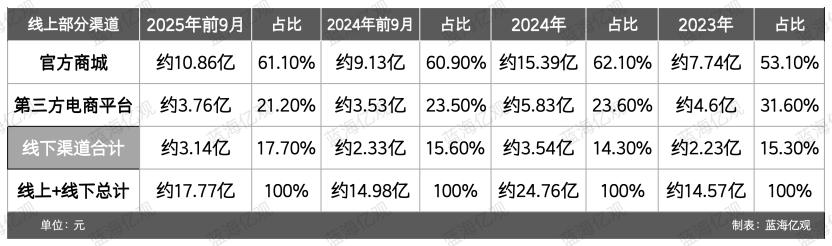
Most of xTool's revenue comes from e-commerce channels. Its official online stores (independent websites) at home and abroad, as well as online platforms such as Amazon, Walmart, and eBay, together contribute more than 80% of the total revenue.
Among them, the official online store is one of xTool's most important sources of revenue. In the first nine months of 2025, the revenue from the official online store alone reached about 1.086 billion yuan, accounting for 61.1% of the total revenue (1.777 billion yuan).
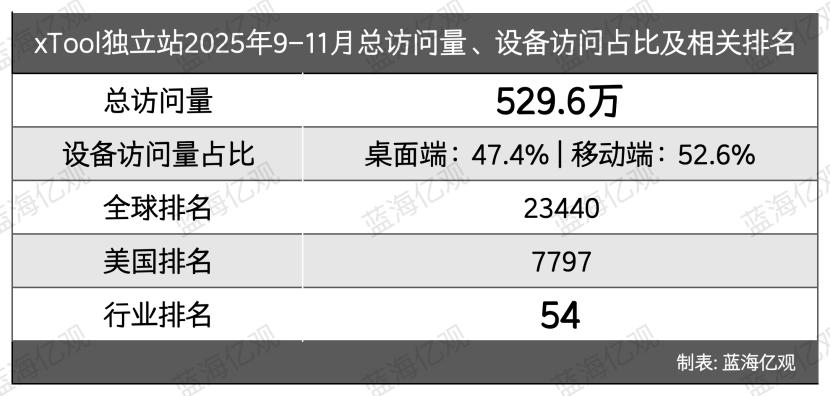
The traffic to xTool's overseas independent website has reached a certain scale, and its traffic structure is relatively healthy. In the past three months (from September to November 2025), the total number of visits to its independent website reached 5.296 million. Among the organic search traffic, the search traffic for brand keywords accounted for 77%. However, its overall traffic still relies on paid advertising. About 24.4% of the traffic is supported by paid ads, far higher than the organic traffic (accounting for 19.08%).
Third-party e-commerce channels such as Amazon are xTool's second-largest source of revenue. In the first nine months of 2025, xTool's revenue from channels such as Amazon and Walmart was about 376 million yuan.
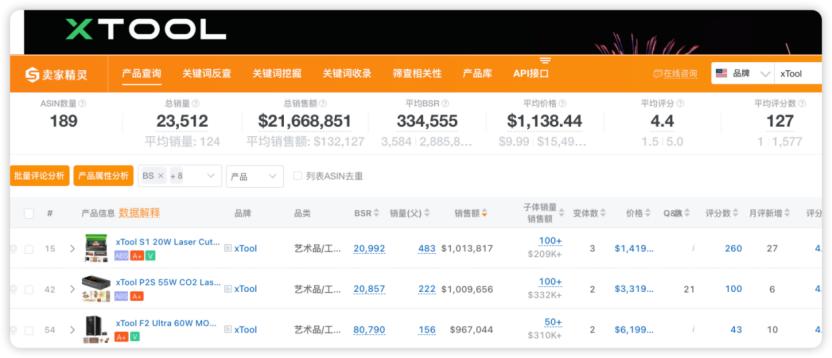
xTool has performed outstandingly on the Amazon US site. According to the data from Sellersprite (www.sellersprite.com), in the past 30 days, among the top 189 ASINs in terms of sales under the xTool brand, the estimated total sales volume was about 23,500 orders, and the total sales revenue was about 21.669 million US dollars. (This data is an estimate and may include some reselling and brand authorization. The actual sales volume may fluctuate due to factors such as the launch of new products and the rhythm of promotional activities.)
Data source: www.sellersprite.com
In the past two years (2023 - 2024), the sales of xTool's laser equipment accounted for more than 80%, followed by consumable products. The two together contributed about 2.206 billion yuan in revenue in 2024, while consumable products only contributed about 269 million yuan.

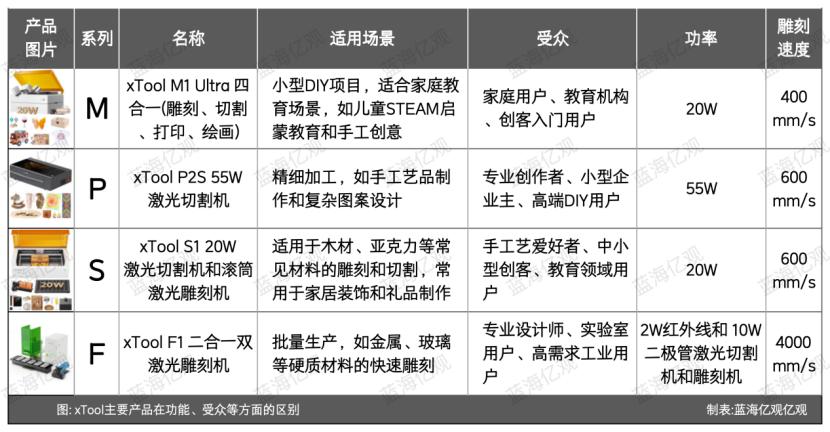
xTool's products are differentiated in terms of power, engraving speed, and precision to suit different usage scenarios and consumer groups, including home users, professional creators, and industrial users.
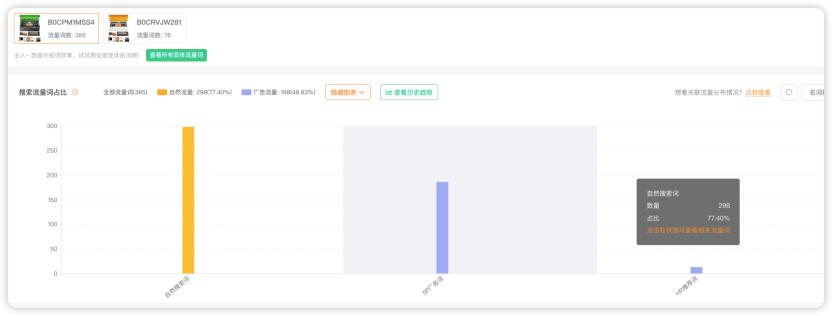
On Amazon, a laser cutting and engraving all-in-one machine priced at $1,419 from xTool has sold very well. According to the data from Sellersprite (www.sellersprite.com), the sales revenue of this product was nearly $1 million in December last year, ranking 49th in the sub-category. The organic traffic of this product accounted for 77.4% in the past 30 days, and almost all the orders were generated through organic traffic.
Data source: www.sellersprite.com
xTool's customized printing machines have generated a huge demand for B2B business, and a large number of e-commerce sellers have become its customers.
xTool launched an online B2B business and provided a set of "paid online customization system" (Customthings) for small and medium-sized enterprise users to manage consumers' personalized orders, including the entire process of design, ordering, production, and delivery.
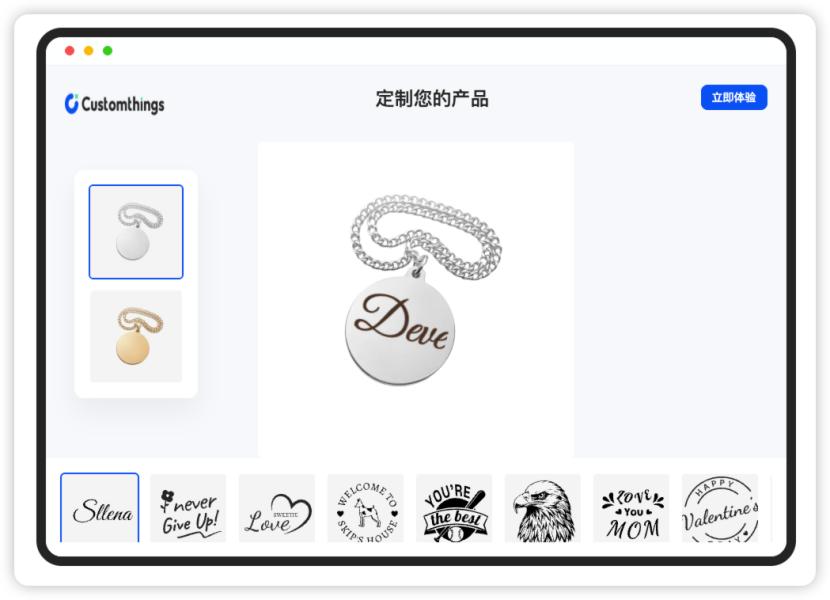
Specifically, merchants can set up "product templates" in the system in advance and open the "online design interface" to consumers. After consumers place an order, the system will directly connect the design content to the production and fulfillment process, reducing the manual connection in multiple processes for merchants. Merchants can check the production and shipping status of orders at any time in the background.

This business model that targets both the B2C and B2B markets has brought considerable revenue to xTool.
In terms of social media marketing, xTool has focused on platforms such as Facebook, TikTok, YouTube, Instagram, and X. As of December 2025, the total number of its followers on major social media platforms reached 1.3886 million, an increase of 736,600 year-on-year.

xTool has also cooperated with some top influencers and launched some performance-oriented advertisements. For example, in the US market, xTool mainly promotes long videos and search-related content, while in the European market, it focuses on short video content.
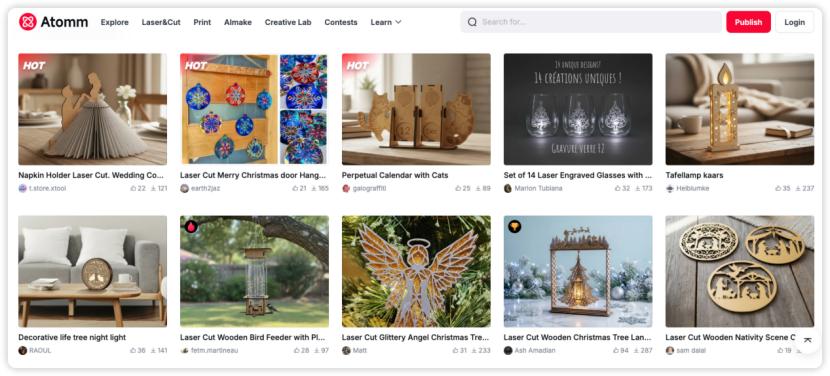
In addition, xTool also operates an online community called Atomm, which is used to centrally display users' works and usage records. Users can also like, comment on, and download the works.
As of now, the platform has accumulated over 210,000 registered users, and users have uploaded more than 40,000 works in total. Among them, about 80% of Atomm users use xTool equipment at least once a month, and about 40% of users use it on a daily basis. This has enhanced user stickiness to some extent and also become an important feedback channel for product improvement.
Photo/
In terms of offline channels, xTool has established store partnerships with many well-known retail brands, including Stanley, Decathlon, Ray-Ban, Mister Minit, Timpson, and PRG Golf. It provides consumers with "on-site customization" and "operation demonstration" services, allowing users to directly interact with the equipment before purchasing.
In addition, to further enhance the connection with users, xTool has also built a user-led offline experience network called "xTool Squad" globally. As of September 30, 2025, this network has covered 32 countries, with a total of 470 offline sites. These sites are usually provided by users with usage experience. These users display the equipment, conduct basic teaching, and exchange works by opening their studios or living spaces.
