The update of AOSP source code has slowed down, and Android is gradually becoming closed.
All along, "openness" has undoubtedly been the gold - lettered signboard of the Android system. However, a series of measures taken by Google in the past few years have all pointed to the same fact, that is, they seem to be preparing to turn Android into a "walled garden" similar to iOS. Recently, Google announced that the code update frequency of AOSP (Android Open Source Project) has been adjusted from once a quarter to once every six months.
That means since 2026, the AOSP source code will be released regularly in the second and fourth quarters. In response, a Google spokesperson said that this change helps simplify development, reduce the burden of multi - branch maintenance, thereby improving the stability and security of Android code, and better coordinating with the stable development model of the main trunk.
As soon as this news came out, the Android developer community was in an uproar. Developers generally believe that this move is to further reduce the influence of third - party developers on Android. Google is trying to squeeze the living space of third - party ROMs in this way.
As is well known, third - party ROMs such as the former MIUI and the current LineageOS are all built based on AOSP. So, a longer source code update cycle means that third - party ROMs cannot obtain bug fixes and update pushes in a timely manner.
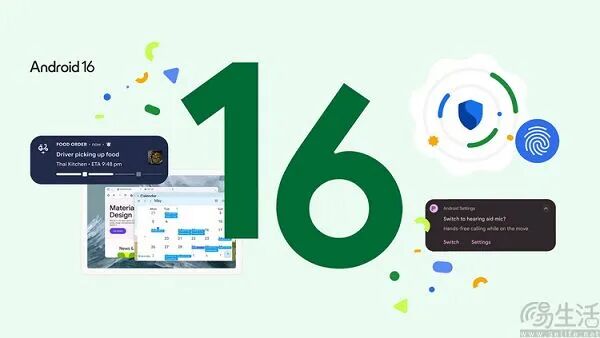
For example, there was an abnormal notification bug in Android 16. Users had to clear old notifications to restore the prompt sound. This bug was fixed by Google in the third quarter of last year. At that time, third - party ROMs obtained the patch immediately. Under the new regulations after this adjustment, users of third - party ROMs will have to wait for three months.
Google's native Android, as well as its partners' One UI and Pengpai OS, can promptly find and fill in the gaps, while other third - party ROMs can only wait patiently. In this situation, users will naturally vote with their feet. Just as users abandoned the poorly - performing native Android and chose third - party ROMs with more functions back then, the Android community is complaining that Google has taken another step forward in hollowing out AOSP.
In fact, since Android 6, Google has been sparing no effort to reduce the content of AOSP. A large number of functions such as search, music, calendar, camera, and keyboard have been transferred from AOSP to Google Play. Even in Android 13, Google directly deleted the dialer and messaging applications (phone and text messages) from AOSP.
Yes, compared with the early days of Android, the difficulty of opening third - party ROMs has actually increased. Google probably hopes that developers will be discouraged by this means and give up maintaining their own ROMs. After all, fragmentation has always been a chronic problem in the Android ecosystem, causing a split in the Android experience. Although they are all Android devices, Google cannot guarantee that every app can run normally on all Android devices.
Since Android 8, Google has successively solved the problem of inconsistencies between the systems of OEM partners and native Android through Project Treble and Project Mainline. However, third - party ROMs can do nothing about it. So, in a sense, third - party ROMs are precisely the last hurdle to solve Android fragmentation.
Unfortunately, openness is the "ancestral law" of Android. Google has no way to prohibit third - party developers from developing ROMs based on AOSP, so it can only beat around the bush. Of course, Google is not only dissatisfied with the developers of third - party ROMs, but also with all external developers.
Google's reduction of the AOSP code update cycle this time is actually the aftermath of Android's shift to internal development last spring. At that time, Google announced that it would abandon the AOSP branch that allowed anyone to access, and only maintain the internal branch that partners with GMS licenses have access to. In short, Android's shift to internal development means that future update content of Android needs to wait for Google to complete it before being fully made public. Before it is completed, ordinary people can't see it.
Of course, Google has left a loophole for third - party developers. Android will continue to accept code contributions from external developers, that is, developers can still submit patches to AOSP Gerrit. Before 2026, developers who submitted code to AOSP could check whether their code was applied every three months, but now this interval has become six months.
Don't think that it's just a change from opening once every three months to once every six months. The result of doubling the interval time will inevitably be that a large number of developers will forget to check. Yes, Google's plan is to discourage third - party developers by increasing the time cost. In fact, similar stories have happened more than once in technology ecosystems such as the Go language community.
Early third - party developers were once a precious asset to Google. Their contributions helped Android through its infancy. However, as Android has become more mature and is associated with huge interests, Google may have long been dissatisfied with these "meddling" developers. After all, the isolated storage sandbox mechanism was forced to be taken offline because of the resistance of third - party developers.
[The pictures in this article are from the Internet]
This article is from the WeChat public account "3eLife" (ID: IT - 3eLife), written by 3e Jun, and published by 36Kr with authorization.