Die Aktualisierung der AOSP-Quellcode verzögert sich, und Android geht schrittweise in Richtung einer geschlossenen Plattform.
Since time immemorial, "openness" has undoubtedly been the hallmark of the Android system. However, a series of measures taken by Google in recent years indicate the same fact: They also seem to be working on transforming Android into a "walled garden" similar to iOS. Recently, Google announced that the code updates of the AOSP (Android Open Source Project) will be changed from quarterly to semi - annual.
This means that starting from 2026, the AOSP source code will be released firmly in the second and fourth quarters. A spokesperson for Google Inc. explained that this change would simplify development and reduce the maintenance burden of multiple branches, so as to improve the stability and security of the Android code and better cooperate with the stable development model of the main branch.
As soon as this news was published, the Android developer community was in an uproar. Developers agree that this measure further restricts the influence of third - party developers on Android. In this way, Google is trying to limit the living space of third - party ROMs.
It is well - known that third - party ROMs such as the former MIUI and today's LineageOS are based on the AOSP. Therefore, a longer source - code update period means that third - party ROMs cannot obtain bug fixes and updates in a timely manner.
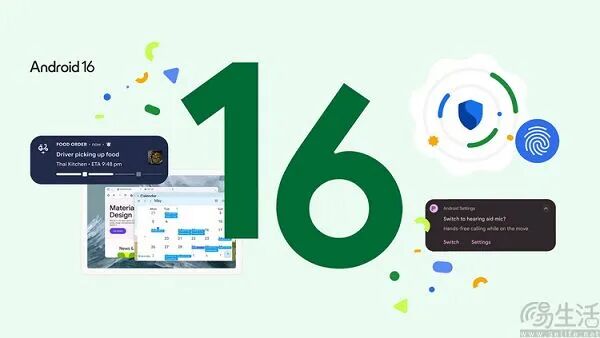
For example, there was a notification bug in Android 16. Users had to delete old notifications to restore the notification sound. Google didn't fix this bug until the third quarter of last year. At that time, third - party ROMs immediately got the patch. However, under the new rules after this adjustment, users of third - party ROMs have to wait for three months.
Google's own original Android, as well as the One UI and Pengpai OS of its partners, can fix bugs in a timely manner, while other third - party ROMs simply have to wait. In such a situation, users will naturally express their opinions through their usage. Just as users used to abandon the useless original Android and switch to more functional third - party ROMs, the Android community is now complaining that Google is taking the process of emptying the AOSP one step further.
In fact, since Android 6, Google has been tirelessly working to reduce the scope of the AOSP. A series of functions such as search, music, calendar, camera, keyboard, etc. have been transferred from the AOSP to the Google Play. Even in Android 13, Google directly removed the phone book and messaging apps (phone and SMS) from the AOSP.
Right, compared with previous Android versions, it has become more difficult to disclose third - party ROMs. Presumably, Google hopes that developers will be discouraged by these measures and abandon the maintenance of their own ROMs. After all, fragmentation has always been a stubborn problem in the Android ecosystem. It has led to a split in the Android user experience. Although all devices use Android, Google cannot guarantee that every app will function properly on all Android devices.
Since Android 8, Google has successively solved the problem of inconsistency between the systems of its OEM partners and the original Android through Project Treble and Project Mainline, but this is impossible for third - party ROMs. In a way, third - party ROMs are exactly the last hurdle in solving Android fragmentation.
Unfortunately, openness is the "original rule" of Android, and Google cannot prohibit third - party developers from developing based on AOSP ROMs, so it has to act indirectly. Naturally, Google is not only dissatisfied with the developers of third - party ROMs but also with all external developers.
Google's shortening of the AOSP code update period is actually the after - effect of Android's shift to internal development last spring. At that time, Google announced that it would abandon the AOSP branch that was accessible to everyone and only maintain the internal branch, which only partners with a GMS license can access. In short, Android's shift to internal development means that future Android updates will only be released after Google has completed them. Most people can't see them beforehand.
Naturally, Google has left a loophole for third - party developers. Android will still accept code contributions from external developers, that is, developers can still send patches to the AOSP Gerrit. Before 2026, developers who sent code to the AOSP could check every three months whether their code had been adopted, but now this period has been extended to six months.
Although it's just an extension from a three - month to a six - month access, doubling the interval will cause a large number of developers to forget about the review. Right, Google plans to discourage third - party developers by increasing the time cost. Similar stories have happened more than once in technology ecosystems such as the Go - language community.
Previously, third - party developers were a valuable asset for Google. Their contributions have also brought Android through its infancy. However, with the maturity of Android and the associated huge economic interests, Google may have long been dissatisfied with these "critical" developers. After all, the isolated storage sandbox system was reluctantly abolished due to the resistance of third - party developers.
[The pictures in this article are from the Internet]
This article is from the WeChat account "Three - Easy Life" (ID: IT - 3eLife). Author: Three - Easy Fungus. Published by 36Kr with permission.