"Chain Innovation" breaks through the bottleneck of traditional industrial transformation, and SHEIN embarks on a brand-new digital and intelligent journey in partnership with apparel factories.
By Xuan Ting
In the standardized factory buildings of Panyu International Fashion Textile and Apparel Industrial Cluster in Guangzhou, Chen Di's fingers glide gently across the screen of the digital production system, where the real-time jumping figures display not only the order progress, but also the global sales data of a certain pleated dress.
Meanwhile, in the factory in Humen, Dongguan, custom-made garments printed with complex patterns are rolling off the production lines, and will be delivered directly to consumers all over the world in a few days.
Riding the wind of cross-border e-commerce, a new form and model of foreign trade, and under the dual tide of global fashion industry restructuring and the advancement of China's 15th Five-Year Plan proposal to promote the upgrading of traditional industries, the textile and apparel industry, as a pillar industry of China, is enabling the factories from China's traditional apparel industrial belts mentioned above to undergo a profound transformation from "scale expansion" to "value leap".
Data from the Ministry of Industry and Information Technology shows that small, medium and micro enterprises account for as high as 99.8% of China's textile and apparel industry. These factories rooted in industrial belts have generally faced pain points such as low digitalization level, large order fluctuations and difficulties in green transformation.
As the rapidly rising world's third-largest fashion retailer and leading cross-border e-commerce enterprise, SHEIN, acting as a "chain leader", is injecting transformation momentum into traditional factories through technological innovation, model reconstruction and ecological co-construction.
Factories in different industrial belts facing different difficulties are using their respective transformation stories to outline how they join hands with the "chain leader" enterprise to leverage the butterfly change of industrial upgrading.
Digital Rebirth of a 30-Year-Old Factory
In Guangzhou in 1994, the wave of people moving south to seek opportunities was filled with opportunities and unknowns. Chen Di, who had just left his hometown, took simple luggage and plunged into the garment industry.
Starting from every stitch of a sewing worker, he mastered all types of work including cutting bed operation, pattern making and design. In the blink of an eye, more than ten years had passed.
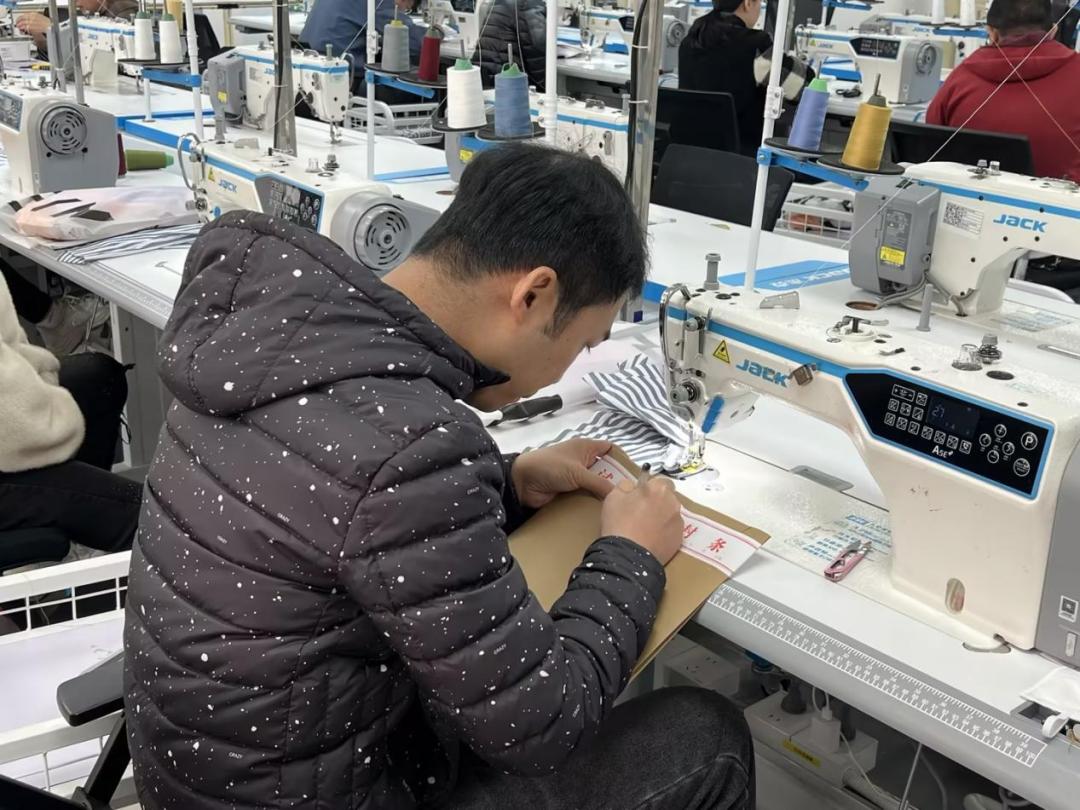
It was not until 2005 that Chen Di, who had saved enough capital and experience, made up his mind to start a business and took the plunge to open a garment processing factory.
But after three years of OEM business, the practical pain points became more and more serious: the processing threshold was too low, the competition was fierce, and the profit was getting thinner and thinner.
He decided to take a different path, rented a stall in the garment wholesale market near Guangzhou Railway Station, but did not follow the conventional rules. "I only operated for a few months, and closed the stall as soon as I found a suitable customer." Chen Di was shrewd in his plan: by saving the stall cost, he could focus on co-designing and developing products with customers, and the products were sold to various places through customers, even across the ocean.
In those days, orders kept coming in, and the roar of the machines in the factory was full of his full vision for his career.
The turning point came around 2010. The rise of online shopping was like a sudden storm that swept through the traditional wholesale market. Chen Di's customers failed to keep up with the trend, their business plummeted, and the pressure was quickly transmitted to his factory, which he finally had to close with great pain.
In the following days, Chen Di watched his peers who transformed in time still be very busy, and he was anxious and flustered. During the 2020 epidemic, he visited a friend's factory that supplied goods to SHEIN, and found that it was completely free of the desolation and mess of traditional factories.
Chen Di decided to reopen the factory and officially became a supplier of SHEIN on June 6, 2021. "I can still clearly remember the day we started our cooperation."
At the beginning, the challenges far exceeded expectations: traditional factories were used to the "large order and slow response" mode, while SHEIN's flexible "small order and fast response" mode with "initial orders of 100 to 200 pieces" meant a wide variety of styles and fragmented orders, which made workers accustomed to single repetitive work feel uncomfortable in the first month.
Fortunately, SHEIN's empowerment team soon stationed in the factory to provide assistance, teaching the team to operate step by step from production scheduling, quality control to data analysis. In daily work, aiming at the problem of multi-style switching, SHEIN provided special training to optimize personnel allocation through lean management; the whole-process quality control system enabled the factory to quickly find problems and adjust in time.
What really made the factory stand firm was a pleated dress with complex craftsmanship.
It was a very tricky style. The tightness and flatness of the pleats had to be just right. Chen Di did it himself and worked with the workers to overcome the technical difficulties. What he didn't expect was that the dress quickly became popular in overseas markets, and each reorder started from two or three thousand pieces. It is still a "evergreen style" in the factory, bringing continuous and generous returns.
After that, the production problem of sequined fabric garments appeared in front of him. The hard edge of the sequins was easy to rub against the skin and affect the wearing experience. Chen Di tried to roll and hem the outer edge of the fabric. Although the problem of skin irritation was solved, the production efficiency was directly halved.
Just when he was at a loss, the special tool developed by SHEIN Garment Manufacturing Innovation Research Center came as a timely help: it combined the two hemming processes into one, which not only increased the production efficiency by 40%, but also made the product quality more stable.
"At that moment, I realized that no matter how difficult the style is, there is a corresponding solution, and the key is to find the right direction." In Chen Di's view, under SHEIN's flexible supply chain mode, through the background data analysis, he can know whether the product is popular among consumers, and he only needs to do a good job in subsequent production guarantee, "to ensure that we don't miss the opportunity of popular styles due to out of stock. The lean tools continuously developed by SHEIN have become a powerful assistant for us to challenge complex styles."
Now, Chen Di's factory is no longer the small workshop it used to be. The factory building in Panyu has been continuously expanded, and the new factory building opened in Hubei has fully replicated the digital experience of Panyu, with a total area of 9,000 square meters.
The factory director and technical management personnel of the Hubei factory are all carefully trained by him in Guangzhou before being transferred there. The two factories work together to calmly meet various order demands.
"SHEIN's model solves the three most troublesome problems I had in the past," Chen Di counted on his fingers: orders are stable, after one order is delivered, the next order has already been scheduled in the background, so there is no need to go around to "beg for orders"; the process is transparent, production progress, quality status and sales data can be checked at any time; the account period is stable, the payment is never delayed on the due date, and there is no need to worry about capital turnover anymore.
What SHEIN brings is not only orders and technology, but also reshapes his business thinking. In the past, he accepted orders passively, but now he takes the initiative to innovate: "Through SHEIN's digital tool system, we can also see consumer evaluations of the styles we produce. For the problems fed back by consumers, we will immediately organize internal research and make improvements in the subsequent production."
This transformation from experience-driven to data-based decision-making was something Chen Di could not even imagine in the past. SHEIN's empowerment is enabling more entrepreneurs like Chen Di to regain confidence in the digital wave and give new vitality to old factories.
The "Green Breakthrough" of the Digital Printing Garment Factory
Driving southeast from Guangzhou for about 1 hour, crossing the Humen Bridge, you will arrive at the hot land of fashion industry — Humen, Dongguan.
As the "Famous Town of Chinese Women's Wear", the annual garment sales here exceed 84.5 billion yuan, gathering more than 3,000 garment enterprises and 200,000 practitioners.
Ten years ago, Sun He stepped into the garment printing industry here. From providing shoe printing services for international second-tier brands in the early stage, to gradually expanding fabric supply, and then to digital printing garment production, he has always adjusted his business direction in line with the industry trend in the past ten years.
At present, the printing and dyeing industry still mainly adopts traditional processes such as screen printing, but such processes are limited by the plate-making process, which can only realize simple patterns with 12 color sets, making it difficult to meet the complex design demands under the fashion trend, and also have the pain points of high water consumption and high pollution.
The digital heat transfer printing technology promoted by SHEIN has brought hope to the industry. Digital printing does not need plate making, has unlimited color sets, and is environmentally friendly, flexible and efficient. Data from China Printing and Dyeing Industry Association shows that the output of digital inkjet printing of Chinese textiles increased from 400 million meters in 2015 to 3.7 billion meters in 2023, with an average annual growth rate of 37.4%, and the market penetration rate continues to increase.
Since the application of this technology in 2018, as of June 2024, more than 65% of the products in SHEIN's supply chain have used digital heat transfer printing technology, saving a total of 1.13 million tons of water, equivalent to 2.26 billion bottles of 500ml bottled water.
More importantly, this technology is deeply compatible with SHEIN's on-demand production flexible supply chain mode: on-demand production can flexibly adjust orders according to market trends, reducing waste from the source; digital heat transfer printing can realize small-batch and flexible-quantity printing production, which perfectly adapts to personalized demands.
"At that time, our own traditional orders were gradually decreasing, but the customers we contacted had higher and higher requirements for order timeliness, and more and more personalized demands." Sun He, who keenly perceived the market changes, made a decisive transformation and officially became a supplier of SHEIN for full-width one-piece customization and women's wear in January last year.
In the early stage of cooperation, Sun He's team once found it difficult to adapt to the fragmented "small order and fast response" orders. "Thanks to SHEIN's supporting order following guidance and a series of empowerment training, our team quickly got familiar with the process and improved their skills."
SHEIN has clear standards for garment printing accuracy, color fastness and delivery time, and its empowerment team has formulated an all-round improvement plan for Sun He: providing step-by-step guidance from raw material procurement standards to production process optimization, from quality inspection methods to the application of digital management tools.
The real test came from the Ramadan big promotion in the Middle East shortly after the cooperation. As the reorders of popular styles poured in one after another, the daily output of the factory continued to rise. "The workshop is easy to get busy and chaotic, there is no new production capacity, and no one specially tracks the whole process, so the risks of unqualified quality and delivery delay come one after another." Sun He recalled.
After detecting the abnormality through data monitoring, the SHEIN team immediately intervened to provide guidance, not only providing monthly training on autonomous operation and inventory management, but also teaching the team to take inventory of inventory and prepare goods accurately step by step.
With the empowerment of SHEIN, Sun He quickly adjusted his strategy: on the one hand, he expanded the team size, relying on SHEIN's clear post standards and special post talent training system to enable new employees to get familiar with the work quickly and solve the production capacity gap; on the other hand, he specially added operation posts to analyze the data of popular styles and out-of-stock warnings, and feed the data back to the production link to form a closed loop of "data-production-optimization".
Today, thousands of entrepreneurs like Sun He form the picture of the upgrading of Humen's traditional garment industry. Driven by SHEIN, this "Famous Town of Chinese Women's Wear" is transforming from "processing with supplied materials" to "defining trends", and the application of digital and green technologies is giving new vitality to the traditional industrial belt.
Flexible Leap from Takeaway Uniforms to Global Outdoor Bestsellers
In Suzhou, Jiangsu Province, in Yao Yuan's sports and outdoor garment factory, workers are rushing to produce a batch of mountaineering clothes for overseas markets.
No one would have thought that this factory, which is now exploring the "small order and fast response" mode, was the core supplier of takeaway platform uniforms in China a few years ago, and once set a record of delivering 600,000 to 700,000 uniforms in two months at its peak.
When the factory was founded in 2003, Yao Yuan mainly focused on foreign trade orders of outdoor apparel. Although the unit price was high, the off-season and peak season were obvious. Until 2016, he keenly caught the boom of the takeaway industry and quickly transformed to produce takeaway uniforms.
In order to win orders, he polished a very strong supply chain system: it can not only undertake massive orders, but also establish a single-piece direct mail service and a special online after-sales team. He even led the team to investigate at rider stations, and improved details such as the firmness of the straps according to the feedback from riders.
However, with the deepening of cooperation, the disadvantages of the "large enterprise thinking" gradually exposed. "The biggest pain points are the account period and inventory." Yao Yuan admitted that the account period of cooperative customers was extended from 3 months to 6 months, bringing huge capital pressure; the more tricky problem was inventory, "some brands continued to return goods half a year after sales", and the early profits were completely swallowed up by the labor and rent costs caused by overstocked inventory, and even resulted in losses.
At the same time, subtle changes are taking place in market demand. Work uniforms are no longer just simple breathable sports styles, but begin to evolve into multi-functional equipment with urban functional style that can cope with bad weather, and even there are IP co-branded limited demands of only 200 to 300 pieces at a time. "The team that was used to producing hundreds of thousands of pieces was unwilling to take such small orders at the beginning." Yao Yuan recalled.
Just then, he heard about SHEIN's "small order and fast response" mode from a customer. This made him realize that consumer demand is transforming towards diversification and extreme cost-effectiveness, and the traditional "large-scale, long-cycle" production is bound to be replaced by "fragmented, fast-response" production.
"I think small order and fast response will become the mainstream, which can not only reduce inventory pressure, but also meet the diverse market demands." Based on this judgment, Yao Yuan decided to take the initiative to contact SHEIN to seek cooperation.
In 2023, Yao Yuan officially started cooperation with SHEIN. Although he was optimistic about SHEIN's advantages of "timely payment, no inventory pressure and stable orders", the "acclimatization" in the initial stage of transformation was unavoidable.
The biggest challenge came from the conflict between aesthetic differences and production logic. "We are used to making domestic work uniforms, we don't understand the aesthetics of overseas consumers, and it is difficult for the styles we select in the old way to be selected by buyers." In order to break the deadlock, Yao Yuan led the team to travel to Guangzhou frequently, participated in SHEIN's targeted training, and actively connected with buyers. Under the guidance of SHEIN's buyers, they learned how to lock in target groups, split product positioning, and develop function-scenario-based styles in combination with seasons.
The real "surgery" took place on the production line. SHEIN's logic of "testing with small orders first to reduce waste" is completely different from Yao Yuan's usual "mass replication" logic. Yao Yuan made up his mind to make a big reform on the production line: the original large assembly line of 30 people was directly split into small assembly lines of less than 10 people.
This change forced workers to step out of their comfort zones and transform from skilled workers accustomed to a single process to all-round workers adapted to multi-process operations. In order to ease the production capacity pressure in the initial stage, Yao Yuan expanded new production capacity and introduced SHEIN's empowerment team to carry out "online + offline" training to ensure that workers master the production specifications of different styles.
After the painful period of transformation, the returns are obvious. Yao Yuan found that the growth brought by SHEIN was equivalent to the scale of serving many customers in the past. What surprised him even more was that SHEIN's empowerment produced a "spillover effect".
"SHEIN's quality inspection method has been reversely applied by us to the small-batch production of other customers later." Yao Yuan said that the "small order and fast response" capability complemented through cooperation with SHEIN has now become