Six conversations at CES: The "external competition" of AI hardware from Shenzhen
On the opening day of CES 2026, an Uber driver in Las Vegas looked at the crowd outside the exhibition hall and blurted out, "There are so many Chinese people."
Yes, the Chinese hardware industry is surging onto the global stage with unprecedented strength and density.
In the robotics exhibition area, Hou Wei, the VP of Xingdong Jiyuan Technology, had a more specific feeling: "All the top domestic manufacturers are here. And in the bipedal robot track, non - Chinese manufacturers' presentations are very conservative. There are no cool moves, and there are even few live demos."
China has become an important base for the global hardware supply chain, and emerging hardware brands are constantly emerging based on China's supply - chain advantages. Their goals are to go global and reinvent hardware with AI.
However, there is also a hint of tension in the enthusiasm.
Xue Lijun, the founder of the AI companion hardware startup Ludens AI, recalled that an American white journalist repeatedly questioned all Asian faces in the exhibition area: "Is your supply chain in Shenzhen? Are there any Chinese engineers in your team? Where is our data stored?"
This anxiety is also confirmed by the data: In 2026, the number of enterprises participating in the exhibition with Chinese registered addresses was 935, which, although still accounting for nearly 20% of the total, dropped significantly from more than 1,300 in 2025. A brand executive told InfoQ frankly that visa barriers were the main reason for the absence.
However, these obstacles have not dampened the global market's enthusiasm for Chinese AI hardware.
Yuandian Intelligence, a new brand under Lexiang Technology, received cooperation intentions from local chain - channel purchasers and other agents in Europe and America right after its press conference at CES.
Ludens AI only brought two prototypes to the exhibition. Before the products were even launched on the crowdfunding platform, it was almost out of 2,000 business cards.
Wan AIChef, an AI kitchen - appliance brand, participated in CES for the first time. Lin Yanni, the brand management director, told InfoQ that the team originally aimed to conduct market research in North America but unexpectedly received a large number of inquiries from local agents and after - sales service providers, as well as cooperation intentions from several large retailers including Best Buy and Home Depot.
These signals all point to a fact: Despite the frictions caused by geopolitics, the market is still impressed by the value and experience of the products themselves.
It is against this background that AI hardware presented new trends at CES 2026:
Some "gadgets" that were once considered to have unclear prospects are being re - defined by large companies as key entrances to the Physical AI ecosystem.
AI hardware startups are thinking more carefully about their survival strategies from aspects such as data, scenarios, and user groups.
It has become clearer how robots can integrate into the physical world, and domestic embodied intelligence already has clear business goals. In addition to humanoid robot manufacturers, industrial giants like Caterpillar and Siemens have also come, eager to tell everyone: We are not only keeping up with the development of AI but also supporting the physical infrastructure required by AI.

Large companies are eyeing the gadgets, and the competition in the AI hardware industry is intensifying
Hardware categories that were once regarded as marginal, niche, or even "toy - level" are being re - defined by technology giants as strategic entrances to the next - generation AI ecosystem. Smart rings, pet robots, and health bracelets have now become key tools for connecting users, data, and multi - scenario services.
At the beginning of 2025, Dreame officially established its AI hardware division and chose the smart ring as its first breakthrough point. Recently, the team exhibited three smart rings with different functions and a blood - pressure watch at CES. The vibrating AI smart ring focuses on active interaction, the ecological - interconnection AI ring has NFC functions, and the health ring and blood - pressure watch are more focused on health monitoring.
These products all aim at the same goal: to extend hardware from the home scenario to users' 24 - hour lives.
"In the Dreame ecosystem, the ring is positioned as the key to unlock the Dreame ecosystem chain," Pan Zhidong, the person in charge of Dreame's AI hardware division, explained to InfoQ. "The smart ring is a product that users can wear 24 hours a day without feeling it. It can obtain millisecond - level data feedback from users and will be used by more people than other types of wearable devices in the next decade."
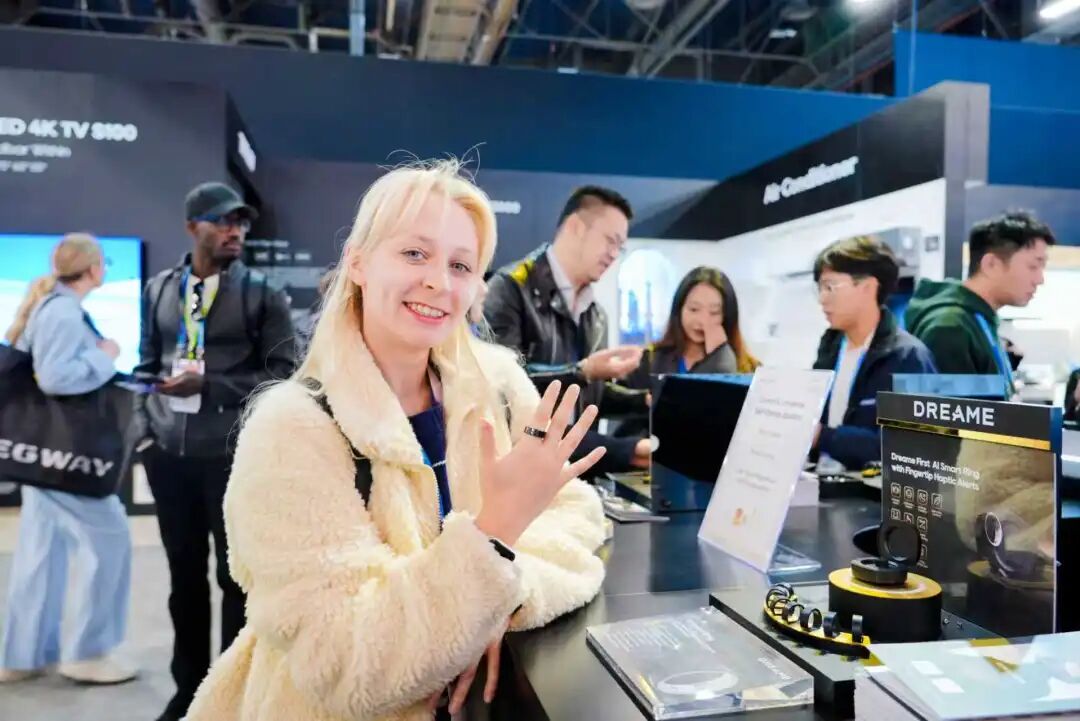
In Pan Zhidong's view, the essence of smart home and AI hardware is intelligent interconnection, and the difference lies in the coverage radius: the former focuses on the comfort and convenience of the living space, while the latter runs through multiple scenarios such as outdoor, office, sleep, and health. In the future, the ring is expected to be deeply integrated with other products in the Dreame ecosystem. For example, users can touch the ring before going home to start the vacuum cleaner in advance, and when they arrive home, the lights and music can be automatically adjusted according to the user's status monitored by the ring.
Technologically, Dreame's AI smart ring relies on the brand's deep accumulation in the high - speed motor field and integrates a micro - motor into the ring structure. It needs to solve problems such as space limitations, the impact of vibration on structural stability, and power consumption control. Currently, the vibration function supports scenarios such as abnormal heart - rate alerts, message notifications, and taking photos.
In addition, Dreame's ambition is also extending to scenarios such as the office. Pan Zhidong said that the team is developing a recording ring that can record highlights in meetings and daily life. "You can think of it as a spatial ring that can store your inspiration at any time."
Currently, the market has given positive feedback: In October 2025, Dreame's smart ring began a low - key pre - sale in China. In December 2025, Dreame's ring topped the sales list of smart rings on Tmall, surpassing brands such as RingConn and Huami.
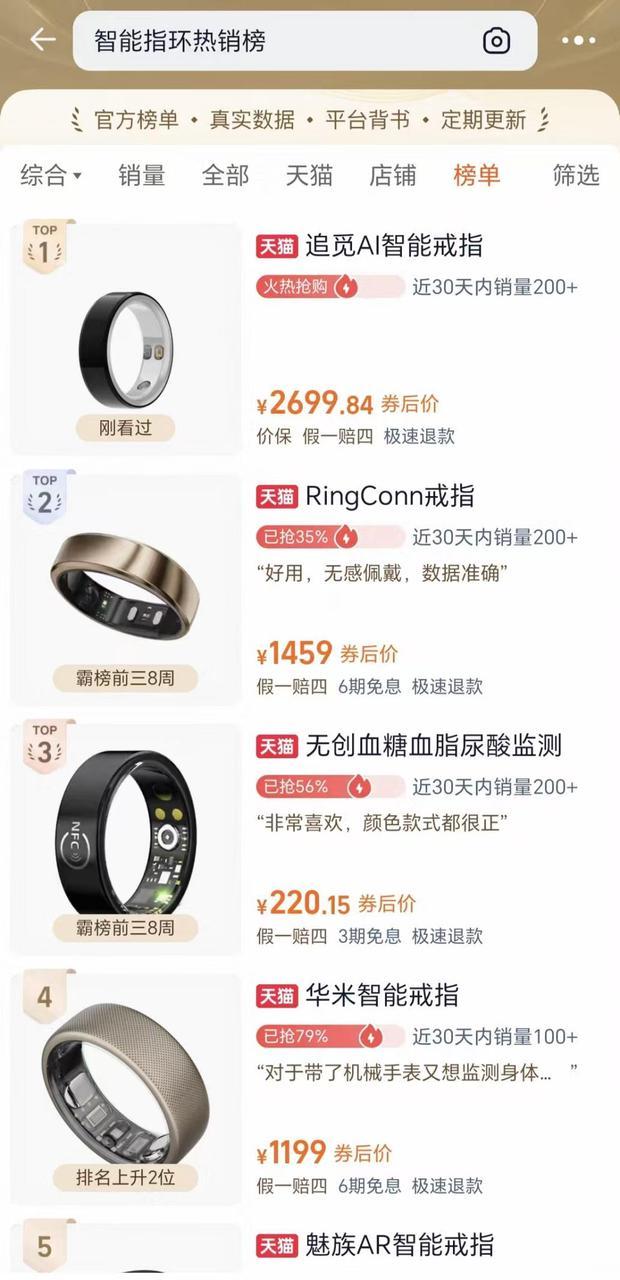
The picture is a screenshot of Tmall's official website on December 29
If Dreame is trying to extend its coverage of "people" through personal devices, then Tuya Smart is building a cross - scenario AI hardware collaboration network.
At this year's CES, Tuya Smart launched its AI pet - companion robot Aura and simultaneously introduced its AI life assistant HeyTuya.
It is worth noting that Tuya has rarely launched hardware products before. The launch of Aura is a major attempt by Tuya in the field of AI hardware consumption.
Na Jingdan, the CMO of Tuya Smart, said on social media, "Aura is not the end but the starting point for home - companion robots to become long - term and universal. 'Pet companionship' is just the entrance, and the system will naturally extend to feeding management, behavior analysis, and health monitoring, backed by a clear three - pillar system."
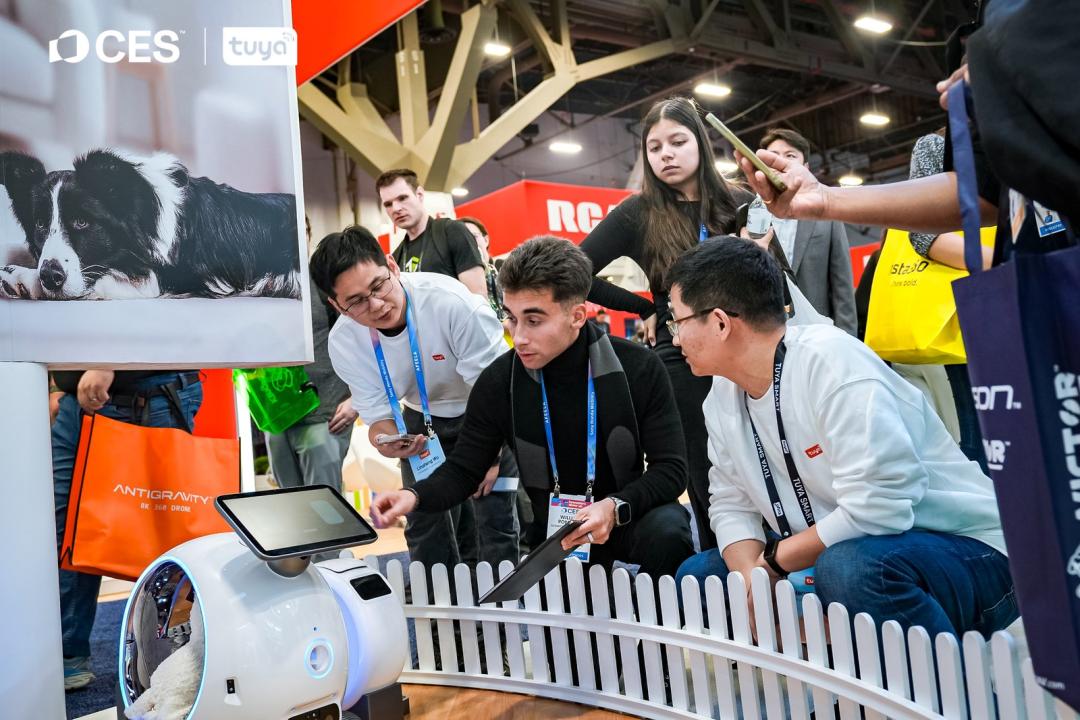
Users are experiencing Tuya Smart's AI pet - companion robot Aura on - site
More worthy of attention than the specific products is the direction pointed to by HeyTuya. In the previous cycle of AIoT, Tuya mostly played a behind - the - scenes role: helping manufacturers quickly build smart hardware through modules and cloud services. Now, it is trying to go a step further, no longer just empowering single devices but serving as a unified entrance for smart homes, enabling different hardware to have Agent capabilities and work collaboratively in scenarios.
"We are not just helping manufacturers make smart air conditioners or refrigerators," Yu Xiang, the product director of Tuya Smart, told InfoQ. "HeyTuya is a complete 'AI life - scenario' demo. It shows how to integrate functions such as security, health, and daily routines, which were originally fragmented, into an overall experience that actively serves users."
Although the idea of "reinventing hardware with AI" has been discussed repeatedly, the industry has not yet reached a consensus on the form and boundaries of Agent hardware.
In Yu Xiang's view, in the short term, there are two types of Agent hardware with the greatest chance of success: one is emotional - companionship products, such as companion robots or high - end toys, which directly respond to people's emotional needs, and the market has started to give feedback through actual usage; the other is "expert assistants" in vertical fields, such as home energy - saving butlers, which can provide quantifiable and perceptible value in specific scenarios.
For these products to truly succeed, the industry still needs to improve two basic capabilities: one is the stable connection and long - term memory as the "nervous system" to enable the Agent to connect to devices in real - time and understand user habits; the other is the ecological integration ability as the "skeletal system," and the value of a single Agent should be based on an open and interoperable device network.
Survival strategies for AI hardware startups
Data, scenarios, and interaction
When large companies incorporate "gadgets" such as smart rings and companion robots into the Physical AI landscape with their ecological advantages, AI hardware startups have to find a foothold in a narrower space. They must build moats around data, scenarios, and interaction.
Wang Chao, the COO of Future Intelligence, believes that among the three elements of computing power, algorithms, and data, the real long - term bottleneck is not the first two but high - quality, scenario - constrained private data - especially information that cannot be obtained through the Internet and can only be continuously collected in the real world by physical devices.
"AI earphones are the ears of the physical world," Wang Chao described. "They convert sound into structured text, and this data has been difficult for large - model companies to directly access in the past."
Wang Chao believes that the key for AI hardware startups is not "putting AI into hardware" but the chosen direction - whether it must rely on a specific hardware form to complete data collection, processing, and understanding in specific scenarios, and this process is difficult to be replaced by the general software solutions of large companies.
Taking the office scenario as an example, Future Intelligence enters the meeting, communication, and decision - making environment through AI earphones. The data accumulated is desensitized, but once structured, it can continuously serve the internal collaboration efficiency and management processes of enterprises.
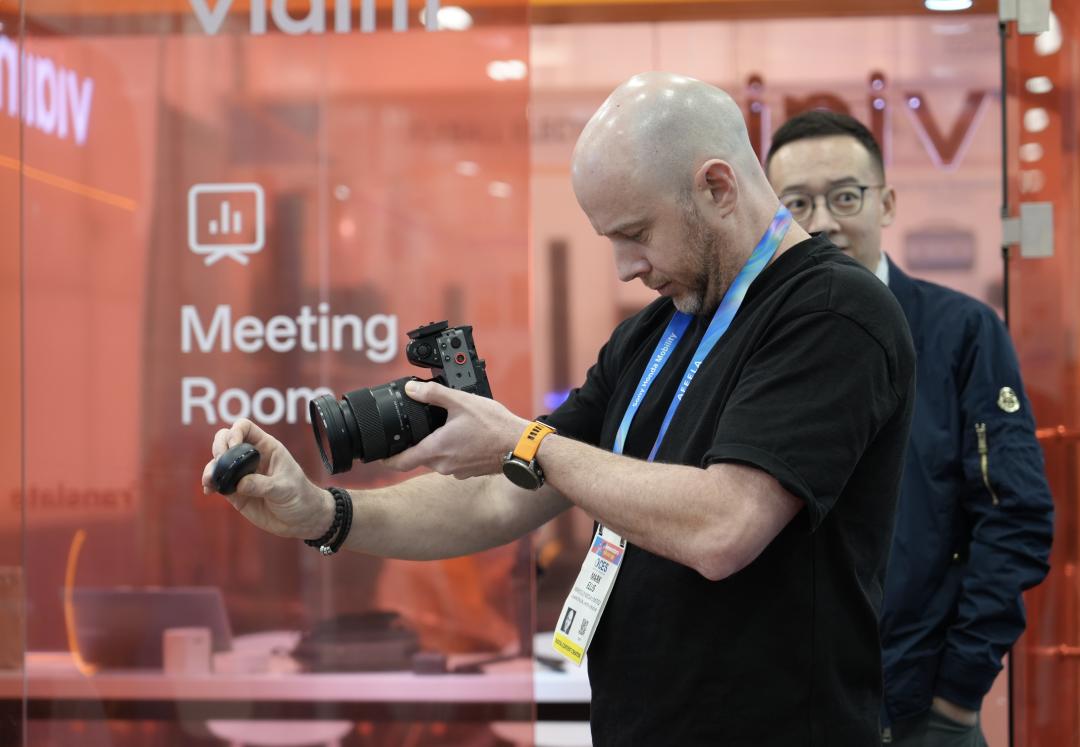
Youtube tech blogger "Mark Ellis Reviews" is experiencing and filming Future Intelligence's products at CES
At the CES site, Wang Chao also felt a strong signal that Physical AI is moving from concept to engineering reality. Behind this trend, two changes are particularly obvious: one is the reconstruction of underlying technologies and the supply chain, including the evolution of edge - side computing power solutions and fluctuations in storage costs; the other is that hardware must be able to be more naturally integrated into the existing living environment through more natural interaction methods.
Specifically, the improvement of chip computing power has opened up space for algorithm optimization. For example, noise reduction can be automatically and dynamically adjusted according to environmental changes, and earphones can even scan the user's ear canal structure to achieve personalized noise - reduction solutions. At the same time, the high storage demand is under supply - chain pressure: the shortage of storage chips and the increase in prices have directly affected some high - configuration earphone products in the AI earphone industry.
In terms of interaction methods, Future Intelligence will focus on voice interaction. Its subsequent product development also plans to introduce Agent - style proactive service capabilities. For example, when an executive is concentrating on a meeting, the AI earphone can intelligently judge whether incoming emails and approval requests are "urgent and need to be processed immediately" and remind the user through the earphone in time; the user only needs a simple gesture to give feedback.
But to achieve this kind of experience, the independent networking and edge - side computing capabilities of the earphones become important.
Wang Chao pointed out that currently, all "AI earphones" on the market still rely on mobile phone apps for voice transcription. Once the app is minimized or restricted by system permissions, the function may be interrupted. In contrast, if the task can be completed on the device side and then coordinated with the cloud, the experience will be significantly more stable. Future Intelligence is also exploring edge - side AI. Although it cannot achieve true independence at present, it is avoiding the uncertainty of the mobile end through some solutions, such as offline flash recording, which directly connects the earphone or charging case to the cloud AI.
Next, Future Intelligence plans to provide more continuous services around the office scenario through multi - device collaboration.
The three keywords of private data, extreme scenarios, and interaction experience also appear in the key thinking of Ludens AI, an AI companion hardware startup.
Xue Lijun, the founder of Ludens AI, introduced that the data in the home scenario is highly sensitive. Therefore, during product development, the team focuses on testing in real environments and accumulates original data on the rhythm of human - robot coexistence, emotional - feedback patterns, and spatial behavior habits.
For this reason, Ludens AI uses a pure edge - side AI model. On the one hand, it is because of the natural vigilance against privacy leakage in the home scenario; on the other hand, it is to achieve a natural sense of interaction. The robots under Ludens AI can achieve real - time response at the 50 - 100ms level.
Behind this design is a detailed breakdown of scenarios. Founder Xue Lijun believes that although AI companion hardware is strongly related to AI and robots, in the long run, it is essentially a field with strong cultural attributes. For example, a robot for elderly people living alone in Japan will have different interaction rhythms, voice intonations, and wake - up logics from a version for children in Europe and America.
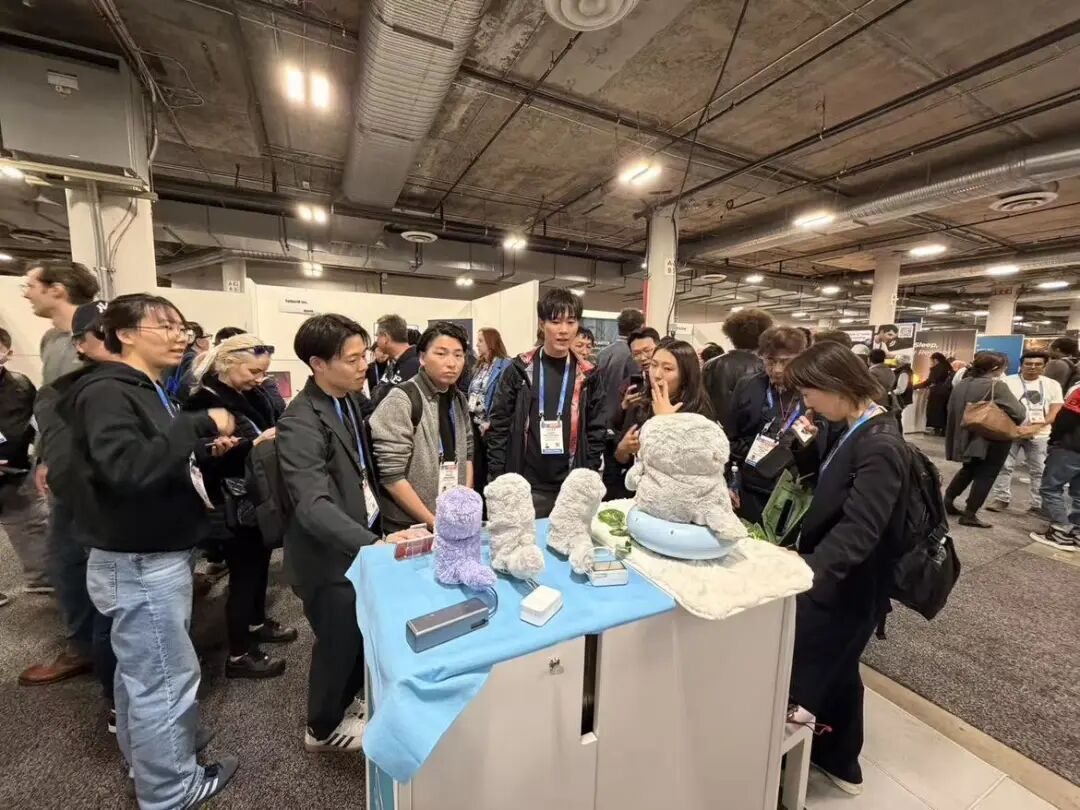
At the Ludens AI booth, visitors are experiencing the prototypes of Inu and Cocomo
In terms of interaction experience, Ludens AI emphasizes using "play" as the core mechanism for building emotional connections. Therefore, the robot can actively respond to the environment and the user's state.
In 2026, Ludens AI plans to conduct two crowdfunding campaigns to test market demand. Xue Lijun believes that for companion products, the frequency and duration of continuous interaction are the key indicators for judging product - market fit. For ethical reasons, the company will not set subscription thresholds for dialogue and memory capabilities to avoid the problem of "losing companionship once the payment stops."
Robots are moving from the exhibition hall to factories and homes
Walking into the robot exhibition hall in Las Vegas, the most intuitive