Xiaomi hits a new high amidst doubts. Huawei's monthly sales approach 90,000. In December, domestic new energy vehicles bloom in a riot of colors.
In 2020, BYD sold 426,000 vehicles. By 2025, its ranking would be behind XPeng.
In just five years, BYD's sales soared to 4.545 million vehicles, with a compound annual growth rate of up to 60%.
Even with such rapid growth, BYD still faced its most anxiety - ridden year. It not only failed to meet its performance targets but was also vigorously chased by automakers such as Geely, SAIC, Chery, and Changan.
This is a true portrayal of 2025. Amidst the intense competition, Chinese automakers are making their final preparations before going global.
01 A Brief Correction in December
Business Data Analysis
The policy incentives continue. Near the end of the year, many regions are still increasing subsidies for automobile sales. Regions such as Guangdong, Jiangsu, Zhejiang, Hubei, Anhui, Sichuan, and Shandong have provided consumption subsidies, with a total amount exceeding 1.1 billion yuan.
However, after a long - term rapid growth, the sales of automakers entered a brief consolidation period in December.
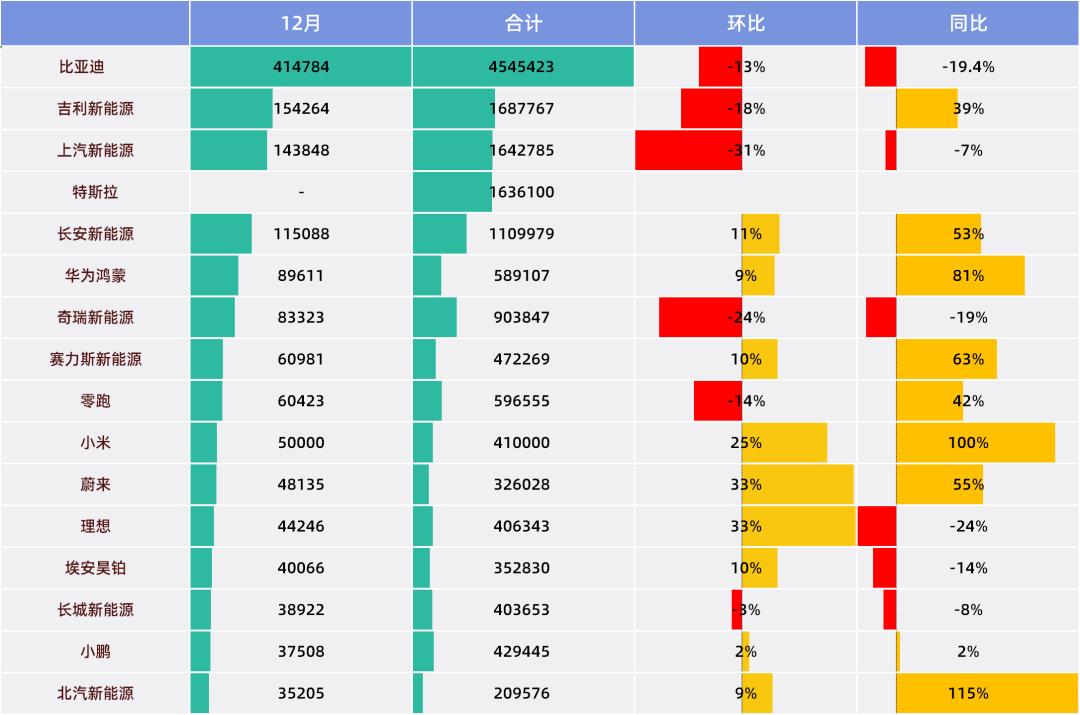
Most manufacturers failed to reach new highs. Among the 15 Chinese automakers that have announced their sales, only 5 achieved both year - on - year and month - on - month growth. The others all experienced varying degrees of fluctuations.
The average sales declined. After two consecutive months of sales exceeding 100,000 vehicles, the average sales in December dropped to 94,427 vehicles. The key reason for this decline lies in the sales drop of the first and second - tier automakers. BYD, Geely New Energy, SAIC New Energy, and Chery New Energy all had month - on - month declines.
On the contrary, the third - tier enterprises performed brilliantly in December. Huawei Hongmeng, Xiaomi, NIO, and BAIC reached new highs. Due to the strong performance of these enterprises, the median sales of the 15 enterprises reached 60,423 vehicles, an increase of 5,220 vehicles compared to the previous month.
The third - tier enterprises generally raised the sales threshold of automakers. Throughout the fourth quarter, none of the 15 automakers had monthly sales below 30,000 vehicles.
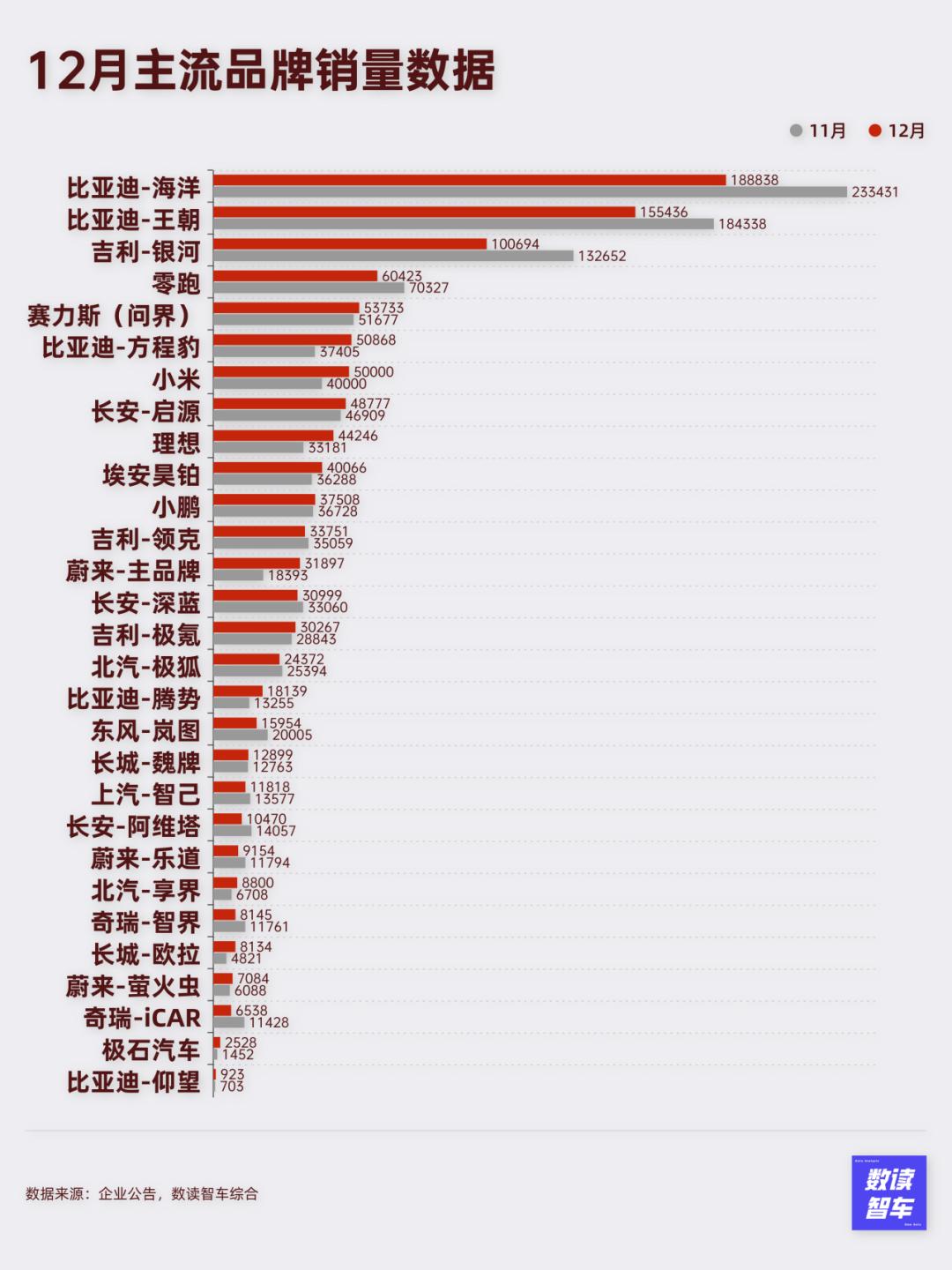
Among the 29 brands that have announced their sales, 12 brands reached new historical highs, mainly mid - tier and lower - tier brands. ZEEKR, Denza, Great Wall's WEY and ORA, BAIC's Xiangjie, NIO's Firefly, and Jishi Auto all set new sales records.
Among the top - tier brands, BYD's Dynasty and Ocean series, and Geely's Galaxy series have stable monthly sales exceeding 100,000 vehicles. Leapmotor, Wenjie, Xiaomi, and Fangchengbao became brands with monthly sales exceeding 50,000 vehicles. The number of brands with sales over 50,000 increased from 5 in November to 7.
In December, the Central Economic Work Conference was held. The first key task for economic work in 2026 is to adhere to the principle of prioritizing domestic demand and build a strong domestic market.
The conference clearly stated the expectation of implementing special actions to boost consumption, indicating that the consumption stimulus for new energy vehicles will continue, which is undoubtedly a very positive signal.
On December 31, the Ministry of Commerce and other departments issued the implementation rules for the subsidy for trading in old cars for new ones in 2026, clarifying the registration time of old cars eligible for the 2026 car scrapping and replacement subsidy, further expanding the scope of support compared to 2025.
The subsidy intensity continues, and automakers are still expected to maintain their strong performance in the future.
02 Only 5 Automakers Met Their Targets
Business Data Analysis
With the release of the December sales data, the sales of automakers in 2025 are finalized.
Among the 14 automakers and brands that announced their annual sales targets at the beginning of the year, only XPeng, Geely, Changan, Xiaomi, and Leapmotor met their full - year targets. Even after raising its sales target, Leapmotor almost achieved its annual goal.
Aion Hyper, Li Auto, and Avita had the lowest target completion rates, achieving less than 60% of their targets. The problem with Li Auto and Aion Hyper is that they set overly high targets at the beginning of the year, both aiming for 700,000 vehicles. Obviously, Li Auto still has a lot to learn in the pure - electric vehicle segment, and its sales did not meet expectations. Aion Hyper set overly high targets for two consecutive years, making it difficult for the brand to make breakthroughs. Although Avita's target was not high, its sales have not improved for a long time.
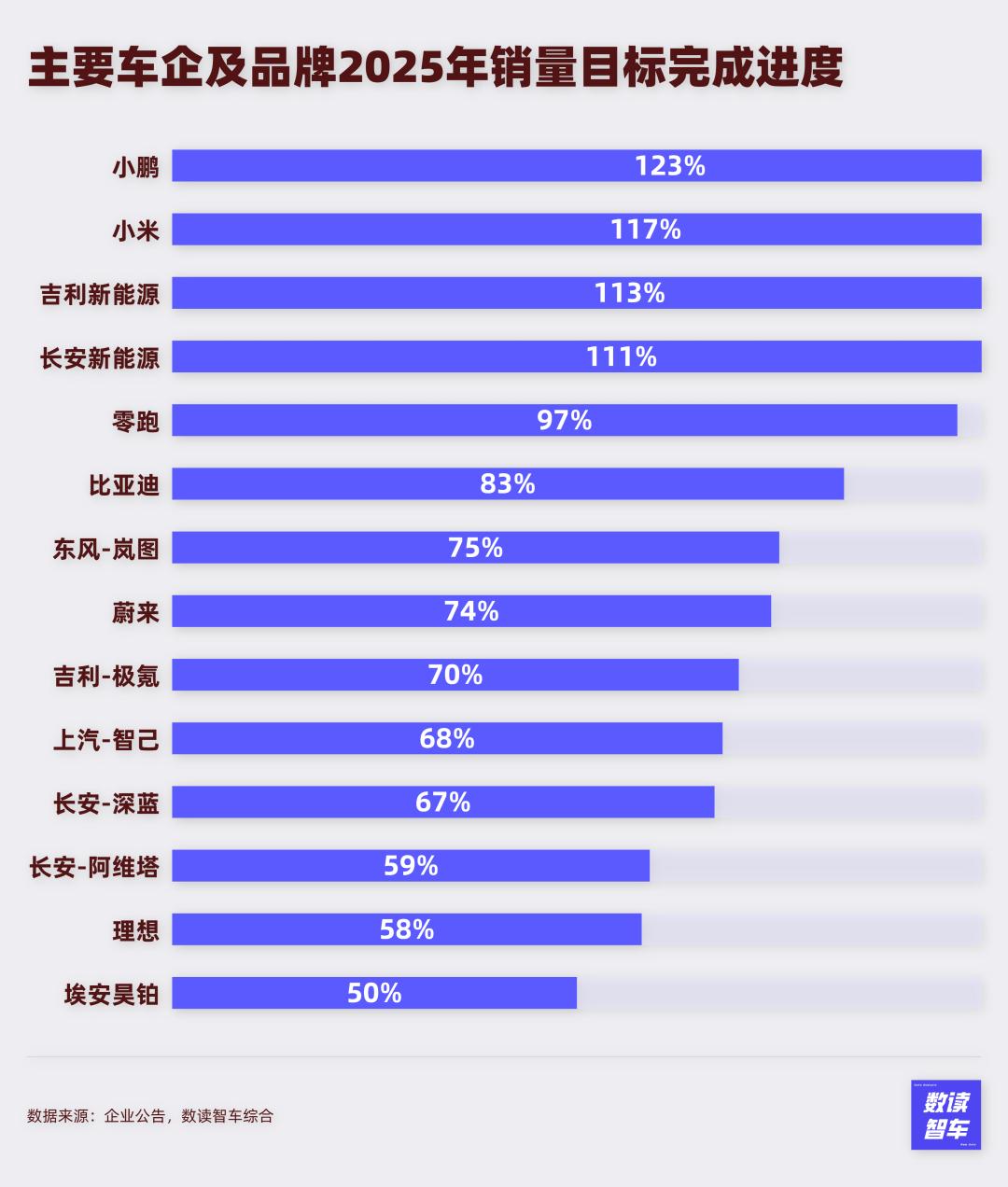
Although most automakers failed to meet their own targets, Chinese automakers still made remarkable progress. Four automakers had annual sales exceeding one million vehicles, and BYD, Geely, and SAIC all surpassed Tesla in terms of sales.
If we only look at the sales of pure - electric vehicles, BYD's pure - electric vehicle sales reached 2.2567 million, exceeding Tesla's 1.636 million and achieving an annual sales surpass for the first time.
Compared with 2024, the competitive momentum of Chinese new energy automakers is more obvious. BYD continues to lead the way, the second - tier automakers are gaining momentum, and the "potential stocks" in the third - tier, such as Huawei and Xiaomi, are also eager to make a move. In the foreseeable future, Tesla is likely to be surpassed by more automakers.
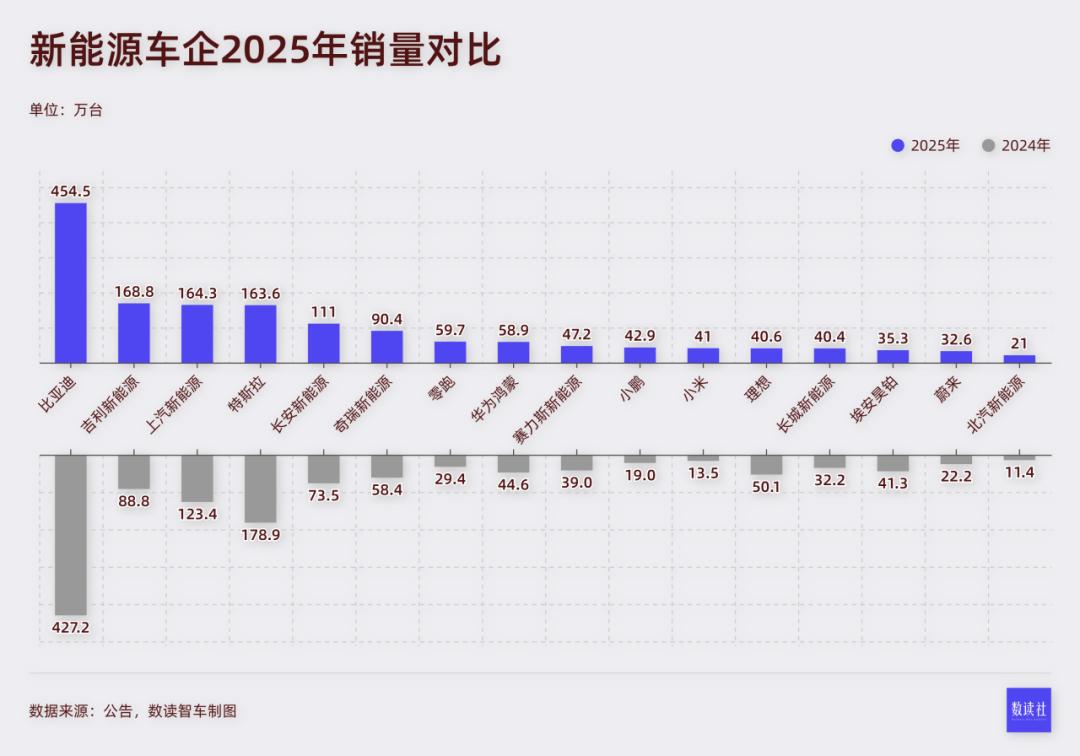
This may be an important turning point, indicating that Chinese new energy automakers have reached a phased goal in terms of quantity. Quantity is just the beginning. Chinese new energy automakers are mainly concentrated in the price ranges below 100,000 yuan and between 100,000 - 200,000 yuan. Increasing both quantity and price is still an important task.
The Chinese market provides unique conditions for manufacturers. As automakers evolve in the Chinese market, going global is imminent.
Data from the China Association of Automobile Manufacturers shows that in November 2025, China's automobile exports exceeded 700,000 vehicles for the first time. The annual automobile exports in 2025 are expected to exceed the 7 - million - vehicle mark.
Currently, traditional automakers are still the main force in going global. In 2025, the global expansion pattern has changed subtly, and BYD has steadily entered the first - tier.
In December, Chery was still the leader among automakers going global, with overseas sales exceeding 140,000 vehicles, setting a new high. BYD followed closely, with sales exceeding 130,000 vehicles for two consecutive months. Since the beginning of this year, BYD's overseas sales have soared from 30,000 vehicles per month at the beginning of the year. It is expected that BYD will take the top spot among automakers going global in 2026.
SAIC's exports also exceeded 100,000 vehicles. However, like Geely, Great Wall, and Changan, SAIC's sales are still fluctuating.
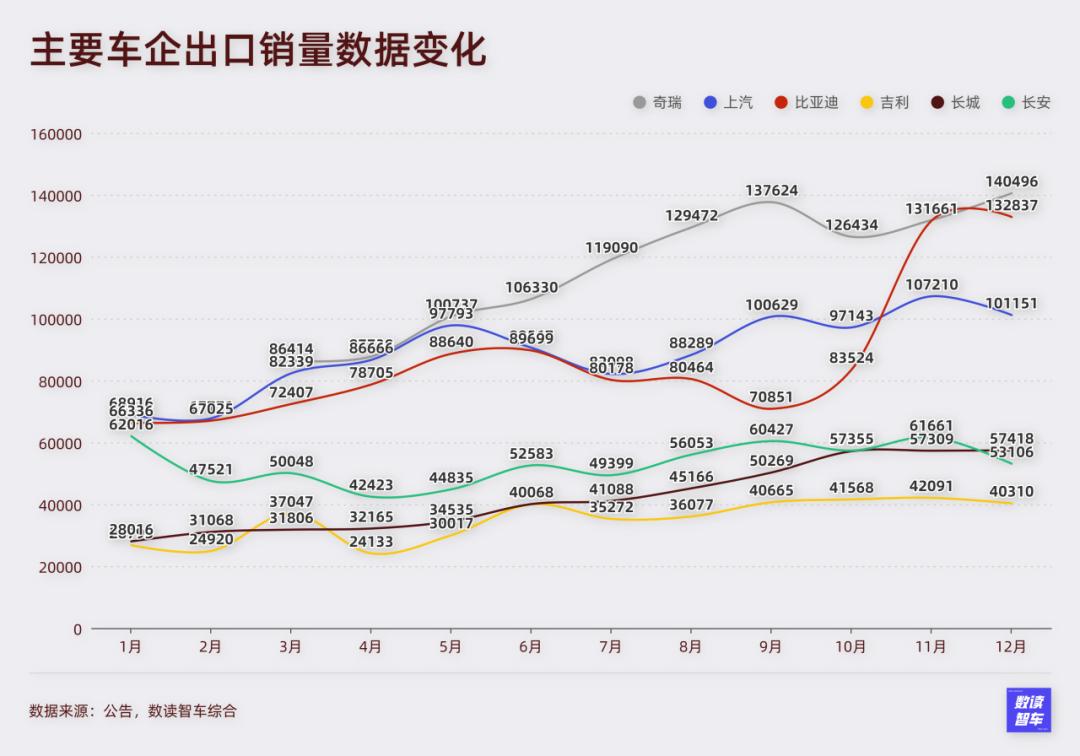
The rapid rise of Chinese new energy automakers is profoundly changing the global landscape.
03 Competition for L3 Autonomous Driving
Business Data Analysis
In December, the most - watched topic was L3 - level autonomous driving. On December 15, the Ministry of Industry and Information Technology announced the first batch of permits for L3 - level conditionally autonomous vehicles in China, and manufacturers began to apply for the permits one after another.
Changan Automobile stated that it has obtained the first official license plate for L3 - level autonomous driving. Currently, it has a comprehensive L3 plan, and corresponding models will be gradually launched for Avita, Deepal, and Qiyuan in the future. In the future, this technology can be applied to models in the 150,000 - yuan price range.
BYD has jointly launched a full - scale internal test of L3 - level autonomous driving for mass - production vehicles with the Shenzhen Transportation Bureau and other departments in Shenzhen. So far, it has completed more than 150,000 kilometers of actual road verification for L3 - level autonomous driving.
BAIC BluePark stated that it has completed all the permit procedures and obtained the license. However, there is still a certain time period before the official market launch and road - going permission.
Seres also announced that it has obtained the L3 test license.
Among the new - force automakers, Hongmeng Zhixing launched an internal test of L3 - level conditionally autonomous driving. Recently, it has jointly launched an internal test of L3 - level conditionally autonomous driving in Shenzhen with the Shenzhen Transportation Bureau and other relevant departments.
XPeng Motors has obtained the L3 - level autonomous driving road test license in Guangzhou and launched regular L3 road tests. Xiaomi Automobile has obtained the L3 - level autonomous driving road test license in Beijing.
According to the general standard, L3 autonomous driving means that the vehicle performs all dynamic driving tasks under specific designed operating conditions (such as congested roads, highways, etc.), and the driver only needs to take over when the system requests.
The commercialization of L3 - level autonomous driving is approaching, indicating that real intelligent driving assistance is about to arrive. In 2026, the competition for intelligent driving will still be a major focus for manufacturers.
04 Huawei and Xiaomi: High - Dimensional Foundation
Business Data Analysis
The sales of Huawei's Hongmeng series reached a new historical high of 89,611 vehicles in December.
Behind this is the expansion of the Hongmeng ecosystem. With the addition of SAIC, the Hongmeng series has expanded to the "Five Realms". Especially the "Shangjie" has opened up the market segment below 200,000 yuan, naturally driving up the sales.
However, it should be noted that Hongmeng still has strong appeal in the high - end price segment. The main brand, Wenjie, had sales of 53,733 vehicles in December, indicating that Huawei is still a well - recognized brand and can dominate the high - end market.
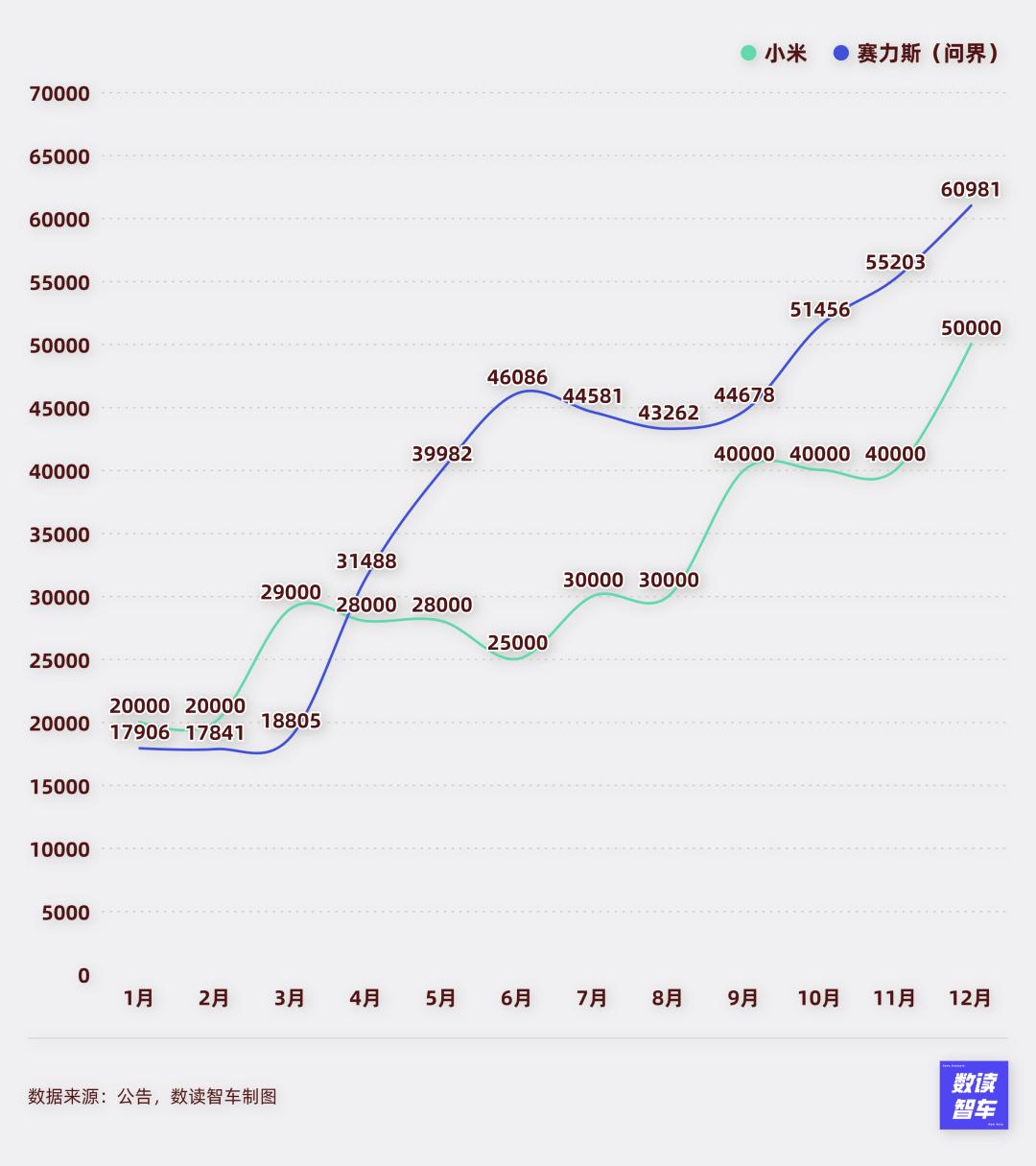
Throughout 2025, the Hongmeng series had a slow start but a strong finish. In some months, Huawei even did not release sales reports. According to the convention of Internet companies of "reporting good news only", combined with Seres' sales data, it can be seen that the Hongmeng series faced certain challenges in the first three quarters.
However, during this process, Huawei still has great appeal to traditional automakers. The Hongmeng series has quietly expanded its team. In addition to the current "Five Realms", a new brand "Qijing" jointly developed with GAC has also been launched. Many traditional automakers generally regard Huawei as an important means to achieve high - end positioning. Huawei's strategy of focusing on empowerment has been carried out steadily despite some setbacks.
Another automaker that has advanced despite difficulties is Xiaomi.
Xiaomi had a glorious moment after the launch of the Yu 7 in the first half of the year. The orders for the Yu 7 were full, and the production capacity was scheduled until 2026, having a significant impact on the market.
At that time, Lei Jun had a strong influence. The Su 7 and Yu 7 laid a solid foundation for Xiaomi, and the sales of Xiaomi Automobile were steadily increasing. In December, Xiaomi's delivery volume exceeded 50,000 vehicles, setting a new historical high. After launching two models, Xiaomi's sales in 2025 reached 410,000 vehicles.
However, after the glorious moment, Xiaomi entered a difficult period at the early stage of car - making. At the end of March, a serious traffic accident involving a Xiaomi car occurred. Xiaomi and Lei Jun did not respond in a timely manner, which triggered a public opinion crisis. This public opinion crisis continued to escalate with events such as the power limitation of the Xiaomi Su 7 ultra and the inability to open the car door in a traffic accident in Chengdu.
By the end of the year, Xiaomi's public opinion crisis had reached a stage where it had to be addressed.
In 2026, the Xiaomi Su 7 will have a facelift, and Xiaomi may also launch new products. How the public opinion crisis will affect the subsequent products and whether Xiaomi can successfully overcome this period of doubt will be answered in 2026.
05 NIO and XPeng: The Victory of Price Cuts
Business Data Analysis
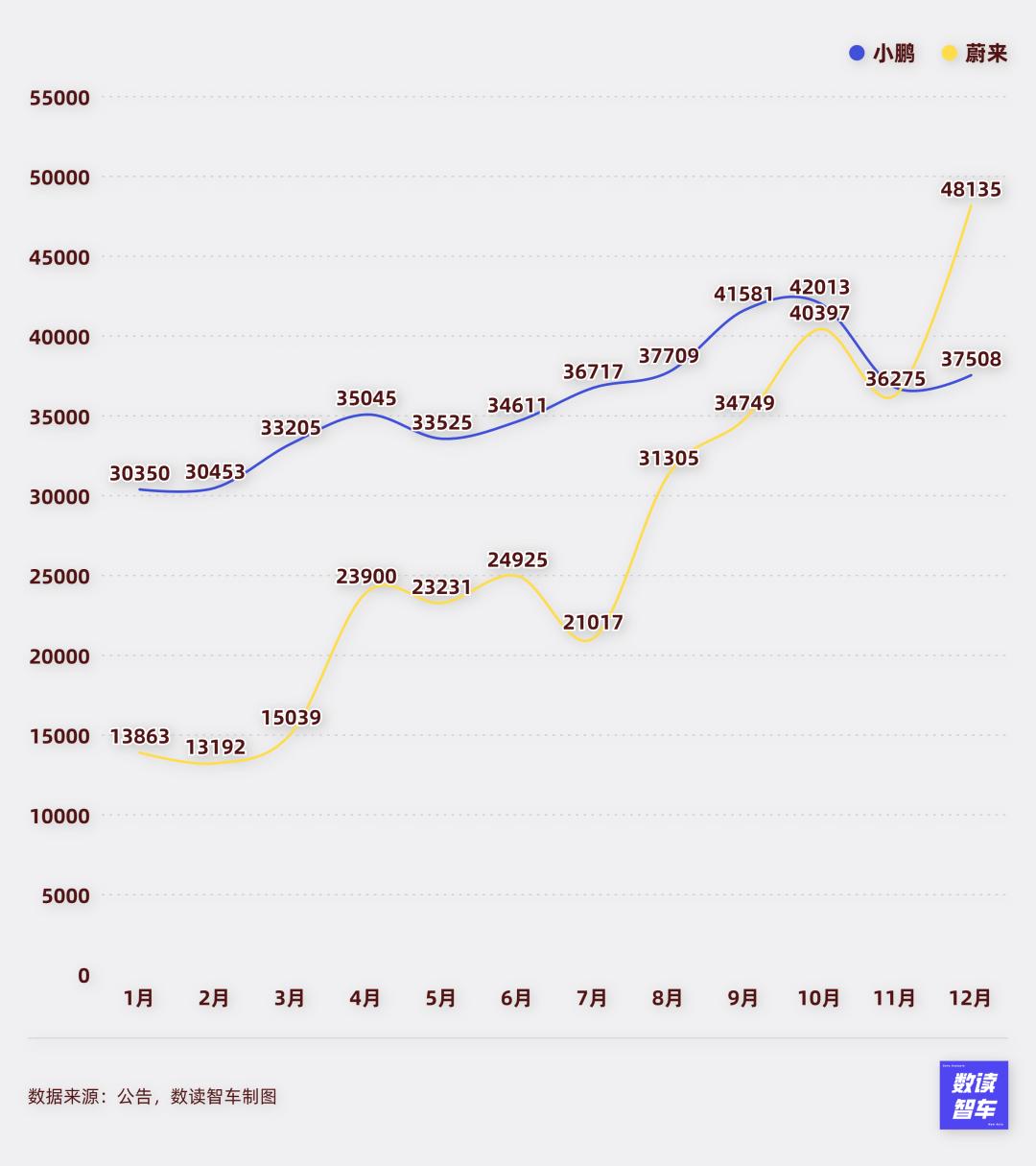
With the entry of Huawei and Xiaomi, the once - highly - regarded "NIO, XPeng, Li Auto" have been pushed to the second - tier in terms of popularity. The high - end price segments they maintained are facing huge challenges.
Since 2024, it has become increasingly difficult for NIO and XPeng to maintain their sales. Finally, in 2025, the two automakers fully deployed in the low - end price segments.
Facts have proven that low prices are the best strategy. Both automakers have reached the monthly sales mark of 40,000 vehicles.
XPeng started faster