The controversial curse of Xiaomi: Even Apple and Tesla couldn't escape it.
On January 3rd, Lei Jun's first live - broadcast in 2026 didn't follow the usual pattern: he didn't mention much about achievements but responded to quite a few controversies. For example, the nickname "Greenbelt God of War" was the result of malicious editing and labeling by netizens; for another, he directly denied the existence of a 7,000 - person legal team.
Throughout the live - broadcast, what's more thought - provoking is such a phenomenon: the greater Xiaomi's achievements are, the more controversies it faces. Some true - or - false topics, whether good or bad, can easily form an opinion vortex.
But this is not strange. Xiaomi's current situation is quite similar to that of Apple before 2005 and Tesla before 2014.
Back then, Apple's iPod was criticized for its high pricing, and Mac OS X was accused of being flashy without substance; Tesla was questioned for its endless money - burning, frequent autopilot accidents, and potential battery safety hazards...
We all know what happened later. Now, Lei Jun probably understands what Steve Jobs and Elon Musk felt back then: their efforts went unnoticed, and their values were misunderstood.
But that's how innovation works. It emphasizes non - consensus and is naturally prone to being "unnoticed, misunderstood, and looked down upon".
Specifically: others may not even notice your efforts; they may not understand your value for a long time; and traditional players may look down on your brand at first.
But the stories of Apple and Tesla tell us that when the time comes, what's unnoticed will finally come into view, and what's misunderstood will finally be understood.
The key question is: Can 15 - year - old Xiaomi cross this time gap?
01
Actually, in the past 15 years, Xiaomi has been "climbing over trenches and crossing hurdles".
During the live - broadcast on the evening of January 3rd, Lei Jun recalled, "Some people said that Xiaomi couldn't make it and never had faith in it. But since its establishment in 2010, we've made multiple breakthroughs."
That's true. In the first five years of Xiaomi's startup, there were many controversies. Some said its hunger marketing was just a hype and its supply chain was not strong enough; some said it had no hardware experience and the quality of its mobile phones was worrying; some were concerned that without offline channels, after - sales service would be a problem.
The result was quite against the common perception. By 2015, Xiaomi mobile phones had the largest market share in China (with 67.5 million units shipped) and ranked fourth globally. So, the controversies gradually subsided. Its achievements were noticed, and its value was understood.
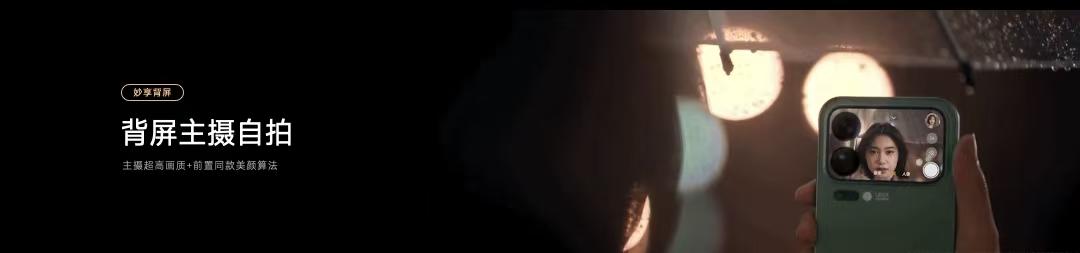
The main new features of Xiaomi 17 Pro
In the past 15 years, Xiaomi has crossed one gap after another.
Now, Xiaomi is facing new gaps: developing chips, operating systems, and AI, manufacturing cars, entering the large - home - appliance market, and building smart factories.
Compared with the mobile - phone business back then, these new business maps are more than ten times larger. And behind new things, there will inevitably be a new round of "misunderstanding": efforts go unnoticed, and values are misunderstood.
Objectively speaking, Xiaomi's achievements in 2025 were not bad (see the table), but they were easily overshadowed by controversies.
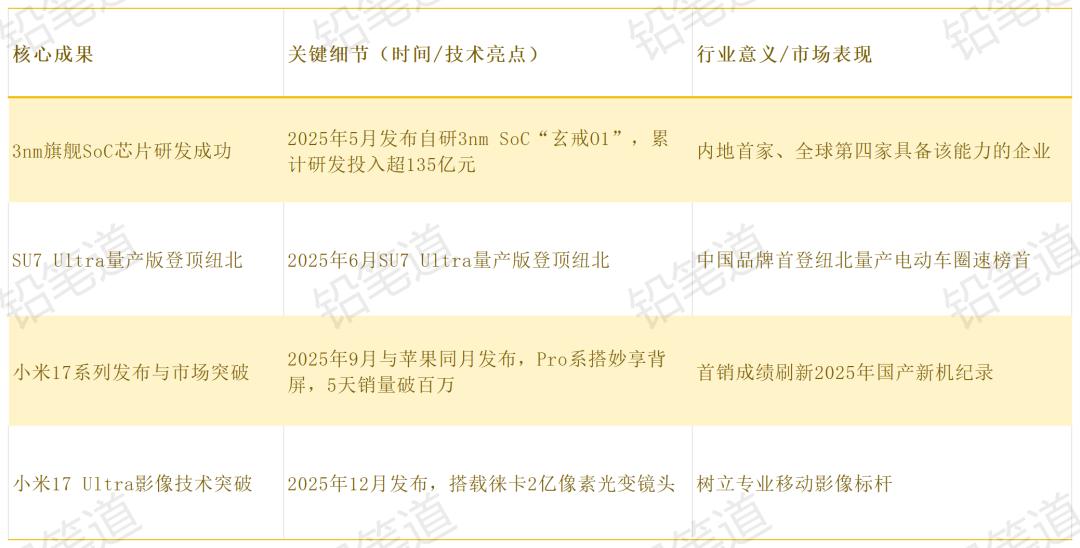
Last year, the value created by Xiaomi was not abstract either.
Its main value line is high - end positioning, not simply selling at high prices but offering high - end experiences. For example, the back - screen innovation of Xiaomi 17 Pro and the ten - year free warranty plan for air conditioners.
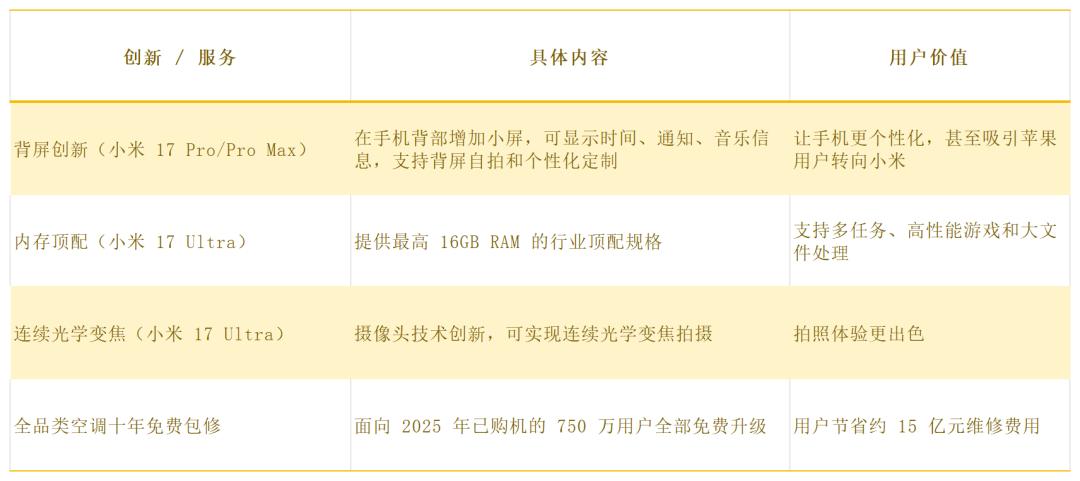
Xiaomi's high - end practice in 2025.
Among the controversies that cover these values, some are based on facts, some are out of emotions, and some are just "groundless accusations".
For example, fine - print marketing. Lei Jun admitted in the live - broadcast that it was a common bad practice in the industry, and it was a fact that Xiaomi didn't do well in this regard. "I think this problem really needs to be fixed."
For instance, the rumors like "not allowing farmers to sell Xiaomi products" and "Xiaomi having a 7,000 - person legal team" are pure lies.
Xiaomi's situation is similar to that of Apple before 2005 and Tesla before 2014: they were also involved in controversy storms.
For example, from 2001 to 2003, there were voices saying "Apple plagiarized". The core technology of the iPod came from MP3 players like Diamond Rio. As a result, the conclusion of "plagiarism" was not valid.
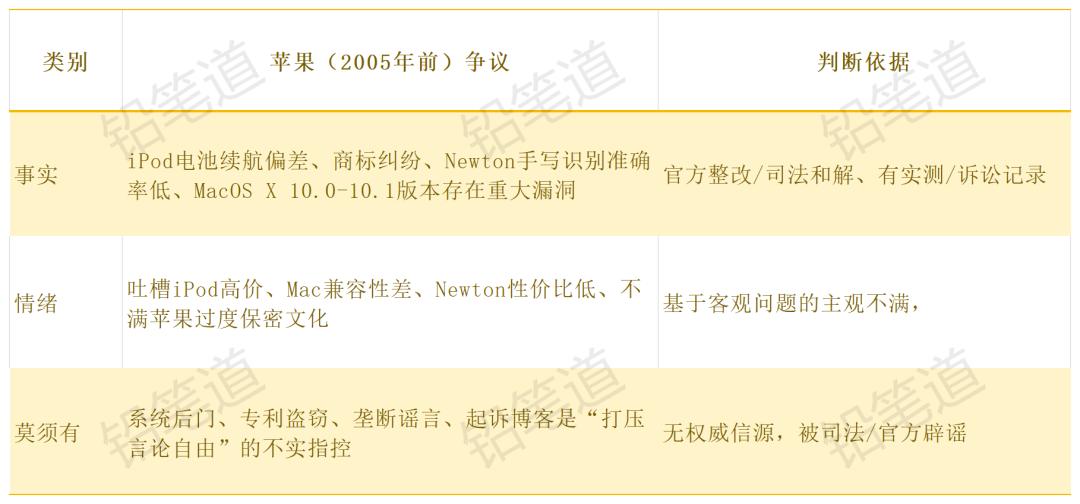
Before 2005, Apple's controversies also mixed with rumors and emotions.
Before 2014, one of Tesla's biggest controversies was autopilot safety. There were risks on highways or in complex road conditions, and there were even car accidents.
But as the technology matured and data was made public, most of these controversies were clarified, and its Autopilot became an industry benchmark.
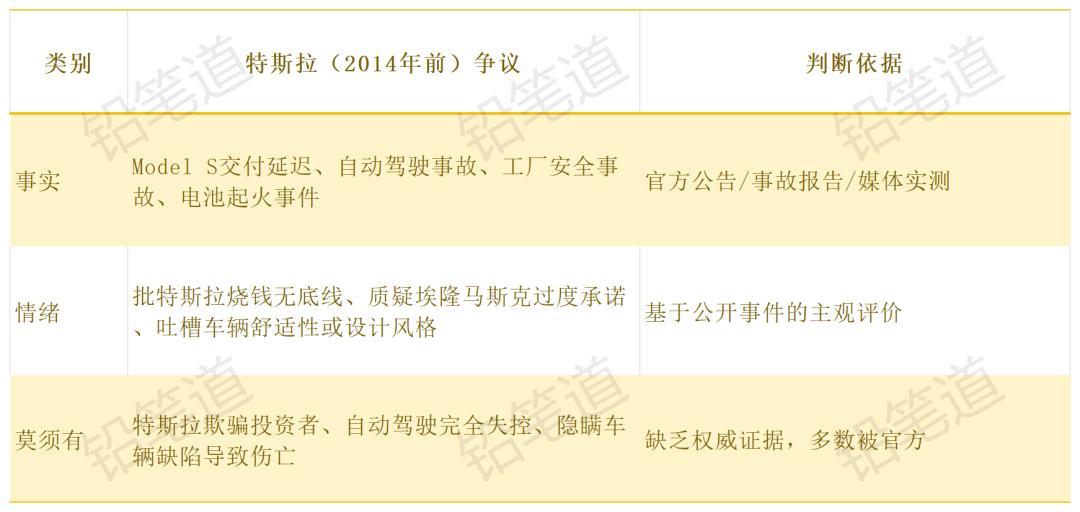
The main controversies Tesla faced before 2014.
02
Why is Xiaomi in its current situation? Because like Apple and Tesla, it made smartphones in the feature - phone era and pure - electric cars in the fuel - car era.
Even the controversies Xiaomi faces today are greater than those of Apple and Tesla back then. Because it is not only making mobile phones and cars but also developing chips, home appliances, and smart factories.
The path it is taking is hard to find a comparable company globally, and it's more difficult to be understood. Efforts are more likely to go unnoticed, and values are more likely to be misunderstood. This is the gap of innovation.
Why? Because every step you take is on new ground. The "natives" won't accept you unconditionally. They will inevitably question and reject you first. Only after you prove your strength will they accept you.
And Xiaomi's greater gap lies in the fact that its underlying soul is changing.
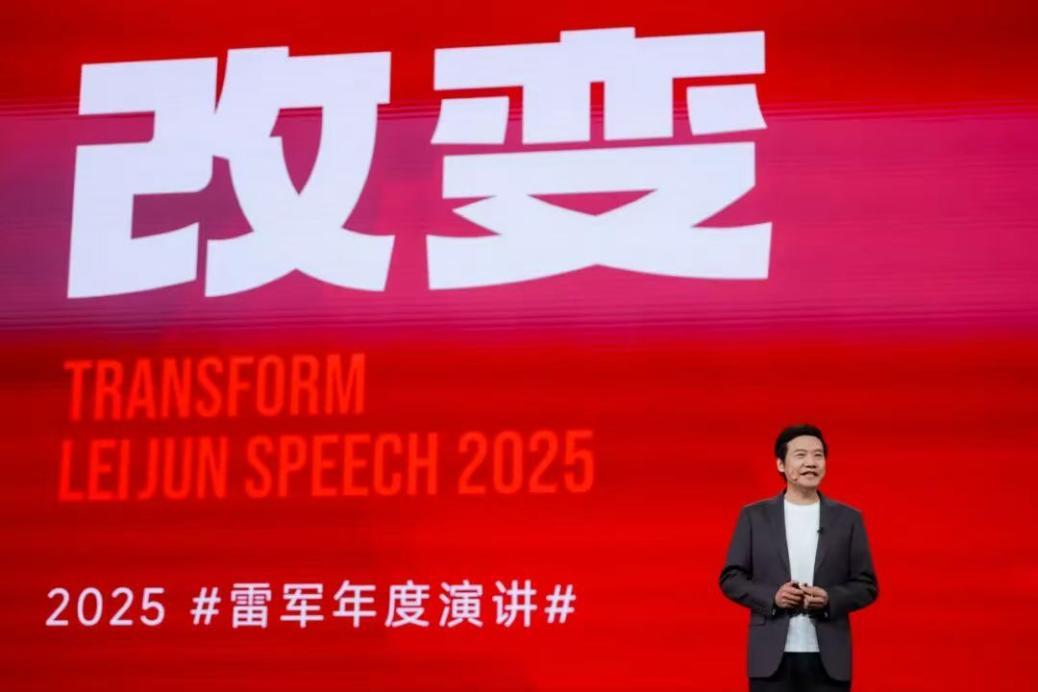
Last September, in Lei Jun's sixth annual speech, he mentioned that the theme of Xiaomi in 2025 was change.
Even today, many people still regard Xiaomi as an Internet company. But in fact, as early as 2020, it had already transformed and was becoming a hardcore technology company.
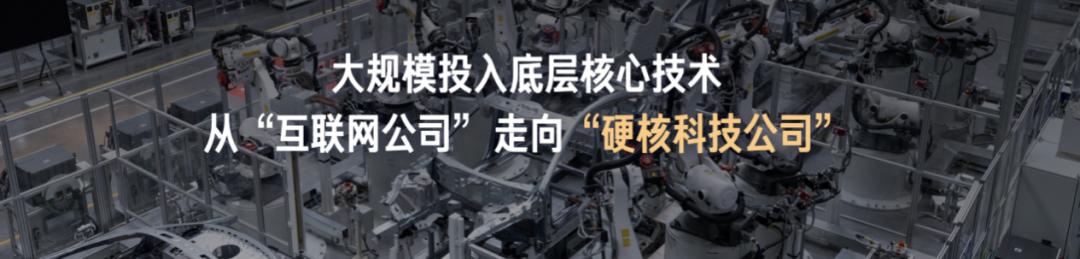
Of course, Xiaomi did start with the Internet. The core function of the Internet is to break information asymmetry. In the early days of making mobile phones, Xiaomi did use it to understand user needs and develop products, and also used it for marketing and sales.
But what has Xiaomi been doing in the past five years?
1. Research and development of underlying technologies: It has spent over a thousand billion in five years on self - developed chips, operating systems, and AI.
2. Layout of intelligent manufacturing: Building smart factories for mobile phones, cars, and home appliances.
3. Entering high - tech categories: Cars and large - home appliances to complete the strategic closed - loop of "people - car - home".
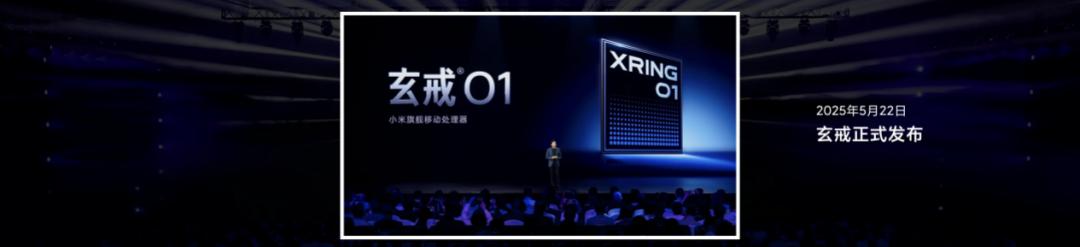
Xiaomi's self - developed flagship mobile processor.
You'll find that the core of these directions is no longer the Internet but high technology.
So, many people start to misunderstand. Misunderstanding easily leads to misinterpretation. When there are more misinterpretations, emotions, speculations, and rumors follow.
These misunderstandings come with various stances, some are well - intentioned, and some are malicious.
One group of people expects Xiaomi to become like Apple and Tesla and demands a lot from it as an industry benchmark. High expectations will inevitably lead to well - intentioned criticism.
Another group of people sees the traffic behind Xiaomi. As long as there are controversies, it means there is traffic to be harvested.
The change of the interest rules will also trigger new controversies. When launching new products, old users will worry if you've changed your mind, new users will care if you can succeed, and competitors will be vigilant about "whether you pose a threat to me".
Actually, innovation itself comes with controversies. Most people will believe only after they see; while entrepreneurs will see because they believe. Most of Xiaomi's new business achievements are less than five years old and are still in the process of "being seen", so controversies are normal.
But there is one thing worth noting. Most of Xiaomi's current controversies are still on the periphery, such as appearance design, marketing methods, and product flaws, without touching the high - tech core.
That is to say, no matter how intense the external controversies are, they haven't hurt the root yet. Xiaomi still has time to polish its core value.
03
In the future, a relatively smooth path for Xiaomi is to, like Apple and Tesla back then, cross the gap of controversies, let innovation take root, let what's unnoticed be noticed, let what's misunderstood be understood, and let what's looked down upon be respected.
In Lei Jun's commonly used words, this may also be a kind of "going with the trend": allow controversies to exist, and when the time is right, they will disappear naturally.
When will that be? When the value is fully proven, when the products and technologies pass the market test, and when users experience the benefits brought by innovation. At that moment, controversies will subside, doubts will turn into recognition, and rumors will be diluted by facts.
Xiaomi has to take this path. In the process, most people don't need to deliberately support or trample on it.
When a Chinese enterprise reaches this scale, the scrutiny it faces doesn't only come from its products. But its actions, achievements, and controversies are all worth being judged based on facts.
A more realistic approach for everyone is to be realistic, notice what should be noticed, and understand what should be understood. Let controversies be settled by time, let conclusions return to facts, and let the industry move forward in real discussions.
This article is from the WeChat official account "Pencil News" (ID: pencilnews), author: Real. Republished by 36Kr with authorization.