ASUS phones are on the decline, while Lenovo phones are waiting for a second heyday.
Recently, there were reports that ASUS would withdraw from the mobile phone market and lay off employees in its mobile phone division.
Subsequently, in an article by Southern Metropolis Daily, ASUS stated that it currently has no plans to launch new smartphones in 2026.
"(However), for all ASUS mobile phone users, we will continue to provide comprehensive after - sales services. The warranty terms and software updates will not be affected. Please rest assured, users."
These words left some leeway, but in the eyes of many, ASUS's strategic retreat seems almost inevitable.
After all, if it weren't for this turmoil, many people might have forgotten that ASUS even had a mobile phone business...
More importantly, as of January 7th, ASUS's two major mobile phone product lines, ROG Phone and Zenfone, seem to have been removed from the ASUS online stores on some mainstream e - commerce platforms and the official mall. Only third - party platforms are still selling them.
Looking at ASUS's current situation, some people can't help but think of another PC giant that also makes mobile phones - Lenovo.
Especially in recent years, Lenovo has been increasing its efforts in the mobile phone market by leveraging Motorola, which it acquired earlier. From launching small foldable screen phones, to Air ultra - thin phones, and actively exploring AI phones.
Even at the previous MWC 2025, Yang Yuanqing, the chairman and CEO of Lenovo Group, made a bold statement: "Lenovo's moto mobile phones aim to become a leading global manufacturer, first in the top five, and then in the top three."
Such a series of actions against the trend naturally left a deep impression on the outside market.
But the question remains: the times have changed, and so has the pattern of the consumer market.
For those born in the 1990s and 2000s, they may still have some impression of Motorola, the "pioneer of mobile phones." But for those born in the 2010s, this name is too unfamiliar.
In this situation, how can Lenovo's mobile phones, which have always been in the "Others" category in the domestic market, break through the current situation?
Can Lenovo catch up with Motorola's decline through cost - effectiveness?
To be honest, ASUS's decline in the mobile phone market has strong implications for Lenovo's Motorola.
ASUS launched the Zenfone series in 2014. But at the same time, it wasn't just ASUS eyeing the mobile phone market. Foxconn launched its own mobile phone brand, InFocus, Gree launched the "Gree Mobile Phone," and 360 launched the QiKu mobile phone...
Why were there so many cross - industry players?
There are two core reasons: 1. At that time, it was an incremental market for mobile phones. Whether in the mainstream or niche market segments, cross - industry players had the potential to find new growth opportunities. For example, in 2018, ASUS launched the ROG Phone series, officially entering the niche market of professional gaming phones...
2. It was the end of the "ZTE, Huawei, Coolpad, Lenovo" era, and the new dominance pattern of Huawei, Xiaomi, OPPO, and vivo had not yet taken shape. The entire market was like the Spring and Autumn and Warring States periods between the Xia, Shang, Zhou dynasties and the Qin and Han dynasties. That's why there was a situation where cross - industry players were competing and flourishing...
Understanding the key factors behind the rise of companies like ASUS in the past makes it easier to understand the reasons for their decline now.
After 2018, a new era pattern of Huawei, Xiaomi, OPPO, vivo, and Apple gradually emerged, and the mobile phone industry entered a red - ocean era of stock competition.
At first, there was competition in price and offline store channels. Later, there was competition in self - developed chips (Kirin, Xuanjie O1), operating systems (PengPai OS, OriginOS), image co - branding (Leica, Zeiss), fast - charging and battery capacity (7000, 8000 mAh). There was even competition in the feedback quality of the "vibration motor" in mobile phones (X - axis, Z - axis)...
In the gaming niche market, although high - end flagship phones could easily cover mainstream games, vivo still launched a sub - brand, IQOO, to dominate the market across different price ranges.
This intense and cut - throat competition naturally made it more and more difficult for cross - industry players like ASUS, which were not fully focused, until they were forced out of the market...
It can be said that the decline of mobile phones like ASUS is essentially due to their failure to "compete" with Huawei, Xiaomi, OPPO, and vivo.
This is also the extremely difficult starting situation that Lenovo's moto is facing now.
From the moto Motorola flagship store on Tmall, many of the best - selling phones are priced around 1200 yuan and 900 yuan.
This price range targets the mid - and low - end market, following a cost - effective strategy. The mainstream consumers include users in the sinking market, the elderly, and students.
Since the core requirements are relatively simple: long battery life, drop - resistance, and a non - lagging system, there are generally no major problems with the corresponding products. It's just a matter of how precisely the product features are designed.
However, in the actual consumer market, if Lenovo only relies on product strength to break through the situation, it may not be enough.
Firstly, in terms of channels, when it comes to the elderly population, an important aspect of senior phones is that they should be easy to repair when problems occur and have simple after - sales services.
For example, I never considered phones like Xiaomi when choosing a phone for the elderly in my family. It's not that the products are bad, but there are no stores near my hometown. It would be troublesome to handle after - sales for small problems.
Therefore, OPPO and vivo, which have been deeply involved in the sinking market for a long time, have a great advantage.
In this regard, although Lenovo has a considerable number of offline stores, its market coverage, especially in the sinking market, is difficult to compete with other mobile phone brands. This may affect the choices of some core users...
Secondly, in terms of brand, in the traditional sense, students don't really care about the brand and are more concerned about the configuration and parameter experience. But this is after the rise of new - era brands like Huawei, Xiaomi, OPPO, vivo, and Honor.
Just like the saying "If you have an OPPO, how can you look down on my vivo?" They are all quite similar.
But Motorola is different. Many students may not even have heard of it. Those who do have an impression may think it's a product of the previous era.
The brand is too old. So even if the prices are the same, in terms of the sensitive social psychology of teenagers, it may create a sense that Motorola phones are inferior...
After all, at this price range, students can choose the Honor X70 or the Meizu note16Pro. If not, there are even more cost - effective options with the support of large - scale subsidies. Why would they buy a phone from a brand they've never heard of?
However, even so, Lenovo's moto also has some mid - and high - end models (with a standard price of over 2000 yuan) with quite impressive sales.
For example, the Razr60 series, which ranks second in total sales, has sold over 5000 units in total.
However, most of these are niche high - end products, and their overall performance seems to be mainly due to the brand's cost - effectiveness strategy.
For example, the starting price of Huawei's PuraX outer - screen foldable phone is 6898.89 yuan, while the moto Razr60 starts at 2994.91 yuan and can be reduced to 2550 yuan after stacking various coupons. Another example is the Air phone, which was popularized by Apple. Its starting price is 7999 yuan, but the post - coupon price of moto's X70Air starts at 2268.89 yuan...
At first glance, this seems like a shortcut to break through the situation. But the problem is that both outer - screen foldable phones and Air phones are niche markets with limited market capacity. It's difficult for them to support the large - scale revival of Lenovo's mobile phone business.
Moreover, the market performance of Apple's Air phones is quite mediocre, but Lenovo is still increasing its efforts in the ultra - thin and light flagship - the X70Airpro. Isn't this just dispersing the brand's resources?
After all, what moto needs most now is a blockbuster innovative product that can boost the brand's popularity, like Huawei's triple - foldable phone, showing the momentum of a comeback. Otherwise, if it just follows the innovation of Apple and Huawei and pursues cost - effectiveness, how can Lenovo's mobile phones achieve a breakthrough?
You know, moto has lowered the threshold of outer - screen foldable phones to around 3000 yuan, but the price of the same - type Nubia Flip has been further reduced to start at 1772 yuan, becoming the new "price - cutter"...
In response, Lenovo has also tried some direct ways to break through the situation, such as focusing on AI phones.
Previously, some media reported that ByteDance is promoting cooperation with Lenovo on AI phones, pre - installing AIGC plugins on its devices to gain user access and reverse the current passive situation of AI implementation.
Regardless of the truth of the news, AI phones are indeed a good opportunity, but the same problem is that it's difficult for Lenovo to break through the domestic market with this.
According to rumors, ByteDance has also cooperated with hardware manufacturers like vivo and Transsion. Honor even has its own AI assistant. Huawei, Xiaomi, and OPPO will also definitely not miss the opportunity of the AI phone era.
In this way, even if Lenovo's direction to break through is correct, the growth space of moto in the domestic market still seems to be blocked. Whether it's in terms of products, brands, or AI, other companies are either more competitive and have more advantages or can overtake later.
Making mobile phones seems to be a low - return business.
Is betting on the next - generation mobile phones the best solution for Lenovo's moto?
Of course, it's understandable that Lenovo doesn't want to give up its mobile phone business in the domestic market.
The domestic consumer market is large enough, with diverse and clearly segmented demands. So as long as the products are cost - effective enough, Lenovo can still open up some growth space.
Moreover, although Lenovo's mobile phones perform averagely in the domestic market, they have remarkable performance in overseas regions such as the United States and Latin America.
According to Omdia data, in 2024, Lenovo's mobile phones ranked eighth in global shipments.
Although there is still a nearly two - fold gap in shipments compared to the fifth - ranked OPPO Group (about 46.1 million units), it doesn't seem like a big deal to also operate in the domestic market.
However, instead of struggling in the "Others" category of the mobile phone industry in the huge domestic technology consumer market, would it be better for Lenovo's moto to switch to a different track?
Just like Baidu, which rose in the 1.0 PC era but fell behind in the 2.0 mobile Internet era. Later, it chose to skip a step and bet on the next era - the AI era.
As a result, Baidu has now achieved a breakthrough through the explosion of its services like Luobo Kuaipao, Kunlun chips, and AI cloud business, and has regained its position in the first echelon of Chinese technology and Internet companies.
Similarly, since it can't compete in the traditional mobile phone form, why doesn't Lenovo directly focus on the next - generation mobile phone product - AI glasses?
On the one hand, with the advent of the large - model era, the AI glasses industry has now reached an inflection point of explosion. The "Hundred Glasses War" in 2025 and the enthusiasm in the investment and consumer markets are the most direct evidence.
During CES 2026, the technology giant Meta even announced a rather "disappointing" news: Due to the excellent sales of the AI glasses launched last year, the international market expansion plan originally scheduled to start in early 2026 will be postponed.
In China, if you open Taobao and Tmall, you will also find that the Quark S1 and rokid AI glasses not only have a higher selling price than most of Lenovo's moto mobile phones but also have better actual sales.
The former is priced at nearly 4000 yuan, with over 9000 people making payments. The latter is priced at 3168.89 yuan, with over 8000 units sold.
During the same period, the best - selling phone in the moto Motorola flagship store is the Edge60S, with a post - coupon price of only around 1230 yuan and a total sales volume of over 6000 units...
On the other hand, Lenovo has a great advantage in technical reserves in the product aspect of AI glasses.
For example, at the Consumer Electronics Show (CES) that opened a few days ago, Lenovo released the world's first personal super - intelligent agent, Lenovo Qira.
According to the introduction, the intelligent agent Lenovo Qira can operate collaboratively across platforms and devices, connecting the user's mobile phones, computers, tablets, and wearable devices. It supports situational awareness, remembers user preferences, and can complete various tasks while protecting user privacy.
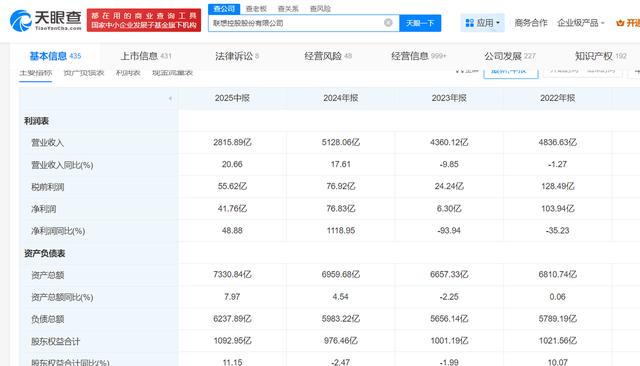
Another example is that according to Tianyancha APP, in the fiscal year 2024, Lenovo's R & D expenses further reached 16.43 billion yuan, a year - on - year increase of 14.177%.
Moreover, currently, the domestic market pattern of AI glasses has just started. Whether it's Quark, Rokid, Li Auto, or Xiaomi, at this stage, everyone is competing in terms of technology and product strength...
This means that if Lenovo continues to invest heavily in moto in the domestic market, it may only add another "Others" business;
but if Lenovo shrinks or even cuts its domestic mobile phone business and concentrates more resources on independently operating the AI glasses category, it may become another Apple or Huawei...
It's a pity that perhaps due to the over - expansion of its domestic business lines in the past, which dispersed its technical resources, Lenovo already has AI glasses products, but the sales volume on the same platform is only in single digits...
Of course, does Lenovo face challenges in making AI glasses in the domestic market?
Yes, mainly in terms of brand.
During the "ZTE, Huawei, Coolpad, Lenovo" era, we saw that although Lenovo performed well in the PC field, when it transformed into the mobile phone market, its brand influence could not be effectively transferred to the mobile phone field.
Ultimately, Lenovo's brand image in the PC field is too deeply ingrained, which has instead become a constraint on the development of its mobile phone category.
As for the moto Motorola brand, it is a bit outdated.
So if Lenovo intends to increase its investment in AI glasses, it may need to directly operate a new sub - brand, just like 58.com split off Tian'e Daojia and KuaiGou Dache.
This may slow down the rise of Lenovo's AI glasses to some extent. Fortunately, at present, the external market is still competing