A post-90s founding team sells dumplings overseas, causing long queues | Exclusive interview by Houxue
Author | Ren Cairu
Editor | Qiao Qian
“Even though the consumer venture capital investment is currently on the decline, do we still have confidence in emerging consumer brands?
There's no doubt about the answer.
Consumer market is a long - term and lucrative field. Building a brand takes time. Once a brand is well - established, it won't easily fade away. We've observed that after going through the pains of rapid growth, some new brand companies have gained loyal customers, achieved considerable scale and even profits, and entered a new stage of stable growth. Most of these brands were founded after 2014 and rode on the investment wave that started in 2019, emerging victorious in the fierce competition.
Based on this, 36Kr Future Consumption has decided to select 36 new consumer brand companies. Through exclusive interviews and case analyses, we will continuously track their development and compile related content in the column "Exclusive Interviews with 36 Prominent Brands".”
In the Singapore office of Yuanji Dumplings, there is a sign on the wall behind Tian Wei that reads "Continuous entrepreneurship". Busy and hands - on work is the real rhythm of his life here.
On December 22, 2025, the new store of Yuanji Dumplings in Jurong Point, Singapore, opened quietly. It's a "food court store" (a stall inside the food court). Without a grand opening ceremony, there was no sign of a new store opening. It just received customers like every other old stall around.
Tian Wei observed the customer flow outside the store for the whole morning. At the same time, he negotiated a strategic cooperation on brand entry with the property management of the food court. "I counted at that time. There were up to 28 people in the queue," the obvious popularity convinced the property management to finally confirm the cooperation intention. At noon, he rushed back to the office to discuss the preparations for the new store in the UK with his partners.
Tian Wei is the co - founder of Yuanji Dumplings. Like the founder Yuan Lianghong, he majored in sports. An investor described their team as "a group of brothers having each other's backs". Over the past decade, this post - 90s team has built Yuanji Dumplings into the "Number One Fresh - made Dumpling Brand in China" with over 4,000 stores nationwide.
In December 2024, they started to seriously plan their overseas expansion, led by Tian Wei. In every sense, "going overseas" can be regarded as the "second startup" for Yuanji Dumplings: the domestic model is gradually maturing, and the overseas market means a brand - new growth space; in actual operation, every aspect, from company registration, partner selection to employee management and cross - border compliance, poses new challenges.
Meanwhile, in the past two years, Yuanji Dumplings has recruited management staff from well - known chain brands and handed over the domestic business to the new team. Tian Wei and the "veterans" from the early days of the startup are fully committed to the overseas expansion, starting the second "from 0 to 1". "The team is young and results - oriented."
With the trend of Chinese food brands going overseas, it has become a somewhat old - fashioned "topic". However, upon closer inspection, full - service restaurant brands usually don't focus on scale. Most of the brands that have achieved a certain scale are in highly standardized forms such as beverages, spicy hot pots, and hot pots. Yuanji Dumplings is in a relatively untapped middle ground, requiring a handmade, fresh - made model while also aiming for scale.
"To truly go overseas, you have to get involved yourself." After a year of handling overseas business, Tian Wei has identified three key points: financial and tax management, data security, and labor relations. This involves a lot of details - protecting the privacy of member information, ensuring the compliance of employees' work permits, preventing franchisees from hiring illegal workers, and dealing with the situation where some employees disappear for a few days after getting paid. All these are issues that cannot be ignored.
In January 2026, five more stores of Yuanji Dumplings will open in Singapore, bringing the total number of stores to 15, making it one of the Chinese fast - food brands with the largest number of stores in the local market. Among them, the models for food court stores, community stores, and mall stores have all been proven successful. The daily average revenue of the Jurong Point store, which opened two weeks ago, is currently around 6,000 Singapore dollars on weekdays. In December 2025, the first store in Thailand opened in Bangkok, the second store in Thailand is expected to open this month, and preparations for entering markets like Malaysia are also in the final stage.
When talking about long - term goals, Tian Wei said, "We hope to introduce Chinese dumpling culture to the world." This journey has just entered the acceleration phase. Currently, their Singapore office area still seems "empty". Tian Wei said, "It will soon be full of people."
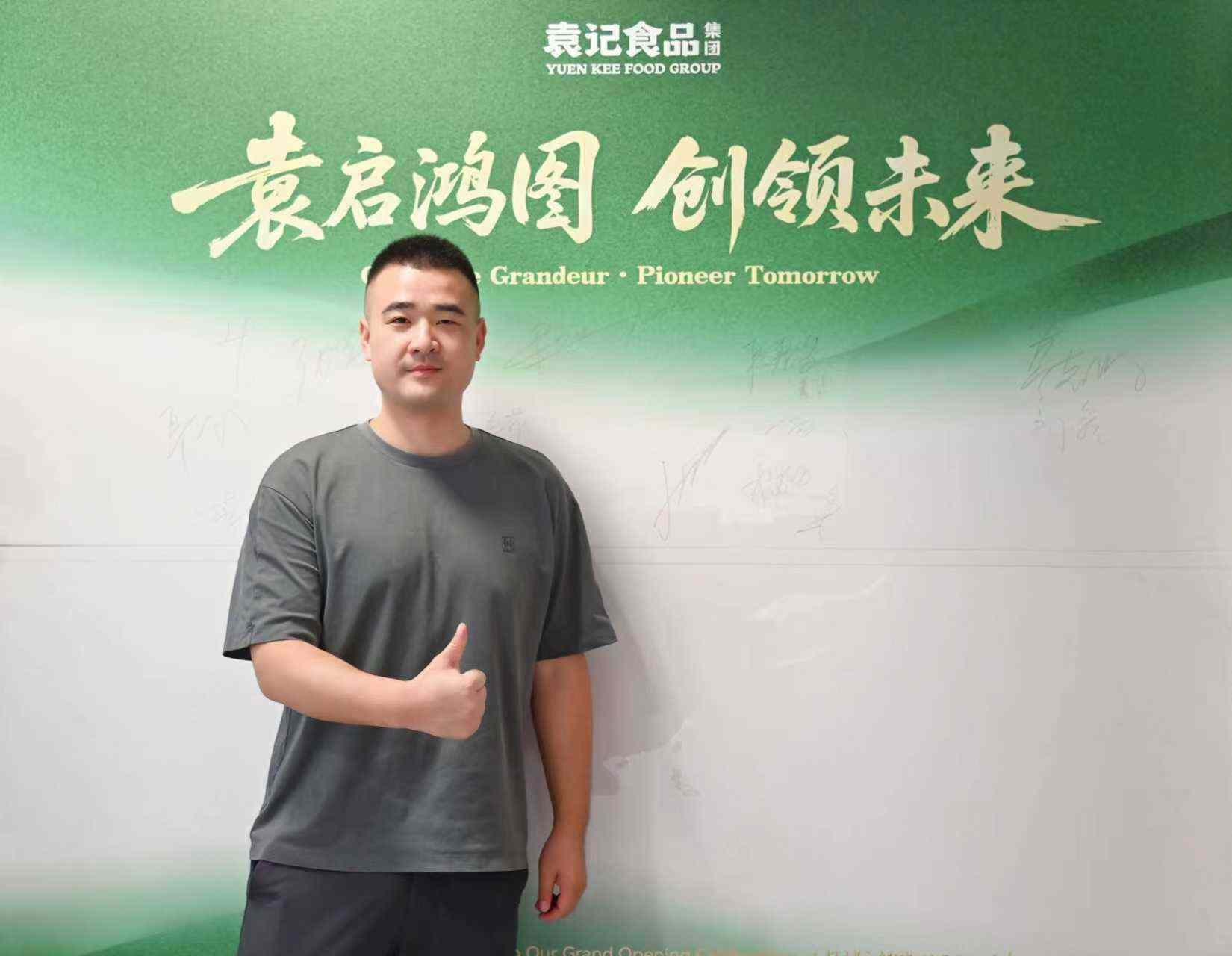
Tian Wei, co - founder of Yuanji Dumplings
The following is our conversation with Tian Wei, co - founder of Yuanji Dumplings:
01 Three store models have been successfully verified. No more self - doubt
Q: When did you start thinking about opening a store in Singapore? Why did you choose Singapore as the first stop after Hong Kong?
A: The markets in Hong Kong and Singapore are quite similar. We already have over 40 stores in Hong Kong, which gave us the confidence. In December 2024, we officially launched the overseas expansion plan. The first store in Singapore opened in Golden Mile Complex. However, the initial daily average revenue was actually quite low, less than 3,000 Singapore dollars.
Q: What did you do when the revenue was low?
A: We once wondered if our products were not suitable for the local market. But after the Spring Festival and a cultivation period of about three months, the performance grew rapidly. The daily revenue at its peak reached 12,000 Singapore dollars. The store area is only about 50 square meters, and the turnover rate reached 11 - 12 times. We even needed three mall security guards to help maintain the queue order.
I remember clearly that due to the high work intensity, three local employees quit within a week. We also gradually stabilized the operation by increasing the number of staff.
Q: What happened between the "poor performance" and the "boom"?
A: It takes time to cultivate consumers' awareness. There were almost no "fresh - made" dumplings and wontons in the Singapore market. During the "buy one - pound get half - pound free" promotion at the beginning of the opening, only 30 pounds of raw dumplings were sold per day. Now, a well - performing store can sell 150 - 200 pounds of raw dumplings a day, and some stores even have a limit because we need to meet the dine - in demand. Now, dine - in accounts for an average of 90%, and fresh produce accounts for 10%. The structure is quite healthy.
Q: Did you just wait for people to accept it?
A: We also made some local adaptations. For example, we added ginger shreds as a side dish because local consumers like to have some ginger shreds with dumplings to remove the fishy smell; we also made some local improvements to the chili oil, and adjusted the domestic beverages to a cold - drink series that is more popular locally, such as American ginseng chrysanthemum tea, momordica grosvenori tea, barley water, etc., and only kept corn juice as a hot drink.
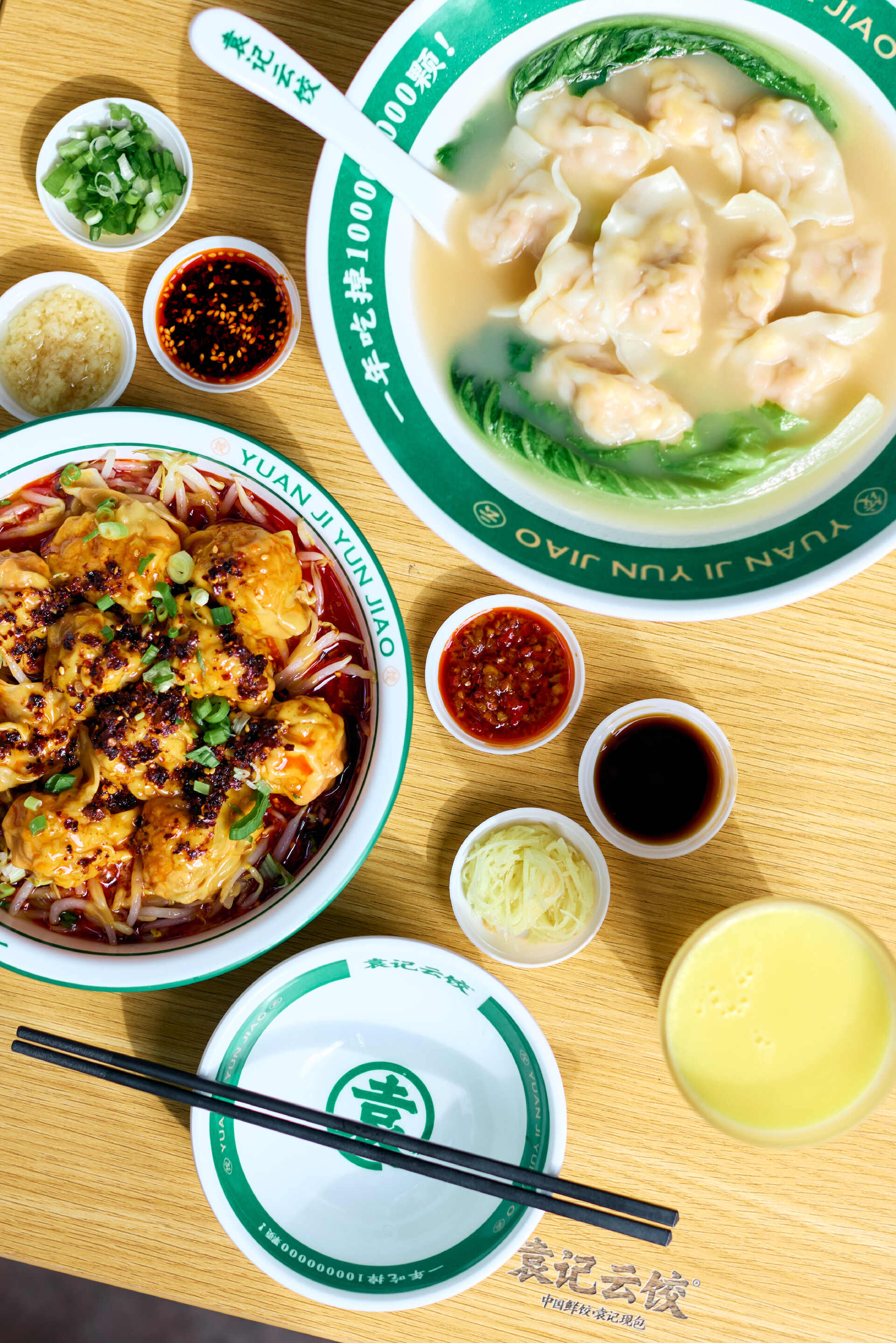
The products of Yuanji Dumplings in Singapore are served with ginger shreds
Q: What were you doing the day before the opening of the first store in Singapore?
A: I was in Singapore. I was full of both expectations and concerns, and I had prepared for both good and bad scenarios. I've had similar experiences in the domestic market. The competition in the Singapore market is relatively milder, so we are more confident in dealing with it.
Q: What were the good and bad scenarios you expected?
A: In the best - case scenario, we would immediately start preparing for the second and third stores. In the worst - case scenario, we would spend half a year improving this store. If we still couldn't improve the business after trying all the methods, we would find another location and start over.
To evaluate the potential of a new market, we usually test three types of stores. If none of them work, we may re - evaluate the market. In Singapore, we think there are three scenarios to test: a community street - front store, a food court store, and a mall store.
Q: Did you have specific data for defining "good" at that time?
A: A daily average revenue of 4,000 Singapore dollars.
Q: Now that you've opened the 10th store in Singapore, it means the actual data is quite good?
A: We estimated that the daily revenue of the store in Nex would be between 3,000 and 4,000 Singapore dollars, but in reality, it's around 10,000 Singapore dollars. It's only a dozen square meters, and there are always queues. Considering that the first store was a street - front store, and the three store models have been successfully verified, we are firmly convinced that this market has great potential.
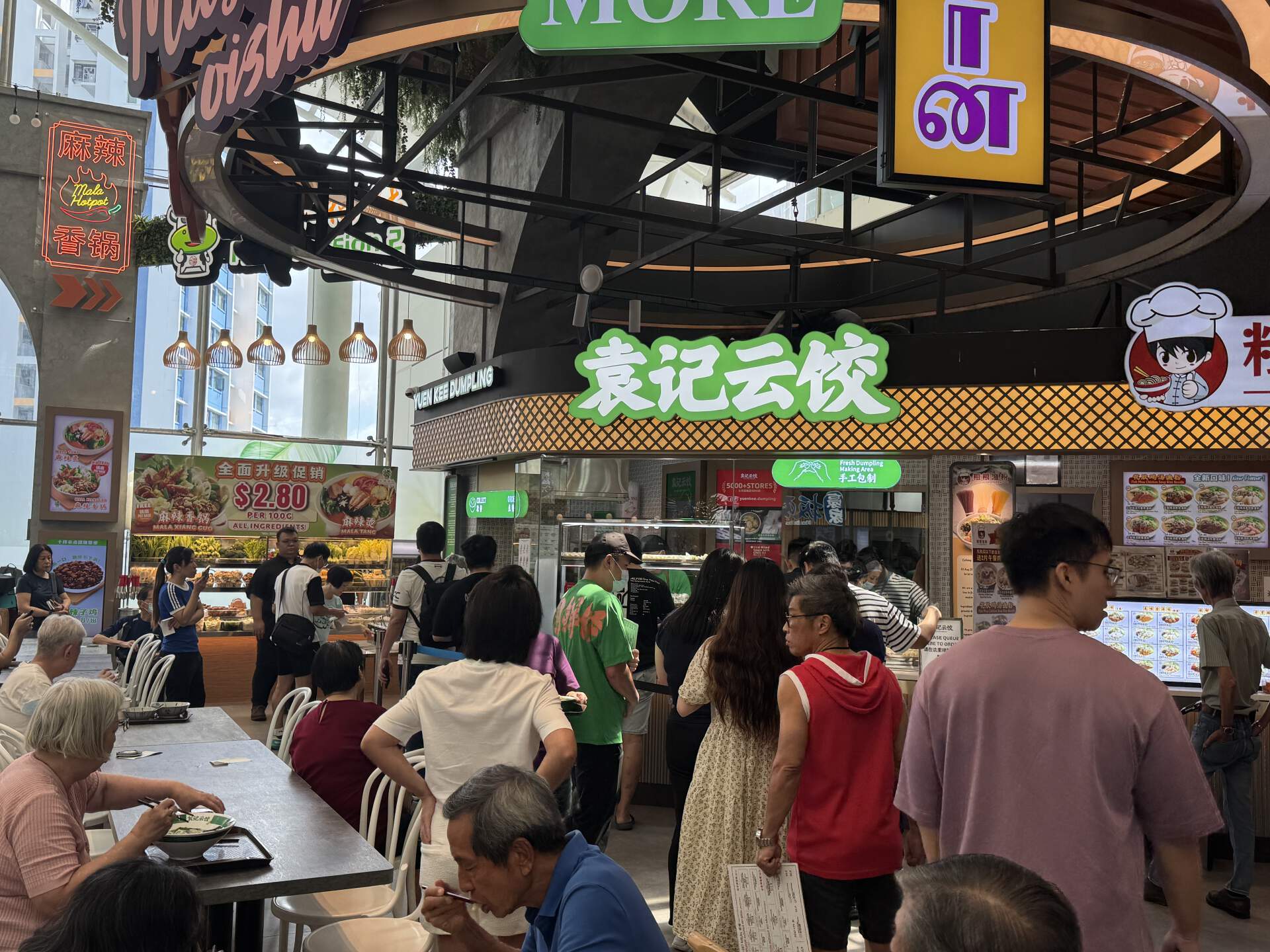
The new store of Yuanji Dumplings in Jurong Point, Singapore
Q: What are your current expectations for the pace of development in the Singapore market?
A: In the short term, there are more than a dozen stores that have already signed contracts and are waiting to be renovated and opened. In the future, the market coverage will expand from Class A commercial areas to Class B commercial areas, and in the third stage, to some Class C commercial areas and more affordable small food courts.
Q: Is there a timeline?
A: This year, we've been taking small but steady steps. We've already opened 10 stores. Five more will open in January 2026. The main thing is to ensure that our organizational ability, team management, and operational ability can keep up with the development of the store business.
Q: How well did you know the Singapore market before?
A: I wasn't familiar with it before, but I knew the importance of the first store. When we expanded into the Nanjing market in China, the daily average revenue of the initial eight stores was only about 2,000 RMB. It took some time to gradually improve. Opening a store in Singapore costs 80,000 - 120,000 Singapore dollars for a food court store and about 250,000 - 300,000 Singapore dollars for a street - front store. We definitely need to be responsible for consumers and franchisees, so we need to be extra cautious in site selection and operation.
Q: What problems still need to be solved in the future market expansion in Singapore?
A: I think it's about localizing products and staffing. As the number of stores increases, we definitely need more people to operate them, which is crucial. The core of Yuanji is the fresh - made model, and labor is also a major challenge. Making dumplings is a common skill in China, but in Singapore and other places, we need to train new employees from scratch to make dumplings up to standard.
02 All kinds of unexpected situations and three key points for going overseas
Q: Do you have a clear roadmap for going overseas?
A: Currently, the markets we are promoting include Singapore, Thailand, Malaysia, etc. When choosing a market, we will comprehensively consider factors such as population, economic level, and supply - chain support. For example, in Europe, we may choose to establish a supply - chain center in an area with lower costs and open stores in cities with stronger purchasing power.
Q: Where does this logic come from?
A: We learned from our domestic experience. In China, we started from the South China market and gradually expanded to East China, Southwest China, and North China. Each region has a warehouse or a forward - deployment warehouse, with a radiation range generally within 200 kilometers. The overseas market will also be set up with reference to the domestic logic and the local logistics development level.
Q: Singapore might be the easiest market for going overseas, right?
A: Relatively speaking, the Singapore market has been quite smooth.
Q: Which market do you think is more difficult now?
A: The UK is more challenging. For example, the work - visa requirements are very strict, with requirements for the education background and language ability of foreign employees. At the same time, we need the team we recruit to have proficient store skills, including making dumplings. It's not easy to recruit such versatile talents.
Q: What's your expansion method in the UK?
A: We are currently in the process of signing contracts. Our partner is a local Chinese with resources and store - operating experience. We didn't actively explore the UK market at first. They approached us after visiting our stores in China and Singapore.
Q: Going back to the beginning, why did you decide to go overseas at the end of 2024?
A: We already have 4,000 stores in China, and after more than a decade of development, our product quality, operation management, and supply - chain system are relatively mature and replicable. Moreover, we've opened more than 40 stores in Hong Kong, and they've all performed well.
Q: What would have happened if you had postponed it for a year?
A: We might have lost the first - mover advantage. Take Singapore as an example. There is a clear business - format plan in a food court. For instance, if one dumpling store is planned among ten stores and the spot is taken by another brand, it will be much more difficult for us to enter later.
Q: After you really decided to "go overseas", did you consult anyone?
A: We did more self - exploration. There are many theories about Chinese food brands going overseas, but the truly effective ones still need to be practiced by ourselves. I believe that financial and tax compliance, data - security compliance, and labor - employment compliance are three aspects that must be highly emphasized during the overseas expansion process.
Q: Where does your confidence in the Japanese, American, and European markets come from in terms of the demand for dumplings?
A: I went to Japan for research last October. They mainly eat fried dumplings, but they are also very interested in fresh - made and hand - rolled dumplings. After a Shanghai - based steamed - bun restaurant opened there, there were always queues, and it could earn 40,000 - 50,000 RMB a day. Although fried dumplings are the mainstream, I think we can also win consumers with different flavors. There is already a successful example of "Panda Express" in North America, which has opened thousands of stores. Since there is demand, we have room for development.
