In 2026, how to participate in SpaceX's trillion-dollar IPO feast?
How to understand the three development stages of the space race?
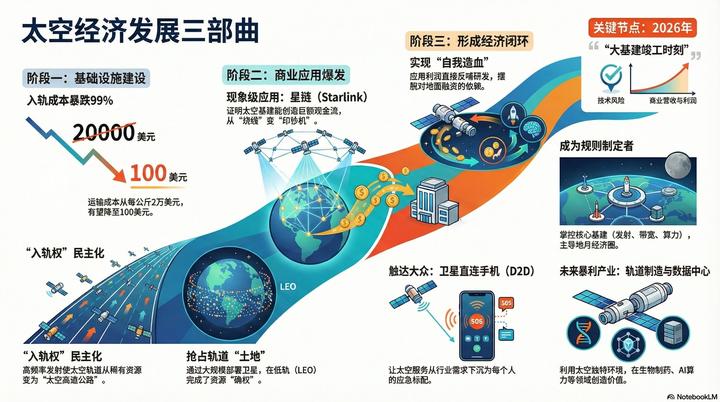
Stage 1: Infrastructure —— Drastic cost reduction and democratization of access to orbit
In any industry, the maturity of infrastructure signals a sharp drop in marginal costs. This is especially true for the commercial space race:
Freight rates from "gold" to "steel": Over the past 50 years, space has been "made of gold." Due to the non - recoverability of rockets, the cost of sending one kilogram of payload into orbit was over $20,000. SpaceX's Falcon 9 has reduced it to around $2,500, and with the maturity of Starship in 2026, the goal is to drive it down to $100 - $200/kg.
Normalization of high - frequency launches: Infrastructure is not only about cost but also about throughput. SpaceX has achieved a rhythm of several launches per week, which means that orbit is no longer an occasionally visited laboratory but a "public ground" like a highway.
Occupation of orbital resources: The orbital positions and frequency resources in low - Earth orbit (LEO) are first - come, first - served. SpaceX has preemptively deployed nearly ten thousand satellites, essentially completing "land title confirmation" in space.
Stage 2: Commercial Application —— From "scientific experiments" to "mass necessities"
With inexpensive transportation tools (infrastructure), the application layer has begun to explode like mushrooms after a rain.
Starlink: The first phenomenon - level application. It has proven that space infrastructure can generate direct cash flow. This is no longer about selling rocket engines but selling global bandwidth subscriptions. With 8.5 million users and a 70% gross profit margin, it has transformed the space concept from a "money - burning" venture into a "money - printing machine."
Direct - to - device (D2D) satellite communication: The final step to reach the consumer end. ASTS, SATS, and SpaceX's acquisition of spectrum aim to enable 5 billion ordinary smartphones worldwide to connect to satellites without any modification. This means that space applications have officially shifted from "needs of a very few industries" to "an emergency standard for everyone."
Orbital manufacturing and data centers: Use the microgravity in space to produce perfect crystals (for biopharmaceuticals) and optical fibers, or deploy artificial intelligence servers (AI Data Centers) in the vacuum and low - temperature environment. These applications were a fantasy in the $2,500/kg era but will be highly profitable in the $100/kg era.
Stage 3: Economic Closed - Loop —— Self - sufficiency and rule - making power
This is the ultimate logic for SpaceX to reach a valuation of $1.5 trillion: It no longer relies on subsidies from the ground but has formed a self - growing ecosystem.
Profits reinvested in R & D: The tens of billions of dollars in annual profits generated by Starlink no longer require financing but are directly invested in Mars colonization, lunar bases, and more advanced iterations of Starship. This "self - sufficiency" ability is something that traditional space companies (relying on NASA funding) have never had.
Rule - making power and the formation of the Earth - Moon economic circle: When a company controls access to orbit, global bandwidth, and orbital computing power, it has rule - making power. Companies like LUNR, FLY, and RKLB have found their positions in the ecosystem after SpaceX's price cuts — lunar infrastructure, special launches, and orbital transportation, which are expected to form a space version of the "terrestrial economic network."
Why is 2026 a critical point?
If 2020 was the "laboratory stage" of the space race, 2026 is the "completion time of major infrastructure." SpaceX has completed the leap from "rocket - building" to "rule - setting." ASTS/RKLB/RDW are seizing high - ground in the application layer. Investors are no longer concerned about whether rockets will explode but about the real - world revenue and profits of this huge "orbital cash machine" each year.
SpaceX —— The "two pillars" behind a $1.5 trillion valuation
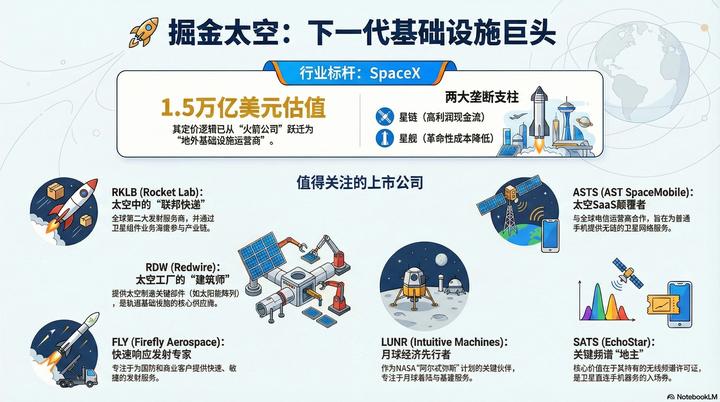
As of 2026, for SpaceX, traditional P/E or P/S valuation models have completely failed. It plans to go public with a valuation of $1.5 trillion, which is the first time in human history to price the "infrastructure layer of extraterrestrial civilization."
Shift in valuation logic: From a "rocket company" to "extraterrestrial infrastructure"
SpaceX's target valuation of $1.5 trillion corresponds to an expected revenue of about $22 - $24 billion in 2026. This means its price - to - sales ratio (P/S) is as high as 63 - 68 times. The P/S of traditional aerospace giants (such as Boeing and Lockheed Martin) is only 1.5 - 2 times. The reason SpaceX can command a premium 30 times that of its peers is that it has completed the transformation from an "equipment supplier" to an "infrastructure operator." The core of this is the cash - flow hegemony of Starlink: As of September 2025, Starlink had over 8.5 million global users and was growing at a rate of 1 million per quarter. Its gross profit margin exceeds 70%, which is a typical SaaS financial model rather than a heavy - asset industrial model.
Starship: The "industrial singularity" triggered by drastic cost reduction
Starship is designed to be "fully and rapidly reusable." This means that launch costs are no longer depreciated on an annual or monthly basis but are turned over on an hourly basis. The RockFlow research team believes that the cost reduction brought about by Starship will be revolutionary: The Falcon 9 has reduced the cost to $2,500/kg, while Starship aims for $100 - $200/kg. From the perspective of past technological progress, when the cost of access to orbit drops by 99%, business models that were once economically unfeasible (such as space manufacturing, asteroid mining, and orbital data centers) suddenly become profitable. SpaceX is establishing an absolute monopoly on heavy - lift capabilities through Starship. Other options for US stock investors besides SpaceX
RKLB —— The "second choice" closest to SpaceX
If SpaceX is a giant ship, Rocket Lab is the "FedEx" in space. It is currently the world's second - largest active provider of orbital launch services and SpaceX's most powerful commercial competitor.
Neutron rocket: Differentiated market capture
RKLB's core weapon is the under - development Neutron. With a payload capacity of 13 tons, Neutron is tailor - made for medium - sized satellites. It cleverly avoids a direct confrontation with Starship and instead targets commercial customers who do not need "heavy - lift capacity" but value "launch frequency." Neutron is expected to make its maiden flight in 2026. Once successful, RKLB will become the only alternative to SpaceX in the market with comparable launch costs and maturity.
The invisible driver of Space Systems
More than 60% of RKLB's revenue actually comes from satellite components (star sensors, solar panels, reaction wheels). An impressive figure is that RKLB currently has backlog orders worth over $1 billion. In addition, RKLB's P/S ratio is currently about 12 - 15 times. As Starship lowers the launch threshold, the demand for satellite components will grow exponentially. The RockFlow research team believes that RKLB is sharing the dividends of the entire space infrastructure as a parts supplier.
ASTS —— The real "space SaaS"
ASTS may be the most disruptive company in the market with the most asymmetric risk - return ratio. Different from Starlink, ASTS does not directly sell packages to end - users but cooperates with operators (such as AT&T and Vodafone). It has two core advantages:
Zero - friction customer acquisition: 3 billion mobile users worldwide can access the satellite network in signal - blind areas by simply receiving a text message and clicking "confirm." ASTS shares profits with operators.
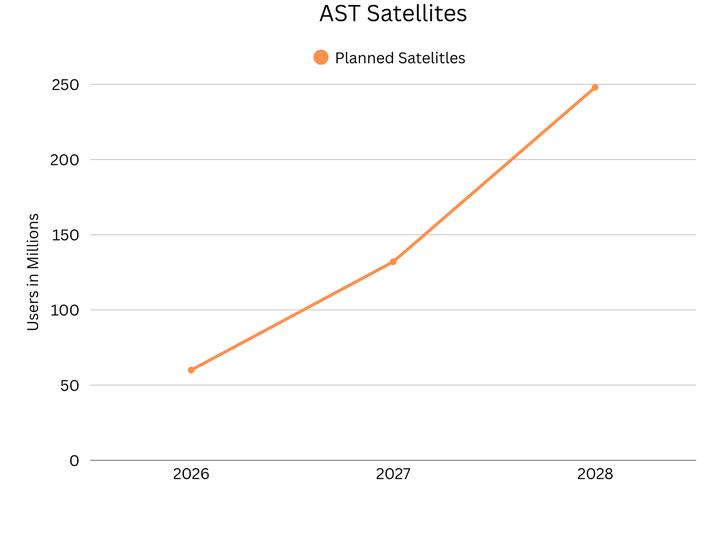
Operating leverage: Once 45 - 60 satellites (Block 2) are deployed in 2026, the marginal cost of serving 1 million users and 100 million users is almost zero. This is the real "space SaaS."
SATS: SpaceX's spectrum supply station
The greatest value of SATS is obviously not its declining satellite TV business but the wireless spectrum licenses it holds. SpaceX's acquisition of SATS assets for $17 billion was essentially to obtain the ticket to achieve "Direct - to - Cell" communication. Before the recent wave of price increases, the market clearly underestimated the value of the spectrum on SATS' balance sheet. The RockFlow research team believes that driven by SpaceX's IPO, "resource - based assets" at the bottom of the industrial chain, such as SATS, will also undergo a significant revaluation.
RDW: The architect of space factories
RDW is the unrivaled king in the field of "space manufacturing." Whether it's SpaceX's orbital data center or NASA's lunar base, they all need RDW's ROSA (Roll - Out Solar Array). Currently, the market is witnessing its financial inflection point: In the third quarter of 2025, its revenue exceeded $100 million, and losses have been continuously narrowing. RDW has transformed from a concept stock into an infrastructure supplier with real contracts. Its valuation (EV/Revenue) is only about 5 - 6 times, with significant room for catch - up growth.
LUNR: The infrastructure anchor point at the lunar south pole
The IM - 1 and IM - 2 missions have proven LUNR's ability to land precisely at the lunar south pole. Its future revenue pillars include delivery services, data transmission, and infrastructure - as - a - service. Currently, LUNR has backlog orders worth $328 million and is an indispensable part of NASA's Artemis program.
FLY: The unicorn of responsive launches

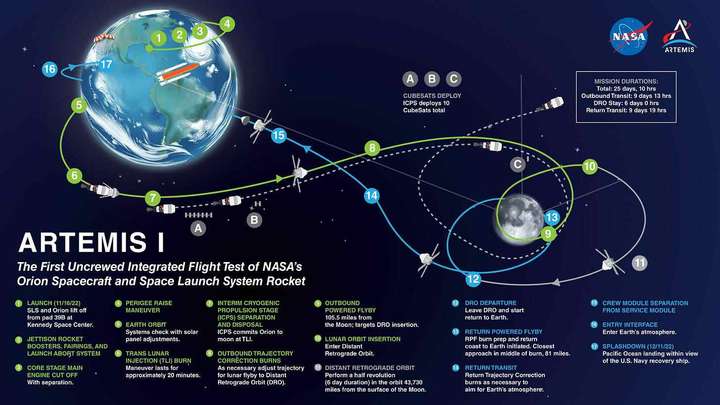
Firefly's Alpha rocket is currently the only 1000 - kg class rocket in the US that has successfully reached orbit. Its advantage lies in "speed" — it can send payloads urgently needed by the Department of Defense into specific orbits in a short time. In addition, its lunar footprint is expanding rapidly, and its "Blue Ghost" lander has successfully completed its mission. FLY's unfulfilled order amount is even higher than that of LUNR, and it is expanding a 200,000 - square - foot factory with the goal of producing one rocket per month.

New - investor practical guide: How to participate in the space wave?
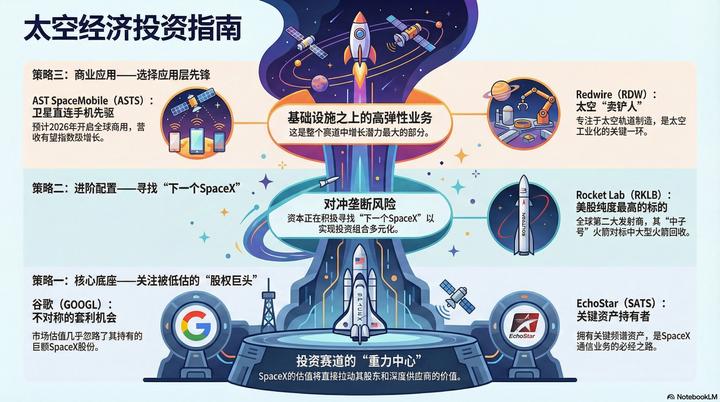
The RockFlow research team believes that US stock investors should not wait for the IPO documents to be released because the premium is often already occupied by smart money before the hype. The beneficiaries in the entire space race have formed a clear echelon. According to our framework of "infrastructure → commercial application → economic closed - loop," the core beneficiaries from a global perspective are as follows:
Strategy 1: Core foundation —— Focus on undervalued "equity giants"
This is the "center of gravity" of the entire race. The revaluation of SpaceX's valuation will directly boost its shareholders and in - depth suppliers. For investors seeking stability, Google (GOOGL) is worth re - evaluating. The market's current valuation of its overall business almost ignores its large stake in SpaceX. This is essentially an asymmetric arbitrage opportunity. Once the IPO pricing of SpaceX is finalized, the asset revaluation will directly increase Google's net asset per share. In addition, EchoStar (SATS), which holds key spectrum assets, is also a necessary step for SpaceX to enter the communication field.
Strategy 2: Advanced configuration —— The "second echelon" benchmarking against SpaceX
SpaceX has proven the feasibility of the business model, and capital is looking for the "next SpaceX" to hedge against monopoly risks. If you are looking for the "next SpaceX," Rocket Lab (RKLB) is the purest US stock target. Its Neutron rocket is scheduled to make its maiden flight in 2026, aiming at medium - to - large - sized rocket recovery. As the world's second - largest active launcher, RKLB is sharing the dividends of the major infrastructure through its satellite component business, and its P/S ratio still has huge room for catch - up growth compared to SpaceX.
Strategy 3: Commercial application —— Choose pioneers in the application layer
After the infrastructure is in place, these companies run "businesses" on it, which is the most elastic part:
AST SpaceMobile (ASTS): The pioneer of direct - to - device (D2D) satellite communication. 2026 is a crucial year for its commercialization on a global scale (including the UK, Japan, and Canada), and its revenue forecast is growing exponentially.
Redwire (RDW): Focused on space - orbital manufacturing. It