The ambition of Shanzi Hi-Tech and Alibaba in car manufacturing
Shanzi Hi-Tech V17 is not just a car; it's an "open exam" for the entire automotive industry.
From January 6th to 9th local time, a bombshell news that could reshape the logic of the automotive industry came from the CES 2026 in Las Vegas. NVIDIA officially launched the open - source inference VLA model Alpamayo and simultaneously opened up the autonomous driving simulation toolchain and high - quality training datasets, forming an infrastructure - level solution integrating "model + simulation + data". NVIDIA CEO Jensen Huang said bluntly at the press conference that the turning point of autonomous driving has arrived, and in the future, there will be one billion cars achieving full autonomous driving on real roads worldwide.
The market generally believes that this judgment is not just an empty shout of technological optimism but an industrial reality after the simultaneous collapse of computing power, algorithms, and data costs. When autonomous driving changes from "high - cost R & D in a closed laboratory" to "an engineering problem that can be rapidly iterated and trained on a large scale in the cloud", cars are no longer just mechanical industrial products but are evolving into the largest embodied intelligent carriers.
Nowadays, more and more technology giants that originally did not belong to the traditional automotive industrial system, even cleaning robot manufacturers, have begun to deeply intervene in the whole - vehicle industry and even directly enter the car - manufacturing field. It is rumored that Alibaba is no longer satisfied with just providing cloud computing, in - vehicle systems, or intelligent cockpit capabilities. Instead, it wants to extend to the whole - vehicle level through cooperation with manufacturing entities such as Shanzi Hi - Tech (SZ.000981) and explore the full - chain integration from AI, data, operating systems to the right of whole - vehicle definition.
01 Rumors, Half - True and Half - False, Are Most Eye - Catching
Regardless of whether the rumor of Alibaba's car - manufacturing is true or false, as onlookers, what we most want to know is whether Shanzi Hi - Tech has the ability to help Alibaba achieve this full - chain integration.
Today's Shanzi Hi - Tech is unfamiliar to many because the predecessor of Shanzi Hi - Tech was Yinye Co., Ltd., a leading real - estate developer in Ningbo, founded by Xiong Xuqiang, the former richest man in Ningbo.
Around 2016, Xiong Xuqiang, who made his fortune in real estate, wanted to lead Yinye Co., Ltd. to transform into car - manufacturing, but it ended in failure. Before Yinye announced the failure of car - manufacturing, its biggest moves were to raise funds to acquire "Ningbo Haosheng" and "Dongfang Yisheng" at transaction prices of 2.845 billion yuan and 7.981 billion yuan respectively.
After Yinye announced the failure of car - manufacturing, Ye Ji took over Yinye Co., Ltd. with 3.2 billion yuan and renamed it "Shanzi Hi - Tech". He became the actual controller of Shanzi Hi - Tech, holding 3.62% of the company's shares. However, since Ye Ji took over Shanzi Hi - Tech, the company's net profit has been unable to turn positive. From 2020 to 2024, Shanzi Hi - Tech suffered losses of 1.087 billion yuan, 2.614 billion yuan, 0.969 billion yuan, 2.057 billion yuan, and 1.733 billion yuan respectively.
However, in 2025, Shanzi Hi - Tech directly turned losses into profits. In the first three quarters, its net profits were 82.8311 million yuan, 219 million yuan, and 437 million yuan respectively. Looking back at Shanzi Hi - Tech's layout around car - manufacturing, since its reorganization in February 2022, Shanzi Hi - Tech has established a high - end manufacturing industrial chain ecosystem ranging from high - end parts manufacturing, whole - vehicle manufacturing, travel services to semiconductor materials.
As a key part of the business, the management of the whole - vehicle business began to make plans in 2021. In 2022, Shanzi Automobile was established as the core sector for Shanzi Hi - Tech to enter the whole - vehicle industry, and relevant technology and personnel reserves were started. In 2023, it acquired 90% of the equity of Xingtai Longgang held by state - owned enterprise Xingtai Xinde through public tender, obtaining the corresponding car - manufacturing qualification, which laid the foundation for subsequent car - manufacturing.
Shanzi Hi - Tech aims to "create a new species of new - energy urban logistics vehicles" in its commercial vehicle business, focusing on the R & D, manufacturing, and sales services of new - energy vehicles. In the passenger car business, it is based in Harbin, targeting the overseas whole - vehicle market. By utilizing the existing whole - vehicle manufacturing resources in Harbin, through technological transformation and product introduction, it is building a whole - vehicle manufacturing project targeting countries along the "Belt and Road" as the main market.
According to Shanzi Hi - Tech's 2024 financial report, in the upcoming third and fourth quarters of 2026, Shanzi Hi - Tech will launch "V17 Passenger Car Project" and "W28 Passenger Car Project", with planned annual production and sales of over 300,000 units and 50,000 units respectively.
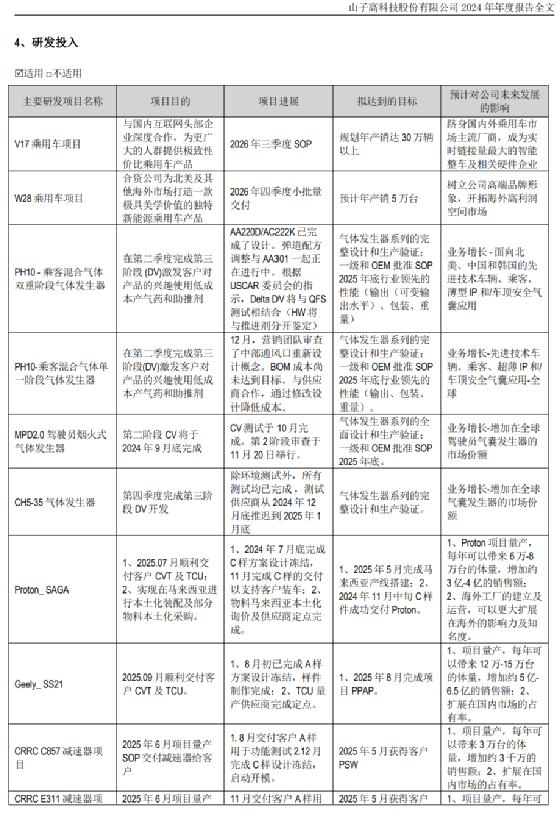
For onlookers, what is worthy of attention is not just the production and sales figures but what Shanzi Hi - Tech has done to achieve this goal.
02 The Close Connection between Shanzi Hi - Tech and Alibaba
In addition to stable R & D investment, Shanzi Hi - Tech has continuously strengthened its cooperation with Alibaba in the whole - vehicle business since July 2025.
On July 2, 2025, Alibaba Tmall and Shanzi Hi - Tech signed a strategic cooperation agreement in Hangzhou. Based on Tmall's digital capabilities of the New Product Innovation Center and Shanzi Hi - Tech's advantages in the entire automotive industry chain, the two sides will jointly explore a new retail model for customized smart cars. Shanzi Hi - Tech publicly revealed that the first cooperation project, the V17 customized model, has entered the prototype testing stage.
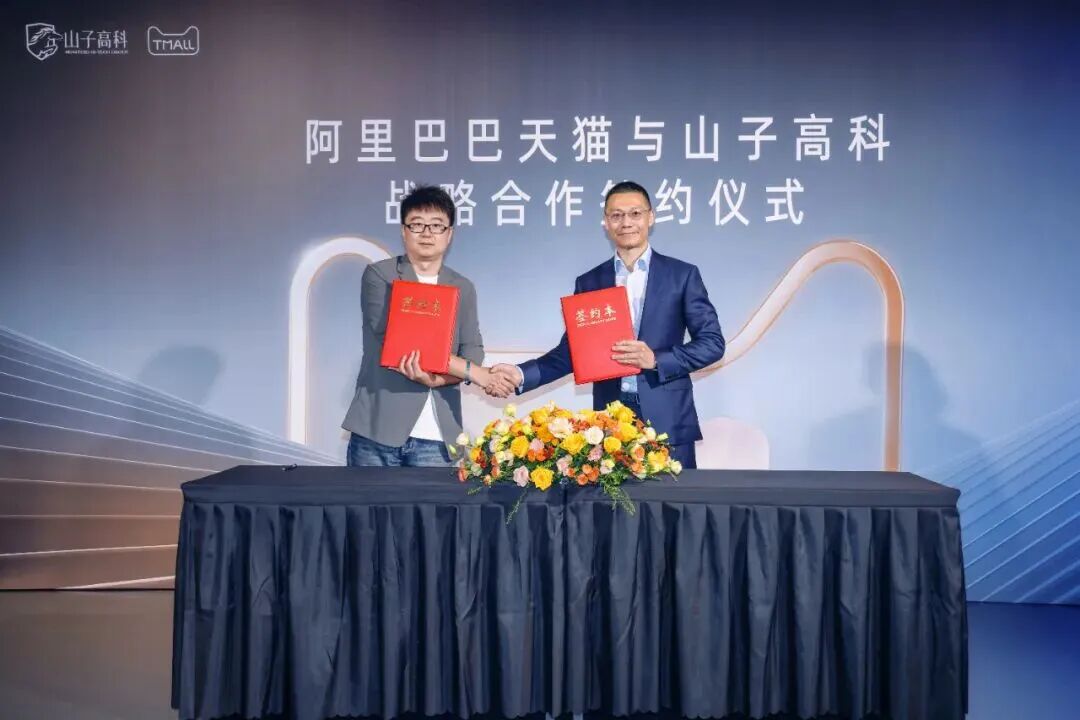
Source: Shanzi Hi - Tech WeChat official account
Shanzi Hi - Tech said that the core of this strategic cooperation lies in connecting the full - chain of "online customization - data insight - intelligent manufacturing". Tmall will open up its intelligent research system of the New Product Innovation Center, which includes 10 core functional modules, to provide Shanzi Hi - Tech with accurate digital analysis capabilities for market demand.
In the future, consumers are expected to directly participate in vehicle configuration customization through the Tmall platform, and Shanzi Hi - Tech can optimize product design and production processes based on these real - time user feedback. In the first phase of the cooperation, more than 2,000 segmented market insight data points will be covered, providing support for the full - life - cycle data analysis capabilities of the V17 model.
Shanzi Hi - Tech claims that this strategic cooperation is the first in - depth digital cooperation case between an "e - commerce platform and an automobile manufacturer" in China. However, in the cooperation agreement reached between JD.com, CATL, and GAC before, the role played by JD.com is similar to that of Alibaba in the cooperation with Shanzi Hi - Tech.
The person in charge of Tmall's whole - vehicle business, Muchen, said at the signing ceremony: "This cooperation is an important implementation of Tmall Auto's strategy of 'empowering the industry with technology'. Relying on the platform's consumption insight capabilities of nearly one billion active users, we will help Shanzi Hi - Tech jointly create a popular Internet car model."
The personnel of Shanzi Hi - Tech's V17 project team said that the two sides agreed to focus on promoting three major directions in 2025 - 2026: completing the development and production of the V17 model, jointly building an exclusive online sales channel on Tmall, and implementing offline batch delivery. At the same time, in order to improve the customer experience and deepen digital car - manufacturing capabilities, the two sides will also jointly build an "Intelligent Vehicle Consumer Insight Laboratory" to explore innovative business forms such as car subscription systems and membership services.
The day after the signing ceremony, Shanzi Hi - Tech announced a change of its office address, moving from Shanghai to the Alibaba Digital Ecosystem Innovation Park in Yuhang District, Hangzhou, Zhejiang Province.
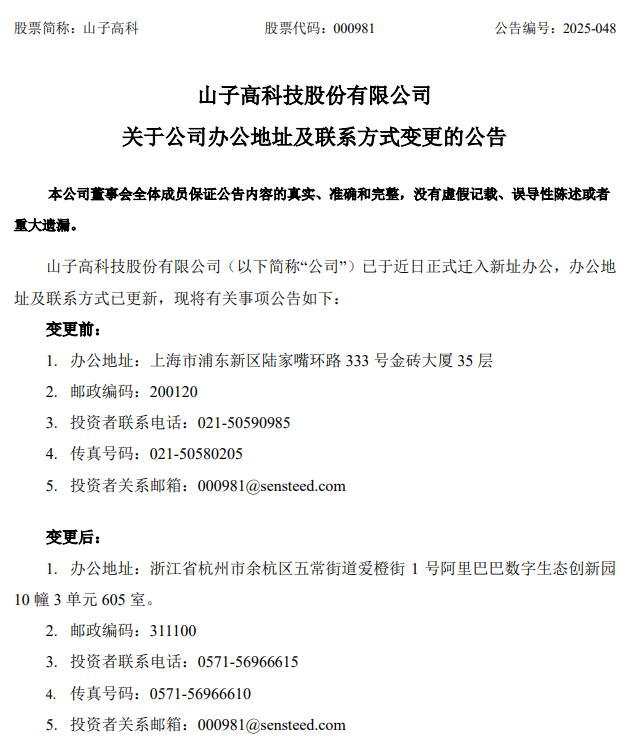
Finally, a subsidiary of Alibaba is going to take a stake in Shanzi Hi - Tech. According to relevant announcements of Shanzi Hi - Tech, Xiong Jikai, a shareholder who originally held more than 5% of the shares, had some of his shares auctioned by the court due to judicial enforcement. The number of shares for auction is 51.079 million, and the right source is the court's enforcement ruling (2025) Zhe 0203 Zhi 6917.
Public information shows that as of September 30, 2025, Xiong Jikai directly held 0.23% of Shanzi Hi - Tech's shares and 2.58% through Shanzi Power Co., Ltd. All these shares are expected to be transferred to Hangzhou Alibaba Zetai Information Technology Co., Ltd. Some people believe that this auction is just a formality, and actually, the shares will be acquired by Alibaba.
03 What Are Alibaba and Shanzi Hi - Tech Seeking from Their Cooperation?
Putting aside the rumors, focusing on the whole - vehicle cooperation project between Alibaba and Shanzi Hi - Tech, what can they bring to the whole - vehicle industry? To understand this issue clearly, we can't avoid another Internet giant, JD.com.
On November 9, 2025, "The People's Good Car" jointly created by JD.com, GAC Group, and CATL - Aion UT super was officially launched. It started delivery on November 25, and in just one week, 1,000 new cars were successfully delivered. JD.com played a similar role to Alibaba, using its long - term experience of facing consumers to provide feedback to car manufacturers to produce cars that better meet market needs and then deliver them to consumers.
If the strategic cooperation between Alibaba and Shanzi Hi - Tech is successfully implemented, JD.com will be the first to be affected. In their respective cooperation projects, both sides will basically provide car manufacturers with consumer preferences at the beginning of vehicle design, offer exclusive online sales and offline batch delivery, and provide membership services in combination with their respective offline car - maintenance businesses of JD.com and Tmall.
Although the impact will be borne by JD.com, for Shanzi Hi - Tech, cooperation with Alibaba can change product definition from engineering - oriented to user and data - oriented, and vehicle model iteration will change from once - a - year to software and service iteration. This is equivalent to systematically introducing the "methodology of Internet companies in making C - end products" into the whole - vehicle development process.
The cash flow and risk structure of car manufacturers will also be reshaped. After the online direct sales, subscription systems, and membership services gradually form a system, the gross profit structure of a single vehicle will no longer rely solely on hardware. Software subscriptions and updates will redefine the gross profit structure of a single vehicle, referring to the charging standards of intelligent driving software of Tesla and other companies. Secondly, the inventory and channel risks will decrease, and then the predictability of the whole - vehicle business and its visibility in the capital market will increase. From a financial statement perspective, this is more important than "selling a few more thousand cars".
To put it more simply, before cooperating with Alibaba, Shanzi Hi - Tech's car - manufacturing was like an inland TV drama. The director and screenwriter would shoot and review all the episodes and then wait for buyers to purchase the copyrights. Whether it could be sold and at a high or low price was all a matter of luck. After cooperating with Alibaba, it's like the director and screenwriter first collect opinions and suggestions from the audience, improve the script according to some of the audience's feedback, and then shoot the complete episodes and put them on the shelves for sale. In this case, it will definitely be more in line with market tastes than the director and screenwriter "creating in isolation".
For Alibaba, in addition to sharing the new cake of "online car sales and offline after - sales service" with JD.com, it can also deeply participate in whole - vehicle definition, sales, and user operation without having to manufacture cars. This is much lower - risk than independent car - manufacturing, and there is still huge room for imagination. Because with the participation of Alibaba and JD.com, vehicle models are no longer one - time products, their life - cycle value is extended, and smart cars are gradually approaching "long - term operating assets".
Conclusion
Shanzi Hi - Tech's cooperation with Alibaba is actually participating in "long - term operating assets". Whether it is the V17 or W28 project, their significance has far exceeded Shanzi Hi - Tech itself. This is not just a story of a single - point transformation of a listed company but more like an ongoing industry - level stress test.
When platform - type companies like Alibaba are no longer satisfied with "empowering from the outside of the car" but try to integrate AI, data, operating systems, and new retail capabilities into a mass - produced car, the automotive industry is forced to face a real - world problem: If cars are becoming intelligent terminals that can be continuously operated and iterated, how far can the existing car - manufacturing logic go?
For Shanzi Hi - Tech, V17 is a crucial self - responsible experiment. But for the entire industry, it is more like a test paper. What it is testing is not just the level of intelligence but whether car manufacturers have the ability to directly connect with users, whether they can withstand the reconstruction of the channel structure, and whether they can maintain their competitive advantages after data and software become basic capabilities.
If this model fails to work, the market will quickly return to rationality, telling all latecomers that car - manufacturing is still a business with heavy assets and low tolerance for errors. But if it works even partially, its spill - over effect will be enough to change the industry's risk pricing. At that time, what will really be re - evaluated is not just "who can manufacture cars" but who is still worthy of long - term investment.
This article is from the WeChat official account "Baker Street Detective" (ID: bkjtag), written by Che Xingyun, and is published by 36Kr with authorization.