At CES, the Chinese robot army aims to empty the pockets of overseas buyers.
Text by | Qiu Xiaofen
Edited by | Su Jianxun
From January 6th to 9th, 2026, CES (Consumer Electronics Show) was held in Las Vegas, USA. Compared with previous CES events, a major highlight this year is the emergence of a group of new Chinese embodied intelligent robot companies.
According to Intelligent Emergence, around 20 Chinese humanoid robot companies participated in this CES, more than the total number from the United States, Japan, South Korea, Germany, the United Kingdom and other countries combined.
Many of these manufacturers are participating for the first time, including Fourier Intelligence, Zhujidongli, Beijing Humanoid Robot Innovation Center, Vita Dynamics, Magic Atom, Pasini, Youliqi and so on.
After visiting the "North Hall" where robots were concentrated, a person from a Chinese robot manufacturer told Intelligent Emergence with emotion, "At CES, we didn't see the legendary American Figure or Optimus. The Chinese brought a bunch of humanoid robots to the gambling city, putting on a Chinese robot convention for the Americans."
The collective overseas expansion of Chinese humanoid robots left a profound impression on overseas audiences. When they saw that Chinese quadruped robots could do backflips and chat, overseas audiences exclaimed one after another - "The product design is super great", "The Chinese manufacturing industry is really amazing."
To participate in CES, robot manufacturers have to pay a high cost. However, almost all Chinese robot manufacturers have clearly stated their determination to achieve two major goals: promote Chinese brands and secure orders.
In the past two years, the first - stage battle of Chinese robot companies has basically ended. Most companies have developed mature products, identified their main application scenarios, obtained high valuations, and have sufficient funds on their books.
In 2026, Chinese robot manufacturers are eager for the next stage to showcase their products collectively.
Before and after CES, we talked with several robot manufacturers participating in CES for the first time and summarized several observations about the similarities and differences between the Chinese and American robot industries and their feelings about participating in CES for the first time.
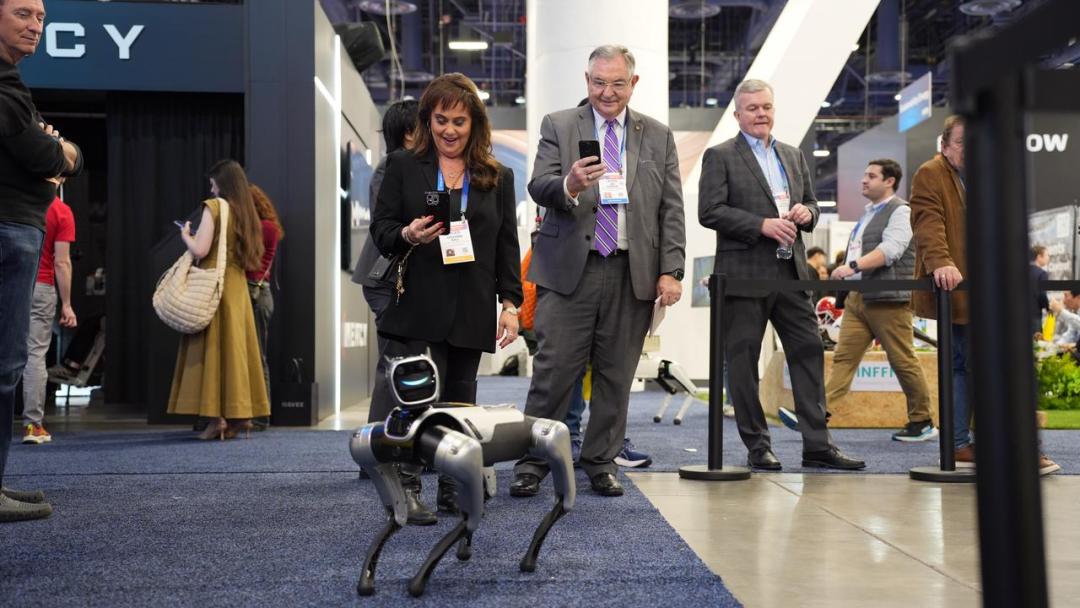
△ MagicDog of Magic Atom
Chinese manufacturers want to sell products, while overseas buyers want "useful" ones
Selling robot bodies overseas is the most important goal for Chinese robot manufacturers participating in CES for the first time.
This is also reflected in their team configuration. According to Intelligent Emergence, in the Chinese robot teams going to CES, salespeople account for about half, and the other half are for brand promotion and R & D.
Several robot manufacturers, including Magic Atom, told us that in order to improve the efficiency of securing orders on - site, their salespeople had contacted several American customers in advance and had pre - communication. "With a foundation of trust, it is more conducive to closing deals when doing on - site product demonstrations."
Overseas business scenarios, universities and research institutions with secondary development needs, and performance and entertainment scenarios are the key areas where robot manufacturers are targeting to secure orders this time.
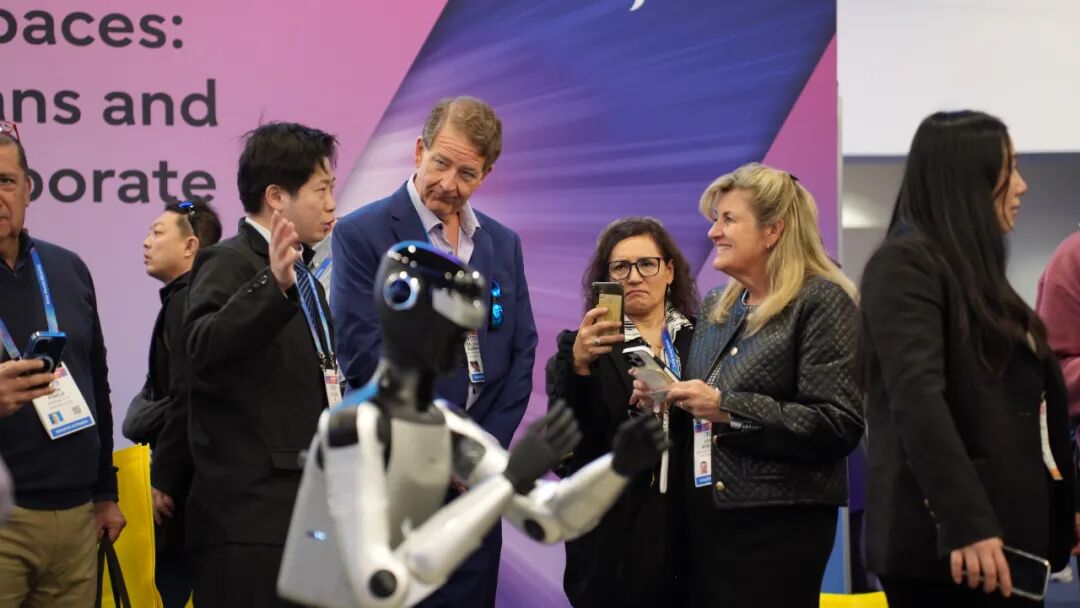
△ Staff of a Chinese robot manufacturer explains products to overseas audiences
The long - distance journey to CES to secure orders stems from the differences between the Chinese and American robot industries - in terms of robot bodies, Chinese robot manufacturers almost have an absolute advantage.
A staff member from the Beijing Humanoid Robot Innovation Center told Intelligent Emergence that China has a more developed manufacturing industry, stronger body manufacturing capabilities and lower costs. An American university customer sighed in front of their CES booth, "It's so difficult to buy a good robot body for secondary development in the United States!"

△ Overseas audiences interact with "Tianggong"
The scarcity of good robot bodies also leads to American customers having stronger curiosity and purchasing power for Chinese robot products.
A staff member from Magic Atom said that some overseas customers expressed strong interest in their products even without in - depth product experience.
However, securing orders is just the beginning of overseas expansion. Several manufacturers also mentioned that there will be many challenges in the overseas expansion of robots in 2026.
Zhang Shipu, the co - founder of Songyan Dynamics, told Intelligent Emergence that compared with other miniaturized AI hardware, humanoid robots adopting the DTC model (Direct - to - Consumer) may face more stringent after - sales tests.
Therefore, robot manufacturers still have a lot of work to do to improve their ecosystem, such as building a reliable ERP system, handling flexible overseas inquiries, and further building a production and supply system.
China focuses on "practical applications", while the United States is not that fast yet
Several manufacturers told Intelligent Emergence that the progress of the robot industries in China and the United States and the focus of audiences are not the same.
In China, after two years of exposure to robots, audiences have a sufficient basic understanding of this new category. Therefore, Chinese audiences are more eager to know how to implement robot applications.
If you have participated in domestic robot conferences, you will find that the common question among audiences is - "What can this robot do?"
At the CES in the United States, many manufacturers told Intelligent Emergence that overseas audiences have not been exposed to many robot products, and their focus is on the products themselves for this new thing.
"Chinese robots have moved from the body stage to the application scenario stage, but the United States is not that fast yet and still stays in the early stage of exploring the body products," an exhibitor said.
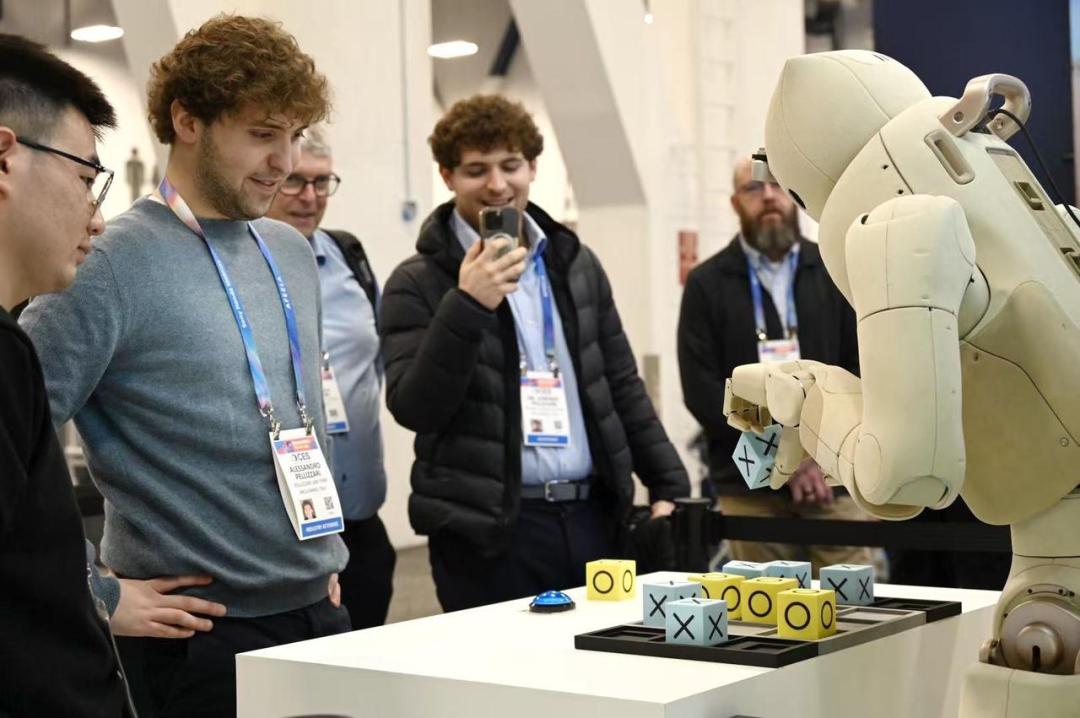
△ American audiences interact with a robot to play "Gomoku - like game"
The difference in focus between China and the United States also affects the exhibition planning ideas of each company at CES.
If at the WRC (World Robot Conference), robot manufacturers tend to put robots in specific scenarios to "work". At CES, the presentation of robots will be more focused, tending to do "subtraction" to highlight the most important and single function.
A staff member on - site from Fourier Intelligence summarized their exhibition idea as "atomizing" the functions.
For example, they hoped to highlight the interaction ability of the humanoid robot GR - 3 with audiences this time, designed a simple "Gomoku - like game" for interaction, and removed some complex scenario displays, such as the "Rehabilitation Port".
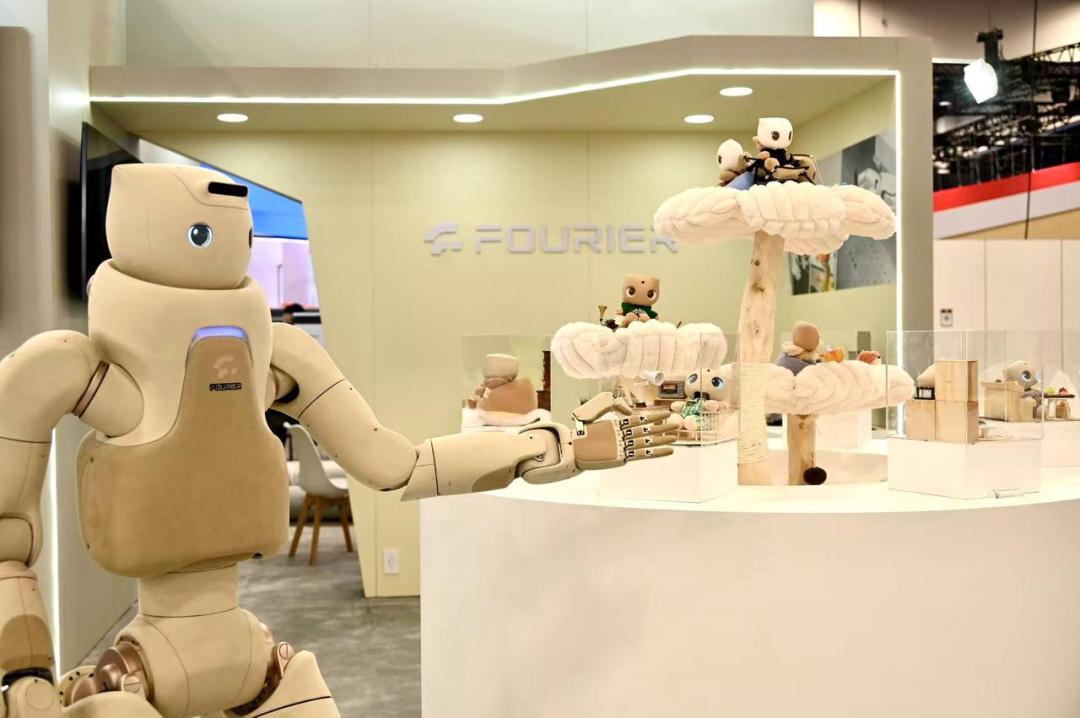
△ Fourier GR - 3
An industry insider analyzed to Intelligent Emergence that this difference reflects the divergence of the robot development paths between China and the United States -
China has more application scenarios, and investors pay more attention to commercialization. The path of Chinese robot manufacturers is to first focus on the scenarios they are good at and then expand to other scenarios.
In the United States, on the contrary, the application scenarios are not as many, and the development of robot bodies is not as fast as in China. A large amount of hot money has flowed into the top - level technology R & D of embodied intelligence, focusing more on the universality of robots.
"American capital is more willing to invest in the development of embodied large - model technologies with imagination and high ceilings. Even if manufacturers have no sales or implementation in the short term, investors don't really care," the aforementioned industry insider told Intelligent Emergence.
The US market: a testing ground for new product categories
Brand exposure is another key focus for Chinese robot manufacturers participating in CES for the first time besides securing orders.
The companion robot brand "Shentingji" chose to release their first product, Rovar X3, during CES. Wang Tao, the founder of the company, told Intelligent Emergence that after two years of product R & D, they hoped to showcase a physical AI MVP (Minimum Viable Product) from China that can enter households.
This is also the aspiration of many robot manufacturers.
For many robot manufacturers seeking overseas expansion, the North American market is a brand benchmark - getting recognized here means taking the first step towards "brand upgrading". Even if they want to expand to other markets, it will be easier.
Therefore, the evaluations of products by US market users, whether good or bad, are quite crucial.
A staff member on - site from Vita Dynamics said that the significance of this CES for them is that it provides a concentrated market research opportunity - the acceptance of overseas users directly affects the iteration direction of the global version of their robot product "Big Head BoBo".
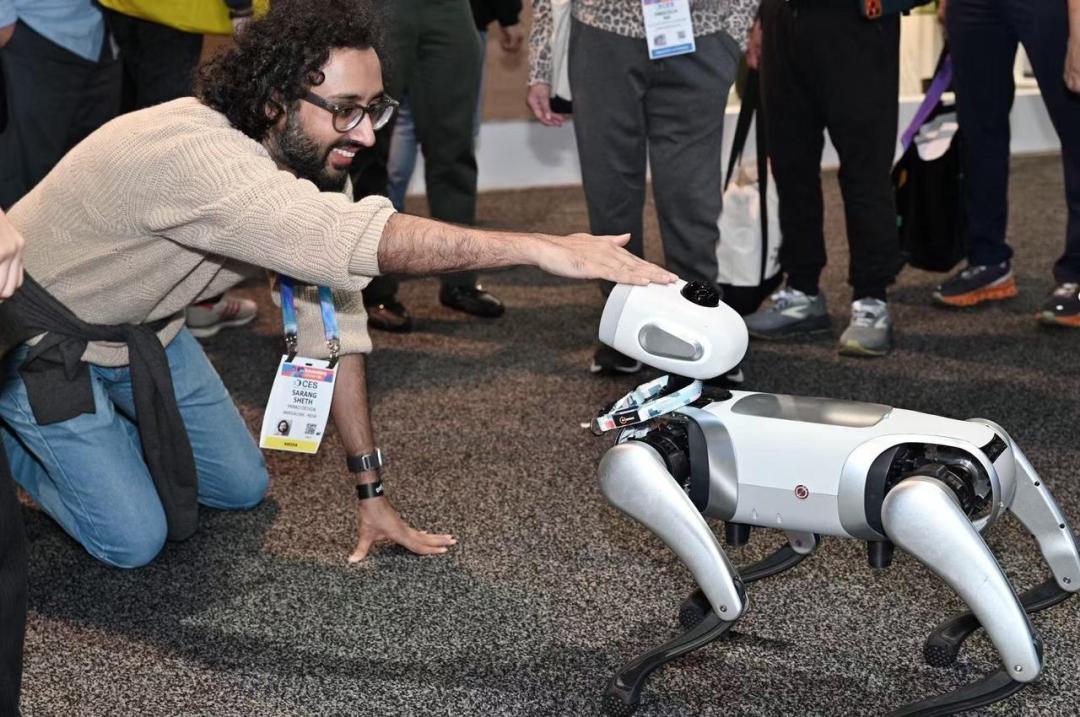
△ Audiences interact with Big Head BoBo
High costs and mismatched time differences
Participating in CES bears many goals for robot manufacturers, but the preparation behind it is not easy.
First of all, the "good locations" at CES need to be snatched. Manufacturers need to book and pay the venue fees one year in advance.
Two robot exhibitors participating in CES for the first time told Intelligent Emergence bluntly that since the exhibition areas they got this year were relatively remote, they planned to book and pay for the locations next year in advance after the exhibition. "But whether to actually participate next year is another matter."
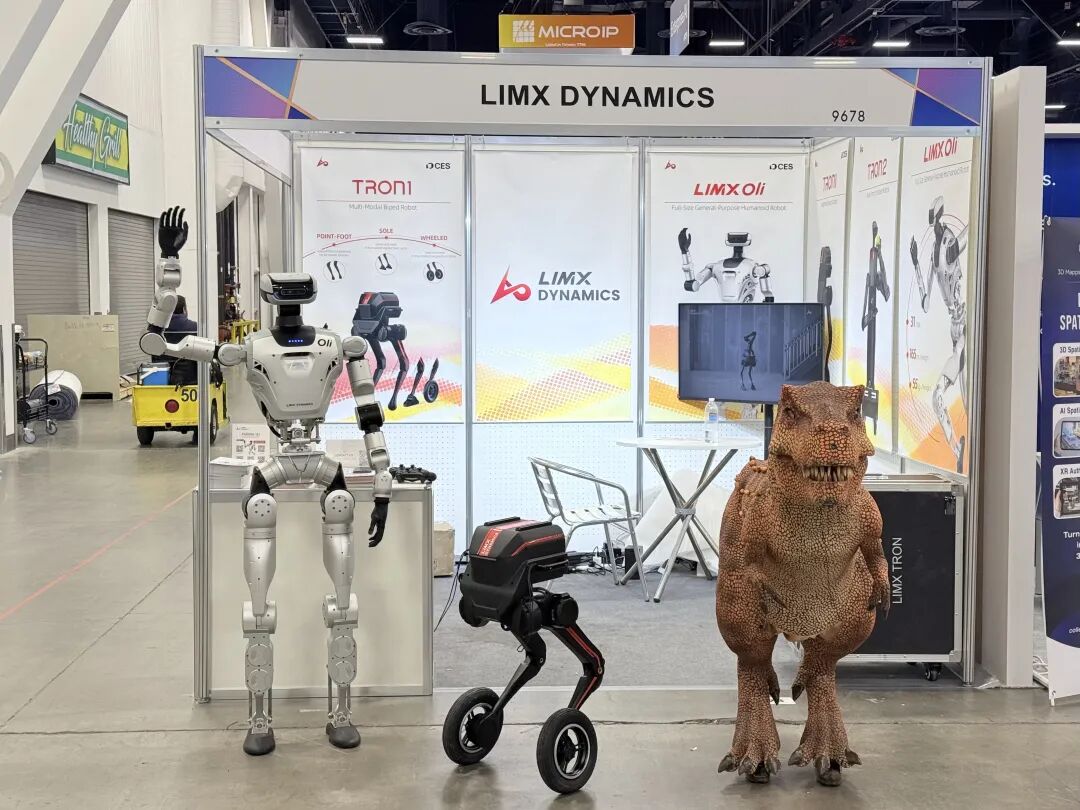
△ Zhujidongli exhibited the full - size humanoid robot LimX Oli
Secondly, the transportation of robots is much more time - consuming and labor - intensive than other consumer electronics categories.
According to Intelligent Emergence, the price of air - shipping humanoid robots is six times that of sea - shipping, so sea - shipping became the first choice for manufacturers this time.
It's hard to imagine that each humanoid robot you saw at CES this year took half a year to drift on the sea for a round - trip. Although most manufacturers only brought three or five robots, the sea - shipping cost will eventually account for 1/4 of the total exhibition cost.
Accumulating all these costs, it is not cheap for Chinese robot manufacturers to participate in CES once.
A staff member of a robot exhibitor told Intelligent Emergence that the booth cost plus the setup cost at CES is about four or five times that of the WRC (World Robot Conference) - and the booth at CES is only 1/5 of that at WRC.
In addition, the visa problems of R & D personnel are another major pain point for Chinese manufacturers participating in CES for the first time.
A special feature of robots is that behind the cool displays, there are often a large number of on - site technical adjustments, which require the support of R & D personnel.
Several robot exhibitors told Intelligent Emergence that due to the visa problems of many of their R & D personnel in the United States, only a small number of R & D personnel went to the front - line in the end, or they chose to let the domestic R & D personnel stand by online at any time.
Although Chinese robot manufacturers paid a high cost for their first appearance at CES, most of them really felt the huge time difference between "China's speed" and the "preparation cycle of overseas exhibitions".
A staff member on - site from Zhujidongli told us that the preparation cycle of CES usually lasts from half a year to one year, while the development of China's embodied intelligence industry progresses by "quarters" or even "months".
"We clearly feel that the exhibition planning speed overseas can no longer keep up with our latest R & D progress."
Cover source | Company official

end

end