Lei Jun confronts the controversy: Talks about the incident of "Mi Black KOLs" for the first time and calls on people not to stigmatize "marketing"
On January 7th, Lei Jun responded during a live - broadcast to the recent controversies arising from Xiaomi's cooperation with "Universal Bear" and various other controversial topics targeting Lei Jun and Xiaomi from the outside world.

Lei Jun stated that this penalty was a serious decision made after careful investigation and deliberate discussion among the management. This incident was not because the KOL criticized Xiaomi or offended Mi fans, but because the relevant KOL had been attacking and belittling Xiaomi users, and even cursing them, which Xiaomi cannot tolerate.
Lei Jun emphasized that protecting users is the bottom - line for enterprises. Xiaomi must firmly stand up to safeguard the interests of users and car owners and will never cooperate with KOLs who slander car owners. At the same time, Lei Jun admitted that the public relations department had deficiencies in handling this incident, and the company decided to criticize and punish it accordingly.
Lei Jun hoped that Mi fans could understand that the public relations department had been under long - term, continuous and high - intensity negative public opinion pressure in the past eight or nine months, which led to some deformities in their work. He hoped to give the public relations department a chance to correct their mistakes and called on Mi fans to remain rational and jointly maintain a good public opinion environment.
Lei Jun once said no to advertising, Xu Jieyun: The situation today is different from the past
In addition, Xu Jieyun, the general manager of Xiaomi Group's public relations department, also responded to the issue of "Lei Jun once said that Xiaomi would not do advertising promotion, but now it is doing relevant advertising".
Xu Jieyun said that more than a decade ago, Lei Jun did make a similar statement. At that time, Xiaomi was just starting up and mainly relied on engineers to communicate directly with users on communities and Weibo. There was no dedicated marketing or public relations department.
Today, the scale and business complexity of Xiaomi are far different from the past. From the early start - up stage to having 70,000 - 80,000 employees now, Xiaomi has gradually learned from its peers and established a marketing system during its development process.
Xu Jieyun emphasized that when discussing such issues, we should consider the background and objective situation at that time and cannot simply compare past and present practices.
Labeled as a "marketing master": Originated from Liu Qiangdong's remarks in a program
On January 7th, Lei Jun responded during the live - broadcast to the label of "marketing master" he was tagged with.

Lei Jun mentioned that this label originated from an entertainment program in 2013 or 2014. At that time, he and Liu Qiangdong led two teams to compete. In the program, Liu Qiangdong's team said "Don't compare marketing with Lei Jun" because Lei Jun could sell hundreds of thousands of mobile phones. After this statement was amplified, it was used by competitors as a means to attack Xiaomi. Lei Jun also said with a smile that he would have a good discussion with Liu Qiangdong if he had the chance.
Lei Jun pointed out that marketing itself is a professional field and a neutral term. Any company needs marketing, but attributing Xiaomi's success to marketing while ignoring the technical strength of its products is a one - sided and even malicious slander. He emphasized that Xiaomi's success comes from excellent products, not just marketing strategies.
Lei Jun even said that he would feel uncomfortable when hearing the word "marketing" now because this label has been maliciously used to mislead consumers. He called on marketing practitioners to respect this professional field and not stigmatize marketing.
In addition, during the live - broadcast, Lei Jun also joked that they might as well set the theme of the 2026 New Year's Eve speech as "marketing".
15 meetings for a cup? Xu Jieyun: At least 16 times
On January 7th, during Lei Jun's live - broadcast tonight, Lei Jun and Xu Jieyun, the general manager of Xiaomi Group's public relations department, also explained the issue of "15 meetings for a cup". Previously, Lei Jun said that Xiaomi had held 15 meetings for the design and development of this cup when introducing it. However, this statement was considered "exaggerated" by some netizens, and some bloggers even said that Lei Jun had a "lying personality and just made things up".
Xu Jieyun said that some people questioned that Xiaomi had held 15 meetings for a cup, thinking it was a bit exaggerated. However, after checking the meeting minutes, it showed that there were at least 16 meetings discussing the cup.
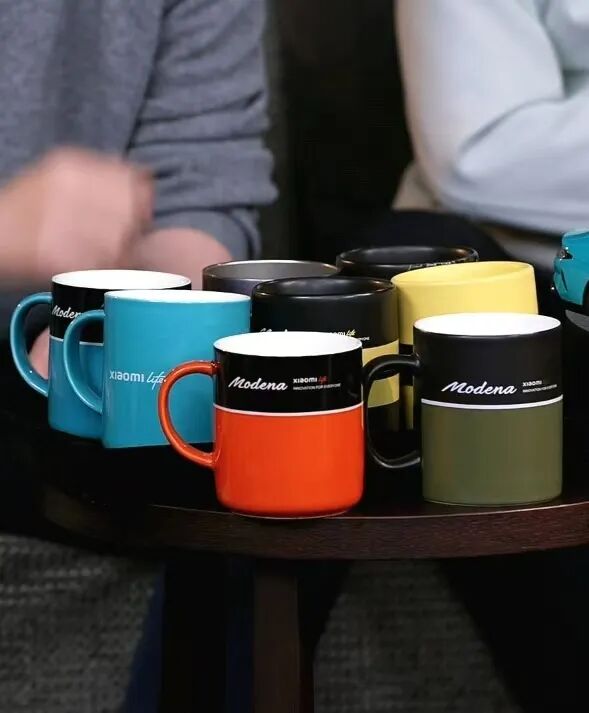
These meetings were not just about the cup but involved the development of a series of products. The cup was just a part of the content. He explained that the design of the cup was continuously optimized in multiple meetings, from the material to the color and then to the process, all of which were carefully polished. For example, the color of the cup was initially aligned with the car body color, and later the material was changed from porcelain to stainless steel to better restore the texture of the metallic paint.
Around the 13th meeting, the team decided to change the material to stainless steel and determined the final process through multiple tests. The two colors of the cup used the masking spray process, and the waistline and logo of the color - matching transition needed to be pasted by hand to enhance the three - dimensional sense of touch. It was this pursuit of details that required multiple meetings to polish a seemingly insignificant product.
Only one charge for 1300 kilometers? Lei Jun: Taken out of context
During tonight's live - broadcast, Lei Jun responded again to the controversy of "only one charge for 1300 kilometers". Lei Jun said that many people saw the clip of "only one charge for 1300 kilometers" on the short - video platform and questioned it as false marketing. However, this statement was taken out of context, leading to misunderstandings.
Lei Jun said that during a previous live - broadcast, after fully charging the standard version of Xiaomi YU7 and starting from Beijing to Shanghai, they only added power once in the middle and completed a 1300 - kilometer journey. This statement was clipped, and only "only one charge for 1300 kilometers" was left, causing some people to think that Lei Jun was exaggerating.
In fact, the CLTC range of the standard version of Xiaomi YU7 is 835 kilometers. As a pure - electric SUV, such a range is already very excellent in the industry. Especially on high - speed driving, being able to achieve only one charge for 1300 kilometers is outstanding among pure - electric SUVs.
Lei Jun also mentioned that the CLTC range of the new - generation SU7 Pro is even stronger, reaching 902 kilometers. Almost all drivers will not have range anxiety in daily use because even under actual driving conditions, the vehicle's range can meet most needs.
Lei Jun also introduced that CLTC is the automotive fuel consumption and power consumption test standard officially released by China and has been implemented since 2021. This standard is designed based on China's real road conditions and aims to uniformly measure the range of all vehicle models. Although in actual driving, due to factors such as vehicle configuration, weather, road conditions and vehicle speed, the range may vary slightly, Xiaomi cars perform excellently in terms of range retention rate and usually rank among the top in the industry.
Lei Jun called on everyone not to be affected by fragmented and misleading content when obtaining information. The complete statement and accurate information are the keys to judging product performance.
"Losing the wheel to protect the car" is a mature technology in the automotive industry
Lei Jun also talked about Xiaomi's "losing the wheel to protect the car" technology.

Lei Jun and relevant Xiaomi officials introduced that this technology is not simply the wheel falling off but an actively - designed safety strategy after rigorous design. Its core is to make the wheel swing and disengage from the vehicle body predictably after a collision through force transmission and unloading, so as to protect the safety of the passenger compartment.
In daily use, whether it is the impact of a curb or the bump on a potholed road, relevant tests have been completed in the test field. Even in the situation of quickly driving onto a curb when reversing, there are strict standards and test procedures. Not all collisions will cause the wheel to fall off. Only under specific working conditions, in order to better deal with the collision, the wheel will fall off as designed.
This technology is not an original creation of Xiaomi but a mature solution in the automotive industry. Although many people think it is Volvo's unique technology, according to industry communication information, Mercedes - Benz proposed a similar solution as early as 1959. Now, luxury car brands including Mercedes - Benz and Volvo have adopted similar designs.
In the era of electric vehicles, due to the large weight of the vehicle, ingenious design is needed to solve the technical problem of small - offset collisions. In the collision test system, in addition to 100% frontal collisions and 40% offset collisions, there are also 25% small - offset collisions. This kind of collision has a relatively high probability of occurring in the actual traffic environment, so the relevant technology is particularly important.
The "losing the wheel to protect the car" technology is not simply losing the wheel in a collision but a strategy adopted to reduce the risk of passenger compartment intrusion under specific working conditions. By setting weak areas at the steering tie - rod and steering knuckle positions, when the force exceeds a certain threshold, the wheel will fall off controllably to ensure the safety of the passenger compartment.
Lei Jun also pointed out that the "losing the wheel to protect the car" technology is a conventional safety technology solution for luxury models, and misunderstandings and doubts about it should be reduced in the future.
1.81 meters tall, once mispronounced "Xuanjie O1" as "Xuanjie zero - one"
Lei Jun also "admitted his mistake" during the live - broadcast.
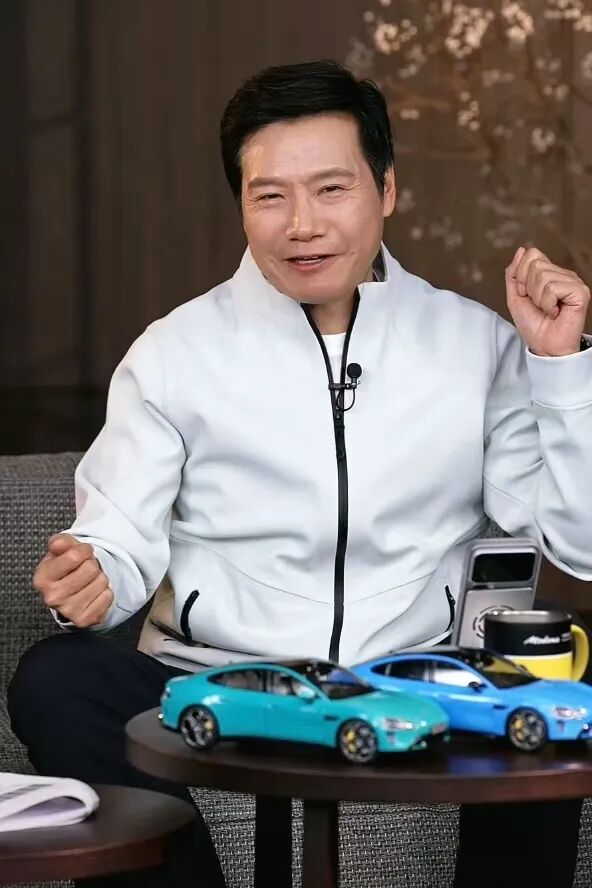
He said that he once said he was 1.81 meters tall at a previous press conference, but some netizens pointed out that he said he was 1.83 meters tall in the live - broadcast on January 3rd and questioned how his height could "increase". Lei Jun explained that it was a slip of the tongue. He re - measured and confirmed that his height was still 1.81 meters and apologized for it.
Lei Jun also detailed his serious slip of the tongue during an internal Xiaomi event in May this year. At that time, Xiaomi released its first chip "Xuanjie O1" with the internal code name "F1".
Lei Jun said that he specifically reminded himself that "O1" was easy to mispronounce when preparing his speech, but due to his poor state on stage, he still mispronounced it as "zero - one". He admitted it was his mistake and said that although he didn't want to go on stage at that time, he still insisted on finishing the speech to support the chip team.
Lei Jun said that he thought it was an internal meeting at that time, and it didn't matter if he said something wrong. But unexpectedly, a new employee posted the speech content on social media, which led to the wide spread of this slip of the tongue and some misunderstandings. He emphasized that this employee meant well but didn't really understand the company's confidentiality requirements. Lei Jun said that he was very angry at that time, but considering the employee's good intention, he didn't pursue the matter in the end.
Regarding the mistake of writing the price of the new Xiaomi SU7 wrong on Lei Jun's Weibo today, Lei Jun said that because he was very busy with work, most of the Weibo content was written during his breaks or in the gaps between meetings. Due to his busy schedule, there might be some typos or slips of the tongue. He promised to proofread more carefully in the future, especially when posting content related to complex or rigorous issues, and would be more cautious to reduce mistakes.
He also called on everyone to view these mistakes rationally, not to over - interpret or misunderstand his intentions, and said that he would work hard to improve and avoid similar situations from happening again.
This article is from the WeChat public account "Sanyan Finance" (ID: sycaijing), author: DorAemon. Republished by 36Kr with permission.