The affordable Leapmotor is sold at the price of Li Auto Plus.
Leapmotor, teetering on the brink of subsistence, has become a darling in the eyes of capital.
On January 6th, Leapmotor secured a new round of financing worth 3 billion yuan. The subscriber is Zhejiang Jinyi High - tech Industry Investment Group Co., Ltd., with a subscription price of 50.03 yuan per share (approximately HK$55.49), representing a 9.88% premium over the closing price of its H - shares on that day. Leapmotor's announcement shows that this additional issuance accounts for 3.85% of the total share capital, and the funds will be used for R & D, operations, and the expansion of the sales network.
Within just 10 days, Leapmotor has successively received two rounds of premium subscriptions. On December 28th, 2025, FAW Group invested 3.744 billion yuan in Leapmotor, acquiring approximately 5% of the equity and becoming the first central - state - owned enterprise to invest in a new - energy vehicle startup. The subscription valuation of approximately HK$83.5 billion is significantly higher than Leapmotor's market value of about HK$71 billion before the transaction.
On December 29th, affected by FAW Group's subscription, Leapmotor's share price soared by more than 6% at one point, reaching HK$53.5 per share. In the view of Zhu Jiangming, the founder and CEO of Leapmotor, with Stellantis as an overseas strategic shareholder and FAW Group as a traditional automaker shareholder, Leapmotor is building a stable triangular equity structure to cope with future market competition.
From all aspects, this seems to be a win - win deal. By investing in Leapmotor, FAW Group gains access to Leapmotor's crucial three - electric technology and product iteration experience. Meanwhile, Leapmotor receives both funds and a partner, transitioning from a vehicle manufacturer to a technology provider. Leapmotor's announcement shows that the total amount of funds from this additional issuance is 3.744 billion yuan, with half allocated to R & D, a quarter for supplementary operating funds, and a quarter for expanding the sales and service network.
However, in the following four trading days, Leapmotor's share price tumbled by more than 5%, and its market value shrank to about 68 billion yuan compared with that before FAW Group's subscription. An investor then sighed about Leapmotor's recent share price performance: "Is FAW's investment useless?" In the New Year's market, the continuous sharp rise of Leapmotor's share price that investors had anticipated did not materialize.
On the one hand, the performance of new - energy vehicle startups in the Hong Kong stock market during the New Year holiday was dismal. During the same period, NIO's share price dropped by about 3.6%, XPeng by about 3%, and Li Auto barely broke even. On the other hand, the market is not interested in Leapmotor's high - premium story. Although Leapmotor achieved a positive gross profit margin for the first time in the third quarter of last year and set a new delivery record, in the early stage of its high - end strategy, Leapmotor still faced huge profit pressure, with a cumulative loss of 2.821 billion yuan in 2024.
More importantly, in the long - term plans of FAW Group and Leapmotor, their cooperation means that Leapmotor will unleash its potential in the technology ecosystem. However, in the market's view, compared with the transformation of its identity, Leapmotor's more urgent tasks are high - end development and achieving profitability as soon as possible.
01 "Half - price Li Auto" Gets a 2.4 - fold Premium
Leapmotor, which lacks brand premium in the terminal market, has received multiple acquisition premiums in the capital market.
From the perspective of the price - to - sales ratio, FAW Group has offered Leapmotor a top - notch valuation among new - energy vehicle startups.
If we estimate the current market value based on the annual sales in 2024, the price - to - sales ratio of XPeng is about 3.6 times, Li Auto about 1 time, NIO about 1.4 times, and Leapmotor about 2.1 times. FAW Group's subscription valuation of Leapmotor is about 2.4 times. This means that Leapmotor, which is jokingly called "half - price Li Auto" in the terminal market, has received a valuation premium twice that of Li Auto in the secondary market.

This is not the first time Leapmotor has been bought at a premium. From a financial investment perspective, FAW Group, like Stellantis two years ago, paid a high price.
In October 2023, Stellantis invested approximately 1.5 billion euros in Leapmotor, acquiring about 20% of the equity and two board seats. This transaction consisted of two parts: new - share subscription and old - share transfer.
In the former, Stellantis subscribed for approximately 194 million new H - shares of Leapmotor at a price of HK$43.8 per share, representing an investment premium of about 19% compared with Leapmotor's previous closing price of HK$36.8. In the latter, Stellantis acquired 90 million shares of Leapmotor from Dahua Technology for HK$3.49 billion, with a per - share price of approximately HK$38.78, and an investment premium of about 5.4%.
Before FAW Group's investment, Leapmotor's market value was about HK$71 billion, and the subscription valuation of HK$83.5 billion represented a premium rate of 17.6%. Although FAW Group paid a lower premium rate, it paid a higher absolute price. The reason for such a high - premium acquisition is mainly due to the underperformance of its competitors and Leapmotor's hard work. Affected by events such as the recall of the MEGA, Li Auto returned to a loss in the third quarter of last year; NIO and XPeng were struggling to turn a profit; Leapmotor and Xiaomi were the only two new - energy vehicle startups with positive single - quarter profits.
However, this does not mean that Leapmotor has the best profit prospects for its main business. In the first half of 2025, Leapmotor reported an operating loss of 88.63 million yuan (i.e., gross profit minus R & D, administrative, and marketing expenses, which measures the profit level of the core main business and does not include government subsidies, investments, and other additional revenues). Although this was a significant reduction compared with the 2.4 billion yuan loss in the first half of 2024, it also indicates that the brand positioning of "half - price Li Auto" has not yet reached an inflection point.
The reason why Leapmotor achieved an overall net profit in the first half of the year is mainly due to two key sources of income: carbon - credit trading and technology licensing fees.
The former allows Leapmotor to sell the carbon credits obtained from selling new - energy vehicles to other automakers that need to offset their carbon emissions. The latter enables Leapmotor to earn fees when it opens up its technology platform, such as when FAW Group uses Leapmotor's B - platform.
This is also one of the reasons why FAW Group's investment in Leapmotor failed to reverse the latter's market valuation: the relevant cooperation benefits have already been reflected in Leapmotor's performance. To stage a comeback, Leapmotor still needs to sell more cars.
From a strategic investment perspective, FAW Group has acquired much - needed scarce resources. There were early signs of their intention to strengthen cooperation. As early as March this year, FAW Group signed a "Memorandum of Understanding on Strategic Cooperation" with Leapmotor. With the help of Leapmotor's B - platform, FAW Group has launched new - model development and plans to expand sales in overseas markets.
FAW Group's investment this time further strengthens their cooperation. According to the announcement, the two parties will further share resources and jointly promote the joint development and production coordination of plug - in hybrid and range - extended powertrains.
The cooperation on the B - platform is a typical example. In short, this is Leapmotor's new - generation pure - electric platform, which includes a complete three - electric system and intelligent technology solutions. It can meet the strict certification standards of overseas markets and shorten the new - vehicle development cycle to about 18 months, enabling the production of mature products in the shortest possible time. Leapmotor's best - selling models such as the B01 and B10 are representative products of the B - platform.
For FAW Group, which is trapped in the era of fuel vehicles, the B - platform is the much - needed transformation accelerator, which can help the group leapfrog the technology accumulation stage in the new - energy era and obtain a global entry ticket for new - energy vehicles. This investment is worthwhile.
02 Leapmotor, Emerging from Subsistence, Pursues Intelligent Driving for Prosperity
"When Leapmotor's first product, the S01, was launched, we didn't know how to sell cars. We didn't even conduct any market promotion. As a brand with no popularity, no one knew about us, so of course, we couldn't sell many cars. Coupled with the fact that people were confined to their homes at that time, I really didn't know what to do. What would happen to our company of thousands of employees if we couldn't make it?"
At Leapmotor's 10th - anniversary press conference, Zhu Jiangming, the founder of Leapmotor, excitedly recalled the company's entrepreneurial journey. From having no experience and groping in the dark to now having self - developed core components accounting for 65% of the vehicle's BOM cost, Leapmotor has a more significant cost advantage in vehicle production, firmly establishing itself as the "MIXUE Bingcheng of new - energy vehicles."
Official data shows that in 2025, Leapmotor delivered 596,600 vehicles, ranking first among new - energy vehicle startups, representing a year - on - year growth rate of 103%. Zhu Jiangming said that Leapmotor's long - term goal is to become a world - class automaker with an annual sales volume of 4 million vehicles, and the sales target for 2026 is 1 million vehicles.
However, Zhu Jiangming also mentioned: "We have just crossed the subsistence line and reached the break - even point. We have no time to rest."
One of the core issues is intelligent driving.
Compared with NIO, XPeng, and Li Auto, Leapmotor is clearly a latecomer. In 2025, when NIO, XPeng, and Li Auto had widely rolled out urban NOA, Leapmotor installed the Commuting Navigation Assistance Pilot (CNAP) on the B01 last year. Compared with the full - coverage mode of urban NOA on all urban roads, CNAP only covers a few fixed commuting routes of users. In other words, CNAP is just a transitional solution to improve the coverage of intelligent driving.
On the Leapmotor C10 and C11 launched last year, Leapmotor has installed intelligent driving functions such as high - speed navigation assistance and parking assistance. Cao Li, the vice - president of Leapmotor, said that Leapmotor is increasing its investment in assisted driving, and the team size has grown from more than 200 people last year to more than 500 people. It is expected that by the end of 2025, Leapmotor will launch the map - less urban navigation function, and in 2026, it will implement the end - to - end model in its vehicles.
However, according to public information, Leapmotor's progress has been slower than expected. As 2025 has passed, Leapmotor has not publicly launched its map - less urban navigation function.
The withdrawal of new - energy vehicle subsidies has also dealt a heavy blow to Leapmotor.
According to the new - energy vehicle subsidy policy in 2026, the previous fixed subsidy of 20,000 yuan for trading in an old vehicle for a new - energy vehicle has been adjusted to a subsidy of 12% of the new - vehicle price, with a maximum of 20,000 yuan.
In short, the new subsidy policy aims to promote consumption upgrading and encourage consumers to buy more high - priced new vehicles. The higher the price of the vehicle, the higher the subsidy. Only vehicles priced at about 166,700 yuan or above can receive the full subsidy.
For Leapmotor, whose main models are priced around 100,000 yuan, a consumer who trades in an old vehicle for a 100,000 - yuan Leapmotor B10 can now only receive a subsidy of 12,000 yuan, 8,000 yuan less than before. This directly undermines Leapmotor's price advantage.
This corresponds to Zhu Jiangming's speech at the 10th - anniversary press conference: "The window period for new - energy vehicles is only a few years... We must seize every second and strive for the next decade."
03 Can Leapmotor Go High - end in the Price War?
It was the C - series models that truly reversed Leapmotor's fortunes, taking it from the brink of collapse to the top of the new - energy vehicle startup sales rankings.
Previously, Leapmotor focused on niche markets such as sports cars. By entering the 150,000 - yuan SUV market, the C - series models unleashed Leapmotor's price - slashing potential. Public data shows that in 2024, the C - series models accounted for more than 76% of Leapmotor's total sales.

Leapmotor's approach is similar to MIXUE Bingcheng competing with HEYTEA and Nayuki: it equips 150,000 - yuan SUVs with configurations typically found in 300,000 - yuan vehicles, such as lidar and 800V high - voltage platforms. By offering Li Auto's configurations at BYD's prices, Leapmotor has earned the reputation of being the "half - price Li Auto."
To deal with the "Sword of Damocles" of the withdrawal of new - energy vehicle subsidies, Leapmotor has taken two steps in the domestic market: extreme cost control and accelerated high - end development.
For the former, Leapmotor's strategy is to conduct in - house research and development across the board. By refusing to outsource core components, the three - electric system, and the electronic and electrical architecture, Leapmotor can reduce costs.
For the latter, at the 10th - anniversary press conference, Leapmotor unveiled two high - end models in the D - series, the D19 and D99, an SUV and an MPV respectively, which are expected to be launched in the first quarter of this year. Following the success of the C - series, Leapmotor plans to offer vehicles priced between 250,000 and 300,000 yuan, with configurations comparable to those of luxury cars priced at 500,000 yuan.
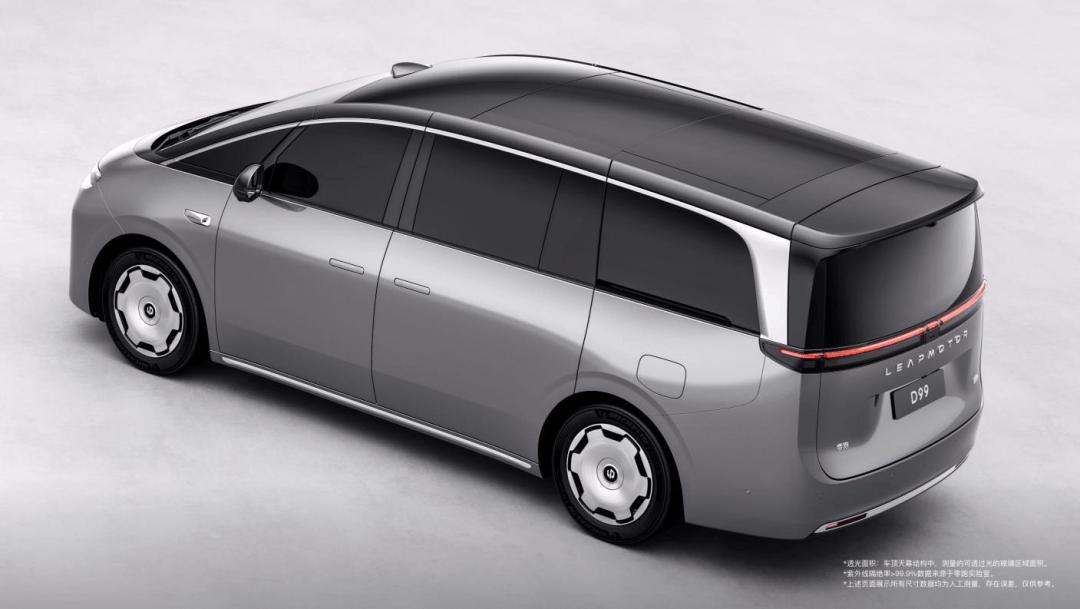
For example, the D19 is equipped with dual Qualcomm 8797 chips with top - level computing power, a large - model intelligent cockpit system on the edge side, and a VLA large - model assisted - driving system. In terms of range, the range - extended version is equipped with an 80.3 kWh battery, with a pure - electric range of more than 500 kilometers, and the pure - electric version can reach a range of 720 kilometers.
However, as the new - energy vehicle industry enters the second half, the mainstream trend in the industry is price reduction