It's rumored that another player is leaving the market. Why can't ASUS succeed in the mobile phone business?
On January 4th, market rumors emerged that ASUS would exit the mobile phone market and lay off its mobile phone department staff.
In response, the "Corporate Research Institute" of Phoenix.com Finance called ASUS' official customer service. The response was: "Currently, we haven't received such a notice. If you want to know other latest information, you can follow the news on the ASUS Mall or the official website."
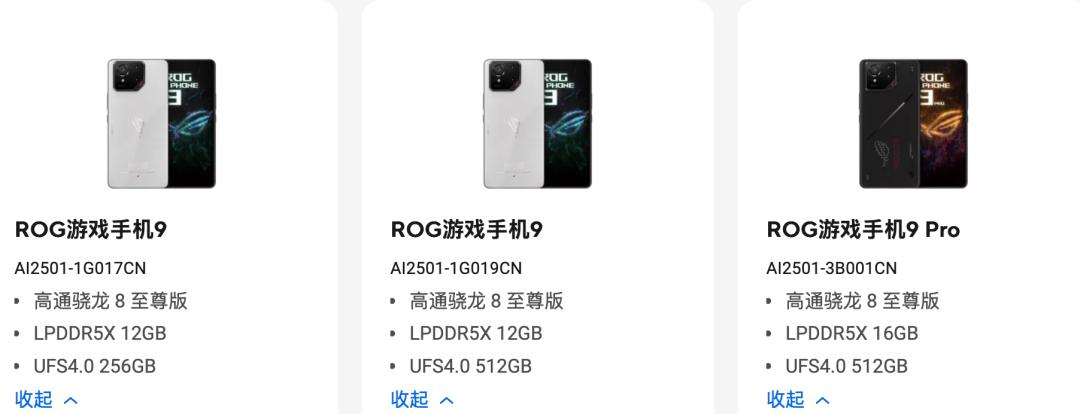
According to IT Home, ASUS confirmed to the media that there are no plans to launch new smartphones in 2026, but the operation of the mobile phone business unit remains unchanged. Additionally, an ASUS brand staff member responded to the "Corporate Research Institute" of Phoenix.com Finance: "I'm not clear about the mobile phone business."
(Image source: Official website)
01 Abandoning the Mobile Phone Business, Is ASUS "Ditching" the Burden?
ASUS entered the mobile phone field much earlier than the public's perception. As early as 2002, when the feature - phone era was on the rise, ASUS had already ventured into the mobile phone original design manufacturing (ODM) field, producing OEM products for European operators.
However, the profit from OEM was meager, and it was impossible to build brand recognition. ASUS, with the dream of creating a global consumer electronics brand, was not content to stay in the background.
At that time, the mobile phone industry in Taiwan, China, was becoming an important force driving the development of global mobile intelligent devices. With the rise of HTC, known as the "preacher of the contemporary mobile phone landscape" and an Android pioneer, ASUS and Acer, the two major PC giants, also entered the mobile phone market one after another.
In 2003, ASUS launched its first self - branded mobile phone, the J101. Because it could rotate gracefully like a swan when upright, users affectionately nicknamed it the "Swan Phone". Although it didn't cause a huge stir, it marked the beginning of ASUS' brand - building journey. The first truly significant attempt was in 2008 when ASUS acquired the smartphone business of Garmin, a global navigation giant, and launched the "Garmin - ASUS" joint brand, trying to enter the market with professional navigation as a differentiating selling point.
However, this cooperation was ill - timed. The smartphone revolution led by Apple's iPhone was changing the rules of the game with irresistible force, and devices focusing on a single function were quickly marginalized. Three years later, the cooperation ended without results, and ASUS paid its first hefty tuition fee.
After learning from the lessons, ASUS was determined to fully enter the smartphone market with a new look. In 2014, ASUS launched the ZenFone series with the slogan "Luxury for All", targeting high cost - performance. It tried to penetrate the thousand - yuan market with flagship configurations (for example, the ZenFone Max was priced at 1,299 yuan), and once created a craze in emerging markets such as India and Southeast Asia.
In December 2015, ASUS launched the Eagle Eye mobile phone with 3x optical zoom in Beijing. The trend of large - RAM phones initiated by the ZenFone 2, the "world's first 4GB RAM phone", was also very popular for a while. This was the closest ASUS mobile phones ever came to success.
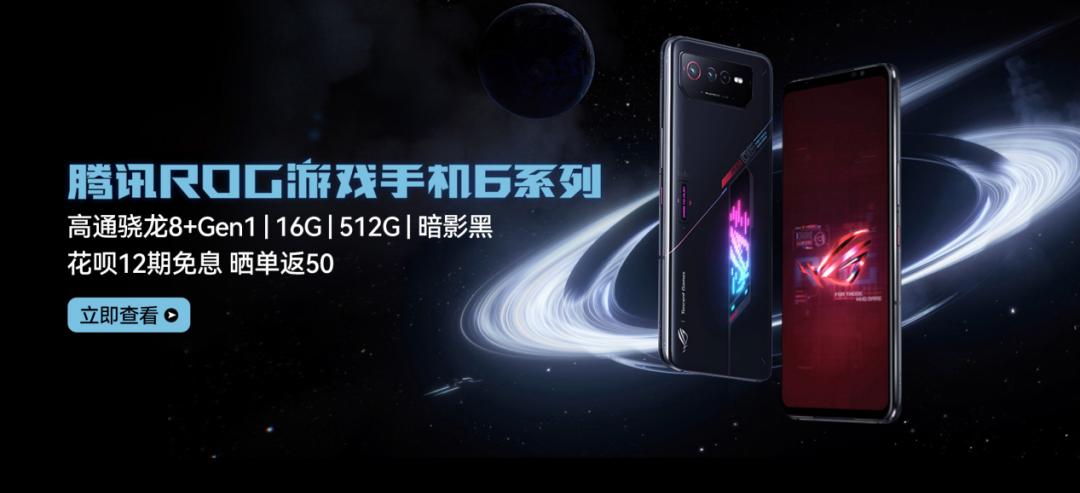
Meanwhile, ASUS keenly observed the rise of mobile e - sports. Relying on the profound reputation accumulated by "ROG (Republic of Gamers)" in the PC field, ASUS launched its first ROG gaming phone in 2017. This series of products was not only one of the pioneers in the gaming phone category but also successfully opened up a "small but beautiful" high - end niche market with its radical heat - dissipation design, high - refresh - rate screens, and rich accessory ecosystem. By then, ASUS mobile phones had established a dual - line strategy of using "ZenFone" to target the mainstream market and "ROG Phone" to defend the high - end market.
(Image source: Official website)
However, the good times didn't last long. After 2018, the smartphone market completely entered a brutal stage of competition for the existing market share. Chinese brands such as Huawei, Xiaomi, OPPO, and vivo demonstrated systematic combat capabilities in technology R & D, supply - chain management, channel penetration, and marketing investment; Apple and Samsung firmly held the profit and brand high - ground in the high - end market.
Against this background, ASUS mobile phones were caught in a dilemma: in the "cost - performance" battlefield, the ZenFone series had difficulty shaking the "mass - phone strategy" and extreme cost control of mainland brands; in the "innovation" battlefield, it couldn't invest R & D resources comparable to the giants in cutting - edge fields such as imaging and foldable screens. The product iteration rhythm slowed down, and its market influence became weak.
Even the well - reputed ROG series faced the natural ceiling of the gaming phone niche market. With the entry of brands such as Black Shark, Red Magic, and Lenovo Legion, the market became crowded. The high R & D and material costs corresponded to limited shipments, and its profitability was always under great test.
A staff member related to ASUS' motherboard and graphics card business revealed the current dilemma to the "Corporate Research Institute" of Phoenix.com Finance: "There were few actions in the mobile phone line in 2025. Currently, ASUS still focuses on the computer business, and the mobile phone shipments are relatively small. Affected by the rising upstream cost of storage chips, everyone is generally having a hard time."
Regarding the notice of price adjustment for ASUS computers and related hardware products issued by ASUS on January 5th, the above - mentioned employee pointed out that this means consumers will face price increases when buying ASUS computers and related hardware products. Regarding the future of the mobile phone business, the employee said: "There is no clear indication that it will exit the market for now; it's just a business adjustment. It is said that the mobile phone and handheld game console belong to the same business department. Currently, there are no plans for new mobile phone products, but the handheld game console (game machine) may continue to be produced."
02 The Major Retreat of the PC Giant's Mobile Phone Strategy
Founded in 1989, ASUS was once a representative of IT enterprises in Taiwan, China, and one of the three major giants among Taiwan's technology companies. Headquartered in Taipei City, Taiwan Province, China, it was jointly founded by four founders: Xu Shichang, Tong Zixian, Liao Minxiong, and Xie Weiqi. In 2006, ASUS officially entered the Fortune Global 500 with revenues of over 120 billion yuan.
As the world's largest motherboard manufacturer, its products cover laptops, graphics cards, servers, and peripheral devices, and it has three sub - brands: ROG (Republic of Gamers), ProArt, and Zenbook. As of October 2025, ASUS' cumulative revenue was approximately NT$602.311 billion (approximately RMB 138.411 billion), which was far lower than US$182.9 billion after conversion at the current exchange rate.
However, while its core PC business was booming, ASUS' mobile device department (mainly the mobile phone business) presented a sharp contrast: its revenue share was consistently less than 10% and it had been losing money for years, becoming a burden on the group's overall profitability.
The loss dilemma of ASUS' mobile phone business is not a new problem. As early as 2018, Chairman Shi Chongsong admitted the failure of the mobile phone business. That year's financial report showed a one - time loss of about NT$6.2 billion (about RMB 1.36 billion) due to the business restructuring. In the following years, the business still couldn't get out of the loss quagmire.
Although ASUS adjusted its strategy several times later, focusing on the two product lines of ROG gaming phones and Zenfone and trying to break through in the niche market, it still failed to achieve the profit target. The key strategic mistakes were the main internal reasons: during the golden period of smartphone development, ASUS wrongly adopted Intel's Atom processor and missed the market opportunity dominated by the ARM architecture due to compatibility issues; by the time it switched to Qualcomm processors, the cost - performance market had been occupied by brands such as Redmi and Honor, and the pattern of the mid - to - high - end market had also solidified. In addition, ASUS failed to effectively use its mature PC offline channels to promote mobile phones, resulting in weak market penetration and gradually being marginalized.
Therefore, rumors about ASUS exiting the mobile phone market have emerged from time to time. In the second half of 2023, there were rumors in the industry that the Zenfone 10 was the last model of the series, and ASUS denied it at that time.
In fact, relevant rumors resurfaced in the second half of 2025. Entering 2026, the external environment deteriorated sharply: the soaring prices of components pushed up the cost of mobile phones, and institutions such as Counterpoint and IDC generally lowered the shipment forecasts for the global and Chinese markets. More importantly, when storage - chip suppliers gave priority to allocating production capacity to the more profitable AI and server fields, it would further exacerbate the supply shortage and cost pressure of mobile phone memory, highlighting ASUS' weakness in the supply chain as a non - leading manufacturer.
Regarding the current situation of ASUS mobile phones, Zhang Yi, the CEO of iiMedia Research, analyzed to the "Corporate Research Institute" of Phoenix.com Finance that without the exit rumors, the public would have almost "forgotten" that ASUS had a mobile phone business.
In Zhang Yi's view, ASUS mobile phones are in an awkward position of "neither here nor there": the mainstream products lack cost - performance advantages, and although the ROG gaming phones are performance benchmarks, due to the small user base, it's difficult to get targeted adaptations from game manufacturers. With an extremely low market share, ASUS lost its scale advantage, and the procurement cost of core components soared, falling into a vicious cycle of "rising costs, difficult price increases, and long - term losses". Coupled with its negligible contribution to the group's revenue, the resource allocation was bound to be insufficient. Against this background, closing the mobile phone business is a wise and predictable result.
Against this background, ASUS is gradually focusing on its main business. The company has clearly set "Ubiquitous AI. Incredible Possibilities" as its core strategy and is comprehensively deploying in AIPC, cloud computing, and the intelligent ecosystem. At the same time, it plans to enter the production field of memory modules in the second quarter of 2026.
According to the latest data from the International Data Corporation (IDC), in the third quarter of 2025, the total global shipments of traditional personal computers (including desktops, laptops, and workstations) reached 75.9 million units, a 9.4% increase compared with the same period last year (69.3 million units). Among them, Lenovo ranked first in the global PC market share, and ASUS ranked fifth, with a lower market share than HP, Dell, and Apple.
Reference materials:
"Behind ASUS' Suspension of New Mobile Phones: Shrinking in the Loss Quagmire and Industry Downturn", Zhichi Observation
This article is from the WeChat public account "Phoenix.com Finance", author: Corporate Research Institute, published by 36Kr with authorization.