The "Immortality" Anti-Aging Experiments and Business Landscape of the "Blood-Transfusing Billionaires": An Exclusive Interview with Bryan Johnson
We are witnessing the first time in human history that someone has publicly challenged aging itself with extreme transparency and precise quantification. That person is Bryan Johnson.
He calls himself "the most precisely quantified person in the world," with "defeating death" as his life project. He tracks thousands of health data points daily; his home is equipped with various monitoring and treatment devices, and a team of doctors helps manage his health. These attempts once made his anti-aging cost up to $2 million per year. He says his metabolic health ranks in the top 1.5% among 18-year-olds; his internal inflammation index is 66% lower than that of an average 10-year-old child; according to his measurements, he has "pulled back" his biological aging rate by 31 years. Just five years ago, however, he was still struggling with obesity, systemic inflammation, and depression.

Recently, during Bryan's visit to China for the Don't Die summit, we not only experienced his anti-aging system on site but also had the opportunity to chat face-to-face with Bryan about his anti-aging career.
01 Bryan's Top Three Focused Physiological Indicators: Inflammation, Blood Pressure, and Cholesterol
Looking at Bryan's records on YouTube, you'll see someone who breaks down daily life into countless measurable steps: waking up at 4:30 AM, red light therapy (for scalp hair growth), light therapy lamp to adjust circadian rhythm, eating a healthy formula breakfast, strength training, sauna, red light treatment, shockwave therapy, entering a hyperbaric oxygen chamber to work while breathing oxygen, and finishing all meals by 11 AM.

On his website, he shares various health advice and self-experiment records, including more "radical" cutting-edge attempts: for example, using mesenchymal stem cell injections to repair damaged tissues and improve cell function, and using follistatin gene therapy to promote muscle growth and enhance exercise capacity.
It's important to emphasize that most of these cutting-edge anti-aging methods are still in the exploratory stage, with no sufficient large-scale, long-term clinical trials to confirm their effectiveness and safety. Bryan himself has admitted on various occasions that he treats himself as an experimental subject, tries cutting-edge therapies, and continuously adjusts his plan based on monitoring data.
These cutting-edge anti-aging attempts don't always yield positive results. Take Rapamycin as an example: it was originally an immunosuppressant drug, repeatedly proven to extend lifespan in various animal models, so it's regarded as one of the most promising anti-aging molecules. However, in Bryan's personal attempts, no clear positive benefits were observed; instead, he suffered from persistent oral ulcers, abnormal metabolic indicators, and increased heart rate. These changes gradually recovered after stopping the drug. Bryan says that several years of Rapamycin use may have actually accelerated his aging and increased his cancer risk.
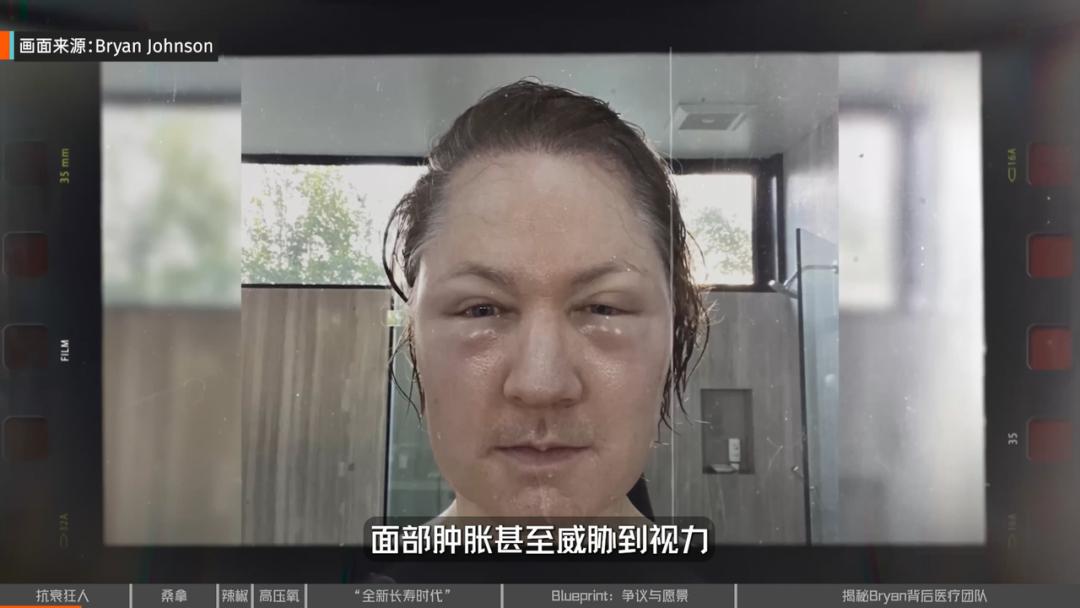
In addition, to improve facial aging signs caused by collagen loss, he received facial fat grafting from a donor but experienced a severe allergic reaction, with facial swelling even threatening his vision.
His well-known "blood transfusion" experiment—one of which used plasma from his son—after six attempts of 1L young plasma replacement each, no clear improvements were shown in related biomarkers, imaging tests, or device monitoring results.
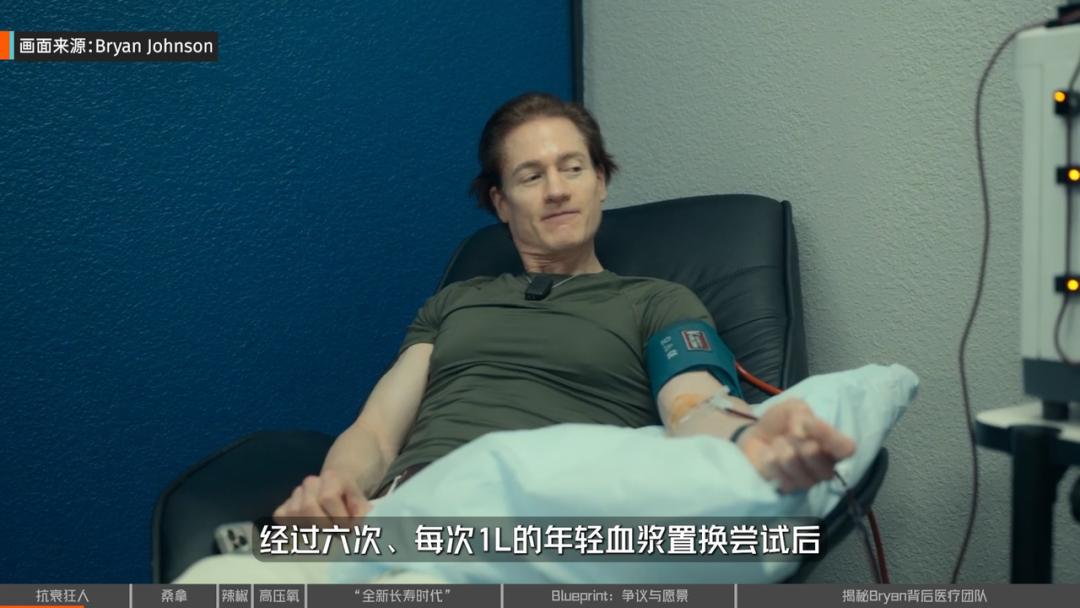
His unsuccessful attempts remind us again: cutting-edge anti-aging doesn't equal mature medicine. Before long-term safety and clear benefits are proven, blindly chasing "breakthrough therapies" is often more dangerous than aging itself.

Yushan:
If you had to choose the three most important physiological indicators for you, what would they be? And what methods would you recommend to actually improve these indicators?
Bryan Johnson:
Probably inflammation, blood pressure, and cholesterol.
For inflammation, I focus on hs-CRP, which reflects overall systemic inflammation levels and can be used to judge your body's general state. Of course, you can go more detailed and precise, but this indicator tells you at a macro level: is your body in an inflammatory and stressed state, or relatively healthy and functioning well?
Data Note: hs-CRP (high-sensitivity C-reactive protein) is a blood test indicator used to assess chronic inflammation levels and cardiovascular disease risks (such as coronary heart disease and stroke). Produced by the liver, it rises in the presence of inflammation.
As for cholesterol, it actually depends on how you measure it—you can do a very comprehensive test that includes particle size. You can do basic tests like total cholesterol and LDL; or go deeper to check indicators like Lp(a), particle size, and ApoB. This depends on how "solid" you want your test panel to be. Obviously, the more indicators you look at, the more complete the information.
Data Note: Cholesterol monitoring includes a series of blood indicators. Cholesterol is transported in the blood by lipoprotein particles, among which a class of particles responsible for delivering cholesterol from the liver/intestines to tissues (including VLDL, IDL, LDL, and Lp(a)) all carry a protein called ApoB. When these particles circulate in the blood, they repeatedly contact blood vessel walls; if their quantity remains high long-term, they are more likely to stay in vessel walls, trigger chronic inflammation, and gradually promote atherosclerosis. Therefore, compared to mere LDL or total cholesterol, ApoB more directly reflects the long-term "wear pressure" on blood vessels.
On this basis, particle size provides additional information: small, dense LDL are more likely to enter the vessel walls; Lp(a) is a special ApoB particle almost entirely determined by genetics—even with a very healthy lifestyle, its level may be high, significantly increasing lifelong cardiovascular risk. This is why Bryan pays special attention to ApoB, Lp(a), and particle characteristics beyond conventional total cholesterol and LDL.
For blood pressure, the most basic are systolic and diastolic pressure, plus central blood pressure and indicators like APX—a whole set around central blood pressure, about five related indicators. I measure blood pressure daily because we do therapies like sauna that have obvious effects on vascular function. Daily measurements let us observe how blood vessels respond when heated and dilated. For inflammation, I test every few weeks.
Data Note: Blood pressure is the most basic indicator of cardiovascular health. Common systolic and diastolic pressures reflect peripheral artery pressure (like in the arm) and are used to judge hypertension and basic heart load. Central blood pressure focuses on the real pressure near the heart and aorta, which is considered better at reflecting long-term heart pressure and vascular aging. Combining with AIx/APX (augmentation index) further assesses vascular elasticity and stiffness, helping detect early vascular hardening even if peripheral blood pressure is normal.
Yushan:
What methods can people use to improve these three key indicators?
Bryan Johnson:
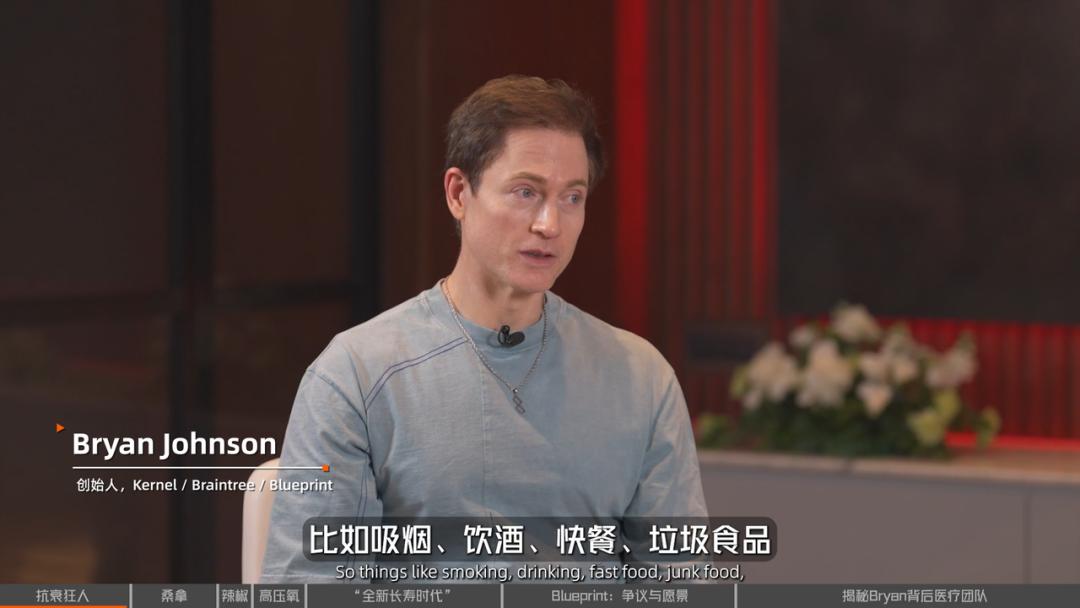
The simplest step is to first eliminate obvious harmful factors in life. Like smoking, drinking, fast food, junk food, sleep deprivation, fried foods—these are the easiest targets to start with.
Once you've basically solved these problems, you move to more detailed aspects like air quality, food toxins, and stress. These all have impacts.
So there are some "low-hanging fruits" at first—things you already know to avoid; later, it's more about fine-tuning and optimizing.
02 Sauna, Spicy Food, and Hyperbaric Oxygen: Experimental Therapies to "Break Through Ceilings"
Yushan:
You've described some of your more experimental therapies as "breaking through ceilings." I'm curious—what exactly do you mean by that? And how do you choose which therapies are worth trying and exploring?
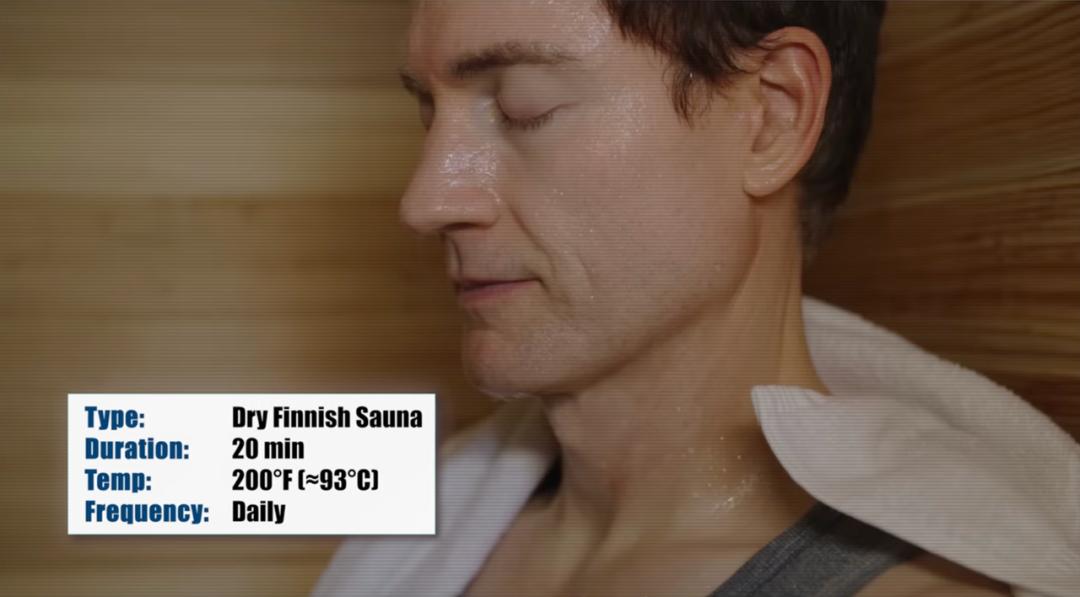
Image Source: Bryan Johnson
Bryan Johnson:
For example, we just completed a sauna intervention. If you ask most health experts about sauna benefits, they usually mention vascular function improvements like better endothelial function—blood vessels dilate, blood flow increases, and heat shock proteins are released. These proteins patrol the body, clearing "junk" proteins like "missiles" on a cleanup mission.
But what we did was what I believe is the most comprehensively measured sauna experiment in history. We looked not just at vascular function but also at other indicators like microplastics—testing both blood and semen. We focused on this because a previous Chinese study found that 100% of male samples had microplastics in their testes and semen. This is not good, as microplastics negatively affect testosterone levels, fertility, and cause a chain of effects. Given that global male fertility has dropped by about 50% in the past 50 years, tracing the source becomes crucial.
Therefore, in this sauna experiment, we specifically measured a question no one had systematically studied before—whether saunas change microplastic levels in the body. The results showed that my microplastic levels dropped by 87%. So we keep making new discoveries because we combine different therapies with systematic measurements. This gives us insights not found in existing scientific literature.
Yushan:
What might be the mechanism behind saunas helping clear or reduce microplastics?
Bryan Johnson:
We don't know. Here's how it works: we usually enter an experiment with a "wide net." In a recent experiment, we tested 249 biomarkers—almost everything: brain, heart, lungs, gut microbiota, eyes—then see what happens.
In this process, there are sometimes false positives—apparent effects that aren't real, requiring further verification. But the value of this approach is that we build intuition about which directions are worth focusing on. Once we make an observation like saunas reducing microplastics, others can follow up with more rigorous methods—this is the ideal scenario.
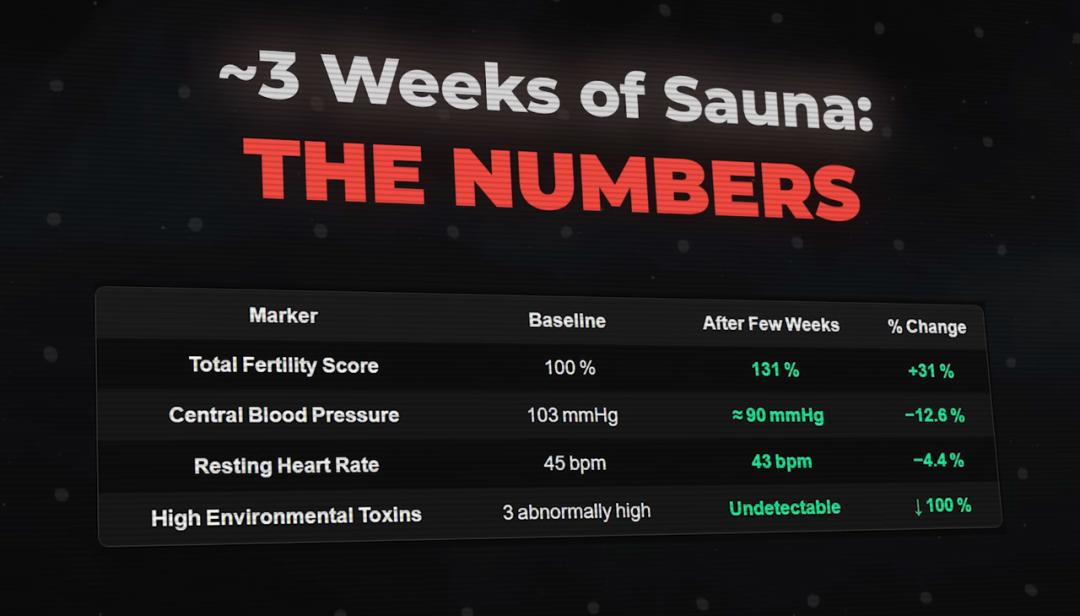
Image Source: Bryan Johnson
Yushan:
How many sauna sessions or how long per session did it take to achieve this effect?
Bryan Johnson:
Less than 30 sessions. We also observed significant drops in environmental toxins—about 15 types tested, which dropped noticeably after 15 sessions. Then we did more sessions to observe microplastics, also finding vascular function improvements.
We also did an experiment showing that men need to cool their groin area; otherwise, high temperatures have negative effects, possibly reducing fertility-related indicators by about 50%. Worse, many men say they don't care because they don't plan to have children, but high temperatures also negatively affect testosterone, hormone systems, and other key processes. So again, many people know saunas are "generally good" but don't realize it requires dry sauna conditions plus groin cooling to work on toxins, microplastics, and vascular function. We integrated all these variables to form the most comprehensive understanding of saunas to date.
Yushan:
Are you trying any new therapies now? What are your plans for the next 3-5 months?
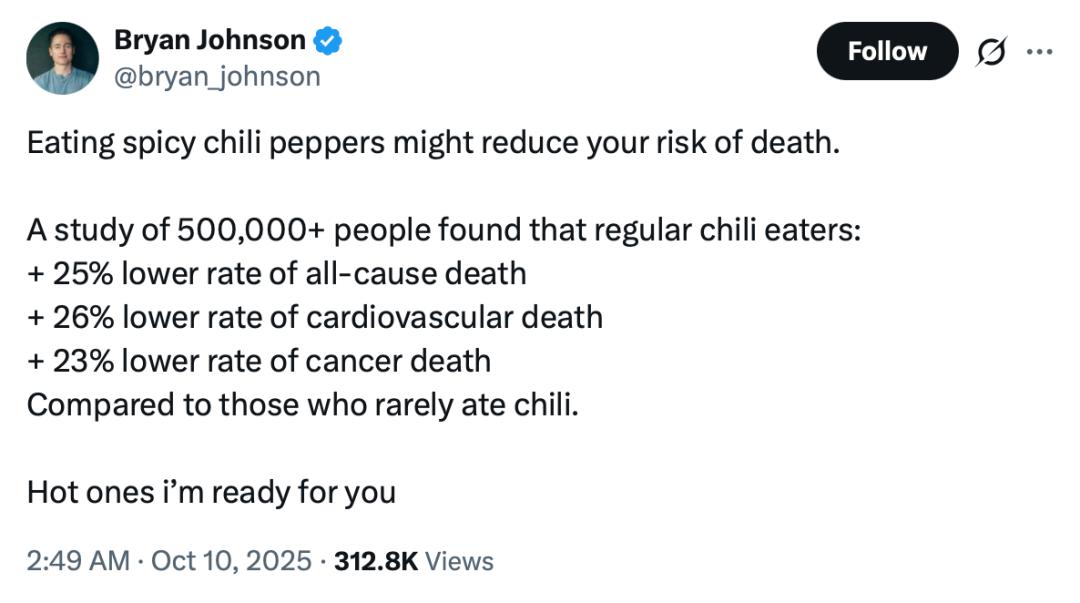
Image Source: Bryan Johnson
Bryan Johnson:
We're planning an interesting therapy now: eating spicy food.
We found evidence that spices have multiple positive health effects. So we've been screening specific spicy molecules, doing lab tests to find those suitable for use with low toxicity. We'll start trying this in the next month or two. Surprisingly, these spicy components show interesting effects in slowing aging and even repairing some aging damage. Of course, we need to continue observing. We often have this experience in research—truly valuable discoveries are often hidden in unexpected corners. Like saunas, maybe the key is which spice, what dose, and how long. This is an interesting direction.
Yushan:
Common knowledge says spicy food may increase inflammation and cause acne