The world is scrambling to buy Chinese transformers.
"A year ago, the world was short of chips. Next, it will be transformers."
Elon Musk's prediction at the Bosch Connected World Conference in 2024 is coming true. With the sharp increase in global power demand, transformers are now in short supply.
Europe plans to invest 584 billion euros to expand its power grid, but the progress is slow due to the shortage of transformers.
Large - scale solar projects in India are forced to sit idle, waiting for enough transformers.
The supply gap of power transformers and distribution transformers in the United States has increased by 116% and 41% respectively compared with 2019. The demand has exploded, but the supply cannot keep up.
The US technology circle has issued a warning: "The shortage of transformers is dragging down power infrastructure construction and will significantly restrict the development speed of artificial intelligence in the United States."
If there are beneficiaries in this global transformer crisis, the biggest one is China, which accounts for 60% of the world's transformer production capacity. Interestingly, the United States previously imposed a 104% tariff on Chinese transformers, but now it has quietly relaxed the control of Chinese transformers.
Chinese Manufacturers with Bursting Orders
New production capacity is booked up before it even comes into existence. Leading Chinese transformer manufacturers are experiencing a peak of "bursting orders".
Chengdu XD Zhongte Electric Co., Ltd. said that after completing the order deliveries for Sweden and Saudi Arabia, it will immediately start producing equipment for export to Canada and Indonesia.
The order schedules of many Chinese manufacturers have been postponed to after 2026. Some European customers are willing to pay a 20% premium to ensure the supply. Currently, the average export price of Chinese transformers has increased to about $20,800 per unit.
From January to August 2025, the export value of Chinese transformers soared to 29.711 billion yuan. Among them, exports to Asia increased by 65.39%, to Africa by 28.03%, and to Europe even skyrocketed by more than 138%.
Why is there such a shortage of transformers?
To understand the reason, we need to know what a transformer is. It is like a "voltage regulator" of the power grid, responsible for adjusting the voltage level. From mobile phone chargers that convert 220V to 5V to ultra - high - voltage converter transformers weighing hundreds of tons, such equipment is everywhere in the power network, just like the heart of the power system.
This round of transformer shortage is first because European and American countries are facing a "major overhaul" of their power systems.
A report by Goldman Sachs in September 2025 pointed out that most power grid facilities in Europe have been in operation for 40 - 50 years. Data from Bank of America also shows that 31% of transmission equipment and 46% of distribution facilities in the United States are already overdue for service.
Therefore, the EU plans to invest 1.2 trillion euros to upgrade the power grid in ten years, and the United States will invest 1.1 trillion dollars in the power industry in five years. Naturally, transformers are a major part of these significant investments.
On the other hand, the rapid rise of new industries has exacerbated the demand for transformers. The power consumption of ChatGPT's large - model training for three days is enough for 3,000 Tesla cars to travel a cumulative distance of 320,000 kilometers. A medium - sized data center newly built by Meta requires hundreds of step - down transformers.
In addition, as the world promotes green and low - carbon development, countries need to build a large number of green energy power plants such as photovoltaic, wind, and hydropower plants. These power plants require far more transformers than traditional power plants such as thermal power plants. For example, the demand for a photovoltaic power plant is 1.8 times that of a thermal power plant of the same scale.
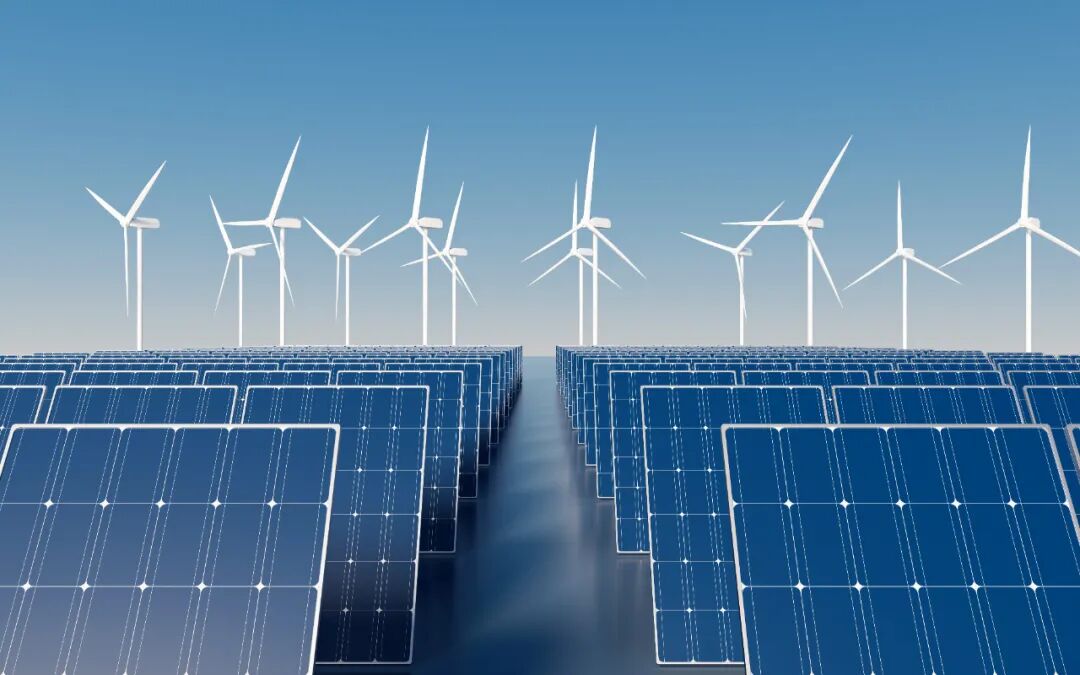
Boosted by multiple factors, the global shortage of transformers is inevitable. The international energy industry analysis institution "Allied Market" predicts that the global transformer market size will reach 103 billion dollars in 2031, doubling compared with 58.6 billion dollars in 2021.
Facing such huge dividends, global power giants have entered the market. From capital acquisitions to industrial integration, they are striving to seize market shares:
German Siemens Energy announced an investment of 2 billion euros to expand production.
Japanese Hitachi Energy plans to invest 6 billion dollars to expand production by 2027 and recruit 15,000 employees.
French Schneider Electric, despite the opposition within the EU, announced the construction of a transformer factory in Samara, Russia.
Even Elon Musk publicly admitted that Tesla will produce transformers independently...
As the main force, China has already assembled a luxurious team in the transformer industry.
The China Electrical Equipment Group, established in 2021, has integrated established players such as China XD Group, Baobian Electric, and Shandong Electric Power Equipment Co., Ltd., creating the "strongest national team".
Among them, China XD Group, as the leading enterprise in ultra - high - voltage, is involved in every major project written into the national strategy. Baobian Electric has advantages in high - voltage and large - capacity equipment, and its products have been exported to more than 40 countries and regions.
The private enterprise camp is also very strong: Xinjiang Tebian Electric Apparatus Stock Co., Ltd., which has long topped the list of the top 100 Chinese electrical industry enterprises, has an annual output of 420 million kVA of transformers and reactors, ranking among the top in the world. Jiangsu Huapeng Power Co., Ltd. was once selected as one of the top ten transformer brands in North America and is the only Chinese enterprise on the list, with the world's largest export volume in the field of new - energy power transformers. Foshan Eagler Electric Co., Ltd. ranks first in the world in step - up transformers used in photovoltaic and energy - storage fields...
This construction of the industrial echelon not only enables China to control 60% of the world's transformer production capacity but also forms the ability to cover the entire industrial chain from raw materials to finished products.
For example, grain - oriented silicon steel, the core material of transformers, can reduce the power consumption of transformers by 45% - 50% and is known as the "craftsman's work in steel".
China leads the world in this key material. In 2024, China's production of grain - oriented silicon steel reached 3.0325 million tons, five times that of Japan and eight times that of the United States.
More impressively, Baosteel Group has built the world's only dedicated production line for silicon steel sheets with thicknesses of 0.18mm and 0.20mm, which can control the material angle error within 4.5 degrees, making its performance top - notch.
From Dilemma to Leadership
It has not been easy for China's transformer industry to achieve today's results. In the 1980s, China's transformer field was deeply trapped in a situation of being "controlled by others".
At that time, China was building the 500 - kV Ge - Nan DC power transmission project, a super - project starting from Hubei in the west and reaching Shanghai in the east, which carried the mission of connecting the energy arteries between central and eastern China.
However, at that time, China was in a stage of "no technology, no equipment, and no experience" in the field of 500 - kV ultra - high - voltage direct current.
This dilemma meant that this project had to rely on foreign countries, and almost all the core equipment had to be imported from countries such as Japan, Germany, and Sweden.
Old power workers recalled the situation at that time with emotion: "Every time we followed foreign experts to learn how to debug, at the critical moment, they always asked us to leave."
When building the cross - river line of the Xu - Hu line, some countries even "cheated" the Chinese with outdated solutions.
Old power workers at that time could tell more or less such frustrating stories.
In September 1985, Zhu Yinghao, then the deputy chief engineer of Shenyang Transformer Factory, led a team to take on a major task at Gezhouba Power Plant, responsible for developing a 500 - kV, 360 - MVA three - phase on - load tap - changing autotransformer.
Zhu Yinghao's team worked day and night and finally made a breakthrough. However, there was a widespread lack of confidence in domestic equipment at that time. Gezhouba Power Plant made two - hand preparations and also ordered the same type of transformer from Japan, planning to use the Japanese equipment as the "main player" and the domestic equipment as the "substitute".
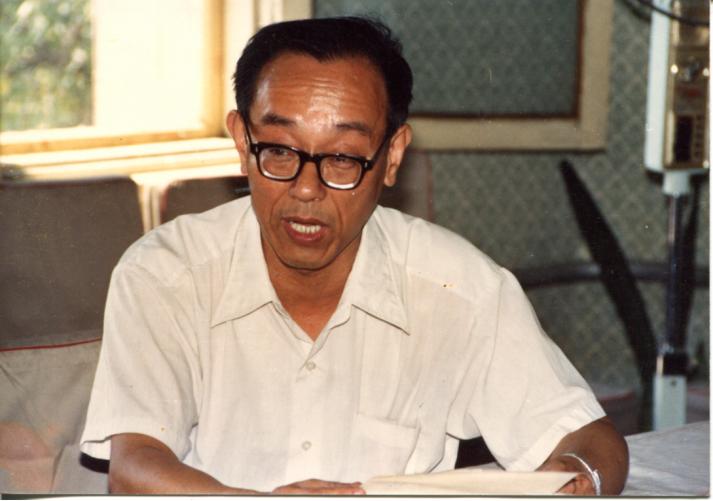
Source: China Scientists Museum
In June 1986, Zhu Yinghao's team delivered the equipment on time and it was successfully debugged on - site at the first attempt, while the Japanese side was late in delivery. Unexpectedly, the Japanese transformer broke down and was scrapped within 10 minutes of operation. The "Made in China" product, originally the "substitute", was called into action and became the "fire - fighter".
This moment became a historical turning point for the localization breakthrough of high - end transformers in China.
Since then, although international giants still erected strong barriers, Chinese engineers have realized that this is no longer an insurmountable mountain.
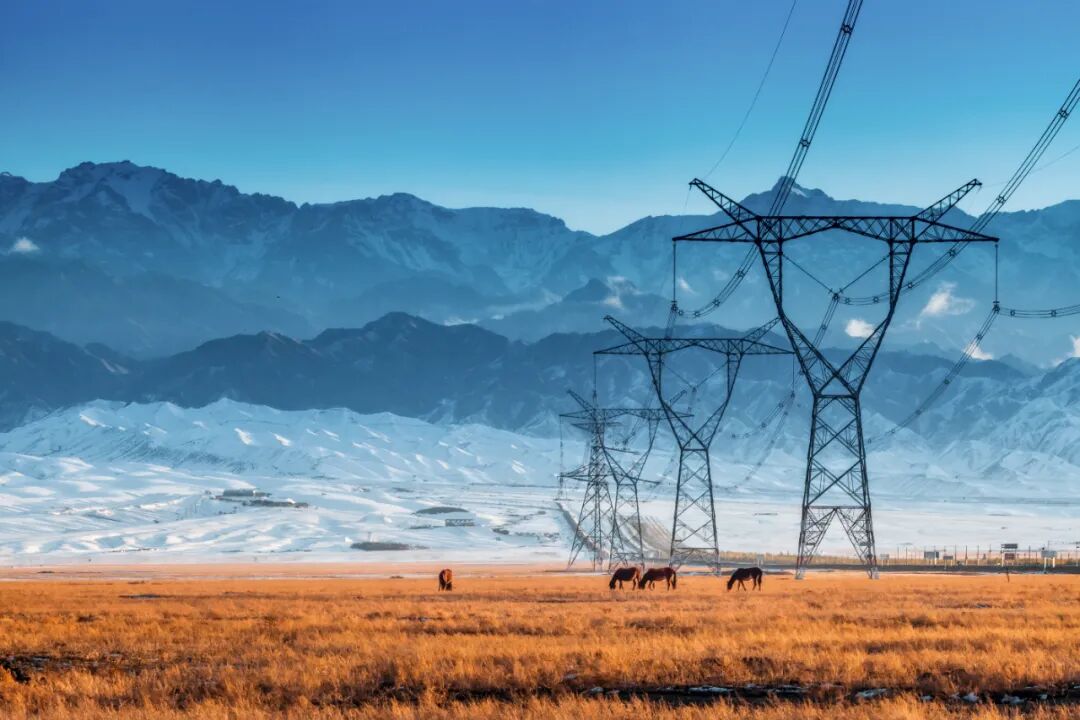
In 2005, China put forward an epic and great idea: transmitting electricity from the west to the east. The plan is to build a "power skyway" stretching thousands of miles between the energy - rich west and the economically developed east.
However, the practical challenges are severe. During the long - distance power transmission, the current, like water flow, will encounter resistance and be continuously consumed along the way. Even a 1% power loss means a huge waste.
For every increase in voltage level, the loss will be correspondingly reduced. Therefore, to achieve long - distance, large - capacity, and low - loss power transmission, the solution is to increase the voltage to over 1000 kV AC or ± 800 kV DC.
However, a sudden leap to the ultra - high - voltage field not only means that the volume of the transformer will increase to several stories high but also means that a series of technical problems need to be solved. Europe and the United States studied 1000 - kV ultra - high - voltage in the 1970s, and the Soviet Union even tried to build a 1150 - kV test line, but they all had to give up due to too many difficulties and bottlenecks.
For example, the insulation problem inside ultra - high - voltage transformers. The United States once tried to use a special ceramic as an insulating material, but the resulting transformer weighed 7000 tons. It was difficult not only to operate stably but also to transport, so the research had to be terminated.
Facing the same insulation dilemma, Chinese scientists did not give up research. After years of research, they discovered a material called "inter - turn insulating paper". This material can not only significantly improve the insulation performance but also reduce the weight of the transformer from 7000 tons to 500 tons.
Inside this "big guy", there are as many as 250,000 paper - based insulating material accessories, and the degree of fineness is amazing.
In 2025, the total mileage of China's ultra - high - voltage direct - current lines exceeded 40,000 kilometers. In the blink of an eye, electricity from Changji in Xinjiang has been transmitted to Guquan in Anhui, 3300 kilometers away, 30 times! The idea of transmitting electricity from the west to the east has become a reality.
The Power Empire
The localization breakthrough of transformers is just a microcosm of China's rise in the power industry.
In November 2025, China became the first country in history to have a trade surplus exceeding one trillion US dollars. In the power field, there is also a "trillion" milestone in China: in July 2025, the power generation exceeded one trillion kilowatt - hours, equivalent to the annual power consumption of Japan in a single month. British media exclaimed: The first "power empire" in human history has been born.
It should be noted that in 1949, each Chinese person could only get 9 kilowatt - hours of electricity per year, less than the consumption of an ordinary family today in two days.
In 1978, although the per - capita annual power consumption in China increased to 261 kilowatt - hours, it was only 1/6 of the world average.
On December 23, 2015, Guomang Village in Qinghai and Changjiang Village in Yushu were connected to the power grid, and the last 39,800 people in China were electrified.
As of now, China is still the only country in the world to achieve universal electrification.
India, also a populous country, still has hundreds of millions of people without stable power supply. Even developed countries in Europe and America are still troubled by power black - swan events.
Not long ago, a large - scale power outage occurred in San Francisco, the United States, paralyzing the transportation system and affecting about 130,000 users.
In May 2025, a large - scale power outage in Spain and Portugal affected more than 50 million people, becoming one of the largest power outages in European history.
When China achieved universal electrification for ten years, universal, stable, and cheap power is still an "impossible trinity" for countries around the world.
There is a popular question on the foreign Quora website: "Does China really have 24 - hour power supply throughout the year?"
A foreign friend who has lived in China for five years shared: "I have been to many places in China, including fourth - and fifth - tier cities and rural areas. When chatting with local residents, I found that no one could remember the last time there was a power outage. It's amazing!"
Today, when there is a power outage, Chinese residents' first reaction is to check the circuit breaker or the electricity bill balance, and they will never question the power supply capacity of the grid.
This change in perception stems from the qualitative change in China's power industry.
Looking at the global power generation change curve, we can see that China's power generation has risen vertically like a rocket, while the growth in Europe and America has almost stagnated. Currently, China ranks first in the world in annual power generation, and its power consumption accounts for one - third of the world's total power consumption.
China is not only the overall champion but also leads in every sub - field.
With limited plain areas and steep mountains, we developed hydropower. Three of the world's top five hydropower stations are in China. Among them, the Three Gorges Hydropower Station has the world's largest installed capacity, and the under - construction hydropower project in the lower reaches of the Yarlung Zangbo River is three times the size of the Three Gorges.
Due to the vast territory and difficult power transmission, we developed ultra - high - voltage technology, with 45 ultra - high - voltage projects crisscrossing