Boast the most, suffer the most: The list of technological disappointments in 2025 is out. Why did these products start strong but end weakly?
Some time ago, Lei Technology announced its annual "Beacon Products." The devices representing the industry's top standards won applause and recognition. However, there are shadows even under the beacon. The history of the tech circle has always been written by both success and trial - and - error. So, after reviewing the glorious achievements, the editorial department of Lei Technology conducted multiple rounds of intense internal discussions and voting, and finally selected this "Annual Disappointment List."
These products may not be bad, but they have an obvious gap with external expectations, or they seem too mediocre or even regressive compared to their predecessors. This list is not intended to deny these products but to urge everyone to pay more attention to the reasons for their failure and learn lessons to make better products.
After all, only by seeing the pits under your feet can you walk more steadily on the future road, just as the old saying goes: "Failure is the mother of success."
Sora 2: Born with a silver spoon, but over - exerted
Image source: OpenAI
As a large - scale video model under OpenAI, Sora 2 has attracted much attention since its release. OpenAI not only made AI - generated videos more realistic but also more user - friendly. Users can modify and control details, and it even supports embedding dialogues and sound effects.
However, OpenAI apparently underestimated the demand for video generation from users. With the surge in the number of users, the daily generation quota of Sora 2 was significantly reduced, and the quality of the generated videos was inconsistent. Some users complained that free members only had 6 generation opportunities a day, and 5 of them might produce useless videos.
On the other hand, the realistic AI videos combined with Sora 2's early abstract review mechanism (only blocking violent, pornographic, etc. content) led users to generate a large number of AI videos of celebrities and post them online, causing a global outcry against AI videos. Later, OpenAI urgently adjusted the review mechanism, but it was difficult to regain the lost reputation.
Moreover, as Sora 2 further tightened the quotas for free and Plus paid members, lowered the video - generation quality, and frequently changed user rights, many users began to switch to other AI video platforms. According to the statistics of the third - party app market monitoring platform SensorTower, the 30 - day user retention rate of Sora 2 was less than 1%, and the 60 - day retention rate was close to 0.
Although this does not fully represent the user retention rate of Sora 2, it is sufficient to show that OpenAI made major mistakes in the release and operation of Sora 2. In addition, as Gemini challenged ChatGPT, OpenAI also chose to shift most of its resources to improving the GPT model and postponed secondary projects such as Sora 2.
As a large - scale AI model, Sora 2 is not a failure. Its generation effect in full - power mode is amazing enough for users. However, from a market perspective, it has undoubtedly "taught the entire industry a lesson," reminding everyone that before releasing a large - scale AI model, they must consider many issues such as cost, computing resources, the number of users, and content compliance. Otherwise, even with strong capabilities, it will fail.
Humane AI Pin: Boast the most, suffer the most
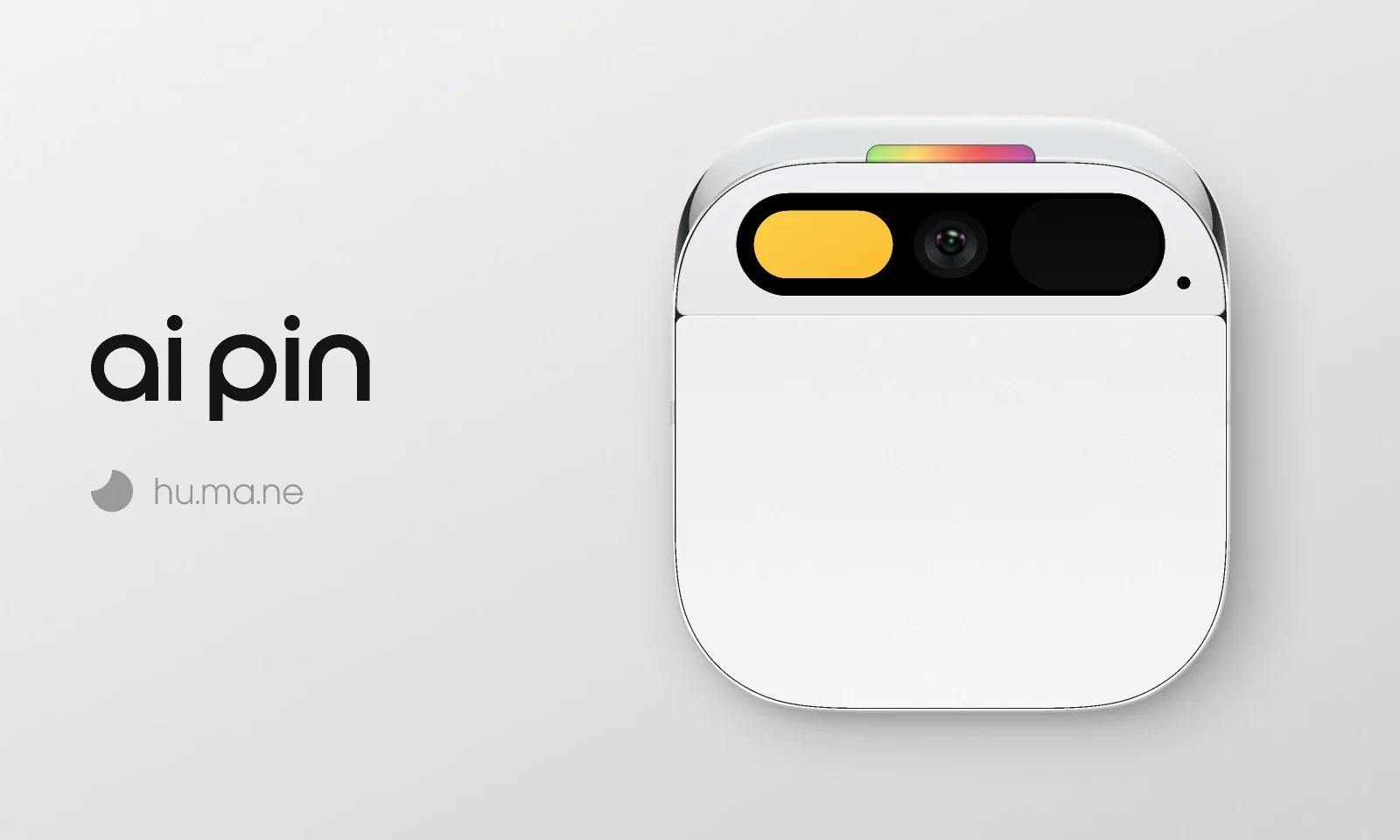
Image source: Humane
Humane AI Pin, a product that was highly touted as soon as it was released. Some regarded it as the "next - generation terminal" to replace the iPhone, and some thought it would be a milestone in AI hardware. However, when we actually got this product, we found that the so - called AI terminal was just a simple network terminal with a microphone, a speaker, and a projector. It was useless once the network was slow or disconnected.
According to the feedback from actual users, AI Pin takes several seconds or even more than ten seconds to answer a simple question like "What's the weather like today?" Moreover, the experience of Humane's self - developed Cosmos OS operating system was a disaster. In the early days of its release, users couldn't even set alarms or timers, which was obviously unacceptable for a product that claims to "replace the iPhone."
The much - anticipated projection function became the biggest pain point in the actual experience. Problems such as low brightness making it difficult to use outdoors, significant reduction in battery life and severe overheating during projection, and poor projection clarity made many users turn off the projection function later and only rely on voice interaction.
However, these are not all the problems of AI Pin. As a product priced at up to $699, users need to pay a monthly subscription fee of $24 to use all functions. The additional cost for a year reaches $288, exceeding most users' expectations.
Although Humane initially promised to upgrade the experience of AI Pin in 2025 and continue to maintain AI services, we soon witnessed the end of this product. It shut down services, sold assets, and declared bankruptcy, becoming one of the first fallen star products in the AI hardware market.
After AI Pin, the Rabbit R1 released at the same time also faced difficulties. There were rumors of salary arrears and layoffs at Rabbit. Relatively speaking, the Rabbit R1 still has a chance of being saved, while the AI Pin is completely finished. These two AI products have also served as a wake - up call for the entire AI hardware market: Don't think that you can replace a mature intelligent ecosystem with a "comprehensive" product right from the start. The possibility of success is almost zero, and you will often end up failing in all aspects and even making the product experience a complete disaster.
Windows Recall: Making "time" traceable but becoming a privacy bomb
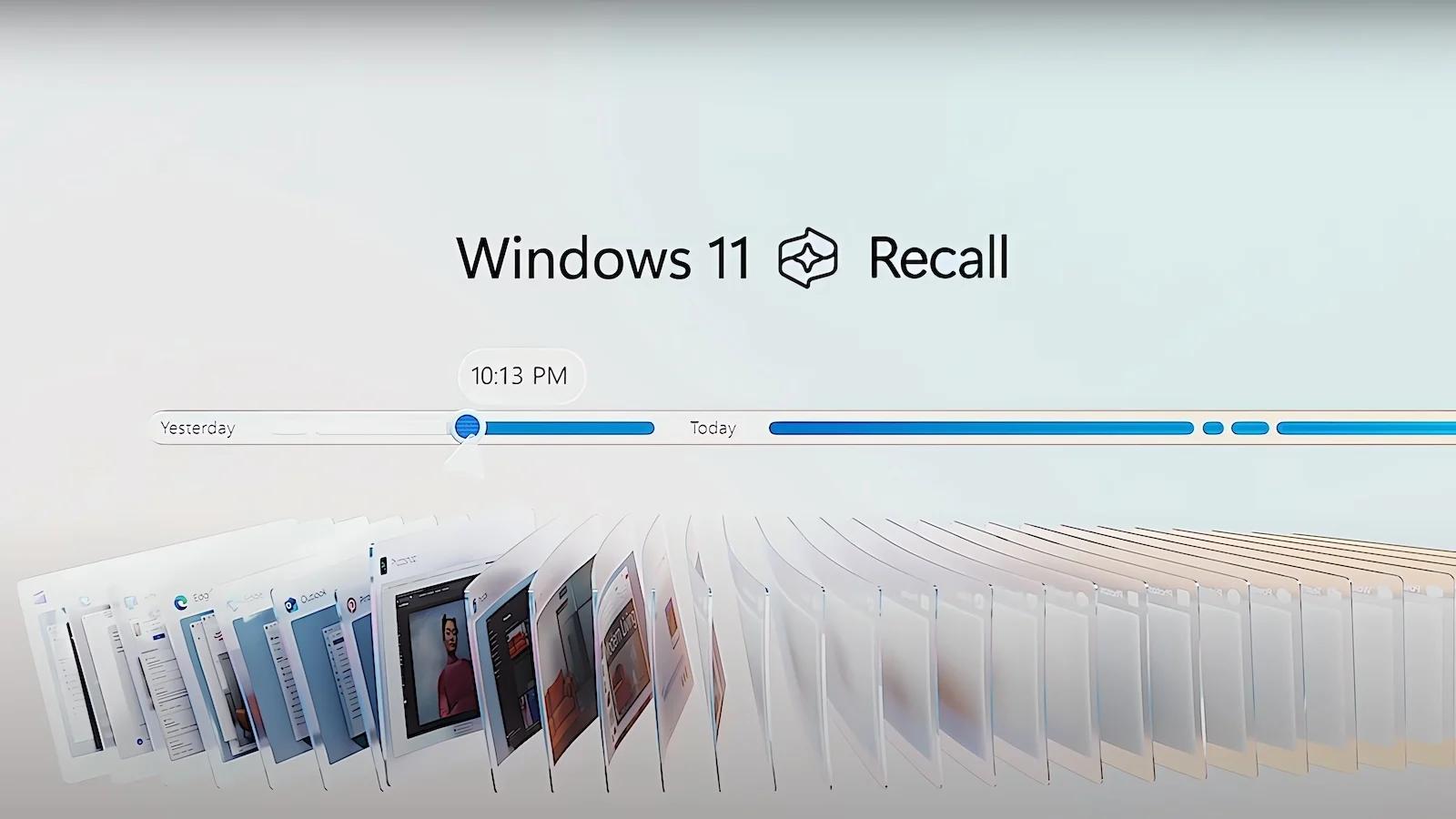
Image source: Microsoft
The Recall function is the most significant and controversial feature module that Microsoft has updated in the Windows system in recent years. The function of Recall is simple: it can help users "recall" web pages they have visited and software interfaces they have opened. Its underlying logic is that the system saves a "desktop snapshot" at regular intervals, and then users can find the pages they want by dragging the timeline or using natural language.
For example, one day, Xiaolei suddenly wanted to find a web page he saw last week. Since he didn't bookmark it and forgot the website URL, and it was troublesome to search the browsing history, he could use Recall at this time. He only needed to provide information such as the general content and UI design of the web page, and the AI could find the corresponding page from the history and bring it back in front of him.
Does it seem useful? In fact, after experiencing it for a month, Xiaolei found that in most cases, he didn't need to use Recall to find lost web pages. Whether it was the browsing history of shopping websites or the built - in history search function of the browser, they could cover more than 90% of the search scenarios. There was no need to specifically use a software to recall the past.
Moreover, Recall is not as simple as "taking a screenshot." To fully restore past pages, it saves a lot of information during operation, including a lot of privacy - related data (such as credit card information and private chats). Although Microsoft claims that they will establish a perfect security mechanism, considering the security issues of Windows itself, this promise seems unreliable.
Therefore, Recall didn't officially enter the release stage until 2025, and even so, it caused a strong reaction from users. Many users demanded that Microsoft provide a tool to delete Recall to ensure that their privacy would not be "stolen." However, this is not the worst. Some security researchers found that the data of Recall could be extracted by third - parties, which further increased users' distrust of this function.
In the view of Lei Technology, the biggest problem with Recall is that the benefits do not match the costs. Users sacrifice their precious privacy and security for a "recall" function that they don't know when they will use. It is a typical case where the granularity of developers and users is completely misaligned.
Galaxy XR: A fellow sufferer with Apple Vision Pro
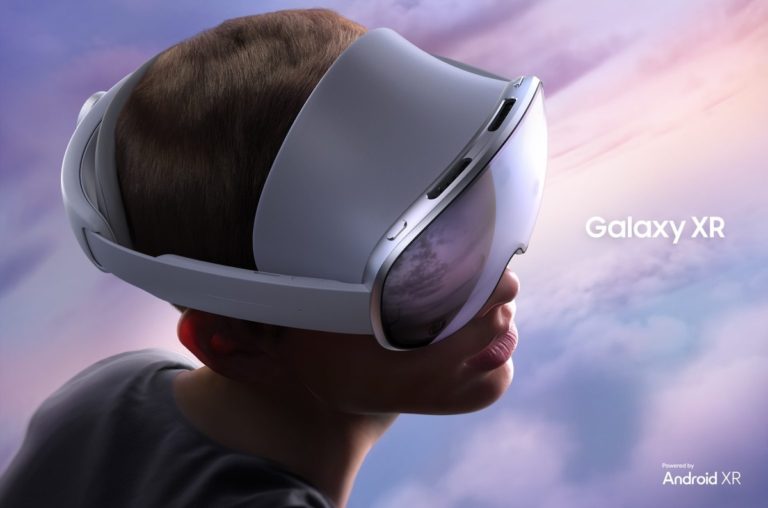
Image source: Samsung
Galaxy XR is one of Samsung's most important new products this year. It was highly anticipated as Samsung's trump card to enter the XR market. In terms of configuration, Galaxy XR is indeed amazing. It is equipped with Qualcomm's latest Snapdragon XR2+ Gen 2 platform and dual 4K Micro - OLED displays, supporting VR/AR hybrid mode and AI functions. Its parameters are directly comparable to those of Vision Pro. However, after its actual release, users who bought the first batch all gave feedback that the experience was "unsatisfactory."
First, there is the wearing problem. The main body of Galaxy XR weighs about 545 grams. Although it is lighter than Vision Pro, due to the lack of a head - strap for fixation, it was criticized for being "uncomfortable to wear firmly." Moreover, Galaxy XR also uses a battery pack for power supply, and the battery pack weighs 302 grams. It is acceptable to put it on the table, but it may be a bit heavy to put in the pocket.
In addition, some users reported that Galaxy XR had optical design problems. Even with short - term use, it would cause obvious eye fatigue and discomfort. According to the analysis of some review bloggers, the reason may be that Galaxy XR shortened the commonly used focal plane in the industry (a comfortable focusing distance for the human eye) from 1.2 - 1.8 meters to 0.9 meters. Although this can bring a stronger sense of immersion, it also causes the eyes to frequently focus when viewing "distant images," leading to discomfort.
However, what really disappointed users was the software ecosystem problem. This difficult problem that even Apple couldn't solve became the biggest obstacle for Galaxy XR. Apart from the lack of killer XR/AR applications, Samsung couldn't even migrate the main functions of One UI to the XR system. The experience was still limited to simple office work, browsing 3D high - definition maps, and watching movies.
As a product that is the first to be equipped with the Android XR system, it is really difficult for Galaxy XR to convince people that it is a product comparable to Vision Pro. Users' disappointment with it is not due to a single shortcoming but the result of a series of problems from hardware to software.
As a flagship product positioned as the "benchmark for Android XR," apart from having stronger performance and display effects, it hardly solves any other problems. The release of Galaxy XR only tells the market that the XR ecosystem is far from mature. However, Lei Technology also believes that the era of XR will eventually come.
Fujifilm X Half: Users want "retro feeling," not a "retro machine"

Image source: Fujifilm
Why are Fujifilm cameras so popular? Because of their unique film - like filters, Fujifilm colors, and the retro appearance that has been maintained until today, they have become the favorites of many street photographers and female users. Even when many mirrorless camera manufacturers are competing in terms of focusing speed and other parameters, Fujifilm can still hold its ground.
However, the Fujifilm X Half shows us the result when a company is too "arrogant." As a digital camera released by Fujifilm this year, the Fujifilm X Half features "what you see is what you get." Its compact body weighing 240 grams is easy to carry around, and it has built - in many popular Fujifilm filters such as film simulation.
Although the sensor size of the Fujifilm X Half is only 1 inch, and it can only use the standard 32mm f/2.8 fixed - focal - length lens (yes, it does not support optical zoom), if the price is right, many users are willing to use it as a "street - shooting tool." Unfortunately, Fujifilm priced it at 4,999 yuan, and the overseas price is $849, which is enough to buy an entry - level mirrorless camera.
Since its experience is not as good as that of a real mirrorless camera, what are the selling points of the Fujifilm X Half? At present, it seems that the only selling point is portability. Moreover, because Fujifilm is too obsessed with "retro," it even "cut off" the RAW format output, making it less useful than a mobile phone in the eyes of professional users. Its focusing speed is also very slow and unreliable, and it has been criticized as being even worse than manual focusing.
Fujifilm mistook the "retro feeling" that users pursue for a "retro experience." In 2025, it released a product at the level of 2005, and the price can buy a proper mirrorless camera. Even the most loyal Fujifilm camera fans find it difficult to convince themselves to pay such a high premium for "emotional value."
This has also led to the Fujifilm X Half becoming the Fujifilm camera with the fastest - falling second - hand price. Currently, you can easily buy a 99% new Fujifilm X Half on the second - hand platform at 50% of the original price, which is also the general market recognition of its value.
The reason for the failure of the Fujifilm X Half is simple. It neither understood the users' needs nor recognized its own product positioning. As a retro digital camera, it does have certain advantages in this unique field. However, when we expand the selection range, we will find that there are countless better products, which is what users are most dissatisfied with.
"One - on - one" AI learning machines: AI hallucinations make the "teacher" a joke
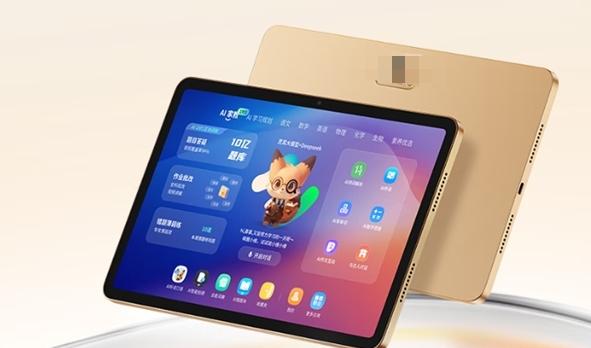
Image source: Weibo
Since the state explicitly prohibited profit - making tutoring classes for the K9 stage, AI learning machines have become a "life - saving straw" for many parents, especially those high - end AI learning machines. They claim to be able to provide "one - on - one" tutoring for students, teaching students in accordance with