Sage die größten Blödsinn und erleide die härtesten Schläge: Die Liste der größten technologischen Enttäuschungen 2025 ist veröffentlicht. Warum haben diese Produkte so stark nachgelassen?
Some time ago, Lei Technology introduced the annual "Beacon Products". The devices, which represent the top level of the industry, have received applause and recognition. However, there are also shadows under the beacon. The history of the tech scene is always written jointly by success and failures. Therefore, after several intensive internal discussions and votes, the editorial office of Lei Technology finally compiled this "Annual List of Disappointments".
These products may not be bad, but there is a clear difference between the public's expectations and the actual performance. Or they seem too mediocre compared to their predecessors or have even regressed. This list is not intended to negate the products but to encourage the industry to pay more attention to the reasons for the products' failures and learn from them to develop better products.
After all, as the old saying goes, "Failure is the mother of success." One can only be sure when one recognizes the pits under one's feet.
Sora 2: Born with a silver spoon in its mouth but over - exerted
Image source: OpenAI
As a major video model from OpenAI, Sora 2 has attracted a lot of attention since its release. OpenAI has not only made AI videos more realistic but also facilitated their use. Users can change and control details and even incorporate dialogues and sound effects.
However, OpenAI obviously underestimated the users' demand for video generation. With the sharp increase in the number of users, the daily generation quota of Sora 2 was drastically reduced, and the quality of the generated videos fluctuated greatly. Some users complained that free members only have six generation attempts per day, and five of them may be useless.
On the other hand, the realistic - looking AI videos and Sora 2's initial abstract moderation system (only blocking content - related problems such as violence and pornography) have led users to create and publish a large number of AI videos featuring celebrities on the Internet. This has triggered a global debate about AI videos. Later, OpenAI urgently adjusted the moderation system, but it was difficult to restore the lost reputation.
In addition, Sora 2 further restricted the quotas for free and Plus members, reduced the quality of the generated videos, and frequently changed the user rights. Many users have therefore switched to other AI video platforms. According to the statistics of the third - party app market monitoring platform SensorTower, the 30 - day user retention rate of Sora 2 is below 1%, and the 60 - day retention rate is almost zero.
Although this does not fully reflect the user retention of Sora 2, it shows that OpenAI made serious mistakes in the release and operation of Sora 2. Moreover, in the face of the challenge of Gemini to ChatGPT, OpenAI has shifted most of its resources to improving the GPT model and postponed the development of Sora 2 and other secondary projects.
As a major AI model, Sora 2 is not a failure. The full - scale generation quality can impress users. But from a market perspective, it has "taught the entire industry a lesson" and pointed out that many factors such as costs, computing power, the number of users, and content compliance must be considered before releasing a major AI model. Otherwise, it can fail even with high performance.
Humane AI Pin: The biggest promises, the hardest blows
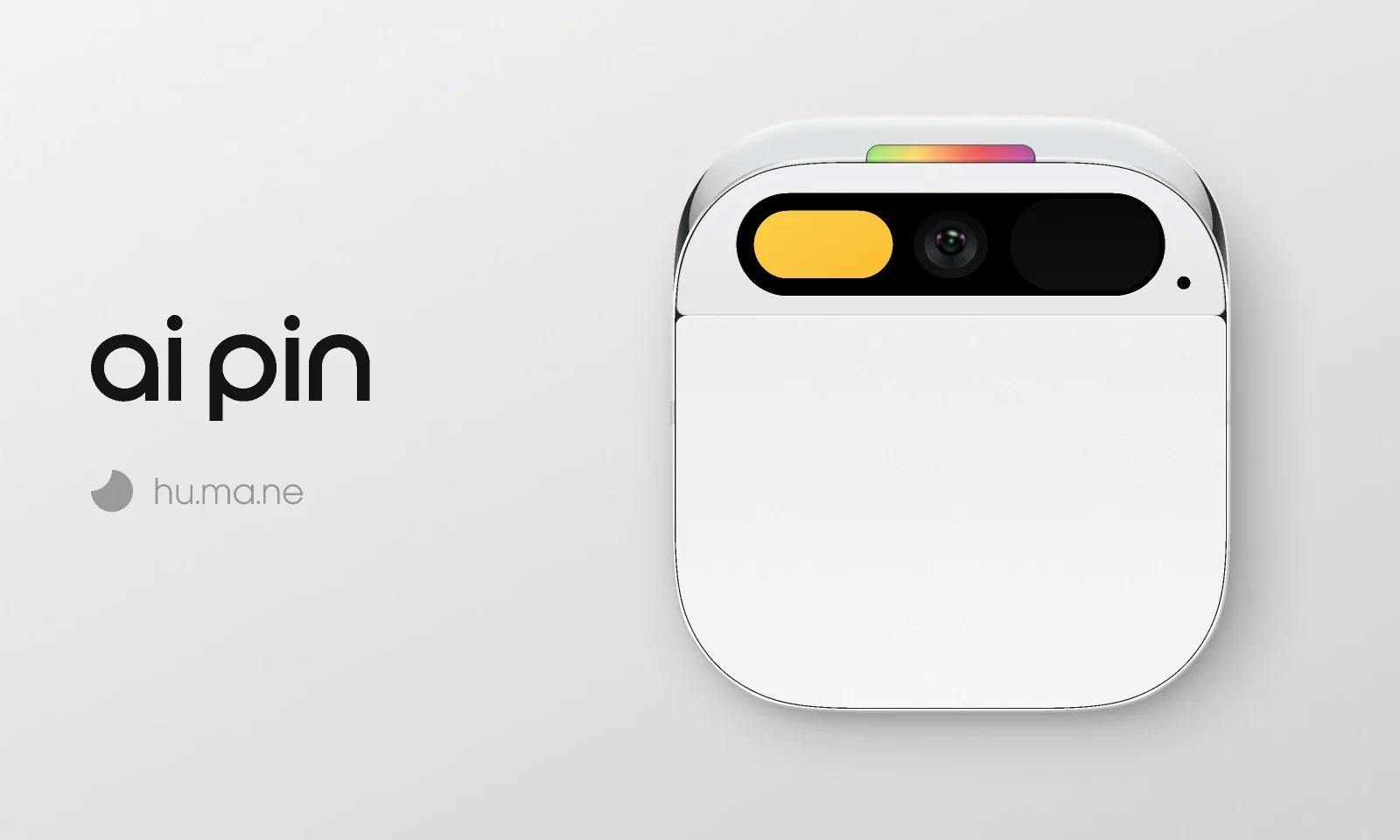
Image source: Humane
The Humane AI Pin is a product that was praised by many people immediately after its release. Some regard it as the "next - generation end - device" that is supposed to replace the iPhone, while others consider it a milestone in AI hardware. But when one actually gets the product in hand, one finds that the so - called AI end - device is just a simple network end - device with a microphone, a speaker, and a projector. Once the network is unstable or fails, it is useless.
According to the feedback from real users, the AI Pin takes several seconds or even ten seconds to answer a simple question like "What's the weather like today?". And the experience with the Cosmos OS operating system developed by Humane itself is rather disastrous. At the beginning of the marketing, it was even impossible to set an alarm or a timer. This is obviously insufficient for a product that claims to replace the iPhone.
The highly anticipated projection function is the biggest point of criticism in actual use. The low brightness makes it difficult to use outdoors, the projection greatly reduces the battery life and causes severe heating, and the projection quality is poor. Many users later simply disabled the projection function and only relied on the voice function.
But that's not the only problem with the AI Pin. As a product priced at $699, if users want to use all the functions, they have to pay an additional $24 per month for a subscription, which corresponds to an additional annual cost of $288 and thus exceeds the expectations of most users.
Humane initially promised to improve the experience of the AI Pin in 2025 and continuously maintain the AI service. But soon, the end of the product was foreseeable: the service was terminated, the assets were sold, and bankruptcy was announced. It became one of the first fallen star products in the AI hardware market.
After the AI Pin, the Rabbit R1, which was released at the same time, is also in trouble. There were rumors of salary defaults and layoffs at Rabbit. In comparison, there is still a possibility of rescue for the Rabbit R1, while the AI Pin has already completely failed. These two AI products have warned the entire AI hardware industry: One should not try to bring a "great and all - encompassing" product to the market to replace an established intelligent ecosystem. The chances of success are almost zero, and it often leads to compromises that can even cause the entire product to fail.
Windows Recall: Makes the "time" traceable but becomes a privacy bomb
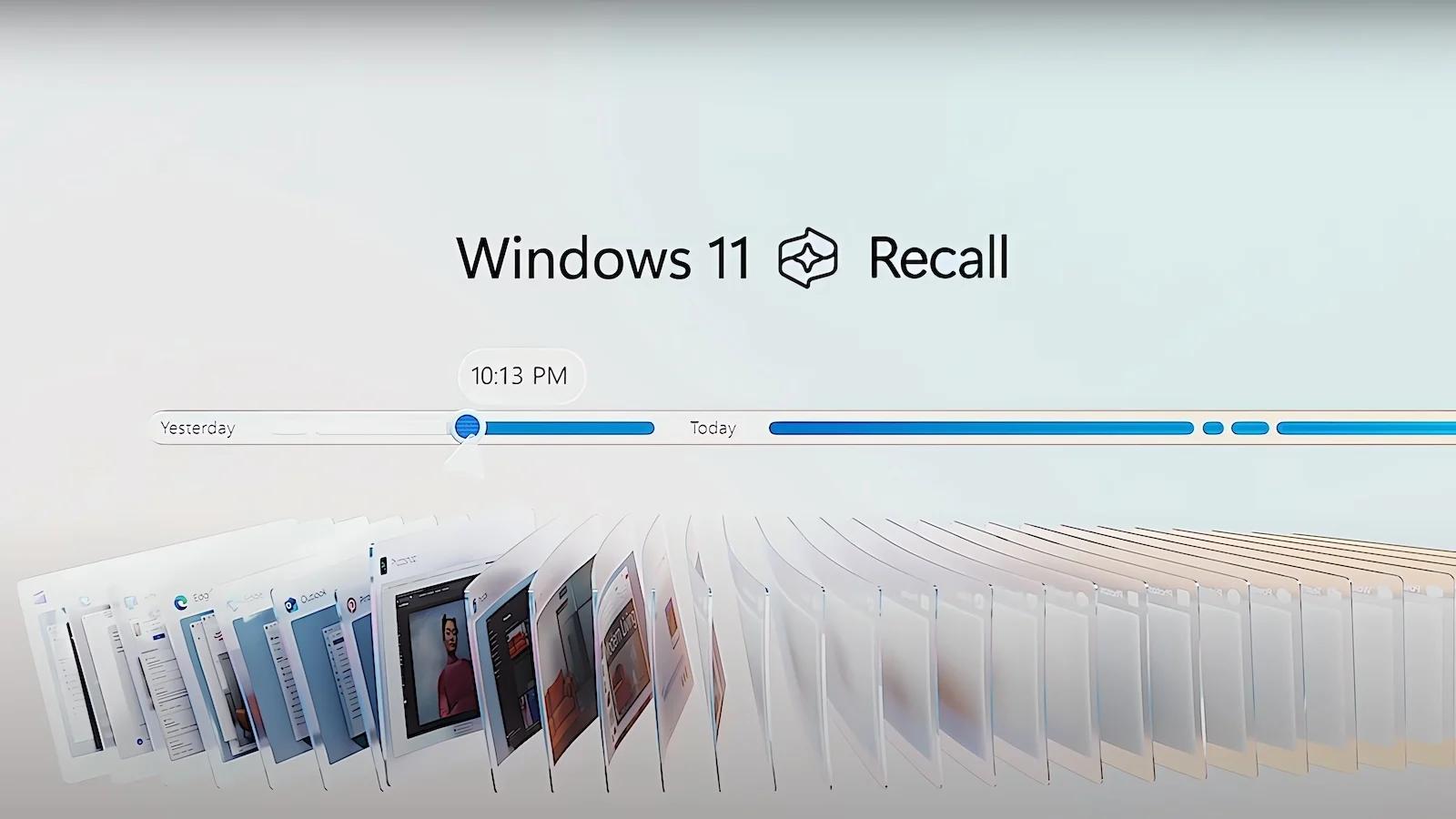
Image source: Microsoft
The Recall function is the largest and most controversial functional module that Microsoft has integrated into the Windows system in recent years. The function of Recall is simple: It helps users "remember" web pages they have seen before or software interfaces they have opened. The underlying logic is that the system regularly saves "screenshots" of the desktop. Users can then find the desired pages via the timeline or natural language.
Suppose Xiao Lei suddenly wants to find a web page he saw last week. Since he didn't save it and forgot the URL, and it's cumbersome to search in the history, he can use Recall. He only needs to specify information such as the approximate content and the UI design of the web page, and the AI will find the corresponding page from the history and bring it back to the foreground.
Does it sound useful? Actually, after a month of use, Xiao Lei found that in most cases, he doesn't rely on Recall to find lost web pages. Both the history of shopping websites and the integrated search function of the browser cover over 90% of the search scenarios. There is no need to use additional software for looking back at the past.
And Recall is not just a "screenshot function". To fully restore the previous pages, it stores a lot of information during operation, including many privacy - related data (e.g., credit card data, private conversations, etc.). Although Microsoft claims to build a solid security concept, this promise does not seem very reliable given the security situation of Windows.
Therefore, Recall was officially released in 2025. However, this triggered a strong reaction from users. Many users demanded that Microsoft provide a tool to uninstall Recall to ensure that their privacy is not "stolen". But that's not the worst part. Some security researchers have found that the data of Recall can be extracted by third parties, which further strengthens users' distrust of this function.
From Lei Technology's perspective, the biggest problem with Recall is that the benefit does not match the effort. Users sacrifice their valuable privacy for a "looking - back" function that is sometimes not needed at all. This is a typical example where the expectations of developers and users are completely different.
Galaxy XR: The unlucky one compared to Apple's Vision Pro
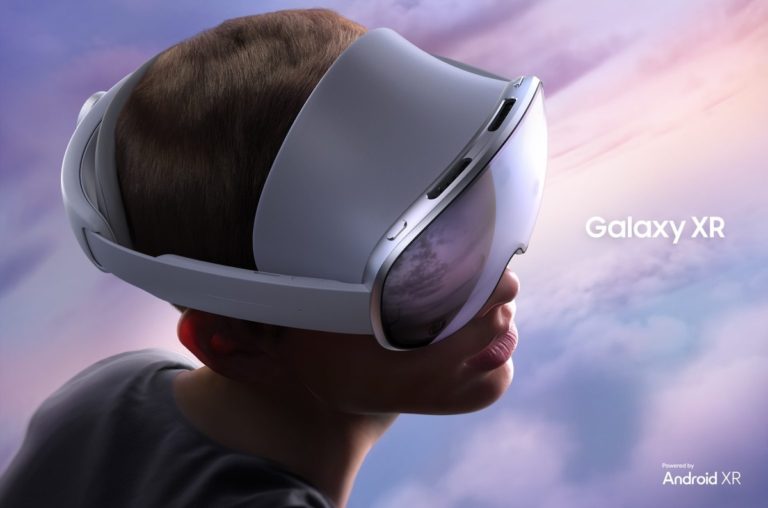
Image source: Samsung
The Galaxy XR is one of Samsung's most important new developments this year. It was highly anticipated as the "secret weapon" to enter the XR market. Technically, the Galaxy XR is impressive. It is equipped with the latest Qualcomm Snapdragon XR2+ Gen 2 platform, two 4K micro - OLED displays, supports the VR/AR mixed mode and AI functions, and is technically comparable to the Vision Pro. But after the release, the first buyers expressed their disappointment with the user experience.
First, the wearing problem. The Galaxy XR weighs about 545 grams. Although it is lighter than the Vision Pro, it is criticized for being "painfully tight to fasten" to wear securely because of the lack of a forehead strap. In addition, the Galaxy XR is also powered by a battery pack. The battery pack weighs 302 grams. It's still acceptable on the table, but it becomes quite heavy in the pocket.
Some users have also pointed out that there are problems with the optical design of the Galaxy XR. Even with short - term use, the eyes can become very tired and uncomfortable. According to some reviewers, the reason may be that the Galaxy XR has shortened the common focal plane (the comfortable focus distance for the human eye) from 1.2 - 1.8 meters to 0.9 meters. Although this provides a stronger immersion, it causes the eye to often focus when looking at "distant images", which leads to discomfort.
However, the biggest problem for users is the software ecosystem. This is a problem that even Apple cannot solve, and it is also the biggest obstacle for the Galaxy XR. Apart from the lack of a killer app for XR/AR, it is not even possible to transfer the most important functions of Samsung's One UI to the XR system. The user experience is limited to simple office work, viewing 3D high - resolution maps, and watching movies.
As a product with the first Android - XR system, the Galaxy XR has difficulty convincing that it is on par with the Vision Pro. The users' disappointment does not stem from a single deficiency but from the accumulation of problems that occur from hardware to software.
As a flagship product positioned as the "benchmark for Android - XR", it has solved almost no other problems except for stronger performance and better display quality. The release of the Galaxy XR only shows that the XR ecosystem is still far from mature.
Fuji X Half: Users want "vintage flair", not a "vintage machine"

Image source: Fuji
Why are Fuji cameras so popular? Because of their unique film filters, Fuji colors, and the well - preserved vintage design, they are the favorite cameras of many street photographers and female users. Even when other DSLR camera manufacturers focus on parameters like autofocus speed, Fuji can still stand firm.
But the Fuji X Half shows what happens when a company becomes too "arrogant". As a digital camera model introduced by Fuji in 2025, the Fuji X Half is based on "what you see is what you get". With a weight of only...