Changes in the new energy vehicle market in 2025: "Lingjie Mi" takes over from "Weilai, Xiaopeng, and Li Auto", and traditional giants lead the global market.
2025 is a watershed year in the development history of China's automotive industry. Against the macro - background of the historical breakthrough of the new energy vehicle penetration rate to 53% and the stable annual total vehicle sales ranging from 33 million to 35 million units, the market has completely shifted from incremental expansion to stock competition.
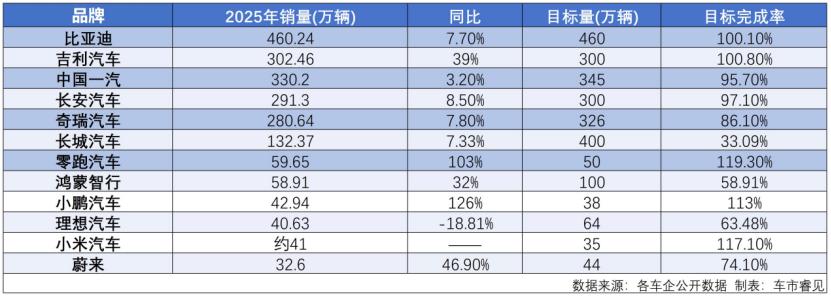
In this year, BYD continued to lead the entire industry with an annual sales volume of 4.6024 million units. Traditional self - owned brands such as Geely and Chery achieved leap - forward growth through the accelerated transformation to new energy and global layout. Meanwhile, the new car - making forces camp experienced a drastic reshuffle of rankings. The "Wei Xiaoli" group temporarily stepped back to the second line, replaced by the rise of the "new triangle" composed of Leapmotor, Hongmeng Intelligent Mobility (mainly Wenjie) and Xiaomi.
Top automakers are accelerating concentration, and self - owned giants are building a scale moat
In 2025, the concentration of China's automotive market further increased. The total sales of the top 15 enterprise groups accounted for 92.2% of the national total, among which the market share of self - owned brands reached 64%, a year - on - year increase of 7.5 percentage points, showing a comprehensive suppression trend against joint - venture brands. In this competition where the strong get stronger, BYD, Geely, Chery, Changan and FAW formed the "Top Five Matrix" of the self - owned camp, and their combined sales accounted for nearly half of the market.
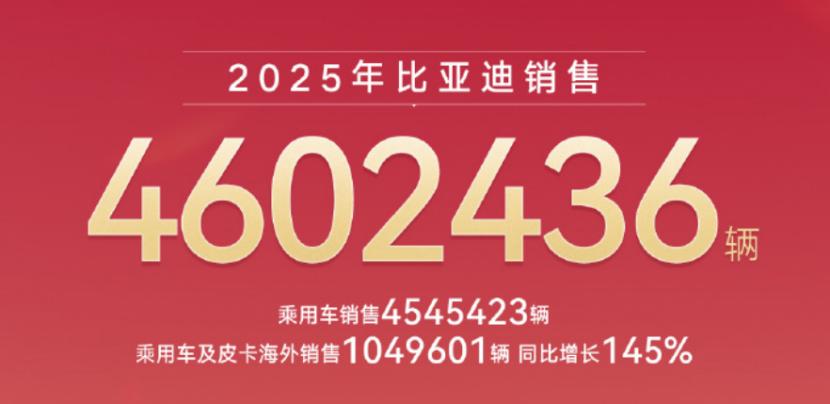
BYD still held the top position firmly, with an annual sales volume of 4.6024 million units, a year - on - year increase of 7.73%. Although the monthly sales volume in December showed a year - on - year decline of about 18.2%, its annual performance still demonstrated strong systematic combat capabilities. Notably, BYD's overseas sales exceeded one million units for the first time, reaching 1.0496 million units, a year - on - year increase of 145%, marking its substantial progress from a "Chinese sales champion" to a "global player". Technologically, the continuous iteration of Blade Battery, DM - i Super Hybrid and e - Platform 3.0 enabled it to maintain a leading position in both the pure - electric and plug - in hybrid sectors. In 2025, its pure - electric vehicle sales reached 2.2567 million units, a year - on - year increase of 27.86%, consolidating its position as the world's top - selling electric vehicle brand.
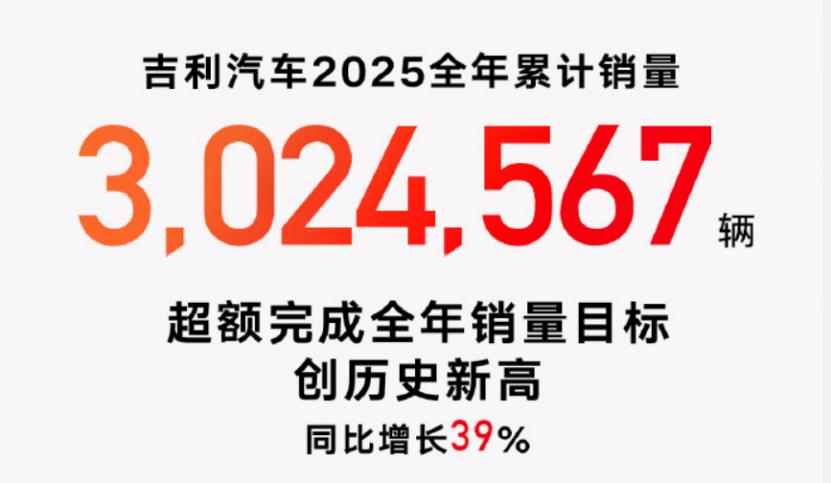
Geely Automobile sold 3.0246 million vehicles throughout the year, a year - on - year increase of 39%, exceeding its annual target of 3 million units. Geely's rapid growth was attributed to the successful implementation of its multi - brand strategy and the full - speed acceleration of its transformation to new energy. Its Galaxy brand sold 1.236 million units annually, a year - on - year surge of 150%, becoming the fastest - growing new - energy vehicle brand to reach one million annual sales. Zeekr and Lynk & Co. contributed 224,000 and 350,000 units respectively, establishing a firm foothold in the high - end intelligent electric vehicle field. Geely covered the entire price range from economy to luxury through brands such as Geely, Galaxy, Lynk & Co. and Zeekr, and built a flexible and resilient product matrix relying on technological synergy with Volvo and Lotus.
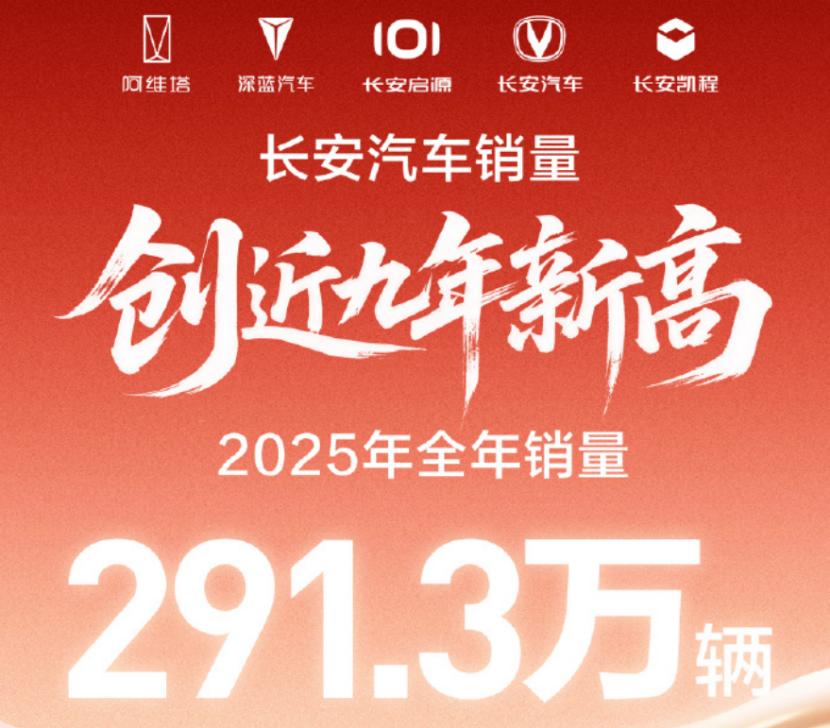
Changan Automobile Group sold 2.913 million vehicles in 2025, a year - on - year increase of 8.5%, and its self - owned segment performed outstandingly. The Deepal brand delivered 333,100 vehicles throughout the year, Avatr exceeded 120,000 vehicles, and Changan Qiyuan also exceeded 400,000 vehicles. Notably, Deepal became one of the first models to obtain the L3 - level autonomous driving access permit, marking that its technological accumulation in the intelligent field began to translate into product advantages.
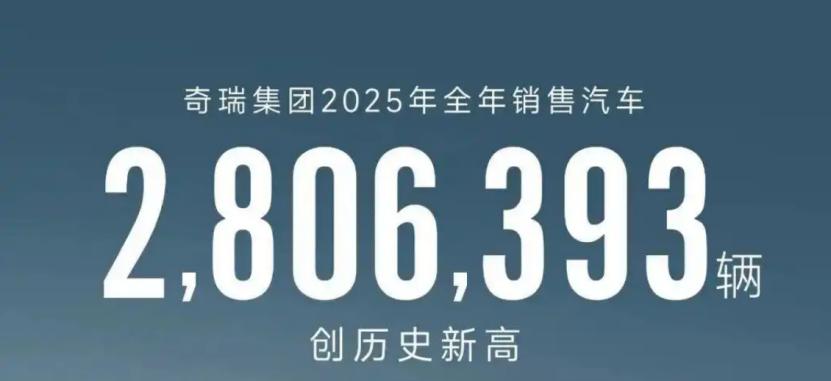
Chery Group refreshed its own record with an annual sales volume of 2.8064 million units, a year - on - year increase of 7.8%. Its biggest highlight was its export performance - it exported 1.344 million vehicles throughout the year, accounting for 47.89% of the total sales, ranking first in the export of Chinese - brand passenger cars for the 23rd consecutive year. Chery formed a dual - cycle pattern in the domestic and overseas markets through the multi - brand layout of Chery, Jetour, EXEED and iCAR. Although the sales volume of the EXEED brand decreased by 15% year - on - year, the rapid growth of Jetour (622,600 units) and iCAR (97,000 units) effectively hedged the risks, showing its ability to accurately position in the segmented markets.
FAW Group had a total sales volume of 3.302 million units, among which the Hongqi brand exceeded 460,000 units, and the sales volume of self - owned new - energy vehicles reached 366,000 units, a year - on - year increase of 71.4%, showing the accelerating catch - up trend of this traditional central enterprise in the electrification transformation.
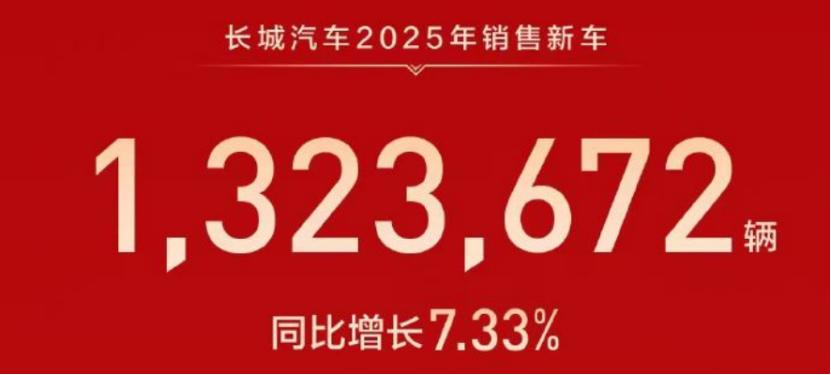
Notably, Great Wall Motor faced relatively more pressure among traditional self - owned brands. Its annual sales volume was 1.3237 million units, a year - on - year increase of 7.33%, and the completion rate of the annual target of 4 million units was only 33.09%. Although the sales volume of new - energy vehicles reached 403,700 units, a year - on - year increase of 25.44%, setting a new record, there was still a gap compared with the sales volume of top enterprises, and its high - end brands such as WEY had not achieved large - scale breakthroughs. Great Wall's dilemma also reflected the common challenges faced by traditional automakers in the transformation process: how to accelerate the implementation of new - energy technologies and the market response speed while maintaining the basic market share of fuel vehicles became the key to its subsequent sales growth.
The new car - making forces camp is deeply reshuffled, with the decline of "Wei Xiaoli" and the rise of "Leapmotor, Hongmeng, Xiaomi"
If the victory of traditional self - owned giants reflects their systematic capabilities, then the performance of new car - making forces in 2025 was a cruel survival elimination game. The development of the "Wei Xiaoli" combination, once regarded as the industry benchmark, slowed down, while the "new triangle" composed of Leapmotor, Hongmeng Intelligent Mobility and Xiaomi quickly seized the opportunity and temporarily reconstructed the market landscape of new car - making forces.
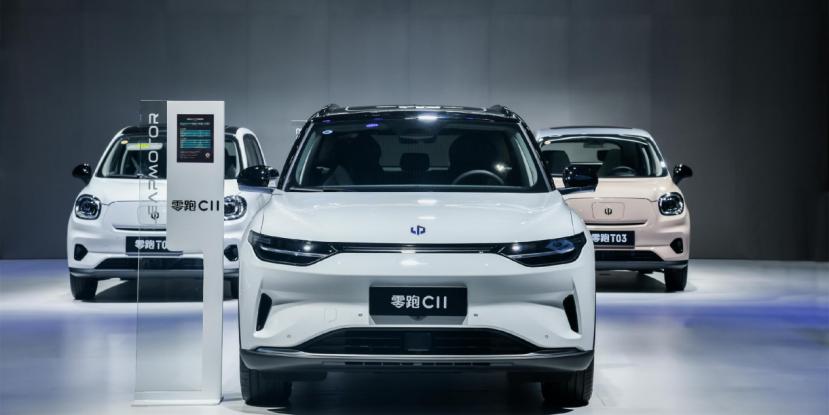
Leapmotor topped the list of new car - making forces with an annual sales volume of 596,500 units, a year - on - year increase of 103.1%, becoming the biggest dark horse. Its success was not accidental but the result of a high - cost - performance strategy and a full - domain self - research model. Leapmotor's breakthrough logic lies in its precise cost - performance strategy and full - domain self - research advantages: it installed lidar on models in the 100,000 - 150,000 - yuan range, realizing the penetration of high - end intelligent driving functions into the mid - end market. At the same time, through the layout of the entire product series, it covered a wide range of customers from the sinking market to mid - end demand. This "technology for all + full - market coverage" strategy exactly met the explosive demand of consumers for "high - cost - performance intelligent models" in 2025, making it the first brand among new car - making forces to achieve continuous quarterly profits. Meanwhile, the cooperation between Leapmotor and Stellantis not only brought technological feedback but also opened the door to the European market, upgrading it from a "price - war participant" to a "technology exporter".
Hongmeng Intelligent Mobility (including brands such as Wenjie and Zhijie) followed closely with a sales volume of 589,100 units, with Wenjie contributing the absolute majority. The Wenjie M7 and M9 continued to sell well, especially the M9, which ranked first in the sales of luxury SUVs priced over 500,000 yuan, and the proportion of high - end models exceeded 15%. Behind this achievement was the all - round empowerment of Huawei in intelligent driving (ADS 3.0), Hongmeng cockpit and channel network. The concept of "software - defined vehicles" was most successfully commercially verified here, and users were more willing to pay for the intelligent experience than for traditional luxury brands.
As a new entrant in 2025, Xiaomi Automobile delivered over 410,000 vehicles throughout the year, directly ranking among the top four of new car - making forces. The SU7 achieved the miracle of becoming a hit as soon as it was launched, thanks to its extreme performance label, ecological linkage advantages (mobile phone × automobile × AIoT) and the strong support of Lei Jun's personal IP. Although it faced challenges in production capacity ramping up and delivery, its performance in the first year far exceeded industry expectations, becoming a key variable in stirring up the market pattern.
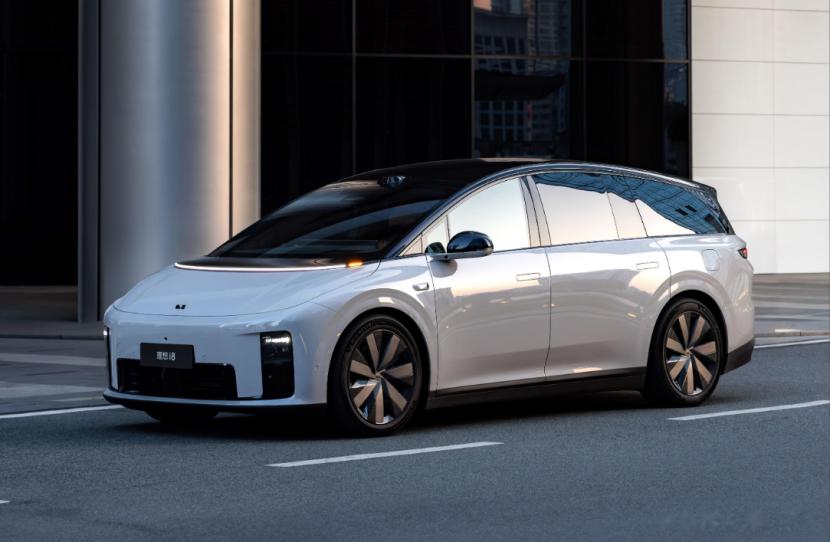
In contrast, the former "Three Swordsmen" were in a rather difficult situation. Li Auto sold 406,300 vehicles throughout the year, a year - on - year decrease of 18.81%, the first negative growth since its establishment. After its annual target was adjusted from 700,000 units at the beginning of the year to 640,000 units, the final completion rate was still only 63.48%. Li Auto's dilemma stemmed from the under - expected transformation to pure - electric vehicles: its positioning of family cars relying on extended - range models was being eroded by brands such as Leapmotor and Geely Galaxy with better price strategies. And its pure - electric models i6 and i8 failed to fill the sales gap of extended - range models in time due to issues such as the supply chain and production capacity ramping up, ultimately leading to a decline in overall sales.
NIO sold 326,000 vehicles throughout the year, a year - on - year increase of 46.9%. Although it achieved positive growth, the completion rate of the annual target of 440,000 units was only 74.1%. NIO had formed a three - brand matrix of NIO, LeDao and YinghuoChong, covering the high - end, mid - high - end and entry - level markets respectively. Among them, the LeDao brand delivered 107,800 vehicles, and the YinghuoChong brand delivered 39,400 vehicles. However, its performance in the first half of the year was sluggish, only completing 35% of the annual delivery volume. It was not until the launch of the two pure - electric six - seat SUVs, LeDao L90 and NIO ES8, in July that a turning point came, and the delivery volume in the fourth quarter refreshed the quarterly record. This "low - first - then - high" trend reflected that the integration of its brand matrix still needed time, and it faced double squeeze from BYD and XPeng in the high - end market.
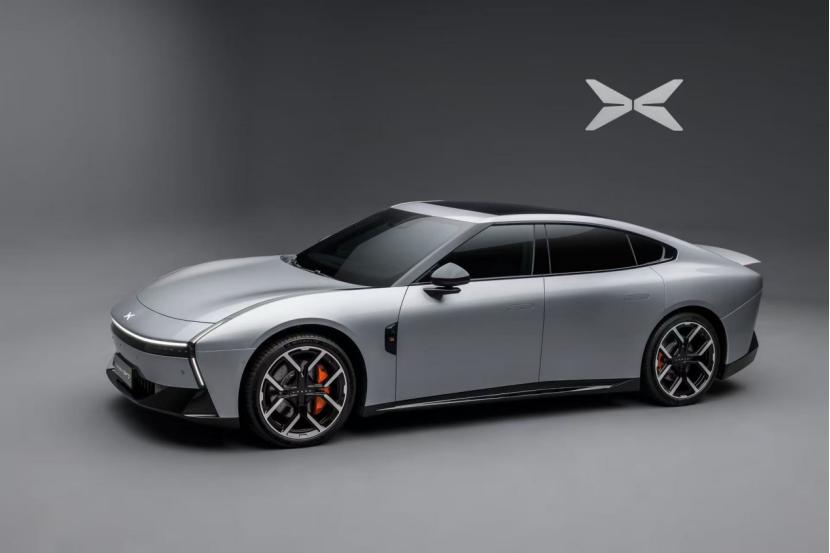
XPeng Motors sold 429,400 vehicles throughout the year, a year - on - year increase of 125.94%, exceeding the annual target of 380,000 units, with a completion rate of over 113%. Although its monthly delivery volume in December was 37,500 units, with a year - on - month - on - month increase of only about 2%, and its short - term performance was a bit weak, its annual growth rate was still remarkable. XPeng's growth was due to the optimization of its product matrix. Meanwhile, its positioning deviated from the traditional "Wei Xiaoli" camp and was more regarded as a representative of intelligent technology. Models such as MONA M03 and P7+ formed a high - low combination, covering the 150,000 - 300,000 - yuan price range. At the same time, the continuous iteration of the intelligent driving assistance system, such as the implementation of the pure - vision map - free technology, drove the growth of orders. However, compared with Leapmotor's cost - performance advantage and Xiaomi's ecological advantage, XPeng's brand differentiation was gradually weakening.
The essence of this reshuffle is the inevitable result of the market's return from concept - driven to product - and - efficiency - driven. In the early days, new car - making forces established brand awareness through high - end positioning and user operation. But when the market entered the popularization stage, cost - performance, large - scale delivery capabilities and cost control became the key to survival. Leap