"Super Content" Secures Angel Round Funding: Investor in Musk's Ventures Enters the Scene. Has the Commercialization Singularity of Chinese Podcasts Arrived?
According to exclusive information obtained by the Entertainment Capital Theory, the podcast commercialization brokerage company "Super Content" has completed a 3 million yuan angel round of financing. According to public information, Super Content is the only podcast company in the past three years to have obtained financing against the odds during the capital winter.
In 2025, the podcast industry was booming. Xiaohongshu, Bilibili and other platforms have stirred up the podcast market with the concept of video podcasts. However, the primary market remained in a state of cautious wait - and - see, and the financing information related to podcast labels still remained before 2022. Therefore, in the current context, any investment and financing event that is not related to hot topics such as AI and embodied intelligence has strong anti - consensus significance.
So, is the so - called "Year of the Podcast", which has been mentioned every year, really coming? Why is capital betting on the podcast industry at this moment? For this reason, the Super Content team has also shared its thoughts.
It is reported that the founding team of Super Content consists of two well - reputed marketing experts in the industry:
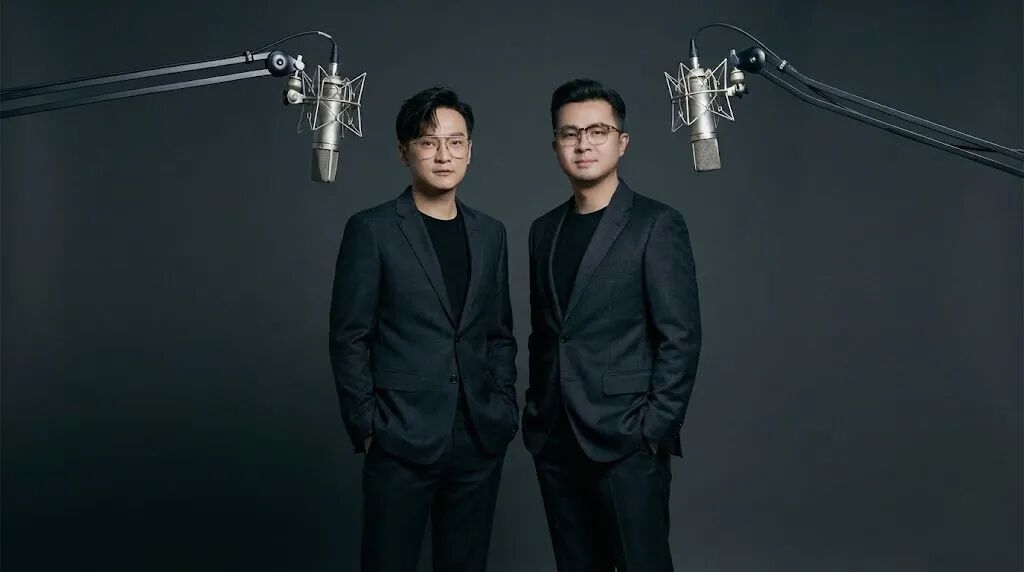
The founder, Xia Hanjie, once served as the deputy brand director of a Fortune 500 company and a marketing consultant for the Beqingsong Group and the City Group. He has successfully incubated several new consumer brands from scratch to billions in value. His new book "Content Power" is also about to be published and released.
The co - founder, Zhou Long, also has an impressive background. He is among the top 100 marketers in China, the best CMO of the year in the Chinese advertising industry, a judge of the Golden Lion Award and the Golden Investment Award, the first Chinese to introduce Hollywood IP co - branding, and the former CMO of Metersbonwe. He led Metersbonwe's growth from 300 million to 10 billion in revenue. The well - known variety show "Odd One Out" is a classic case he was involved in. When "Odd One Out" was just a planning proposal, Zhou Long had the foresight to provide Ma Dong with the only start - up funds at that time, which led to the show's great success later.
The investor in this round, Qianjiang Capital, may not be well - known in China. However, its founder, Simon Wang, is an old friend who has been actively involved in the investment circle in Silicon Valley, USA for a long time. He was an early shareholder of the famous US start - up investment institution Wefounder, successfully invested in Musk's XAI and SpaceX, successfully invested in Y Combinator founded by Sam Altman, the current founder of OpenAI, and successfully invested in the well - known Silicon Valley project DNA.US until its listing.
The following is an exclusive interview with [Super Content]:
I bet on the variety show "Odd One Out" ten years ago, and I'm betting on podcasts now.
Entertainment Capital Theory: As an experienced marketer who has managed billions - scale businesses, why did you choose the seemingly small podcast business?
Zhou Long: First of all, the term "billion - scale business manager" is very misleading. It seems that once I start a business, it has to be on a billion - scale. And if I start a business worth 100 million, it's considered a downgrade or I'm out of my mind. This logic doesn't make sense. It's not that once I start a podcast business, it will definitely be big and successful. To be honest, I've had many failed cases, I just don't talk about them. My understanding of entrepreneurship is to use the accumulated experience of failures to control the probability of success. That's all. I don't know what others think, but when I start a business, I don't focus on whether it's a big or small business at first. Instead, I focus on whether it's something I'm good at or interested in. That is, passion comes first, and then I see if there are sufficient resources to support it continuously. Since I've gone through several business cycles and made many mistakes, I increasingly feel that sometimes it doesn't make sense to just look at the size of the business. No matter how big the business is, it's meaningless if you can't do it. But if the right people are involved, even a small business can become a big one, and often a big one that others can't replicate.

Secondly, we should view the so - called "small - scale" status of the podcast business from a dynamic perspective. Ten years ago, online variety shows were also a small business. At that time, Ma Dong approached many people, but they all said they didn't understand it or thought the online variety show business was too small and refused. In fact, Hanjie also encountered such a situation in 2016. He started a short - video MCN very early, and at that time, people also said it was a small business. But if you look at this view today, you'll find it extremely funny. Things are constantly developing. Of course, some of our judgment criteria make us realize that podcasts may be the next online variety shows or the next short - video trend. Currently, we believe that the value of podcasts is seriously underestimated.
Xia Hanjie: Both of us have an extreme and pure love for the content industry. We're even the kind of people who are willing to sacrifice for our love. Although Brother Long has been working in marketing, he has actually been closely involved with the content industry. He has a good relationship with several Hollywood bosses and a private friendship with Jay Chou. Of course, he has also created many content works under the guise of marketing. For me, my connection with the content industry is even deeper. My first book is called "Content Power", and I majored in directing at the Beijing Film Academy for my undergraduate degree. At that time, I could have been recommended to some non - art schools based on my competition results, but because of my love, I chose the content industry. Later, my career development got a bit out of control, but my relationship with the content industry is still in a delicate state. My love for this industry has never changed. But because of this love, I'm also a bit angry. The key is that now we seem to have some resources, conditions, abilities, and experiences to support our anger, rather than just being angry and helpless. This is the underlying logic of our decision to start this company. That's why our company is named "Super Content". Many people shout the slogan of "super content", but actually, we hope to build this company like our works to explain our understanding of super content.

(Xia Hanjie)
Although we're working on podcasts, we didn't name the company "Super Podcast" because we think podcasts are a carrier that can hold our ambitions, and currently the best one. Many of its rules haven't been set, and the complex network of interests hasn't fully formed. Today, if we want to change the rules in the short - video, long - drama, or movie industries to support our ambition of defining super content, we think it's unrealistic and impossible. You can understand that the screenwriter - centered system is difficult to establish in long - dramas, not because the system itself doesn't work, but because changing a complex system comes with the risk of backlash. The domestic long - drama and movie systems are built around directors and popular stars. However, you can see that short - dramas have been screenwriter - centered from the very beginning, and the entire industry is highly integrated with screenwriters. Producers can choose to optimize costs extremely, but whether the information flow can work effectively is directly related to the intense plot reversals created by screenwriters.
The singularity for podcasts to cross the chasm is in 2026.
Entertainment Capital Theory: When do you think podcasts will become the so - called "big business" you mentioned?
Xia Hanjie: We're extremely optimistic about the future of podcasts. We don't think podcasts will become a national - scale big business like short - videos. It's very difficult to replicate the 1 billion monthly active users of short - videos. However, we believe that podcasts have a high probability of becoming a mainstream new medium for long - form content similar to iQiyi and Tencent Video in 2 - 3 years. The ceiling for the domestic user scale is probably around 300 - 400 million. But we need to tell you that the size of commercial value is related to both the user scale and ARPU (Average Revenue Per User). We think the ARPU of podcasts should be much higher than that of short - videos and current mainstream long - form content media.

According to McLuhan's media theory, media don't replace each other but continuously supplement and progress. There's nothing new under the sun. The migration of media actually meets the needs that couldn't be met well in the past in a new form. For example, after being overly exposed to short - videos, people have fallen into aesthetic fatigue, so long - form content, which is more informative and can carry complex information, has come back into focus. From this perspective, podcasts actually meet the needs previously filled by long articles on WeChat official accounts. My judgment is that the successful account positioning on WeChat official accounts can be replicated on podcasts, but it doesn't make sense to copy the successful short - video accounts and put them on podcasts. Further, according to McLuhan's media theory and the attention economy model, in an empty bottle, big stones are put in first, then fragmented sand, and finally water to fill all the attention. Podcasts are the final "water", which is an evolution of needs. When can we confirm that podcasts are the next medium with a high ceiling? Actually, we just need to see if the previous generation of media becomes content on the next - generation media. This is also McLuhan's classic theory. For example, if print media and magazines, which are the previous - generation media, open accounts on WeChat official accounts and become their content, then WeChat official accounts can be regarded as the mainstream position for the migration of the next - generation media. This is a business with a high ceiling.
Zhou Long: In fact, when choosing to start a business, we also considered the factor of the market ceiling. We've been discussing whether to enter the podcast industry in the past few years. On the one hand, we both had our own businesses that we couldn't let go of for the time being. On the other hand, we thought the time wasn't right. Whether it's investment or entrepreneurship, timing is crucial. Sometimes, entering too early can easily make you a martyr, and entering too late means you'll miss the opportunity. However, in March this year, the situation changed. The emergence of Deepseek made us determined to enter the podcast industry. We believe that AI will definitely have a greater efficiency advantage than humans in short - text processing. Although AI can maximize the efficiency of information distribution, it can't solve the problem of trust efficiency. In the era of information overload, the value of trust has never been more important. So we decided to put aside some things and start a long - form content business in podcasts. Actually, before starting the business, Hanjie was quite hesitant. He received offers from two big companies to be their CMO, and someone even wanted to double his salary to hire him as a marketing consultant. But I told him one sentence and he immediately decided to start the business. I said, "Do you want to continue being a dog that maintains the existing rules, or do you want to establish a content kingdom that we desire?"

(Zhou Long)
Xia Hanjie: Actually, our initial judgment was that podcasts would quickly gain popularity in six months. In fact, in September, more and more brands and celebrities, including Luo Yonghao, entered the podcast market, and more and more people began to know about podcasts. In March, when we talked to many CMOs about podcasts, their expressions were very blank. Now it's much better, and they're willing to talk more. We need to thank Yang Tianzhen, Luo Yonghao, and all our peers for their efforts. We're just hitching a ride on their work. However, even so, the market's judgment of the timing is still very cautious. Based on the current 64% growth rate of new podcast users, podcasts are on the verge of crossing the chasm and going mainstream. Sometimes, the explosion of a new behavioral tool is just a sudden change from quantitative to qualitative, going from being unknown to being widely known. From the data, we can clearly determine that the inflection point will be around June 2026. In fact, the daily active users of the Xiaozhouyu platform are constantly hitting new highs. I'm also very optimistic about AI glasses or AI headphones. If these two devices become the next - generation Internet entrances, due to the constraints of computing power and power, audio is an unavoidable medium. You can see that the Quark glasses have a built - in podcast app. In the future, this kind of built - in will become more and more common.
Zhou Long: It's actually not that complicated. The current situation of podcasts in the US is what the future of podcasts in China will be. Our investor originally wanted to invest in US podcasts but found it was impossible. In fact, podcasts are very popular in North America, even more popular than YouTube. People say that AI is very hot, but when new AI tools are released, they often choose podcasts as the first - choice medium. In this sense, podcasts have become the upstream of AI. When I watched "Zootopia", there was a character named Li Bao who was a podcaster. When people in China watched it, many asked what a podcast was and how it was different from a radio station. But in North America, people would be very excited, especially when they knew it was also the host of a crime - themed program. So why are podcasts so popular in the US? I think as long as we figure out the reasons, we'll understand that the development trend of podcasts in China and the underlying logic in North America are similar.
The real "Year of the Podcast" will come when true commercialization is achieved.
Entertainment Capital Theory: Will 2026 be the "Year of the Podcast" in China? What can Super Content learn from the commercialization of podcasts in North America?
Xia Hanjie: Every year, people say it's the "Year of the Podcast". In 2020, they said so. Last year, when Bilibili and Xiaohongshu started to focus on podcasts, they said it again. Now it's 2026. Do you think last year was really the "Year of the Podcast"? So personally, I think we should focus more on the commercialization of podcasts rather than the so - called "Year of the Podcast". As long as there is continuous revenue in a certain area, more and more creators will join, the relevant upstream and downstream industries will become more mature, and monetization will become more certain. This will form a positive cycle of continuous growth and expansion.
Zhou Long: It doesn't make sense to simply copy the US commercialization model in China, but the underlying principles are the same. Talking about the difference between podcasts and radio stations, podcasts are more like a live variety show where you eavesdrop on a conversation at the next table, while radio stations are more like a well - crafted movie. There's no superiority or inferiority between the two. But in the AI era, we need a sense of real - life presence. The real - life presence of podcasts can