In the fast-paced era, automakers can't escape the "March sales curse".
In the Chinese automobile market in 2025, a strange "March curse" has cast its shadow.
It's quite common to see a new car become a hit as soon as it's launched and its delivery volume quickly exceed 10,000. However, this sweetness usually comes to an abrupt end after the third month.
After Nissan N7 aimed for a monthly sales target of 10,000 units, its sales volume shrank by over 60% within half a year. LeDao L90's delivery volume exceeded 10,000 for three consecutive months after its launch, but its sales volume nearly halved in the fourth month. New products with high hopes, such as Lynk & Co 900 and DeepBlue S07, all failed to escape the fate of "starting strong and ending weak".
This can't be blamed on the lack of effort from car companies. On the contrary, LeDao L90 and Nissan N7 once played the role of saviors within their companies. To make these saviors more effective, the companies poured all their efforts into creating these products.
Li Bin, the chairman of NIO, called LeDao L90 "the result of over 60 billion yuan in R & D investment over 10 years". In order to make Nissan N7 competitive, Dongfeng Nissan overturned the long - standing problems of traditional joint - ventures from the product definition stage to the pricing stage.
The initial popularity proved that LeDao L90, Nissan N7, and even Lynk & Co 900 were all good products. However, due to the intense competition in the rhythm of new energy products, these products gradually showed signs of decline.
However, the good news is that the introduction of a series of relevant policies will also curb the disorderly competition in the industry to a certain extent. By then, the market will give these products more time to show their greater value.
The "Saviors" Who Can't Escape the "March Curse"
In July this year, the popularity of LeDao L90 pulled NIO out of its darkest hour. The continuously rising order volume was quickly converted into delivery figures. NIO even maximized the efficiency of the entire industrial chain to ensure delivery.
"More and more people like LeDao, and now we are in great need of manpower," said Shen Fei, the president of LeDao.
At that time, the sales terminals were also immersed in the booming sales momentum. A LeDao salesperson told Future Auto Daily that in the early days of the launch, he could sell one (LeDao L90) every day.
But the sweet period came to an abrupt end in the fourth month.
According to public data, LeDao L90 delivered 10,575 new cars in August, and the delivery volume exceeded 10,000 in both September and October (10,997 and 11,722 respectively).
But in November, LeDao L90 only delivered 5,970 new cars, nearly half of the previous volume. The performance of terminal sales was also affected. The above - mentioned salesperson could sell 30 new cars in August, "but last month, the total sales were less than 10."
Regarding the sharp decline in sales in November, the above - mentioned salesperson also explained that "the six - seat market is only this big, and those who wanted to buy have basically bought (in the previous few months)."
To reverse the decline, LeDao L90 also tried to increase market sales with higher terminal discounts. In December this year, on the basis of a 5,000 - yuan optional equipment fund, LeDao added a 3,000 - yuan subsidy, and also offered discounts on charging fees and other configurations.

Source: LeDao official
It's not just LeDao L90. More and more newly launched cars this year can't escape the "March curse". Even though these products have received a lot of efforts from car companies, they can't withstand the high - frequency rhythm of the market.
For example, Nissan N7, a product that Dongfeng Nissan called "a product that can only succeed and not fail", once overturned the constraints of traditional joint - venture car companies in product definition, R & D, supply chain selection, and manufacturing. Even in the pricing stage, Nissan N7 overturned the profit - making logic of the joint - venture system.
"Currently, making new energy vehicles basically doesn't make money, and the specific losses are not convenient to disclose," said Shang Shunshi, the deputy general manager of the product planning headquarters of Dongfeng Nissan.
According to the plan of Zhou Feng, the deputy general manager of Dongfeng Nissan Passenger Vehicle, the sign that Nissan N7 becomes a hit is to exceed 10,000 units per month.
Nissan N7, which was launched on April 28, reached a sales volume of over 10,000 in August (the fourth month after its launch) after ramping up production capacity, and then gradually declined to around 6,000. In November (the seventh month after its launch), it directly dropped to 4,000 units.
The 100,000 - yuan - level market where Nissan N7 is located can be regarded as a "battlefield" with a large capacity but many players. Independent brands dominate with cost - effectiveness and intelligence, joint - ventures survive by price cuts, and new forces break through with technology. It's not easy for N7 to break through in the cracks.
Currently, the main sales force of Dongfeng Nissan consists of Nissan N7, Nissan N6, and Nissan Teana with Hongmeng cockpit version.
An insider from Dongfeng Nissan said that the potential customers of Nissan N7 were diverted to the plug - in hybrid Nissan N6, and a small number of users chose the Teana with Hongmeng cockpit version because they valued the Hongmeng cockpit.
"The diversion among products of the same brand is also one of the reasons for the decline in Nissan N7's sales," said the above - mentioned insider.
As more and more hit products fall from grace, this trend seems to indicate that the "starting strong and ending weak" of most products will be a distinct feature of the competition in the "stock market":
After half a year of climbing, the sales volume of Lynk & Co 900, which was launched in April, remained at around 7,000 units. But in November this year, the seventh month after its launch, the sales volume dropped to 4,330 units;
DeepBlue S07, which was launched in September, achieved a sales volume of 8,761 units in October and quickly declined to 3,819 units in November;
Even once - evergreen products in the market like Changan Lumin, Geely Xingyue L, Wuling Hongguang MINIEV, and Geely Binyue all saw their sales volumes decline by over 4,000 units this year.
No One Can Keep Running in the Rapid Iteration
On one hand, car companies are frequently launching new products, and on the other hand, the overall market is shrinking. This year, the automobile industry presents a "sense of torn prosperity".
According to the statistics of Future Auto Daily from the data of the China Passenger Car Association, from January to November this year, a total of 523 new cars (including facelifted models) were launched, setting a record high over the years. At the same time, in November, the retail sales of the passenger car market nationwide were 2.225 million units, a year - on - year decrease of 8.1% and a month - on - month decrease of 1.1%.
This also reflects the "profit - seeking nature" of car companies. "The greater the potential of a certain technological form/segmented market, the more car companies will flock to this market, and the product density in this segmented market will also become higher and higher," said an insider from a car company.
For example, this year's "Battle of Series 9". In order to get a share of the flagship SUV market, within just half a year from March to September, 7 Series 9 flagship SUVs were released in a cluster.
Some products also tried to break the homogeneity through product differentiation.
LeDao L90 came up with the concept of a super - large frunk. Li Bin of NIO even said that the frunk of LeDao L90 "leads its competitors by at least one year". Less than four months after the launch of LeDao L90, Cao Li, the vice - president of Leapmotor, actively released information about the frunk of D19, which has a similar concept to LeDao L90.
The finally released IM LS9 even introduced the family concept into the cockpit. In addition to equipping the latest hardware such as lidar, it also added a floor - heating system and outdoor equipment functions.
"Car companies try their best to add features for product differentiation, but ultimately they can't escape the route of turning differentiation into cost - effectiveness," said the above - mentioned insider from a car company.
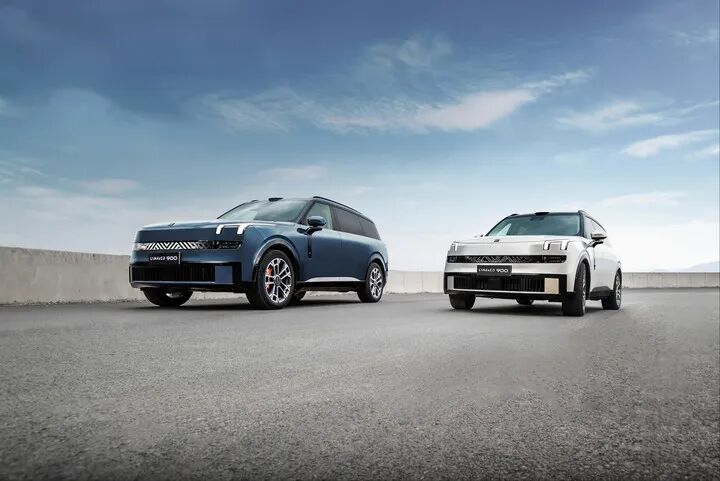
Source: Lynk & Co official
Once "cost - effectiveness" becomes the biggest selling point, this car seems to be doomed to a "short life". After all, piling up features and controlling costs are well - recognized product strategies, and later - comers can always raise the cost - effectiveness to a new level.
Meanwhile, the high - frequency product iteration has also consumed users' trust. This speed once shocked Jim Farley, the CEO of Ford Motor. "The speed at which Chinese car companies launch new cars is amazing, only half of that of traditional car manufacturers," he said bluntly.
For example, Zeekr completed the product update rhythm that would take a traditional car company three years in just one year.
To ensure the competitiveness of its products, Zeekr launched the 2023 - version Zeekr 001 in January 2023, the 2024 - version Zeekr 001 in February 2024, and the 2025 - version Zeekr 001 appeared in August of the same year. The strategy of three updates in one year has labeled smart cars as "fast - moving consumer goods".
According to data from Jato Dynamics, Tesla launched its best - selling Model Y in 2019 and only had its first major facelift this year. In the same period, BYD has launched more than 40 new models and over 139 upgraded or facelifted models.
Zhu Huarong, the chairman of Changan Automobile, once said that the development speed of new energy vehicles in China is very fast, but there are many problems behind it. Frequent product updates, and even the inability of existing products to be continuously iterated and upgraded, have reduced consumers' experience.
Facing the rapid iteration frequency, consumers vote with their feet. After all, the rapid update of a product directly affects its subsequent resale value.
"If a car model has a facelifted version within a year and the new version solves the core pain points of the old version (such as battery range and intelligent driving), the price of the old - version used car will drop rapidly," said a relevant used - car practitioner.
Perhaps rapid iteration can bring short - term sales, but long - term sales still belong to those all - rounders with both brand power and product power, such as the Tesla Model Y.
Epilogue: Reshaping the Pattern through Trial and Error
Today, the car - purchase subsidies are being quickly consumed. Even though it's a foregone conclusion that the subsidies will decline next year, there was no "end - of - year surge effect" in the new energy vehicle market in December.
According to the data disclosed by the China Automobile Dealers Association on December 18, in the first half of December, car sales increased by 1.5% compared with the same period in November and decreased by 23.7% compared with the second half of November.
The China Automobile Dealers Association judged that since the subsidy funds for the "two new" policies in many places have been basically exhausted, the demand for replacement and upgrading is weak. Coupled with the late Spring Festival in 2026 and the continuation of the "purchase - tax subsidy" programs of some car companies for new energy vehicles, consumers are currently in a strong wait - and - see mood.
After losing the purchase - tax subsidy, the operating pressure on car manufacturers has increased sharply. After all, the survival space relying solely on price wars has been further compressed. At this time, car companies need to re - evaluate the value of their products.
For example, on the product side, the idea of "having more products to compete" will completely fail. Concentrating resources to create core models that truly solve users' pain points can effectively avoid internal diversion and energy dispersion;
The focus on piling up configurations will shift to "experience upgrading", and advantages should be established in the full - cycle user experience, such as the reliability of intelligent driving, the convenience of energy replenishment, and the speed of after - sales response;
Finally, it's about ecological precipitation. By maintaining a stable product iteration rhythm, a transparent pricing strategy, and a perfect protection system for old - customer rights, the brand trust can be rebuilt, and the label of "fast - moving consumer goods" can be shaken off.
Fortunately, the policies are also providing positive guidance.
On December 12, the State Administration for Market Regulation issued the "Compliance Guidelines for Price Behaviors in the Automobile Industry (Draft for Comments)". The most attention - grabbing part of this draft is the prohibition of car companies from "selling cars at a loss", which is regarded as a key measure to combat price wars.
Although according to China's current legal system, the "guidelines" are not laws and regulations, and their guiding role and symbolic meaning are stronger. However, it can be seen that the regulatory authorities are managing the automobile industry in a more orderly manner. BYD responded immediately, and then many car companies such as Dongfeng, XPeng, Leapmotor, Chery, and Changan also followed suit.
In 2026, car companies need to face the decline of purchase - tax subsidies, the uncertainty of national subsidies, and strict management. They should get rid of their dependence on the "shortcut" of price wars as soon as possible.
This article is from the WeChat official account "Future Auto Daily". Authors: Su Peng, Zhang Xiaohe. Editor: Su Peng. Republished by 36Kr with permission.