The Era of First-in-Class New Drugs: A Comprehensive Perspective on New Drugs Approved by the FDA in 2025
In 2025, the Center for Drug Evaluation and Research (CDER) under the FDA approved 44 new drugs, more than half of which were "first-in-class" drugs. This data not only demonstrates the innovative ability of global new drug research and development but also reveals that the treatment paradigm is shifting from "improvement" to "disruption." Small molecule drugs still dominate, but new treatment modalities such as peptides, nucleic acid therapies, and ADCs are accelerating their entry into the clinic. Target innovation and mechanism breakthrough have become the keywords of the year.
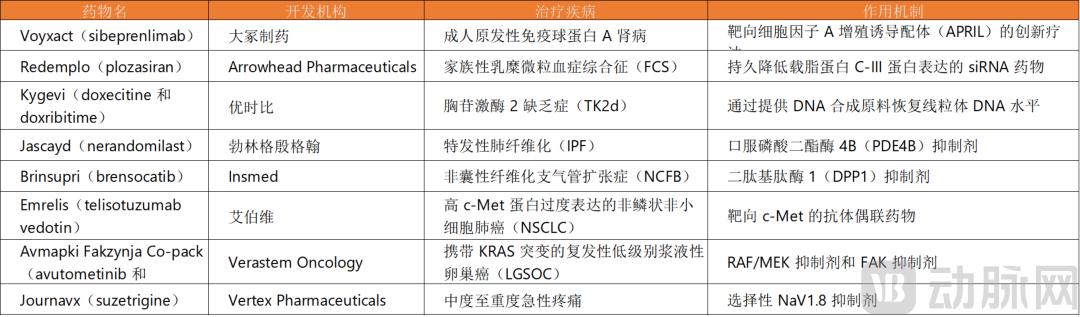
Table: "First-in-class" drugs recognized as breakthrough therapies by the FDA
More than half of the newly approved drugs are first-in-class, and innovative drugs have entered the era of "mechanism-driven" development
Why is the industry so enthusiastic about developing drugs with entirely new mechanisms? From the perspective of clinical needs, for many diseases, especially rare diseases and complex chronic diseases, existing treatment methods often fail to meet patients' needs. For example, in the case of non-cystic fibrosis bronchiectasis (NCFB), before the approval of Brinsupri (brensocatib), there was a lack of effective targeted treatment drugs in clinical practice. Patients had to rely on physical sputum drainage and antibiotics, which severely affected their quality of life. As a "first-in-class" inhibitor targeting dipeptidyl peptidase 1 (DPP1), Brinsupri solves the problem at the root of the pathogenesis by inhibiting the activation of neutrophil serine proteases that drive chronic airway inflammation in NCFB within neutrophils, bringing new hope to patients.
Another example is for adult and pediatric patients with diffuse midline glioma carrying the H3K27M mutation and whose disease has progressed after previous treatment. Previously, treatment options were extremely limited, and the prognosis for patients was extremely poor. Modeyso (dordaviprone) developed by Jazz Pharmaceuticals not only inhibits dopamine receptors and weakens the activation of the RAS signaling pathway mediated by dopamine receptors but also over-activates the innovative target ClpP, leading to the selective degradation of mitochondrial proteins and causing cancer cells to die due to a shortage of energy supply. This unique mechanism of action provides new treatment options for such patients and also demonstrates the potential of drugs with entirely new mechanisms in tackling difficult diseases.
From a commercial perspective, once the development of a "first-in-class" drug is successful, the enterprise will gain a first-mover advantage in the market and receive substantial returns. During the patent protection period, the enterprise can exclusively sell the drug and obtain high profits. At the same time, it also helps to enhance the enterprise's brand image and R & D capabilities.
Among the new drugs approved in 2025, 8 drugs received the breakthrough therapy designation, which is closely related to innovative mechanisms. The breakthrough therapy designation aims to accelerate the development and review of drugs used to treat serious or life-threatening diseases, and preliminary clinical evidence indicates that they have a substantial improvement over existing treatments. Drugs that receive this designation usually have unique innovative mechanisms and can bring significant improvements in efficacy to patients. For example, Brinsupri was approved for marketing through the accelerated approval pathway due to its innovative mechanism of action and good clinical data, which also reflects the regulatory authorities' encouragement of truly innovative drugs. Through policy support, the R & D and marketing process of innovative drugs is accelerated, allowing patients to benefit more quickly.
Small molecule drugs remain the mainstay, but the "approach" has changed
Among the new drugs approved by the CDER in 2025, small molecule drugs accounted for as high as 66%. This data highlights the unshakable position of small molecule drugs as the mainstay in the field of new drug research and development. Although small molecule drugs have always been an important part of drug R & D, in 2025, the internal innovation dimension has been significantly improved, and the "approach" has undergone profound changes, shifting from the traditional "pan-inhibition" mode to the "precision regulation" mode.
Traditional small molecule drugs often exert their effects by broadly inhibiting targets. Although this method can treat diseases to a certain extent, it is also prone to cause more side effects because while inhibiting the disease-causing targets, it may also affect other targets related to normal physiological functions. Nowadays, with the continuous in-depth research on disease mechanisms and target structures, the design of small molecule drugs is more refined, aiming to achieve precise regulation of specific targets, improving efficacy while reducing side effects.
Allosteric inhibitors are an important manifestation of the precise regulation of small molecules. For example, Myqorzo (aficamten, an allosteric cardiac myosin inhibitor) developed by Cytokinetics was approved in December 2025 to treat adult patients with symptomatic obstructive hypertrophic cardiomyopathy (oHCM). By binding to a unique allosteric site of cardiac myosin to reduce contractility, it is more precise than traditional direct inhibition, reducing interference with normal physiological processes and improving safety and tolerance. The key phase 3 SEQUOIA - HCM study showed that after 24 weeks of treatment, the peak oxygen uptake (pVO2) of patients increased by 1.8 mL/kg/min compared with the baseline, significantly better than the placebo group (0.0 mL/kg/min), verifying the efficacy of precise regulation.
The rise of covalent drugs also demonstrates the innovative "approach" of small molecule drugs. Covalent drugs achieve a long - lasting inhibitory effect by forming stable chemical bonds with targets. In 2025, the FDA approved several covalent drugs, such as the EGFR inhibitor Zegfrovy (sunvozertinib), which provides new treatment options for adult patients with non - small cell lung cancer (NSCLC) carrying EGFR exon 20 insertion mutations. Traditional EGFR inhibitors often have problems with drug resistance, while covalent drugs can more effectively inhibit target activity by forming stable covalent bonds with targets, overcoming some drug - resistance problems and increasing target occupancy. Administering at a lower dose can achieve good treatment results, not only reducing the amount of drug used but also lowering the risk of side effects, showing broad clinical application prospects.
Then there is Journavx (suzetrigine) developed by Vertex Pharmaceuticals, an oral selective NaV1.8 inhibitor. Through an allosteric inhibition mechanism, it achieves a high degree of selectivity for NaV1.8, with a selectivity for the NaV1.8 ion channel 30,000 to 40,000 times that of other NaV channels. NaV1.8 is mainly expressed in pain - sensing neurons of the peripheral nervous system and is responsible for transmitting pain signals to the spinal cord and brain. Journavx precisely blocks the transmission of pain signals by highly selectively inhibiting NaV1.8, thereby effectively treating moderate to severe acute pain.
Compared with opioid drugs, it not only provides good analgesic effects but also avoids side effects such as addiction, which is exactly the advantage brought by the precise regulation of small molecule drugs. In two phase III clinical studies, NAVIGATE1 and NAVIGATE2, Journavx was able to rapidly reduce moderate to severe acute pain and was effective as a single agent within 48 hours. The incidence of side effects such as nausea and vomiting was significantly lower than that of the opioid group, and patients had better tolerance, bringing new hope to the field of pain treatment.
Modeyso (dordaviprone) developed by Jazz Pharmaceuticals was approved for the treatment of adult and pediatric patients with diffuse midline glioma aged 1 year and older, carrying the H3K27M mutation and whose disease has progressed after previous treatment. By precisely regulating multiple targets, Modeyso provides a new treatment strategy for patients with this refractory tumor and also demonstrates the potential of small molecule drugs in the precise treatment of complex diseases. Previously, treatment options for diffuse midline glioma were limited, and the prognosis for patients was poor. The emergence of Modeyso has brought a turning point to this dilemma, and its precise regulation of new targets such as ClpP has opened up new ideas for tumor treatment.
The rise of peptide and nucleic acid therapies, and RNA - targeted therapy has entered a harvest period
Beyond traditional small molecule and antibody drugs, peptide and nucleic acid therapies reached an important development milestone in 2025. Multiple new drugs with innovative treatment modalities were approved by the FDA. This field is gradually becoming an important force in new drug development, marking the transition of RNA - targeted therapy from concept to normalcy and bringing new hope for the treatment of many refractory diseases.
With the maturity of the development technology for peptide and nucleic acid drugs, the FDA has approved an average of 4 such new drugs per year in recent years. Among the 3 "first - in - class" oligonucleotide therapies approved in 2025, Qfitlia (fitusiran), an siRNA therapy, provides a revolutionary preventive solution for hemophilia patients by inhibiting the production of antithrombin in the liver and balancing hemostatic function. As a rare hereditary bleeding disorder, hemophilia has a high risk of bleeding due to a lack of clotting factors, and the treatment of patients with inhibitors is even more complex. Qfitlia breaks the traditional treatment model. The phase III ATLAS study showed that it can significantly reduce the annualized bleeding rate in patients with or without inhibitors (71% and 73% reduction respectively). Moreover, the drug is administered subcutaneously only 6 times a year, greatly improving patient compliance and is expected to reshape the treatment landscape for hemophilia.
The antisense oligonucleotide therapy Dawnzera (donidalorsen) is an RNA - targeted drug used to prevent attacks of hereditary angioedema (HAE). Hereditary angioedema is an autosomal dominant genetic disease. Its pathogenesis is mainly related to the functional defect or insufficient quantity of C1 esterase inhibitor (C1 - INH), leading to the excessive production of vasoactive substances such as bradykinin, which in turn causes localized edema attacks in the skin and mucous membranes, which can involve the extremities, face, gastrointestinal tract, respiratory tract, etc. In severe cases, it can lead to asphyxiation and death due to laryngeal edema.
Currently, clinical treatment for HAE mainly includes treatment during acute attacks and preventive treatment. Traditional acute - attack treatments can only relieve symptoms during an attack, and preventive treatment options are limited. Dawnzera is administered subcutaneously and targets and silences the prekallikrein (PKK) gene to reduce bradykinin production, thereby preventing edema attacks. The key phase III OASIS - HAE study showed that administering the drug every 4 weeks can reduce the HAE attack rate by 81% - 87%, and administering it every 8 weeks can reduce it by 55% - 60%, providing a long - acting preventive treatment option for HAE patients, filling the gap in the field of long - acting preventive therapies, significantly reducing the attack frequency of patients, improving their quality of life, allowing patients to better control their condition, and reducing the pain and risks brought by disease attacks.
Redemplo (plozasiran) is an siRNA therapy approved by the FDA to reduce triglycerides in adult patients with familial chylomicronemia syndrome (FCS). Familial chylomicronemia syndrome is an extremely rare autosomal recessive genetic disease. Due to gene mutations in key enzymes or apolipoproteins involved in chylomicron metabolism, the activity of lipoprotein lipase (LPL) is severely reduced or absent, resulting in a large accumulation of chylomicrons in the blood. Patients have extremely high triglyceride levels and are prone to severe clinical symptoms such as pancreatitis, seriously threatening their health.
Current treatment methods have limited efficacy for FCS patients, and patients urgently need more effective treatment methods. Plozasiran reduces triglyceride levels by down - regulating apolipoprotein C - III (APOC3), restoring lipid levels to normal and bringing new hope to FCS patients. Previously, Arrowhead Pharmaceuticals announced that the FDA had accepted the new drug application (NDA) for its siRNA therapy plozasiran for the treatment of FCS. This therapy has also been submitted for marketing approval in China and has been included in the priority review, reflecting global attention to the treatment of FCS and expectations for this innovative therapy.
In the field of peptide drugs, the FDA accelerated the approval of the "first - in - class" drug Forzinity (elamipretide), bringing the first approved therapy for patients with Barth syndrome. Barth syndrome is a rare X - linked genetic disease that mainly affects males. It is caused by a mutation in the tafazzin gene, leading to a decrease in cardiolipin and mitochondrial abnormalities. Patients have symptoms such as exercise intolerance and heart failure, and 85% of early deaths occur before the age of 5.
As a mitochondrial cardiolipin - binding agent, Forzinity improves mitochondrial structure and function by targeting the inner mitochondrial membrane. Its approval is based on the TAZPOWER phase 2/3 trial and 192 - week extension - phase data. Although the primary endpoint of the randomized trial was not superior to the placebo, during the extension phase, the knee extensor muscle strength of patients significantly improved compared with the baseline (the median baseline muscle strength was 124 Newtons). This drug is also the first approved therapy targeting mitochondria. Although further verification of its clinical benefits is needed, it provides a new direction for the treatment of Barth syndrome and other mitochondrial - related diseases.
ADC is not limited to "anti - cancer," with parallel progress in mechanism innovation and indication expansion
Antibody - drug conjugates (ADCs), as one of the rapidly developing treatment modalities in the field of cancer treatment, only had 2 drugs approved in 2025. However, they have made remarkable progress in mechanism innovation and indication expansion, gradually changing the treatment landscape for cancer and other diseases.
Datroway (datopotamab deruxtecan) approved in 2025 is a typical representative of the evolution of ADC mechanisms. It is generated by conjugating a humanized monoclonal antibody targeting Trop2 with an innovative DNA topoisomerase I inhibitor (DXd) through a cleavable tetrapeptide linker. In breast cancer treatment, Datroway shows unique advantages. The topoisomerase I inhibitor DXd it carries has a unique mechanism of action, with 10 - fold higher activity compared to the common chemotherapy drug irinotecan. Moreover, this drug has a strong ability to penetrate cell membranes. This characteristic enables it to kill nearby cancer cells after killing the cancer cells that have engulfed the ADC, producing a "bystander effect."
The "bystander effect" is particularly important for breast cancer tumor tissues with high heterogeneity. Breast cancer cells are not uniformly distributed in the tumor tissue, and there are different sub - populations. Some cancer cells may be difficult to be completely eliminated by traditional single - target drugs due to reasons such as low Trop2 expression levels. With the "bystander effect," Datroway can continue to act on surrounding cancer cells with low or no Trop2 expression but adjacent to high - expressing cells after killing cancer cells with high Trop2 expression, effectively overcoming the problem of tumor heterogeneity and improving the treatment effect. When treating adult patients with unresectable or metastatic hormone - receptor (HR) - positive, human epidermal growth factor receptor 2 (HER2) - negative breast cancer, Datroway significantly prolongs the progression - free survival of patients, providing new and effective treatment options for such patients and changing the previous situation where treatment options for these patients were limited.
The potential of ADC drugs is not limited to breast cancer, and there have also been important breakthroughs in other cancer fields such as lung cancer. Datroway received accelerated approval from the FDA in June 2025 for the treatment of NSCLC, bringing new hope to lung cancer patients.
For non - small cell lung cancer patients, especially those whose condition has progressed after multiple lines of treatment, treatment options are extremely limited. Datroway precisely delivers the highly active topoisomerase I inhibitor DXd to cancer cells by targeting Trop2, which is highly expressed in lung cancer, achieving precise strikes against cancer cells. In clinical trials, Datroway has shown good efficacy in previously treated NSCLC patients, significantly improving the objective response rate and prolonging the survival of patients. For some NSCLC patients with drug - resistance problems, due to its unique mechanism of action, Datroway may also play a role, opening up new treatment pathways for drug - resistant patients.
In addition to continuous expansion in the field of cancer treatment, exploration of ADCs in non - cancer fields is also gradually underway. In the field of autoimmune diseases, ABBV - 3373 developed by AbbVie has undergone relevant exploration. It consists of adalimumab and a novel glucocorticoid receptor modulator (GRM), aiming to regulate the TNF - mediated inflammatory pathway by directly delivering the payload GRM to activated immune cells expressing TNFα.
Although AbbVie has terminated the ABBV - 3373 project, it provides important ideas for subsequent research. Hengrui Medicine in China has disclosed a patent for CD40ADC, exploring its use in the treatment of autoimmune diseases; Ying'en Biotech has disclosed a patent for BDCA2ADC, using glucocorticoids as the payload for the treatment of autoimmune diseases. In the field of anti - infection, RG - 7861 developed by Genentech is an Anti - S. aureus AAC. It is composed of a THIOMAB™ IgG1 that recognizes Staphylococcus aureus and a rifamycin - type antibiotic. After the antibody binds to Staphylococcus aureus and enters phagocytes, the rifamycin - type antibiotic is released and kills the Staphylococcus aureus inside phagocytes. It is currently in phase 1 clinical trials. These studies indicate that ADCs are expected to provide new strategies for the treatment of autoimmune and infectious diseases by precisely delivering specific drug payloads to diseased cells.
From a more macroscopic perspective, ADC technology is developing towards becoming a platform - type technology. With a deeper