Can a pair of AI insoles priced at 1,288 yuan really replace a skiing coach?
"Scientific exercise is more important than worrying about falling."

More and more new product forms are emerging. A recent interesting product I've seen is an AI ski insole that claims to be a coach.
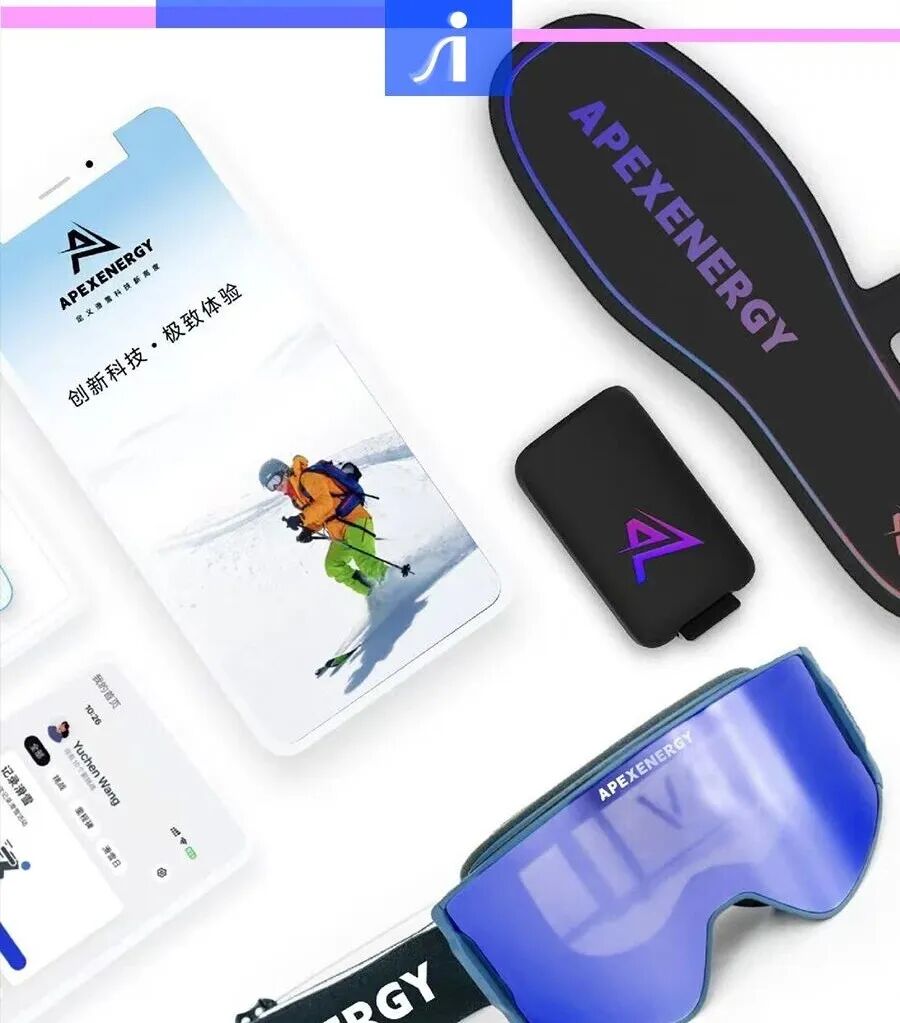
The insole was developed by Li Haowen, a former wrestler. It looks similar to an ordinary insole but is stiffer. There are 84 sensors arranged in an array in the stress areas such as the soles and heels of the feet. There is an extended connection line at the back of each of the two insoles, which can hang outside the ski boots and connect to a small square battery.
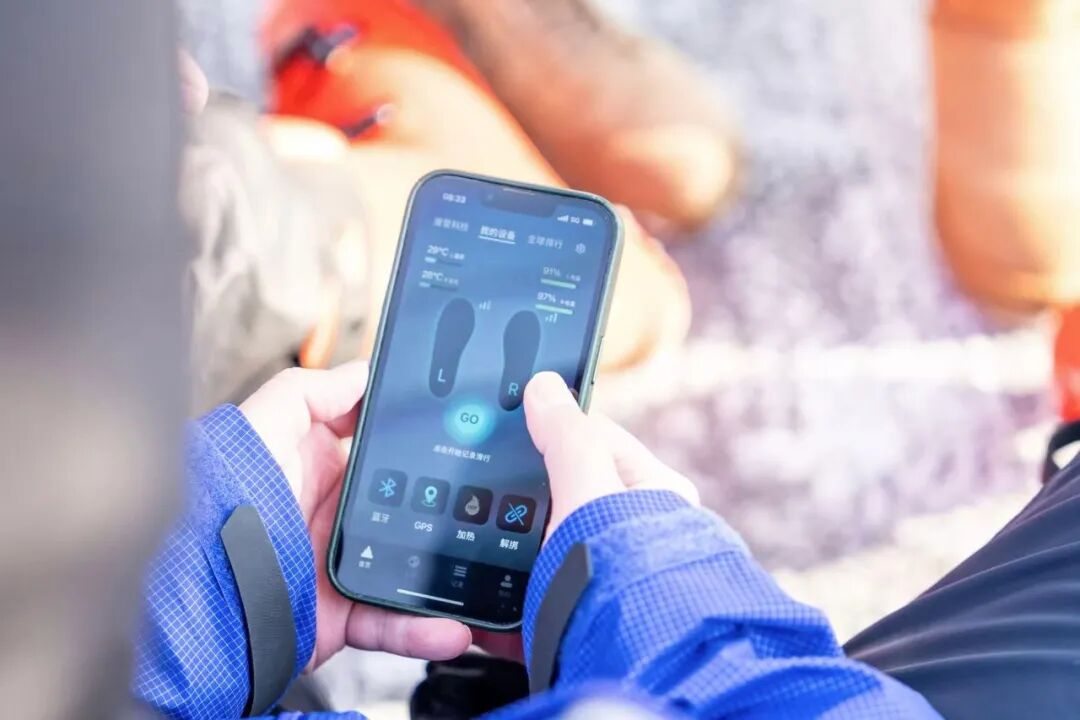
When in use, the dense sensors in the insole can collect every tiny force exerted by the feet and transmit the data back to the mobile app. The self-developed AI sports model will analyze the user's skiing speed and edge angle based on this data, remind you where you are likely to fall, and even whether you should change to new equipment. Of course, it also has one of the most basic and highly demanded functions - heating.
Li Haowen was a wrestler in the US Sports Alliance. Since he started high school in the US at the age of 14, he "has seen many very high-tech training methods", such as infrared capture, while "at that time in China, only the top champion athletes could access these things."
In 2021, Li Haowen returned to China. He watched Su Bingtian train in a stadium in Shenzhen. At that time, Su was doing infrared capture to measure his explosive power and the fluency of his entire movement. "At that time, I thought, actually, we ordinary people also need this because incorrect postures can lead to injuries."
Li Haowen wanted to create something that could perform motion capture in any scenario. "Most of a person's (sports) power comes from their feet." So he decided to implant sensors into the insole and self-developed a large model specifically for sports. After collecting data, it calculates the relationships between various forces, speed, space, etc., to determine a person's movement trajectory and behavioral habits.

Li Haowen hopes that this pair of AI insoles can ultimately predict the parts of the body that are likely to be injured based on the user's sports characteristics. For example, it can provide personalized corrections for repeatedly occurring incorrect behaviors and even guide the user on how to exercise correctly through precise analysis, which is the so - called "AI coach".
After that, he chose skiing as a practical application scenario for this pair of insoles because it has enough variables and complex data. Once it is successfully developed for skiing, it will be relatively easy to apply the technology to other sports. Another point is that they have noticed the growth of the skiing economy in recent years and the rapidly expanding population base of skiers.
In 2023, Li Haowen founded the brand Aizhou Technology. After one year of skiing data collection, nearly two years of large - model research and development, and insole hardware development, in October 2025, the first AI ski insole, APEXENERGY, mentioned above was launched at a price of 1288 yuan. It is said that more than 400 pairs were sold to individual consumers in two months after its launch.
Currently, they plan to shift the main retail market of the insoles overseas, to areas with relatively mature skiing markets such as Austria, Switzerland, Canada, and even Japan. In China, they will focus more on app subscriptions, including coaching courses from internationally certified skiing teaching systems.
As another ski season approaches, "Future Human Laboratory" had a conversation with Li Haowen. The following is the content of the interview, sorted out and released by "Future Human Laboratory" -

Why does a pair of insoles cost 1288 yuan?
Future Human Laboratory: A pair of insoles is sold for 1288 yuan. What is your pricing standard?
Li Haowen: Essentially, our product is not a necessity like a ski board. So we investigated the prices of single - piece ski equipment for the general skiing enthusiasts, such as helmets, goggles, headgear, and thermal clothing. Then we set the price at a relatively average level, which is a little over 1000 yuan.
Future Human Laboratory: Did you ever hesitate? Did you think this price would be a challenge for individual consumers?
Li Haowen: Yes, but if the price is lower, it may not seem like a high - tech product anymore.
Future Human Laboratory: Why do you think it's worth the price? What services can this insole provide to users?
Li Haowen: First of all, there should be no problem with this hardware for 3 to 5 years. We will definitely have new products out in 3 to 5 years, so we currently offer a 3 - year warranty.
It can predict potential injuries based on the skier's skiing characteristics. Since everyone has different skiing postures, if a user always exerts force in a certain way and often falls at a particular point, we can predict where on the slope they are likely to fall and which part of the body will be injured first.
It can also predict some hidden sports - related problems. For example, in skiing, incorrect force application can cause knee pain. We can identify the force - exertion characteristics of such people, mark them, and then recommend some rehabilitation training content to users.
We also collect a large amount of general data. For example, on the same slope, if 100 people are skiing, there may be a common point where they are prone to get injured.
More deeply, through the collection of an individual's data over a certain period, our self - developed AI large model can calculate the user's skiing tendency, which is more customized.
The core selling point of our product may not be to improve the quality of sports but more importantly, to protect the user.
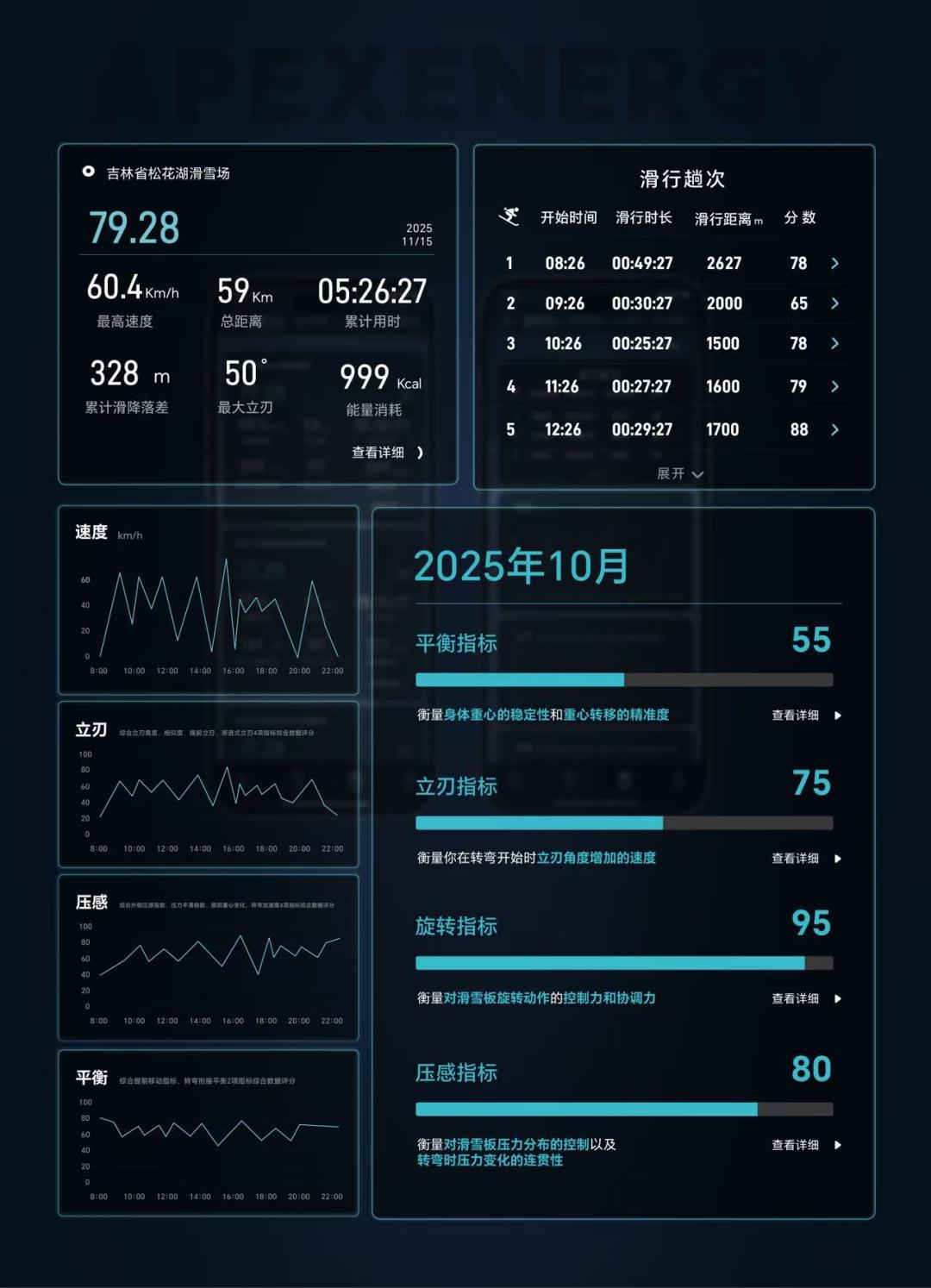
●APEXENERGY skiing data interface
Future Human Laboratory: How much data needs to be collected to accurately judge an individual?
Li Haowen: According to the current integrity of our model, a user needs 20 skiing hours to receive a fully customized service without errors.
We currently offer some customized services to users, such as growth curves and personal ability distributions, which are billed monthly. One - time data collection is not enough because the data fluctuates too much. Moreover, the data we collect is not only from the slopes. As long as the insole is connected, we will collect data through GPS and pressure sensors, including when the user is walking in the shoes. So for ordinary users, skiing for one or two days can usually accumulate about 20 hours of data, and then we can calculate their skiing tendencies.
Future Human Laboratory: How was the 20 - hour standard determined?
Li Haowen: We calculated it during the data - marking process. It takes about 5 minutes for a user to ski down a slope with about 10 turns. Each turn has its own characteristics. After one run, you will find that some users repeat certain incorrect movements, which become obvious characteristics. When we mark the data in the background, we can identify the user's problems. Excluding terrain and weather factors, we can analyze the pressure issues caused by the body structure and joints.
As our model becomes more complete, the data - collection time will gradually decrease. In the future, we may be able to determine a person's skiing style and characteristics after just one or two runs.
Future Human Laboratory: Who is the main target group?
Li Haowen: Currently, a large number of our users are individual consumers. Most of our male users are between the ages of 35 and 70. They spend at least 100,000 to 200,000 yuan on outdoor sports every year. Besides skiing, they usually participate in 2 to 3 other types of outdoor sports. They have long - term sports habits, as well as the time and money to support them. The oldest user is a 69 - year - old man from Hong Kong. He just climbed a 5000 - meter mountain this year, wearing ski boots and carrying a snowboard, then skied down.
Users under 35 also have a relatively high acceptance of our product. They are well - educated and quick to understand new technologies. However, these users need to be cultivated, for example, in terms of their consumption ability. When a person can afford to buy a complete set of skiing equipment on their own, they may become our user.
Users of our product must have received some education, have awareness of training and consumption, and understand the importance of a healthy lifestyle and scientific training methods for long - term well - being.
Another part of our customer base includes national teams, competitive teams, and youth training teams. They purchase our training system. For the insoles, they only keep the sensors and chips because they usually only change the hard shells, not the inner liners. They don't need many algorithms, just the data.
There is also cooperation with ski equipment manufacturers. Ski equipment manufacturers have a pain point: they lack the ability to manage users. Users may spend tens of thousands of yuan on their products every year, and the brand may offer a few training spots. However, they want to know the users' usage habits, skiing levels, and the wear and tear of the shoes. These are the three core requirements of ski boot manufacturers. They are even willing to spend 1000 yuan to buy back users' old shoes to study their wearing habits and product wear. What we can provide them is this data, such as how many times a user goes to the ski resort in a year, the wear and tear of the shoes, and the user's skiing level. This is related to repeat purchases.
Our cooperation with ski boot manufacturers is similar to that with youth training teams. We implant our modules into the inner liners of their boots. The hardware is sold at cost, and we charge a certain amount of user management fees. They can also push some related products and services to users based on their usage habits, such as shoe - repair services and board - repair services. When a user's skiing skills reach a bottleneck, we can recommend new equipment to them.
Many people think, "I can't improve my skiing because of the equipment," and they are very convinced, saying, "I became faster after changing that equipment."
Future Human Laboratory: How has the individual consumer sales been since its launch?
Li Haowen: We have sold 400 pairs so far. We are now planning to sell the hardware overseas because the European market has been well - educated. Children start skiing at the age of 4 or 6, and the popularity is very high.
Future Human Laboratory: How do you plan for the domestic market?
Li Haowen: We plan to produce a large number of devices and place them in ski resorts. Previously, the rental fee was 59 yuan per day. Now we have changed the rental model to a subscription model. Users need to pay a 500 - yuan deposit to use the insoles. They can view their skiing data on the app. They can view more than 20 types of data for free, as well as 5 - 10 teaching videos from international coaches. If they want to view more detailed data and courses, they need to subscribe for 399 yuan per year.
This is mainly to collect data and lower the threshold to encourage more people to start using the product and develop usage habits.

"What we want to create is not just an insole, but an AI coach."
Future Human Laboratory: You said you have collected more than 20,000 hours of data. Are there any interesting stories in this data?
Li Haowen: The most interesting one is the data of a snowboarder. This person has a skiing characteristic of liking to lean inward. When skiing in an S - shaped curve, the movement at the entrance of the turn is called edge rolling. At this point, after reaching the maximum peak, the pressure starts to be released. Many people tend to lean inward at this moment.
Currently, there is a popular technique called "ground - hugging carving." Many people actively lean inward to pursue this technique. This leads to a problem: insufficient pressure release on the upper and lower boards, increased pressure on the inner foot, and they may be thrown out and fly high. This is a very common mistake for this person, occurring about 2 to 3 times.
Normally, if you want to perform a large - scale carving posture or a high edge - angle turn and maintain body stability, you need to put 70% of your body weight under your feet to achieve this.
Future Human Laboratory: Didn't he realize this problem before?
Li Haowen: He realized it before, but being thrown out was not a frequent occurrence, so he would adjust himself. Maybe when he was testing our product, he really wanted to have a high - performance skiing session, but he didn't master the most basic principle, so this problem occurred.