Autonomous Driving Year-End Review 2025: Emerging from "Adolescence", Shifting from Technological Showmanship to Global Implementation
In 2025, the autonomous driving industry quietly completed a silent coming-of-age ceremony.
There was a time when autonomous driving was the eye-catching concept cars on technology exhibition stands, the bold claim of "replacing human drivers within a decade" from Silicon Valley elites, and the "sexy track" chased by hot money from capital. However, when Tesla's FSD frequently stopped in front of traffic cones on Chinese streets and when Robotaxis circled around in an empty industrial park at night, people began to wonder if this technology would always be stuck in the cycle of "just wait another five years."

But in 2025, everything changed quietly. In this year, there were no earth-shattering declarations, but there were solid milestones. Pony.ai and WeRide both passed the record-filing with the China Securities Regulatory Commission and prepared for their listings on the Hong Kong Stock Exchange. MogoAuto, in cooperation with BYD, won Singapore's first official project for L4 autonomous buses, marking the first time that a Chinese solution was integrated into the public transportation backbone network of a developed country. Shenzhen, Beijing, Shanghai and other cities successively opened commercial operations of "driverless in the main seat." The approval system for L3 autonomous driving was approaching...
Autonomous driving finally emerged from its "adolescence."
Accelerated Overseas Expansion of Chinese Solutions, Multi-scenario Implementation Opens Up Incremental Space
In 2025, Chinese autonomous driving companies significantly accelerated their globalization pace. From technology output to project implementation, from single scenarios to diversified cooperation, Chinese solutions are playing an important role in the global intelligent transportation construction. Among them, MogoAuto winning the Singapore project and WeRide's overseas operation expansion became two landmark events.
In October, the Land Transport Authority (LTA) of Singapore announced that a consortium composed of MogoAuto (MOGOX), MKX Technologies and BYD won Singapore's first official pilot project for L4 autonomous buses. This was the first time that L4 autonomous bus services were introduced in Singapore's public transportation history and also the first time that a Chinese full-stack autonomous driving technology solution was incorporated into an overseas public transportation system.
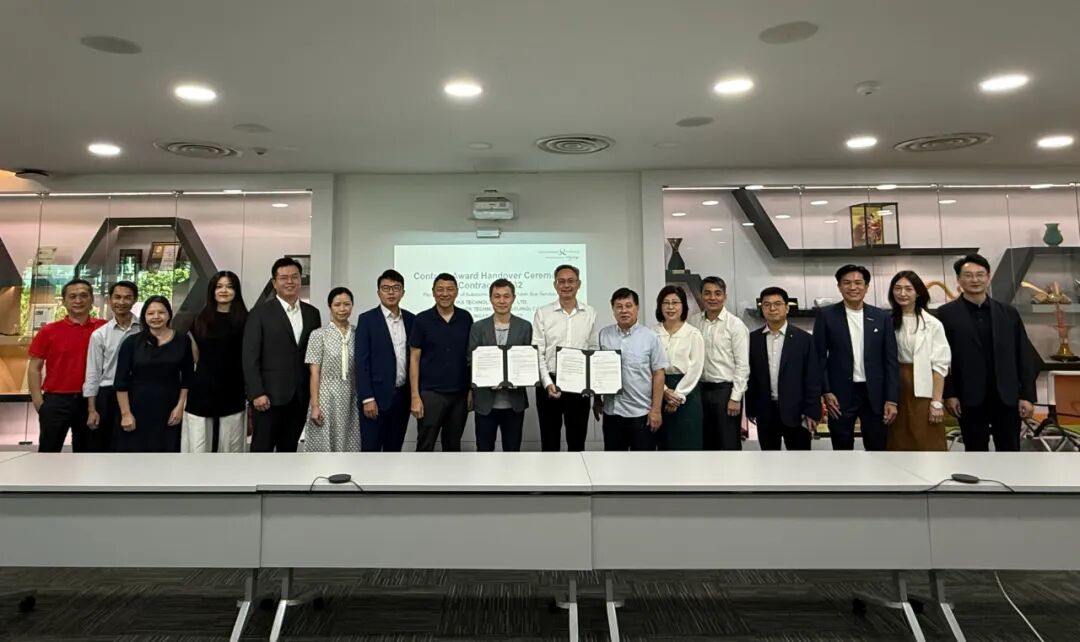
The winning project is highly "practical." According to the plan, in the second half of 2026, autonomous buses will be put into operation on Line 191 in Singapore's one-north and Line 400 in Marina Bay and Shenton Way. These two lines are both located in the transportation and commercial core areas of Singapore, connecting popular places such as the Marina Bay Cruise Centre, Gardens by the Bay and subway stations. They need to face complex road conditions such as morning and evening peak crowds and non-motor vehicle crossings, posing extremely high requirements for the safety and reliability of the technology.
The core reason why MogoAuto stood out is that it has the capabilities of "L4 full-stack technology + city-level AI dispatching platform + commercial implementation on main roads in developed countries" at the same time. The company uses an "end-to-end perception model + hybrid architecture" and combines its self-developed AI large model for the physical world, MogoMind, to endow vehicles with in-depth cognition and autonomous decision-making capabilities. Before this, MogoAuto's autonomous buses, MOGOBUS, had achieved regular operations in more than 10 provinces in China, with a cumulative safe driving mileage exceeding 2 million kilometers and serving more than 200,000 passengers. They also provided shuttle services at international events such as the United Nations Global Conference of Environmental Scientists and the F1 Chinese Grand Prix. This marks that Chinese autonomous driving companies are moving from "single-vehicle intelligent output" to "system-level overseas expansion" - no longer just technology suppliers, but co-builders of urban intelligent transportation.
For the industry, the significance of this project far exceeds a single commercial cooperation. As a globally recognized "intelligent transportation test field," Singapore's 2040 Land Transport Master Plan lists autonomous driving as the core upgrade direction. MogoAuto's successful implementation not only provides a "high-density city sample" for the overseas expansion of Chinese autonomous driving technology, but also enhances China's voice in the formulation of global autonomous driving standards. Lü Bin, the vice president of MogoAuto, said that in the future, they will deepen cooperation with Singapore's transportation department to help build a global sustainable public travel service system.
In addition to the public transportation field, the global operation of Robotaxis is also accelerating. In December, WeRide and Uber jointly launched a public Robotaxi operation service in Dubai, covering areas such as Umm Suqeim and Jumeirah. Safety drivers were initially equipped, and the plan is to achieve driverless operation in early 2026. At the same time, Tesla launched a small-scale test of Robotaxis in the south of Austin, the United States in June, with about 20 Model Ys put into the test initially to verify the driverless operation path. Its Cybercab project is expected to be launched in 2026. The implementation of multi-scenarios globally is promoting the cross-regional optimization and iteration of autonomous driving technology.

L3 Moves from Paper to the Streets, Dual-city Pilots Outline the Commercialization Path
The development of the autonomous driving industry has always been inseparable from the support and guidance of policies. In 2025, China made a key leap from "pilot exploration" to "standardized approval" in the policy level of autonomous driving. The most milestone event is the official implementation of L3 autonomous driving.
In April, Beijing took the lead in implementing the Regulations on Autonomous Vehicles, clearly including L3 autonomous driving in the personal passenger car scenario and for the first time clearly defining the boundary between "system responsibility" and "driver responsibility." When the vehicle is in the L3 operating state, the system is responsible for driving behavior, and the driver only needs to respond in time after receiving a takeover prompt from the system. The introduction of this regulation provides an important local practice sample for the subsequent national-level approval policy.
In September, eight departments including the Ministry of Industry and Information Technology jointly issued the Work Plan for Stable Growth of the Automobile Industry (2025 - 2026), clearly proposing to "conditionally approve the production and approval of L3 models," directly pressing the "accelerator button" for the mass production and application of L3. The continuous efforts at the policy level have finally provided an outlet for the technology accumulation of automobile enterprises.
December became the "explosion month" for the implementation of L3. On December 15, the Ministry of Industry and Information Technology announced the first batch of L3 conditional autonomous driving vehicle model approval licenses. Two models, Changan Deepal SL03 and BAIC ARCFOX, were successfully selected and obtained the operation qualifications in specific areas of Chongqing and Beijing respectively. Among them, the Changan Deepal SL03 is restricted to specific expressways and congested single lanes in Chongqing, with a speed limit of no more than 50 km/h. The BAIC ARCFOX can operate on designated highways and expressways in Beijing, with the speed limit increased to 80 km/h.
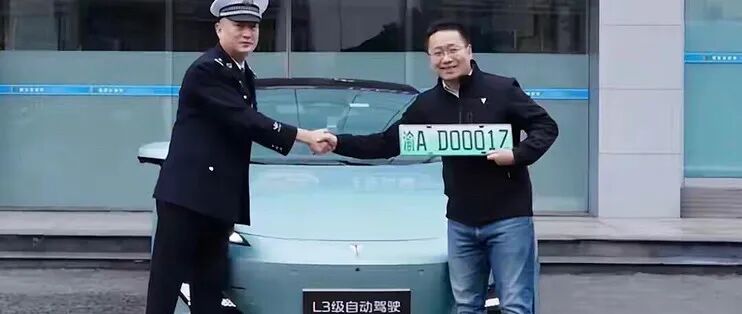
Following this, Chongqing issued the first official L3 special license plate "Yu AD0001Z" in the country to the Changan Deepal SL03, and Beijing also issued three special license plates simultaneously, forming a north-south corresponding pilot pattern between Beijing and Chongqing. On December 26, 46 Changan Deepal SL03s carried out large-scale road tests on complex sections such as the inner ring road in Chongqing to further verify the reliability of L3 in real traffic scenarios. A industry analyst pointed out that "the significance of the Beijing-Chongqing pilot lies not only in the 'first order implementation,' but also in establishing a closed-loop system of 'national approval + local operation,' laying the foundation for the large-scale promotion of L3 in 2026."
Fierce Competition between End-to-End and Localization, Cost Reduction Promotes Equalization of Intelligent Driving
Behind the relaxation of policies is the continuous maturity of technology and the rapid decline of costs. In 2025, the field of autonomous driving technology showed the characteristics of "coexistence of route differentiation and integration." The end-to-end architecture, local adaptation and cost control became the core competition focuses.
In April, Huawei released ADS 4.0 and the WEWA architecture, becoming an important indicator of the industry's technological iteration. This system uses an end-to-end solution of "cloud world engine + vehicle world behavior model," reducing the system delay by 50% and being able to better handle long-tail scenarios such as high-speed congestion and complex urban intersections. The roadmap disclosed by Jin Yuzhi, the president of Huawei's intelligent driving business, at the WNEVC conference in September shows that Huawei plans to complete the high-speed L3 pilot and urban L4 test in 2025, achieve large-scale commercialization in 2026, and promote the large-scale application of L3 and the commercialization of urban L4 in 2027. The advantages of the end-to-end architecture gradually emerged in actual tests, also triggering the industry to re-examine the traditional modular solutions.
Foreign-funded enterprises are also actively deploying locally. On February 25, Tesla China pushed the FSD system (version 2024.45.32.12) to HW4.0 models in batches, using a pure vision solution + local data training, with a one-time purchase price of 64,000 yuan. However, due to the OTA record-filing issue, Tesla suspended the free FSD experience in March and did not restart the service until April 28 after completing the compliance record-filing. It also adjusted the function name to "intelligent assisted driving" to meet the domestic regulatory requirements. Tesla's entry into the Chinese market not only intensified the competition in the high-end intelligent driving market, but also promoted the improvement of the capabilities of local enterprises in data compliance and scenario adaptation.
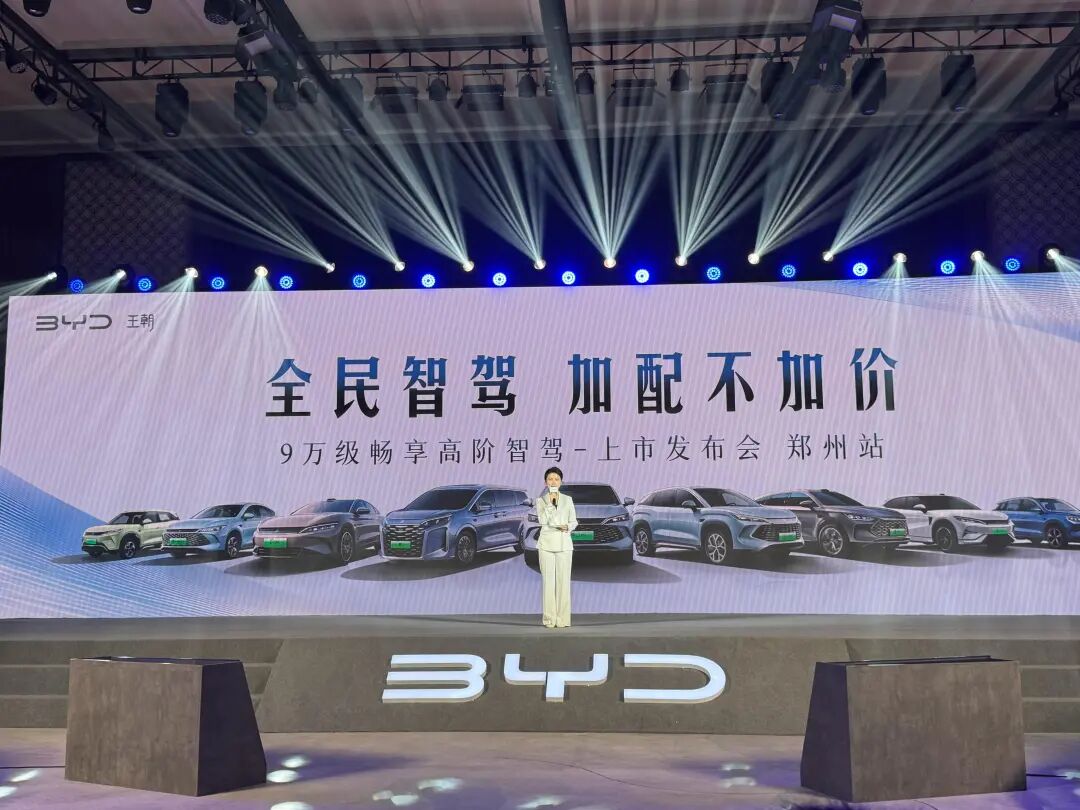
What is more disruptive to the industry is the accelerated arrival of "equalization of intelligent driving." On February 10, the intelligent driving version of BYD Qin L DM-i was officially launched, with a starting price of only 99,800 yuan. The whole series is standardly equipped with the Tian Shen Zhi Yan C assisted driving system, directly bringing high-level intelligent driving functions into the range of less than 100,000 yuan. The launch of this model completely broke the inherent perception that "high-level intelligent driving only belongs to luxury cars," forcing competitors to either cut prices or upgrade the standard configurations. Data shows that by the end of 2025, the penetration rate of high-level intelligent driving in models below 150,000 yuan increased from 5% at the beginning of the year to 18%. Intelligent driving functions are becoming the core competitiveness of new cars.
In the field of Robotaxis, pre-installed mass production is the key to cost reduction. On April 12, Didi and GAC Aion jointly released a pre-installed mass-produced L4-level Robotaxi hardware platform, using a multi-redundancy design and an L2 fallback solution, and planning to achieve mass production and delivery by the end of 2025. With the maturity of pre-installed technology, the cost of a single Robotaxi has dropped from the early one million yuan level to about 300,000 yuan, laying the foundation for subsequent large-scale operations.
Dual Listings Open a New Chapter, Rational Fundraising Focuses on Commercialization
In 2025, the capital market was a "warm current in the cold winter" for the autonomous driving industry. On November 6, Pony.ai and WeRide were both listed on the Hong Kong Stock Exchange, forming a dual primary listing pattern of "US stocks + Hong Kong stocks," becoming the most concerned capital event in the industry throughout the year.
In this listing, both companies focused their fundraising on commercial implementation. According to the listing announcements, Pony.ai's issue price was HK$139 per share, and the fundraising amount after the "greenshoe" option reached HK$7.7 billion. It plans to use 40% of the funds to accelerate the commercialization of L4 autonomous driving technology, including expanding the fleet size and improving the construction of the computing power center. Peng Jun, the founder and CEO of Pony.ai, said at the listing ceremony that the company's current core task has shifted from technology verification to "large-scale" expansion. "This fundraising will be the key support for promoting the implementation of the large-scale strategy." He also revealed that the industry's break-even point is expected to be between 2028 and 2029, and the Hong Kong listing is expected to accelerate the achievement of this goal.

WeRide issued shares at a price of HK$27.10 per share, raising a total of HK$2.39 billion before the "greenshoe" option. The funds will be mainly used for recruiting top global AI and autonomous driving talents, expanding the global Robotaxi fleet size and building a sales service network. Different from Pony.ai's "technology in-depth development," WeRide focuses on the "global implementation" strategy. It has cooperated with Grab to explore the Southeast Asian market and launched a Robotaxi service with Uber in Riyadh, Saudi Arabia. In the second quarter of 2025, its Robotaxi revenue was four times that of Pony.ai.
It is worth noting that the listing process of the two companies was not smooth. On the first day of listing, WeRide's share price was reported at HK$23.50, a 13.28% drop from the issue price. Pony.ai's share price was reported at HK$120.3, also breaking below the issue price. This reflects the capital market's rational understanding of the characteristics of the autonomous driving industry, which is "high investment and slow return." Data shows that in the first half of 2025, WeRide's revenue was about 199 million yuan, and its R & D expenses reached 640 million yuan. Pony.ai's revenue was about 252 million yuan, and its R & D investment was 688 million yuan. The R & D expense ratios of both companies exceeded 300%.
Although the share prices broke below the issue price on the first day, this dual listing still has a benchmark significance for the industry. As the world's first batch of Robotaxi companies to achieve dual listings on the US and Hong Kong stock exchanges, the capital paths of Pony.ai and WeRide provide financing references for other companies in the industry and also let the capital see the long-term value of the autonomous driving industry. A securities analyst pointed out that "in the period of capital withdrawal, leading companies obtain stable financing channels through dual listings, which