Why didn't Manus stay in China?
Although Manus chose to embark on an overseas migration and eventually became part of the global social giant Meta's territory, this does not mark the end of China's AI narrative. Instead, it signals the beginning of a more grand and prosperous era of competition.
From DeepSeek shocking Silicon Valley with its extreme efficiency, to AIGC products like Doubao, Kimi, and Tongyi Qianwen capturing hundreds of millions of users with astonishing growth rates; from Zhipu AI deeply integrating into various industries to reap productivity dividends, to manufacturers like Rokid and Thunderbird making aggressive explorations in AI hardware terminals, China's AI track remains a vast expanse full of diverse players.
Here, there is the world's most complete industrial chain and the most hard - working entrepreneurial community. Manus's departure is just a specific example under the global division of labor.
In the future, the Chinese market will surely, based on its unique local ecological advantages, nurture its own and more vibrant "Manus".
Near the end of the year, an acquisition news shook the tech circle. Meta announced the official acquisition of the parent company of the general AI Agent product Manus, Butterfly Effect. This is Meta's third - largest merger and acquisition since its establishment, second only to the acquisitions of WhatsApp ($19 billion) and Scale AI ($15 billion). After the transaction is completed, Manus will maintain independent operation, and its founder, Xiao Hong, will serve as a vice - president of Meta.
Why did an AI startup team "born and raised in China" with an all - Chinese founding team not stay in the local market for development or be acquired by domestic giants, but instead be taken over by Meta across the ocean?
It all starts with the entrepreneurial background in the AI era.
Genes Rooted Overseas
Founder Xiao Hong graduated from Huazhong University of Science and Technology. The startup began in Wuhan, and the company initially had dual headquarters in Beijing and Wuhan. Early investors also included well - known names such as ZhenFund, Tencent, and Sequoia China. With these elements combined, it's easy to have the illusion that Butterfly Effect is a company that "could have stayed in China".
But what really determines Manus's fate is not where the team is from, but what problems it wants to solve from the very beginning.
When Manus was officially launched in March this year, it was a "general intelligent agent (AI Agent)" product. It has the ability to think independently, plan and execute complex tasks, and directly deliver results. The official introduction video demonstrated Manus's process of performing three tasks: "screening resumes, selecting real estate, and stock analysis".
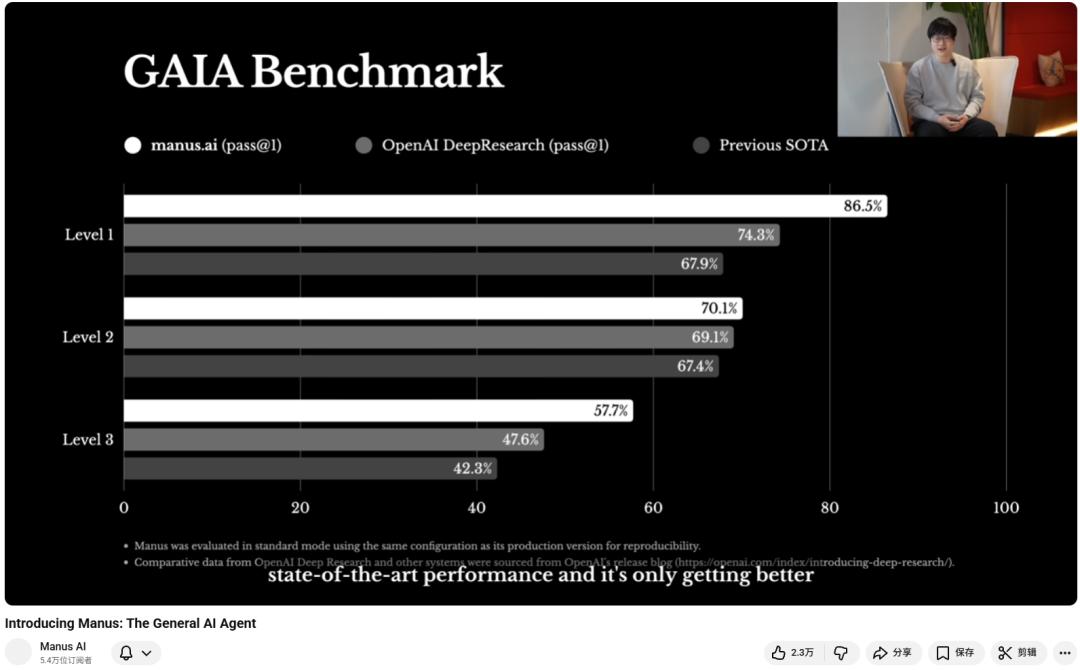
This is a YouTube screenshot of the introduction video.
Put simply, it means "give me an instruction, and I'll do all the work for you". Behind this result - oriented approach, two major supports are needed: unrestricted access and a large amount of interaction data.
Otherwise, when performing complex tasks, any error in one link will lead to a huge deviation.
And Manus can hardly achieve these two points in China. In China, to provide generative AI services, algorithm filing is required, and there are also compliance requirements for data and content.
Manus has no algorithm filing and no self - developed large - scale model. Instead, it creates products by calling APIs of overseas models such as Claude and GPT - 4 or simple encapsulation (this is also the source of the industry's controversy over Manus being a "shell - wrapper"). Sending user interaction data to overseas models would violate review regulations.
Early tests showed that in a restricted environment, Manus's overall task success rate would significantly decline, with stability fluctuating between 50% and 70%. For a product with "delivering results" as its core selling point, this difference in experience is fatal.
Actually, in the early days, Manus also tried to cooperate with Alibaba's Tongyi Qianwen to explore the possibility of launching a "Chinese version". But this attempt failed due to various reasons.
The times have changed. Different from the approach of burning money for traffic in the mobile Internet era, AI startups are leveraging the "model leverage". Wang Hua, the co - CEO of Sinovation Ventures, once said that currently, there is no traffic dividend, but there is a wave of model dividends. The entrepreneurial boom and going global in the AI Agent track are irreversible trends.
Manus bet on the global market from the start. Its official website, registration system, demonstration cases, and pricing methods are almost all designed around overseas users. The English interface is prioritized, registration depends on overseas account systems, and even the payment method supports PayPal, not domestic WeChat Pay or Alipay.
In this regard, Manus didn't "decide not to stay in China" at a certain point. Instead, from the moment the product was defined, it placed itself on a global track. Moving the headquarters to Singapore, laying off the Chinese team, and stopping services in the Chinese region are more like continuous adjustments to the established global route.
In Xiao Hong's own words, "Today's Chinese entrepreneurs should be more radical in globalizing. Everyone should go to the international market to gain experience and participate in global competition, rather than competing in the markets we are accustomed to."
"Acclimatization" in Commercialization
In addition to the product's usage attributes, Manus's business route is also highly compatible with the overseas market. It doesn't try to cover as many users as possible but uses a subscription system to screen professional users willing to pay for efficiency. The subscription fees range from $19 to a maximum of $199 per month, which is quite expensive.
The SaaS process overseas started at the end of the 20th century. After more than twenty years of cloud - based education, both enterprises and users have developed mature SaaS subscription habits.
Just eight months after its launch, the company's annual recurring revenue exceeded $100 million, the cumulative token consumption exceeded 147 trillion, and the number of virtual computer creations exceeded 80 million. Manus has verified the value of its useful product and also reaped rich business returns.
But when this profit model was introduced to the Chinese market, problems began to emerge.
Although Chinese users have a relatively high acceptance of AI, their payment habits are quite different. Especially in the past two years, the Chinese AI application market has been rapidly educated by a large number of free or low - cost products. There are many AI assistants such as Doubao, Wenxin Yiyan, and DeepSeek, and users have become accustomed to obtaining "decent" capabilities at extremely low costs.
In such an environment, persuading users to pay several times or even dozens of times the price for an Agent product requires a longer education period.
More realistically, there is the pressure of inference costs. Every time Manus performs a complex task, it incurs a non - negligible inference cost (computing power, Tokens). Industry estimates suggest that the single - task inference cost fluctuates between $1 and $2. This cost structure can only work with a high - ARPU user group. Once the user scale expands but the payment depth is insufficient, commercialization becomes difficult to sustain.
Domestic Internet giants have achieved commercialization through "traffic harvesting". Although they don't charge software subscription fees, they take up your time, retain you through various free and attractive content (such as short - videos, social media, and search), and then sell the traffic to advertisers.
Based on this, we can imagine that if Manus had stayed in China, it would probably have become a free plugin embedded in the ecosystem of Internet giants, surviving by helping merchants attract traffic or doing customized projects. Its "arrogant" monthly price of $199 has almost no survival soil in the current domestic business environment.
After the acquisition by Meta, a frequently asked question is: Why wasn't Manus bought by a Chinese company?
Actually, in 2024, ByteDance offered $30 million to acquire Butterfly Effect. At that time, the Manus product was not yet fully developed, and the company's core product was still the browser AI plugin Monica.
Xiao Hong was once shaken, but ZhenFund, which had been involved since the seed round, believed that the AI application potential represented by Monica was far greater than that. It persuaded Xiao Hong not to "sell it cheaply". After that, ZhenFund not only continued to invest but also helped the team introduce Sequoia, Tencent, and the top Silicon Valley VC Benchmark.
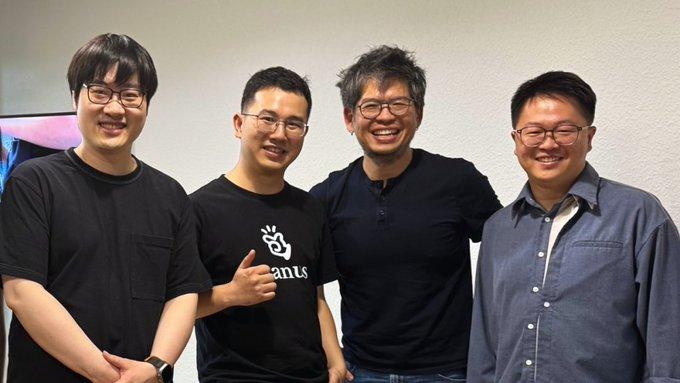
From left to right: Ji Yichao (Co - founder and Chief Scientist of Manus), Xiao Hong (Founder and CEO of Manus), Chen Shijun, Zhang Tao (Co - founder and Product Director of Manus)
As we all know, later, Manus became an overnight sensation, and its valuation soared until it was acquired by Meta.
From a business logic perspective, the fact that domestic Internet giants didn't make the acquisition is just a difference in the phased choices of enterprises.
For large - scale companies, the current core task of AI is still to serve existing businesses. Whether it's content, advertising, or transactions, the main expectation for AI is to improve efficiency, reduce costs, and enhance conversion. This determines that large - scale companies prefer capabilities that can be quickly embedded into the existing system.
This is also the reason why ByteDance didn't actively follow up after its acquisition offer was rejected. According to Jingxuan AI, the inside story is that ByteDance thought the Monica product was a "shell - wrapper", with high traffic investment costs and unoptimistic data retention. It might be replaced by large - scale models in the future. Moreover, ByteDance planned to launch its own Doubao plugin, so the offer price was a bit low.
Tencent's move to strengthen its intelligent agent efforts at the same time, launch Tencent Yuanbao, restructure the organizational structure of large - scale model R & D, and recruit a former OpenAI researcher follows the same logic. They are not blind to the potential of Agent, but believe that this ability can be achieved through internal construction.
Moreover, the general Agent represented by Manus is closer to a potential "next - generation entry point". In other words, this is a more long - term bet. For companies like Tencent and ByteDance that already have mature ecosystems, such a bet is not only expensive but may also form an internal hedge with the existing ecosystem for some time.
Therefore, it's not difficult to understand why domestic giants prefer internal R & D to external acquisitions.
Meta Can't Wait, Manus Is Just in Time
Different from domestic giants that are taking a slow and steady "endogenous" approach, Meta's needs are urgent.
Since Mark Zuckerberg invited Turing Award winner Yann LeCun to establish the FAIR laboratory in 2013, Meta's AI route has long been caught in the internal strife between the "academic school" and the "product school".
There is a natural rift between the research openness advocated by Yann LeCun and the commercialization desire of Mark Zuckerberg. This awkward situation completely evolved into a survival anxiety after the emergence of DeepSeek V3.
Meta's management began to face the most pointed questions: Why does a department that spends billions of dollars and employs thousands of high - paid engineers have a lower output - to - input ratio than the opponent's commando team with only a $5 million budget? This doubt about the effectiveness of the organizational structure directly led to a severe personnel upheaval in the following five months.
From diluting the power of FAIR to spending huge sums to introduce Wang Tao, the founder of Scale AI, to lead a practical - oriented team, Meta tried to heat up the talent market by "head - hunting" top - notch talents and making saturated investments, thus buying time.
Behind this business anxiety is the real dilemma that Meta's core advertising business has been eroded by TikTok, and the metaverse has burned $40 billion with little return.
The latest survey data from the Pew Research Center shows that TikTok is currently the most popular news - related social application among 18 - to 29 - year - olds in the United States, surpassing Facebook and Instagram.
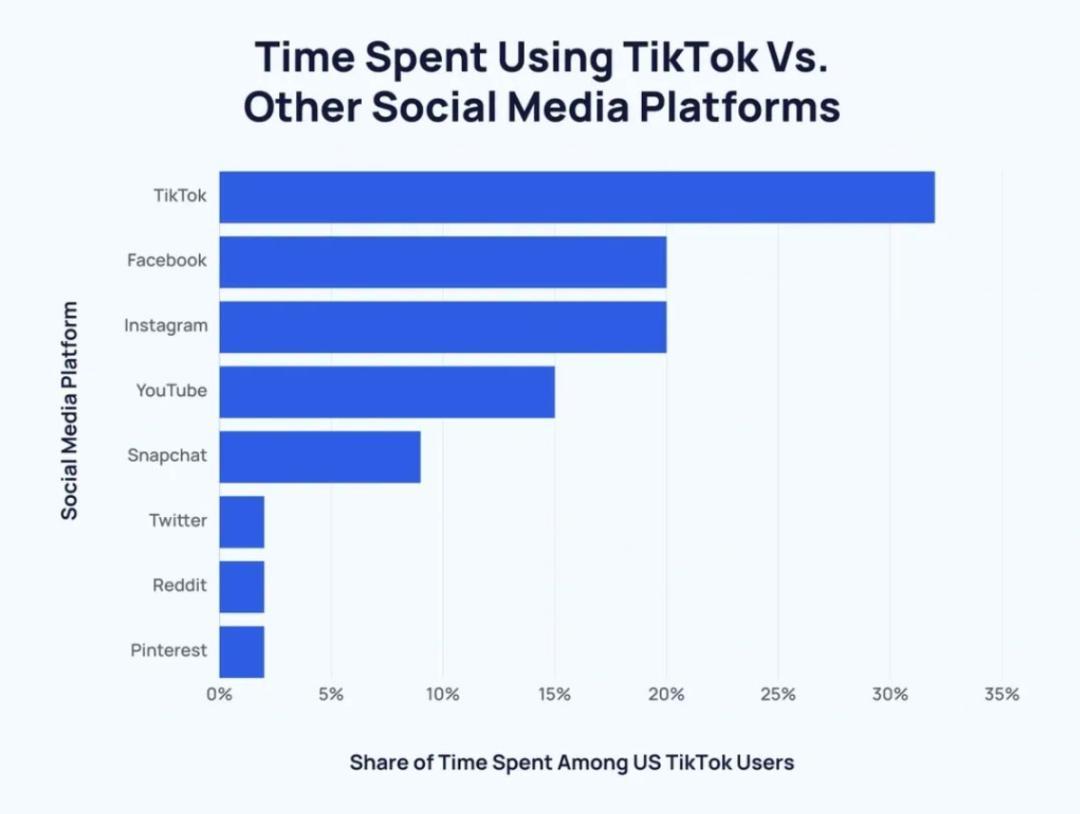
The capital market no longer believes in long - term stories. It was at this delicate moment that Manus emerged with an impressive report card. It not only has an annual recurring revenue (ARR) of over $100 million, proving the practical value of the general Agent, but also has VCs like Benchmark, which represent the mainstream Silicon Valley perception, on its investor list. All these paved the way for Meta's acquisition.
Meta's open - source large - scale model, Llama, is essentially just a "chat - capable and understanding" mental system. It lacks execution ability, and its monetization strategy is unclear. The introduction of Manus means that AI can start to take on a more definite "agent role", performing cross - application and cross - system tasks with user authorization. This ability is highly consistent with Meta's vision of the future personal computing platform.
After the acquisition, Meta also pieced together an AI ecological closed - loop with Llama as the base, Scale AI for data, and Manus for implementation, accelerating AI commercialization and filling in the short - comings.
Manus, on the other hand, can obtain stable super - large - scale computing power and financial support, reducing the pressure on independent entrepreneurship in terms of profit margins and continuous investment. Technologically, it can also directly access global products such as Facebook, Instagram, and WhatsApp, expanding the commercialization space of the general AI Agent.
Although Manus chose to embark on an overseas migration and eventually became part of the global social giant Meta's territory, this does not mark the end of China's AI narrative. Instead, it signals the beginning of a more grand and prosperous era of competition.
From DeepSeek shocking Silicon Valley with its extreme efficiency, to AIGC products like Doubao, Kimi, and Tongyi Qianwen capturing hundreds of millions of users with astonishing growth rates; from Zhipu AI deeply integrating into various industries to reap productivity dividends, to manufacturers like Rokid and Thunderbird making aggressive explorations in AI hardware terminals, China's AI track remains a vast expanse full of diverse players.
Here, there is the world's most complete industrial chain and the most hard - working entrepreneurial community. Manus's departure is just a specific example under the global division of labor.
In the future, the Chinese market will surely, based on its unique local ecological advantages, nurture its own and more vibrant "Manus".
This article is from the WeChat official account "Singularity Research Institute", author: Meng Wen, published by 36Kr with authorization.