The Year 2025 for Humanoid Robots: Value Validation, Capital Frenzy, and Crossroads
In 2025, orders of Chinese robot-related enterprises witnessed explosive growth, but most were framework agreements. Business models were first established in scenarios such as industry and entertainment, and the industry ecosystem was initially formed.
In 2025, the Chinese robot industry underwent a transformation from being a "performance guest" to a "factory worker", and also entered a new cycle of "value verification" oriented by practical applications from the "technology demonstration" stage. The surge in orders, the capital boom, and the rush to go public jointly set the main theme of the industry this year.
However, behind the noisy calls for mass production and the financing of hundreds of millions of yuan, prudent thoughts about when robots can truly "work" and whether there is "overheating" in the industry also form an indispensable aspect of understanding this industrial transformation.
From the laboratory to the factory: a sharp increase in orders and the initial emergence of business models
In 2025, the Chinese robot industry witnessed a historic turning point, as products are transforming from laboratory demonstration items to tools participating in production work in factories. The entire industry has crossed the "technology verification" stage and entered a new cycle of "value verification" oriented by market applications.
The most convincing sign of this transformation is the collective explosion of orders among embodied intelligence manufacturers this year. The focus of the industry has shifted from discussing the "possibility" of technology in the laboratory to verifying its "feasibility" and "usability" in real production scenarios.
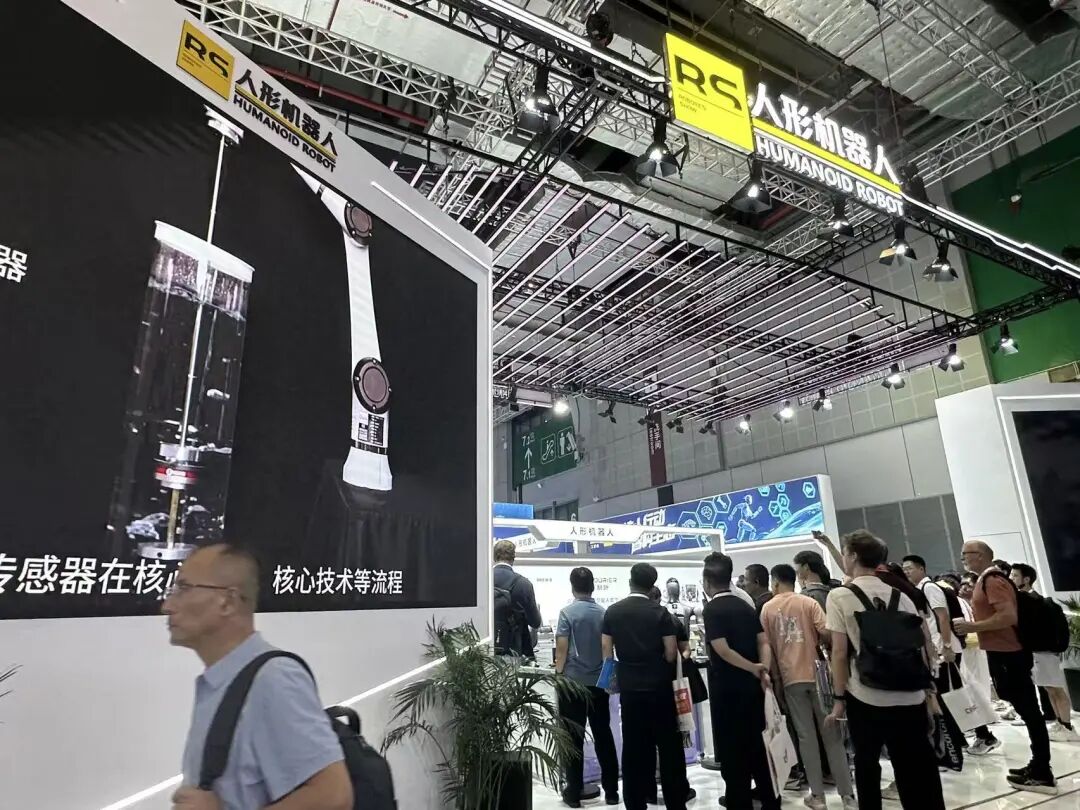
Photo taken by Huang Xinyi, a reporter from the Science and Technology Innovation Board Daily
In 2025, the order volume of the robot industry increased significantly. The total order amounts of leading enterprises have entered the "hundred-million-yuan club" and even climbed towards the billion-yuan level. According to incomplete statistics by reporters from the Science and Technology Innovation Board Daily, there have been nearly 20 orders worth over ten million yuan in the robot field since this year. It is reported that six enterprises, including Ubtech, Zhipu Robotics, Zhipingfang, Stardust Intelligence, Yuanli Unlimited, and Songyan Power, have achieved single or cumulative amounts exceeding one hundred million yuan.
According to public order data, the total order amount obtained by Ubtech in 2025 is close to 1.4 billion yuan, and it may become the enterprise with the highest annual order amount. Its latest order was to win the bid for the Humanoid Robot Data Collection Center Project in the Greater Bay Area of Huiyang District, Huizhou City on December 22, with an amount of 59.62015 million yuan.
Ubtech revealed that in 2025, the production capacity of its industrial humanoid robots exceeded 1,000 units, and over 500 units were delivered. It is expected that by 2026, the annual production capacity of industrial humanoid robots will reach the scale of ten thousand units.
Meanwhile, Zhipu Robotics also performed impressively. Recently, Deng Taihua, the CEO of Zhipu Robotics, publicly stated that Zhipu Robotics is expected to have a real shipment volume of over 5,000 units and sales revenue of over one billion yuan in 2025. Starting from next year, the shipment volume and sales revenue of robots are also expected to maintain several-fold growth every year.
From the frequent appearance of many billion-yuan orders since this year, it is not difficult to see the market's confidence in the industry's prospects and the acceleration of its commercialization process. However, it should be noted that some large orders are framework agreements or long-term cooperation, and the actual delivery will be carried out in stages. At the same time, the phenomenon of "related orders" that once occurred in the new energy vehicle industry has also emerged in the robot industry, triggering discussions in the market about the quality of orders and whether there is "overheating" in the industry.
In response, Yu Yiran, the managing director of CIC Consulting, told reporters from the Science and Technology Innovation Board Daily: "The key to measuring whether an order constitutes real 'value creation' does not lie in the amount or the number of units itself, but rather in whether a sustainable commercial closed-loop is formed behind the order. For example, whether it enters the real production chain, operates stably in a clear scenario, and brings quantifiable efficiency, quality, and safety benefits."
Judging from the currently formed business models, industrial manufacturing and entertainment performances are the core scenarios for the large-scale commercial implementation of humanoid robots.
Among them, many embodied intelligence manufacturers told reporters from the Science and Technology Innovation Board Daily that due to the clear scene tasks and relatively structured environment, the industrial manufacturing scenario is usually the first choice for the commercial implementation of robots. At the same time, through the operation of products in such real scenarios, real interaction data can be generated to feed back the iteration and training of the algorithm model capabilities.
Since the products of Unitree Robotics became popular on the Spring Festival Gala stage at the beginning of the year, the entertainment performance scenario has also attracted a large number of manufacturers to layout, giving rise to the emerging industry of robot leasing. In response, Zhipu Robotics has also launched the domestic robot leasing platform "Qingtian Rent", attempting to integrate the industrial chain and build an open leasing network covering the whole country.
Intensive capital inflows, and "Unitree and others" rush to go public
"Robot" is undoubtedly the hottest term in the capital market in 2025. According to IT Juzi data, as of December 27, 2025, there have been 610 financing events in the Chinese robot field this year, nearly three times more than last year, and the total financing amount is estimated to exceed 57 billion yuan.
Among them, large single - large - scale financings frequently occurred. Galaxy General Robotics completed a Series A financing of over 300 million US dollars (over 2.1 billion yuan) in December, becoming the largest single - financing event in the publicly available data this year. Currently, the company's valuation has reached 20 billion yuan. In addition, enterprises such as Zhongqing Robotics, Xingmai Innovation, and Independent Variable Robotics have all had financing events of approximately one billion yuan.
In the wave of the capital market generally optimistic about embodied intelligence, the strategic positioning of Internet giants is particularly prominent. These Internet giants have formed differentiated investment logics around their core business ecosystems.
IT Juzi data shows that as of December 21, 2025, eight Internet giants, including Baidu Ventures, Lenovo Capital and Incubator Group/Lenovo Star, Guoxiang Capital (SenseTime), Ant Group, iFlytek Ventures/iFlytek, Meituan/Meituan Longzhu, JD.com/JD Cloud, and Alibaba, have made a total of 62 investments in the embodied intelligence track, with investment amounts ranging from 1.45 to 3.4 billion yuan.
Simultaneous with the capital market financing boom, 2025 has also become the "year of the rush to go public" for robot companies. According to statistics, as of November, nearly 30 companies in the robot industry chain have submitted listing applications to the Hong Kong Stock Exchange. These enterprises cover the entire industrial chain from core components, complete machine manufacturing to system integration.
In the A - share market, the direct listing path is particularly difficult. As a star in the industry, Unitree Technology has completed a 132 - day IPO counseling and is making every effort to rush, hoping to become the "first humanoid robot stock" in the A - share market.
Meanwhile, more robot enterprises have chosen to "go public indirectly" through mergers and acquisitions. For example, Zhipu Robotics acquired the controlling stake in Shangwei New Materials; Qiteng Robotics plans to take control of Shengtong Energy by replicating Zhipu's path; Ubtech, which is already listed on the Hong Kong Stock Exchange, also plans to acquire the equity of Fenglong Co., Ltd., an A - share company.
It should be noted that many robot enterprises rushing to IPO are facing profit difficulties and are still in a loss state. Even Ubtech, a Hong Kong - listed company with nearly 1.4 billion yuan in orders, showed a loss of 439 million yuan in its first - half financial report this year.
Previously, Li Chao, the deputy director of the Policy Research Office of the National Development and Reform Commission, said that with the accelerated entry of emerging capital, there are currently more than 150 humanoid robot enterprises in China, and this number is still increasing. More than half of them are start - ups or "cross - industry" entrants, which is a good thing for encouraging innovation. However, efforts should also be made to prevent risks such as the "crowded" listing of highly repetitive products and the compression of R & D space.
As the year draws to a close, where should robots that can't "work" go?
In 2025, accompanied by the call of the "year of mass production", the robot industry has witnessed unprecedented capital pursuit and the listing boom of industrial chain enterprises. From the amazing appearance on the Spring Festival Gala to the conceptual implementation on the factory production line, humanoid robots are gradually moving from the "showcase" to the "factory".
However, a fundamental problem has also emerged. The core value of a robot priced at hundreds of thousands or even millions of yuan is still defined by many users and practitioners as "emotional value" rather than real productivity. As the end of 2025 approaches, these robots that are not yet truly good at "working" are at a critical crossroads.
Since this year, videos of robots showing off skills such as "backflips", "running marathons", and "walking the catwalk" have frequently gone viral. However, these movement abilities in a controlled environment are worlds apart from completing a precise assembly task in a dynamic and complex real factory. This also reveals a major pain point in the current industry, that is, the current technology may enable robots to "move like humans", but it is far from achieving "decision - making like humans".
Therefore, although robots have begun to enter factories, on industrial production lines with strict requirements for precision and efficiency, most of them still remain in the initial stage of small - scale single - point tests, undertaking relatively simple auxiliary tasks such as material handling and loading and unloading. There is still a long way to go to achieve large - scale job replacement.
Wu Fengli, a deputy to the National People's Congress and the chairman of Guangdong Topsun Technology Co., Ltd., pointed out that current intelligent robots are facing problems such as insufficient data "fuel" and insufficient technical collaboration. At the same time, Yu Yiran, the managing director of CIC Consulting, also told reporters from the Science and Technology Innovation Board Daily that the "brains" and "cerebella" of humanoid robots currently have a low level of maturity. The corresponding large - scale models and small - scale models are the rapidly developing parts in the field of artificial intelligence. Especially for embodied large - scale models, due to the lack of ready - made data, the development difficulty is relatively large, and the data set is one of the main barriers.
In addition, as mentioned above, there is a phased mismatch between the "explosion of orders" and "reliable delivery" in the current robot industry, which inevitably leads to market concerns about the "overheating" of the industry.
Yu Yiran believes that in the short term, the phenomenon that "the growth rate of orders is faster than the growth rate of delivery capacity" is a typical phenomenon when the industry reaches the critical point of explosion. In the medium - and long - term, as the data closed - loop, software - hardware integration, and standard system construction are gradually improved, the industry is expected to move from single - point pilots to large - scale deployment and gradually resolve this structural contradiction.
It is worth noting that the recent new developments at the national level have also pointed out a clearer development direction for this industry at the crossroads.
On December 26, the Standardization Technical Committee for Humanoid Robots and Embodied Intelligence of the Ministry of Industry and Information Technology was officially established. The committee will be mainly responsible for formulating and revising industry standards in areas such as basic commonality, key technologies, components, complete machines and systems, applications, and safety of humanoid robots and embodied intelligence.
According to CIC Consulting data, the global market scale of embodied intelligent robot solutions is expected to exceed 10 billion yuan in 2026. Yu Yiran believes that 2025 - 2026 can be regarded as a critical window period from "verification to volume increase". "As the downstream implementation scenarios are gradually opened up, especially in sectors such as retail services, commercial displays, and industrial manufacturing, the conditions for products to shift from single - point tests to batch replication are being formed."
This article is from the WeChat official account "Science and Technology Innovation Board Daily", author: Li Jiayi. Republished by 36Kr with permission.