Der Jahr 2025 für humanoide Roboter: Wertverifikation, Kapitalboom und Kreuzungspunkte
In 2025, there has been a sharp increase in orders for Chinese robotics companies, although most of them are framework agreements. The business models in industries such as manufacturing and entertainment have been successfully implemented for the first time, and the industry ecosystem has taken shape for the first time.
In 2025, the Chinese robotics industry has transformed from a "show artist" to a "factory worker" and has also entered a new cycle of "value verification" from the stage of "technology demonstration", which is oriented towards practical application. The sharp increase in orders, the enthusiasm of capital, and the rush to the stock market have jointly sounded the main melody of the industry this year.
However, behind the noise of mass production and billion - level financing, cautious considerations about when robots can actually "work" and whether there are "overheating phenomena" in the industry also form an indispensable other side of understanding this industrial transformation.
From the laboratory to the factory: A sharp increase in order volume and the first appearance of the business model
In 2025, the Chinese robotics industry has reached a historical turning point. The products are changing from demonstration models in the laboratory to tools involved in production in the factory. The entire industry has exceeded the stage of "technology verification" and entered a new cycle of "value verification" oriented towards market application.
The most convincing sign of this transformation is the collective leap in order volume of various companies with physical intelligence this year. The focus of the industry has shifted from discussing the "possibilities" of technology in the laboratory to verifying its "feasibility" and "usability" in real - world production scenarios.
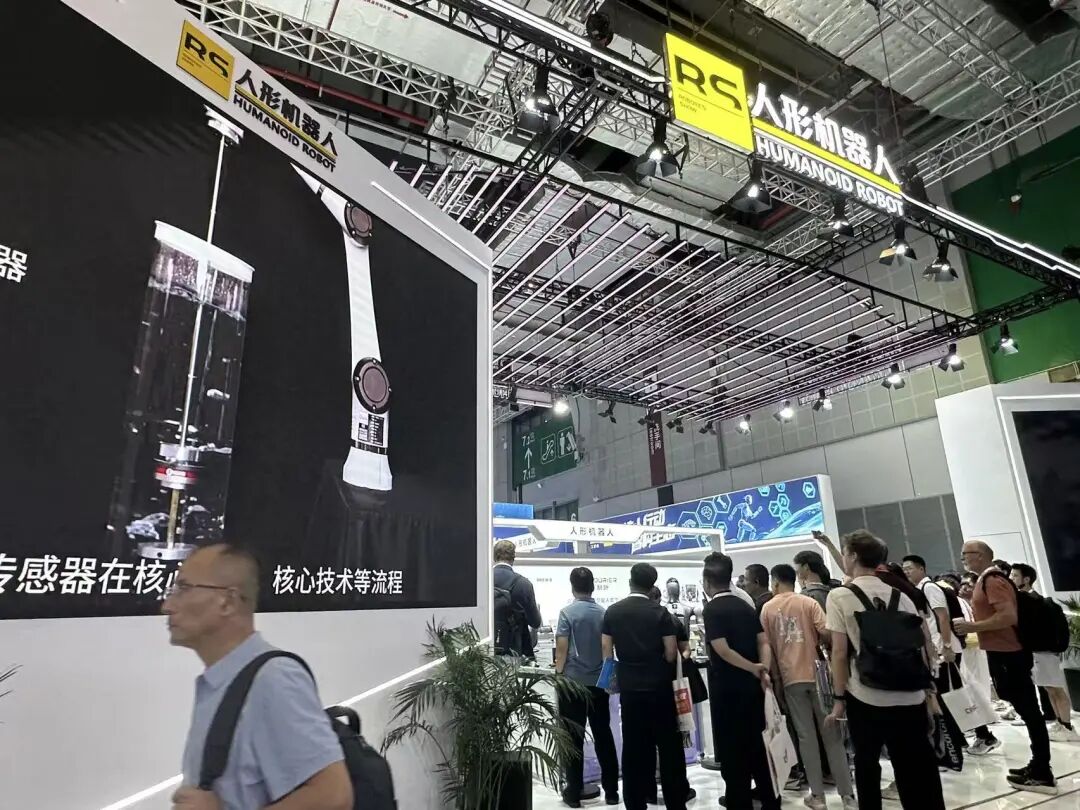
Photo taken by Huang Xinyi, a reporter from Science and Technology Innovation Board Daily
In 2025, the order volume in the robotics industry has increased significantly. The total order amounts of leading companies have all entered the "billion - club" and are even rising towards the ten - billion threshold. According to incomplete statistics from reporters of Science and Technology Innovation Board Daily, there have been nearly 20 million - level robotics orders since the beginning of this year. It is known that six companies such as Ubtech, Zyuan Robotics, Zsquare, Stardust Intelligence, Force Infinity, and Songyan Power have already reached individual or cumulative amounts of over one million yuan.
According to the disclosed order data, Ubtech reached a total order amount of nearly 1.4 billion yuan in 2025 and could become the company with the highest annual order amount. Its latest order win is that on December 22, it won the project of the data acquisition center for humanoid robots in the Greater Bay Area's megacity region in Huizhou District, Huizhou City, with an amount of 59.62015 million yuan.
Ubtech revealed that its production capacity for industrial humanoid robots in 2025 was over 1,000 units and over 500 units were delivered. It is expected that the annual production capacity for industrial humanoid robots will reach the order of ten thousand units by 2026.
At the same time, Zyuan Robotics has also shown excellent performance. Recently, Deng Taihua, the CEO of Zyuan Robotics, publicly stated that Zyuan Robotics is expected to achieve an actual delivery volume of over 5,000 units and a turnover of over 1 billion yuan in 2025. From next year, it is also possible that the delivery volume and turnover of the robots will increase multiple times each year.
From the numerous billion - level orders since the beginning of this year, it is not difficult to see the market's confidence in the future of the industry and the acceleration of its commercialization process. However, it should be noted that some large orders are framework agreements or long - term cooperation, and the actual delivery will be carried out in phases. At the same time, the phenomenon of "related orders" that once occurred in the new - energy vehicle industry has also shown initial signs in the robotics industry, which has led to discussions about how much value the orders actually have and whether there are "overheating phenomena" in the industry.
Regarding this topic, Yu Yiran, the general manager of CIC, told reporters from Science and Technology Innovation Board Daily: "The key to judging whether an order actually represents 'value creation' does not lie in the order amount or the number of devices themselves, but should aim at whether a sustainable commercial closed - loop is formed behind the order, such as whether it is integrated into the real production chain, functions continuously and stably in a clearly defined scenario, and brings measurable efficiency, quality, and safety effects."
From the business models that have been formed so far, industrial manufacturing and the entertainment industry are the core areas for the large - scale commercial implementation of humanoid robots.
Several companies with physical intelligence have told reporters from Science and Technology Innovation Board Daily that due to the clearly defined tasks and relatively structured environment in industrial manufacturing, this industry is usually the first choice for the commercial implementation of robots. At the same time, by operating the products in such real - world scenarios, real interaction data can be generated, which can improve the iteration and training of algorithm models.
After the products of Unitree Robotics went "viral" on the Spring Festival Gala stage, the entertainment industry has also prompted many companies to invest in this area and has given rise to the new business of robot leasing. For this purpose, Zyuan Robotics has also launched the first Chinese robot leasing service platform, "Qingtian Rent", to integrate the industry chain and build an open leasing network across the country.
Strong capital inflow and the rush to the stock market of "Unitree and Co."
"Robots" are undoubtedly the hottest word in the capital market in 2025. According to data from IT Juzi, as of December 27, 2025, there were 610 financing events in the robotics industry in China, almost three times that of the previous year, and the total financing amounts are estimated to be over 57 billion yuan.
Large individual financings have occurred frequently. Galaxy Universal Robotics completed a Series - A financing of over 300 million US dollars (over 2.1 billion yuan) in December, which is the largest known individual financing event in the public data this year. The current enterprise value of the company is already 20 billion yuan. In addition, companies such as Zhongqing Robotics, Xingmai Innovation, and Independent Variable Robotics have each carried out financing events in the range of about 1 billion yuan.
In the wave of the capital market's general approval of physical intelligence, the strategic positioning of Internet giants is particularly noticeable. These Internet giants have developed different investment logics around their own core business ecosystems.
According to data from IT Juzi, as of December 21, 2025, eight Internet giants, including Baidu Ventures, Lenovo Capital and Incubator Group/Lenovo Star, Guoxiang Capital (SenseTime), Ant Group, iFlytek Ventures/iFlytek, Meituan/Meituan Longzhu, JD.com/JD Cloud, and Alibaba, have invested in the field of physical intelligence a total of 62 times, and the investment amounts range from 1.45 to 3.4 billion yuan.
Parallel to the enthusiasm in the capital market, 2025 has also become the "year of the rush to the stock market" for robotics companies. According to statistics, as of November, nearly 30 companies in the robotics industry have submitted applications for stock - market approval to the Hong Kong stock - market watchdog. These companies cover the entire industry chain from core components, complete - device manufacturing to system integration.
On the Chinese A - share market, the path to direct stock - market approval is particularly difficult. As a star company in the industry, Unitree Technology has completed a 132 - day IPO consultation and is currently in full swing to possibly become the first humanoid - robot stock on the A - share market.
At the same time, more robotics companies have decided to go public indirectly through mergers and acquisitions. For example, Zyuan Robotics has acquired a controlling stake in Shangwei New Materials; Qiteng Robotics plans to do the same and enter Shengtong Energy; even Ubtech, which is already listed on the Hong Kong Stock Exchange, plans to acquire shares in the A - share company Fenglong Co., Ltd.
It should be noted that many robotics companies approaching IPO still have difficulties in making profits and are in the red. Even Ubtech, a company listed on the Hong Kong Stock Exchange with nearly 1.4 billion yuan in orders, recorded a loss of 439 million yuan in its interim report this year.
Previously, Li Chao, the deputy director of the policy research department of the National Development and Reform Commission, explained that with the accelerated entry of new capital in China, there are currently over 150 companies in the humanoid - robotics industry, and this number is constantly growing. More than half of them are start - ups or companies that have entered from other industries. This is a good sign for promoting innovation; however, attention must also be paid to avoiding risks such as the "congestion" of highly repetitive products on the stock market and the restriction of the research space.
At the end of the year: Where should robots that can't "work" yet go?
In 2025, the robotics industry, with the call of the "year of mass production", has witnessed unprecedented capital inflow and a rush to the stock market of companies in the industry chain. From the impressive debut on the Spring Festival Gala to the implementation of the concept in factory production, humanoid robots are gradually moving from the "show stage" to the "factory".
However, a fundamental problem has also emerged. The core value of a robot that costs hundreds of thousands or even millions of yuan is still defined by many users and industry insiders as "emotional value" rather than real productivity. At the end of 2025, these robots that can't really "work" are at a critical crossroads.
Since the beginning of this year, videos of robots "rolling backwards", "running marathons", or "walking the catwalk" have often flooded social media. However, these movement capabilities in controlled environments are fundamentally different from the ability to perform a precise assembly task in a dynamic and complex real - world factory. This also highlights a major problem in the industry, that is, although the current technology can enable robots to "move like humans", it is far from enabling them to "make decisions like humans".
Therefore, although robots have already entered the factories, on industrial production lines with high requirements for precision and efficiency, they mostly remain in the initial stage of small - scale and single - point experiments and undertake relatively simple auxiliary tasks such as material handling and loading and unloading. The path to large - scale replacement of jobs is still very long.
Wu Fengli, a deputy to the National People's Congress and the chairman of Guangdong Topsun Technology Co., Ltd., has pointed out that current intelligent robots have problems such as the lack of "data fuel" and poor technical coordination. At the same time, Yu Yiran, the general manager of CIC, told reporters from Science and Technology Innovation Board Daily that the "brains" and "cerebellums" of humanoid robots are still relatively immature at present. The corresponding large and small models are the fastest - developing areas in artificial intelligence, especially the physical large models. Due to the lack of existing data, development is difficult, and the data set is one of the main barriers.
In addition, as mentioned above, there is currently a time lag between the "leap in orders" and the "reliable delivery" in the robotics industry, which has led to concerns in the market about "overheating phenomena" in the industry.
Yu Yiran believes that in the short term, the "faster increase in order volume than delivery capacity" is a typical phenomenon when the industry reaches the turning point. In the medium and long term, as the data cycles, the integration of hardware and software, and the standardization systems are gradually improved, it is possible that the industry will shift from single - point experiments to large - scale implementation, and this structural problem will be gradually solved.
It is worth noting that the latest news at the national level has also mapped out a clearer development direction for the industry at a crossroads.
On December 26, the Standardization and Technology Committee for Humanoid Robots and Physical Intelligence of the Ministry of Industry and Information Technology was officially established. The committee will mainly be responsible for formulating and revising industry standards in areas such as the fundamentals and commonalities, key technologies, components, complete devices and systems, applications, and safety of humanoid robots and physical intelligence.
According to data from CIC, the global market for physical - intelligence robotics solutions may reach over one billion yuan in 2026. Yu Yiran believes that the years 2025 - 2026 can be regarded as a critical period from "verification to volume increase".