Is it time for car companies to embrace the new battleground of "seamless charging" as self-built charging piles phase out?
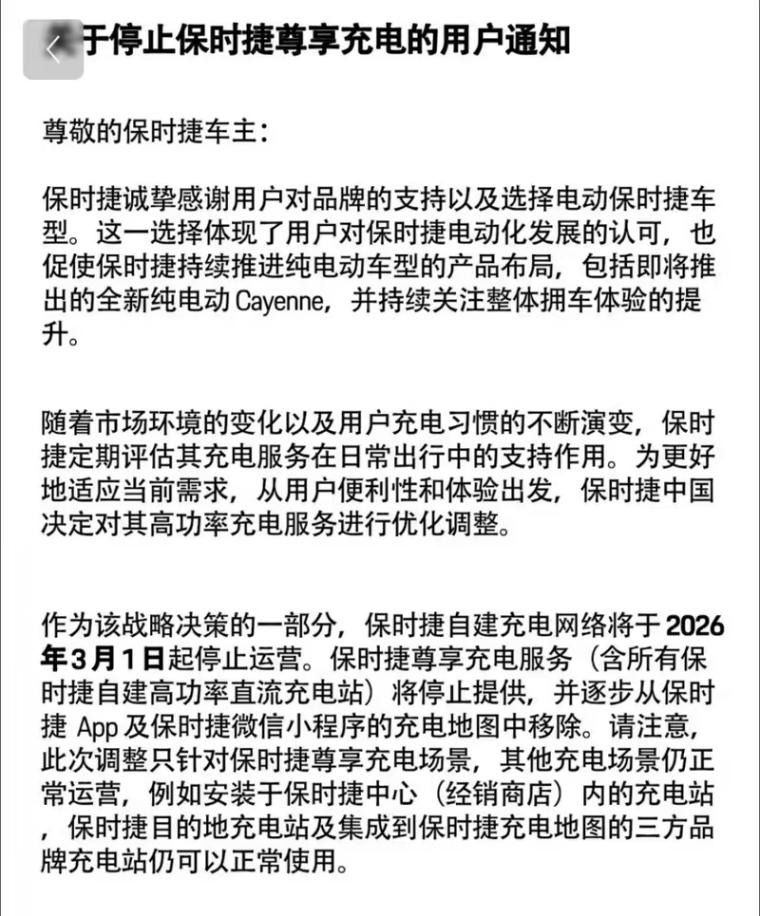
Recently, Porsche China officially announced that it will start to gradually dismantle its Premium Charging service facilities from March 1st, 2026. After that, it will shift to in - depth cooperation with leading charging operators in the industry, which has stirred up quite a storm.
In the reports of relevant media, Porsche's decision to shut down its self - built charging facilities is undoubtedly a wise and forward - looking one. There are approximately 200 charging stations in total, with each investment reaching the million - level, but the utilization rate of its exclusive charging piles has long remained below 20% (some estimates are about 15%). This not only reflects the inefficiency of Porsche's self - built charging facilities in operation but also highlights the deviation between its market layout and user needs.
Actually, in the "compulsory course" of charging, car manufacturers are presenting different answers. Some brands like Xiaomi, Nezha Auto, and Leapmotor choose not to build charging piles on a large scale. They believe that energy replenishment is a function that vehicles need to provide, rather than an asset that the brand must build on its own. On the other hand, brands like NIO, Tesla, and Li Auto tend to make heavy investments. They believe that building a self - owned energy network is an extension of product definition and a key strategy for building long - term competitive barriers and the entry point for the future energy ecosystem...
Obviously, this divergence indicates that the new energy vehicle industry in China is moving from the early - stage hardware competition to an advanced competition stage centered on the full - life - cycle user experience and in - depth industrial chain collaboration. Although the two seemingly opposite development paths actually point to the same end: solving the energy replenishment problem of electric vehicles with the lowest social total cost and the highest user satisfaction.
The Crossroads of the Energy Replenishment Battlefield
Regarding Porsche's decision to shut down its self - built high - power DC super - charging piles, that is, the "Porsche Premium Charging" service network, many users think that this has reduced one of the major conveniences for them to use Porsche electric vehicles.
After all, in today's increasingly competitive electric vehicle market, the perfection of charging facilities is directly related to the user's driving experience and brand loyalty. Just like Porsche owners who could originally enjoy faster and more convenient charging services through the "Porsche Premium Charging" and experience a certain sense of special privilege.
However, Porsche also has its own considerations for cutting off this benefit:
On the one hand, Porsche has encountered obstacles in the domestic electric vehicle market. According to its latest financial report for the first three quarters of 2025, its sales revenue was 26.86 billion euros, a 6% decrease compared with the same period last year. While facing high pressure on profitability and a sharp decline in profits, its self - built charging piles, although of high quality, have high maintenance costs and a limited coverage area.
For the self - operated super - charging network of car manufacturers, if the utilization rate is insufficient, this service not only fails to bring the expected revenue but also becomes a heavy burden on the automaker, continuously consuming the company's profits. In the increasingly severe market environment, strategic contraction and optimization of resource allocation have become a necessary choice for Porsche.
On the other hand, the concentration of the charging pile industry is rapidly increasing, and the market pattern is undergoing profound changes. Data from the first half of 2025 shows that the top 15 operators in the industry, such as TELD, Star Charge, and Yunkuaichong, have occupied more than 80% of the national public charging pile market share, showing a significant Matthew effect.
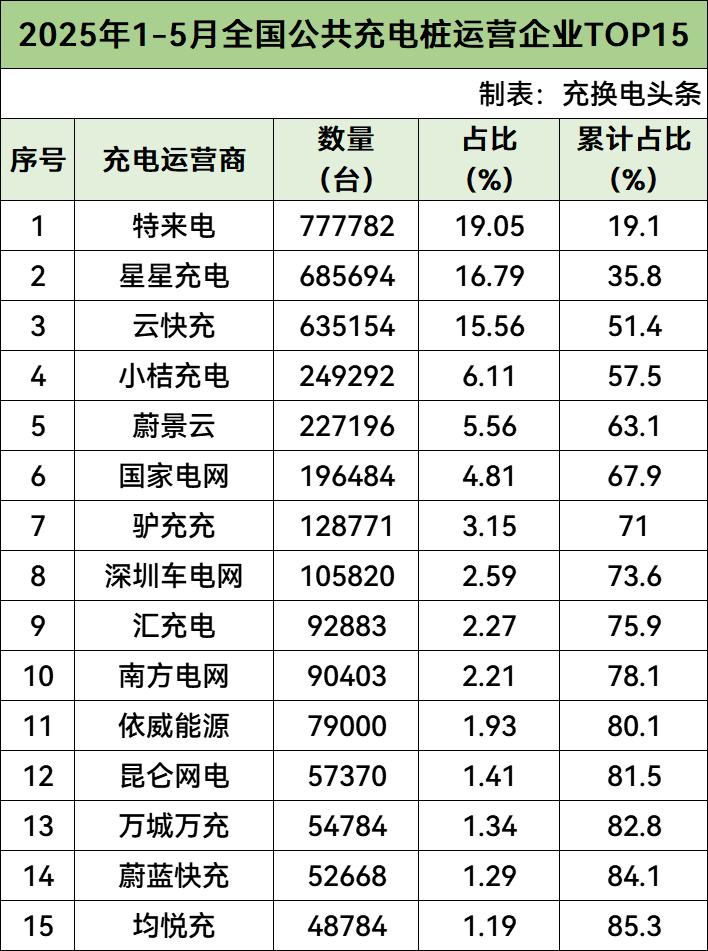
Source: Charging and Battery - swapping Headlines
This means that in the charging pile market, a competitive pattern dominated by a few giants has been formed. For a car manufacturer like Porsche, instead of investing a large amount of resources in building its own charging piles and competing directly with these industry giants, it is better to choose to cooperate with them to jointly build a more perfect charging network and provide users with more convenient and efficient charging services.
Compared with Porsche, which started to make a strategic turn only after realizing that building self - owned charging facilities was a "bloody path" and paying a high price, quite a number of new energy car manufacturers gave up the self - building path from the very beginning.
Lei Jun once said in a live - broadcast, "Xiaomi has built a small number of charging stations, but there are no plans for large - scale construction at present. The primary task is to build good cars and make the SU7 the electric vehicle with the best compatibility with public charging piles." Public information shows that Nezha Auto's energy replenishment service mainly provides home charging piles for its users, and relies on third - party cooperation for public energy replenishment. Zhu Jiangming, the founder of Leapmotor, has repeatedly emphasized focusing on "cost - based pricing" and "full - domain self - research" to achieve "technological equality", so it naturally chooses to rely on the existing public charging network rather than the path of building heavy - asset charging facilities...
For these brands, China already has the world's densest and most convenient third - party public charging network. If they build their own charging piles, it is, to some extent, equivalent to asset reset and resource waste.
However, there are also many car manufacturers that choose to make heavy - asset investments, including NIO, Tesla, and Li Auto.
Since its establishment, NIO has invested nearly 10 billion yuan in battery - swapping stations, super - charging piles, and destination charging stations, and has the world's densest battery - swapping station network. Tesla's capital expenditure exceeded 10 billion US dollars in 2024, with the super - charging network being the core investment item. As of July 2025, Li Auto has built 3,614 super - charging stations, with an average of 4 new super - charging stations added per day and about 28 new super - charging piles added per week...
Similarly, for these brands, building their own charging piles is not only to provide supporting services but also to further consolidate and enhance their brand competitiveness and market position by building a perfect energy replenishment system. They even continuously explore and experiment with new energy replenishment methods and technologies, such as battery - swapping technology and wireless charging technology.
It is not difficult to find that if a brand chooses to integrate into a mature ecosystem, it can rely on the existing charging network and service system of third - parties to achieve a light - asset operation. On the other hand, if it chooses to invest a large amount of funds and resources to build a better ecosystem, it can create unique brand advantages and enhance its market competitiveness.
There is no absolute superiority or inferiority between the two paths. They just meet the actual needs of each brand and are all aiming to solve the most basic problem for users: how to provide a more personalized and high - quality charging experience?
The End Goal is Seamless Experience Integration
When the outside world shifts its perspective from the strategic choices of a certain car manufacturer to the charging industry itself, the main contradiction has long shifted from "availability" to "quality".
From the user's perspective, the average power of public slow - charging piles is 44.69 kilowatts, and it takes about 2 - 3 hours to charge to 80%. However, users expect to replenish 400 kilometers of range in 5 - 8 minutes (the same speed as refueling), which intensifies the anxiety about energy replenishment in long - distance and peak - period scenarios, forcing the improvement of super - charging speed.
From the supply - side perspective, public charging piles present an imbalanced structure of "more slow - charging, fewer fast - charging, and scarce super - charging". Data shows that as of the end of 2025, the proportion of super - charging piles is less than 5%. Industry analysis generally points out that a large number of existing charging piles are difficult to be compatible with the 800V high - voltage platform. Although the coverage rate of charging piles in highway service areas has reached 98%, queuing during holidays has become a common phenomenon.
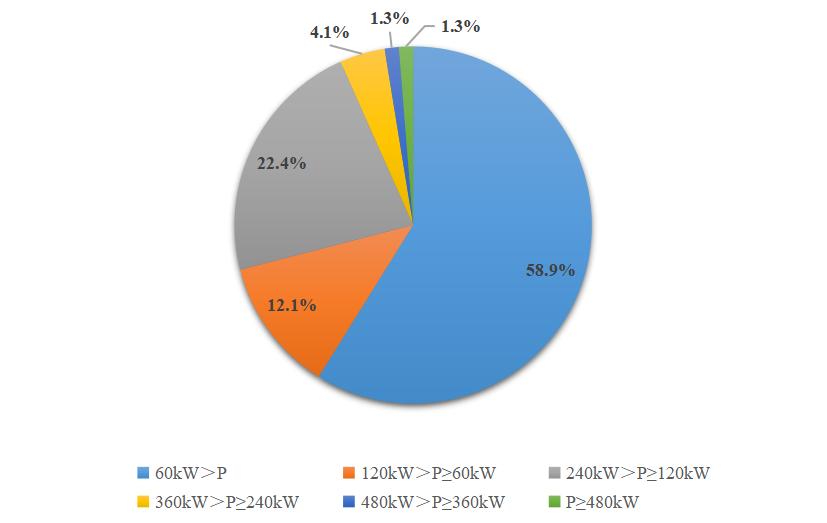
Proportion of public charging piles in each power segment. Source: China Charging Alliance
In this way, the development focus of relevant enterprises has shifted from the "endurance competition" to the "energy replenishment efficiency competition". Megawatt - level super - charging (≥1000kW) has become the key to solving the problems of "slow charging and long queuing". Therefore, the ultimate competition in the industry has become the "ecosystem integration ability", that is, the one who can better integrate vehicles, charging piles, power grids, and parking scenarios to achieve seamless, efficient, and intelligent energy replenishment will win the future.
At present, leading enterprises are making differentiated layouts in technology and scenarios. For example, Huawei's all - liquid - cooled megawatt super - charging technology has quadrupled the efficiency compared with traditional fast - charging, enabling heavy - duty trucks to be charged to 90% in 15 minutes. Star Charge's liquid - cooled super - charging 2.0 technology supports the start of charging within 3 seconds and has the ability of multi - terminal dynamic power distribution. BYD also has megawatt flash - charging technology, achieving an ultra - fast charging ability of 2 kilometers per second, replenishing 407 kilometers in 5 minutes and being compatible with the 1000V platform... However, beyond the technological imagination, large - scale implementation still faces multiple constraints, especially at the industrial cooperation level, and the complexity of ecosystem integration far exceeds expectations.
Specifically, on the car - manufacturer side, although leading enterprises such as Tesla, NIO, and XPeng have laid out super - charging networks, it is a common industry understanding that the charging protocols of different brands are not compatible with each other, resulting in limited charging power when users charge across brands. On the power - grid side, there are differences in the charging facility standards between the State Grid and the Southern Power Grid, and there is a phenomenon of "one pile with multiple standards" in some areas, which increases the operation and maintenance costs. On the site side, the layout of charging piles in core scenarios such as highway service areas and commercial complexes is often restricted by land resources and power capacity, resulting in delays in the commissioning of super - charging piles.
So, do players like Xiaomi, which have not entered the market, or those like Porsche, which have given up in - depth self - building of charging piles, still have a chance in the energy replenishment battlefield? The answer is yes.
From the perspective of differentiated competition, they can rely on their user groups and use software means (such as plug - and - charge, exclusive reservation, etc.) to achieve their own brand - based services on the basis of third - party charging service providers. This is far more efficient than simply operating physical equipment.
For example, by developing a cross - brand charging aggregation platform to integrate the charging resources of different car manufacturers and operators, and using big - data algorithms to recommend the optimal energy replenishment plan for users (considering factors such as battery level, time, cost, and queuing situation), and at the same time, enhancing user stickiness through membership systems and point - exchange programs. Although this model does not directly participate in hardware construction, it can become a key "connector" in the energy replenishment network through ecosystem integration ability and even promote car manufacturers and operators to open their protocol standards in reverse.
In the future, the competition of car manufacturers in the energy replenishment battlefield will no longer be a single - dimensional "technological arms race", but a dual competition of "ecosystem integration ability" and "user value creation". Whether they are new entrants or traditional players, only by centering on user needs and breaking down industrial barriers through open cooperation can they gain an advantage in the energy replenishment efficiency competition and ultimately shape a seamless future where charging is as convenient as refueling.
This article is from the WeChat official account "Zinc Scale". Author: Meng Huiyuan, Editor: Chen Dengxin. Republished by 36Kr with authorization.